The right drone battery depends on what the aircraft is expected to do. A lightweight FPV platform built for fast throttle response and a long-endurance UAV carrying cameras, sensors or agricultural payloads may both use lithium batteries, but their priorities are very different.
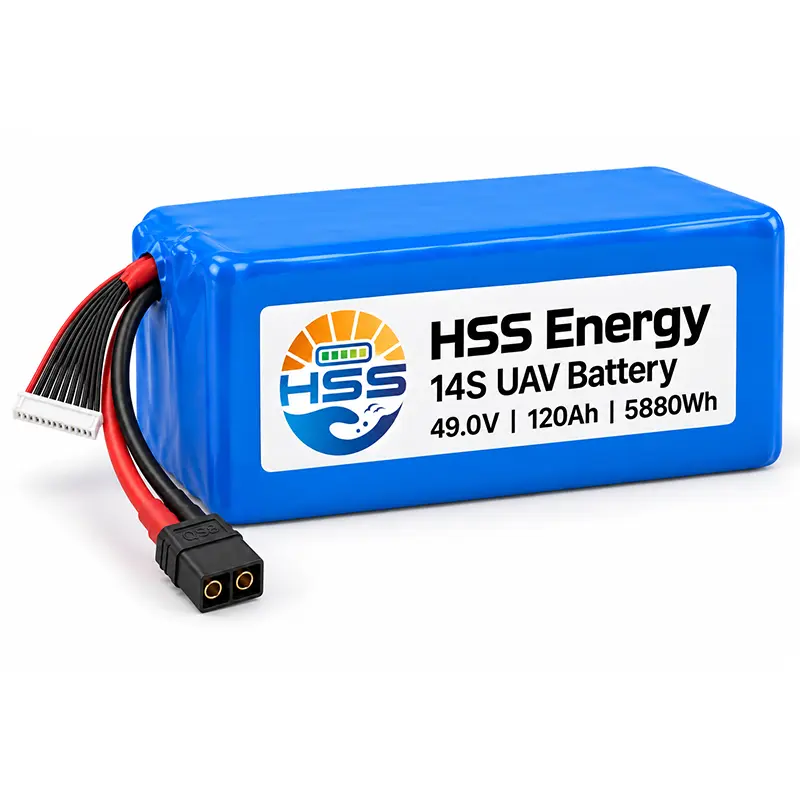
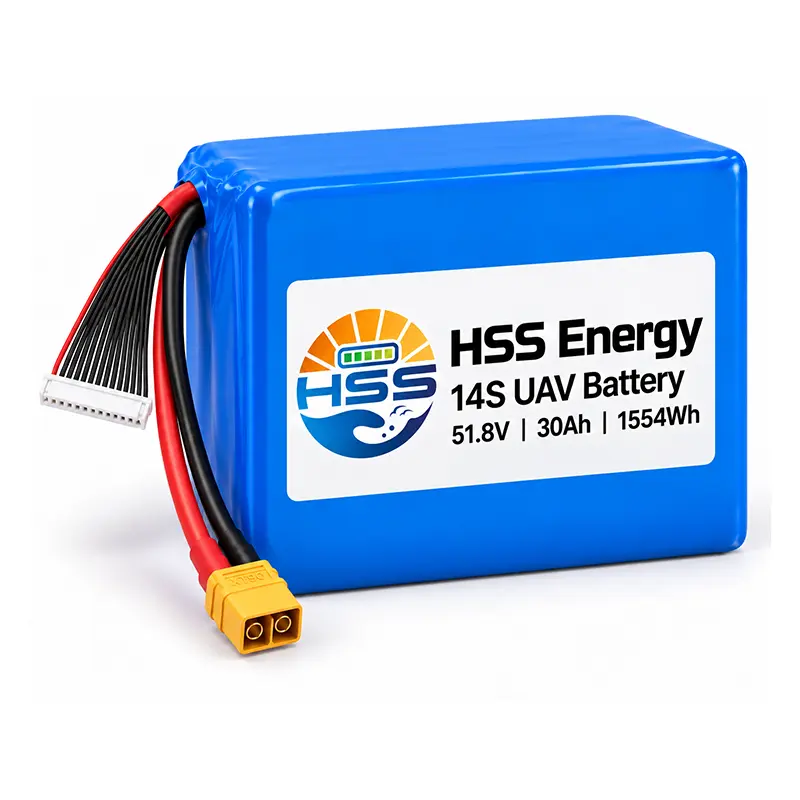
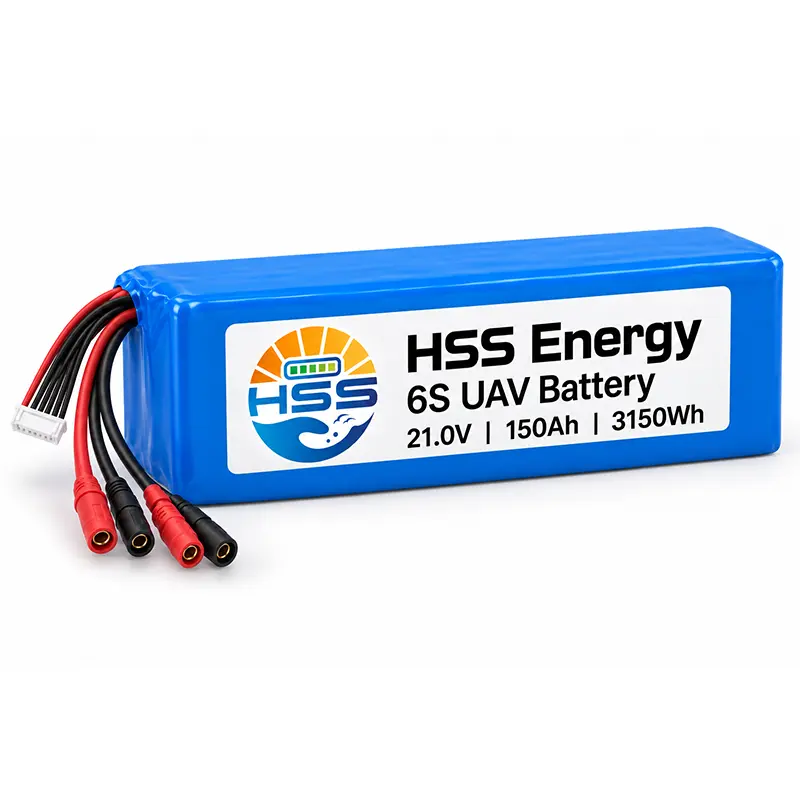
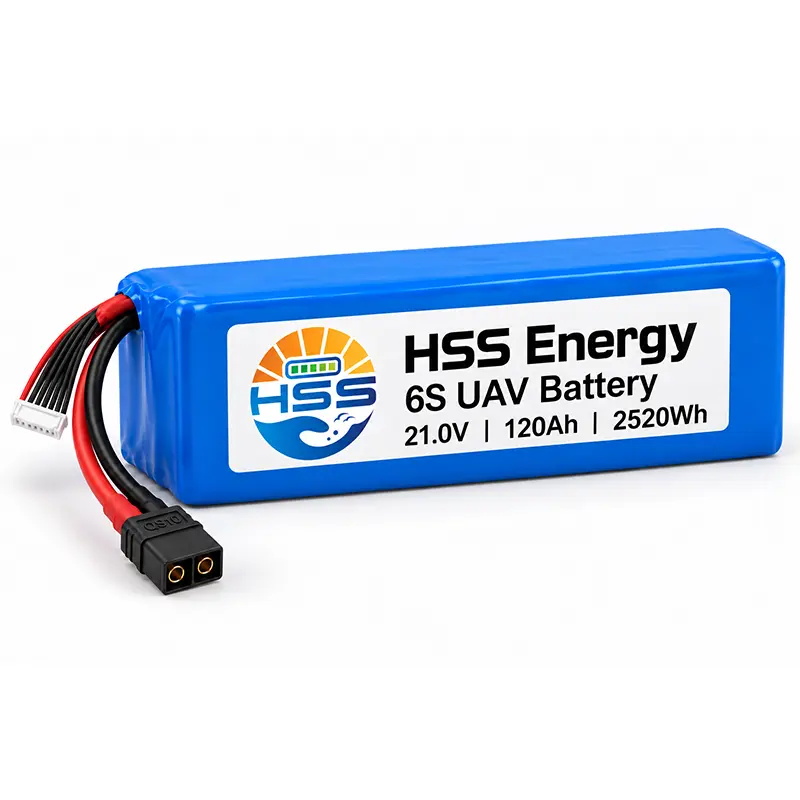
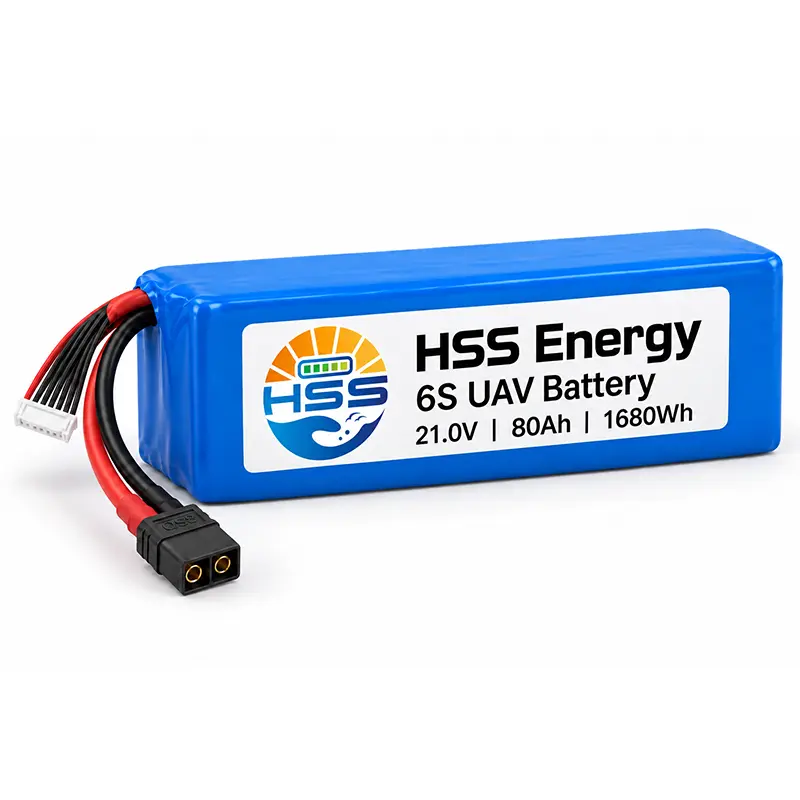
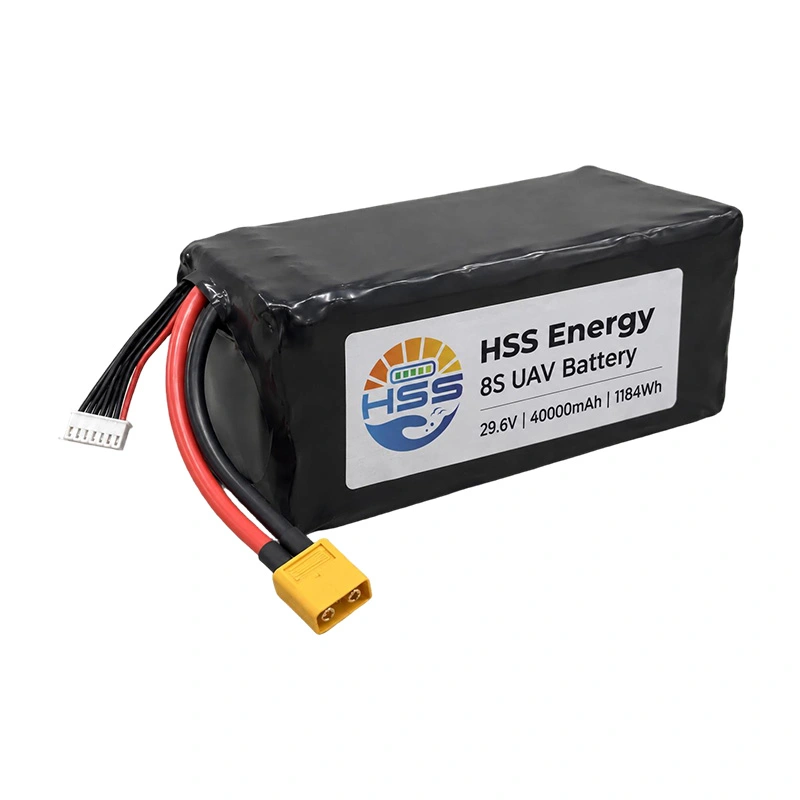
HSS Energy supplies drone batteries for FPV, mapping, inspection, industrial and agricultural applications. Battery configuration is selected around the aircraft rather than from voltage and capacity alone. Our Drone Batteries series includes the FPV Drone Batteries series and the UAV Batteries series.
|
Send Your Drone Specs for a Battery Configuration Review Aircraft Type • Voltage / S Count • Motor / ESC • Payload • Flight Time • Battery Space • Weight Limit |
|
Battery Direction |
Typical Priority |
Main Chemistry |
|
FPV Drone Batteries |
Weight, C-rate, throttle response, compact size |
LiPo / Li-ion |
|
UAV Batteries |
Endurance, payload, energy density, mission time |
Semi-solid |
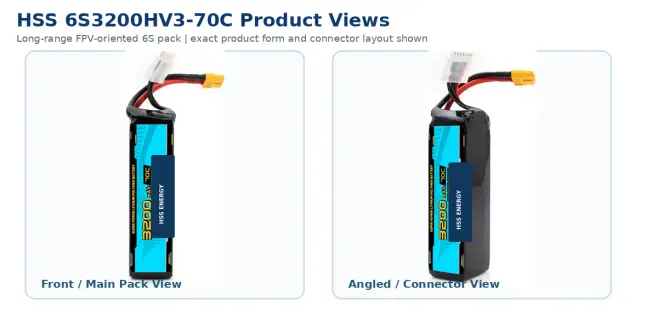
FPV batteries are normally selected around aircraft weight, motor and ESC demand, flight style and connector layout. Common HSS Energy platforms include 3S, 6S, 8S and 12S, with capacities from about 450mAh to 9000mAh and discharge capability typically from 15C to 100C.
LiPo is the mainstream option for high-discharge FPV applications, while Li-ion can be considered where longer flight time and energy capacity are more important.
For larger UAVs, battery selection is usually more about usable energy per kilogram and how much battery weight the aircraft can carry efficiently. Common HSS Energy UAV platforms include 6S, 8S, 12S and 14S, with capacities typically from 12Ah to 40Ah and discharge capability from about 3C to 50C.
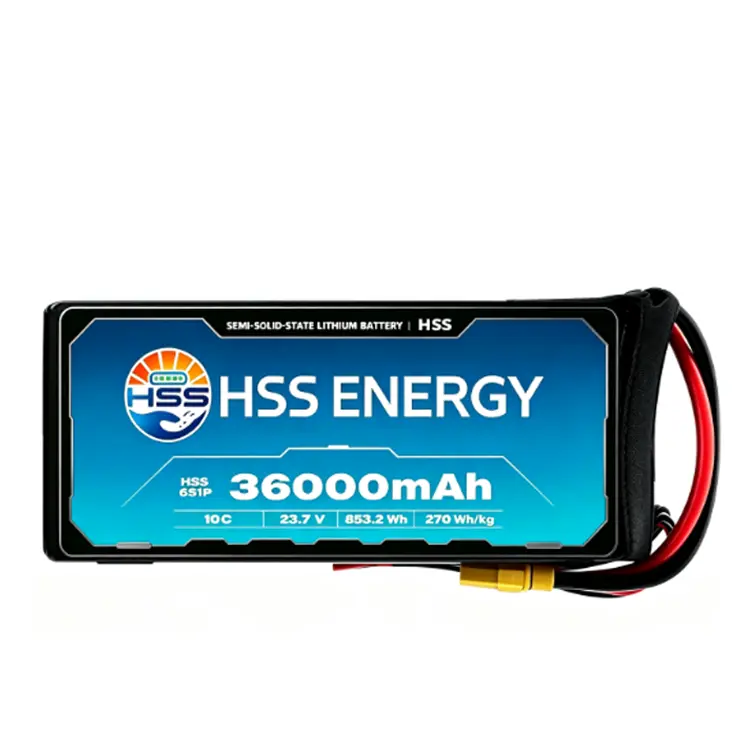
Semi-solid soft-pack cells are the main route for this category. Available semi-solid cell technology covers approximately 240Wh/kg to 500Wh/kg at cell level, and the upper end of this range is supported by actual product configurations. Pack-level energy density is lower and depends on enclosure, cables, connectors, insulation and discharge requirements.
A higher C-rate is not automatically better, and a higher Wh/kg figure is not automatically the right answer. FPV platforms may prioritize fast current delivery with the lowest practical battery weight, while mapping or inspection UAVs may benefit more from higher energy density and longer mission time.
For industrial or agricultural drones, payload, take-off current, mission duration and charging schedule need to be considered together. We normally review the motor, ESC, maximum take-off weight, payload, flight time and available battery space before recommending a configuration.
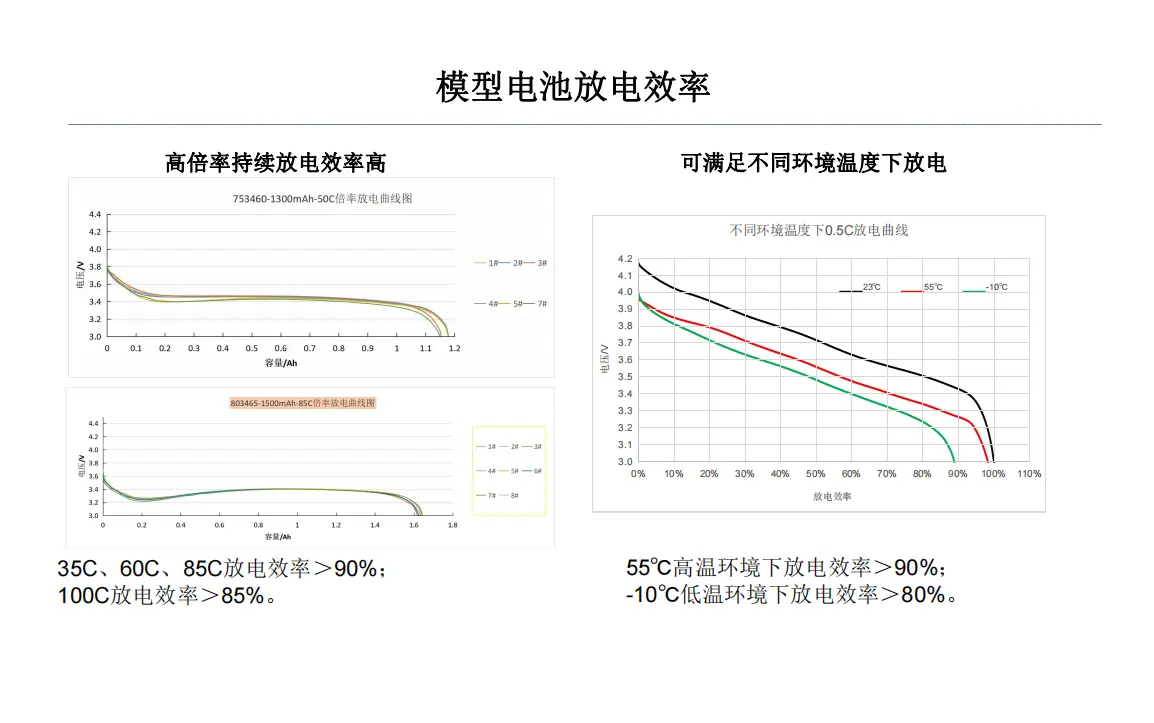
Battery performance should be supported by test data rather than marketing labels alone. In one HSS Energy reference battery test set, discharge efficiency at 35C, 60C and 85C was above 90%; at 100C it was above 85%. The same reference material shows discharge efficiency above 90% at 55°C and above 80% at -10°C.
These figures are reference results for the tested battery configuration, not universal category-wide guarantees. Final performance depends on the selected cell, pack design, discharge rate and operating temperature.
Reference discharge-efficiency test material supplied for this category. Results apply to the tested configuration only.
HSS Energy supports full OEM / ODM customization for drone battery projects, including:
· series count and voltage
· capacity and discharge capability
· cell chemistry and cell platform
· battery dimensions and target weight
· cable gauge, cable length and connector orientation
· connector type
· pack structure and insulation
· label, branding and packaging
Common connectors include XT60 and XT90, while other layouts can be reviewed when the aircraft requires them. FPV and standard UAV packs generally do not include CAN, RS485, Bluetooth or an integrated charger unless the project uses a different architecture.
|
Typical custom workflow Requirement -> Battery Proposal -> Sample -> Flight Test -> Confirmation -> Bulk Production |
Flight testing matters because bench performance does not always translate directly to aircraft performance. Weight distribution, motor efficiency, payload, ambient temperature and flight profile can all affect the final result.
Documentation and transport
UN38.3 and MSDS documentation is available for selected battery models and configurations. Documentation should be confirmed against the specific product before order approval rather than assumed to apply to every battery in the category.
What to send before quotation
Send the drone application, required voltage / S count, motor and ESC data, required flight time, maximum take-off weight and payload, expected current, available battery dimensions and weight limit, connector requirement and estimated order quantity.
Should I choose an FPV battery or a UAV battery?
FPV batteries generally prioritize high discharge, low weight and flight response. UAV batteries usually place more emphasis on endurance, payload efficiency and energy density.
What chemistry is used for drone batteries?
FPV projects generally use LiPo or Li-ion. UAV projects mainly use semi-solid soft-pack cells.
Is the 240-500Wh/kg range pack-level?
No. This is a cell-level range. Actual pack-level energy density depends on the complete battery construction.