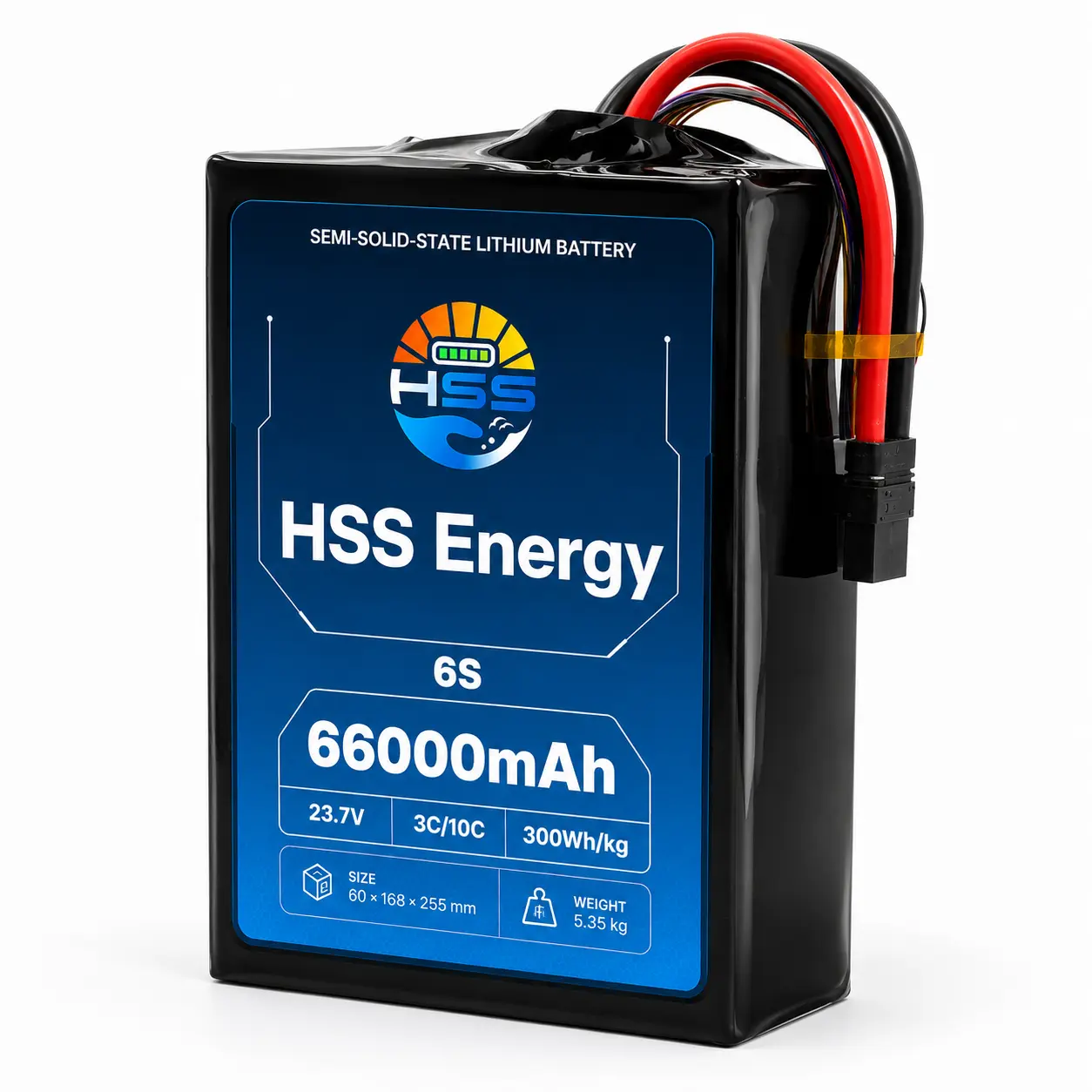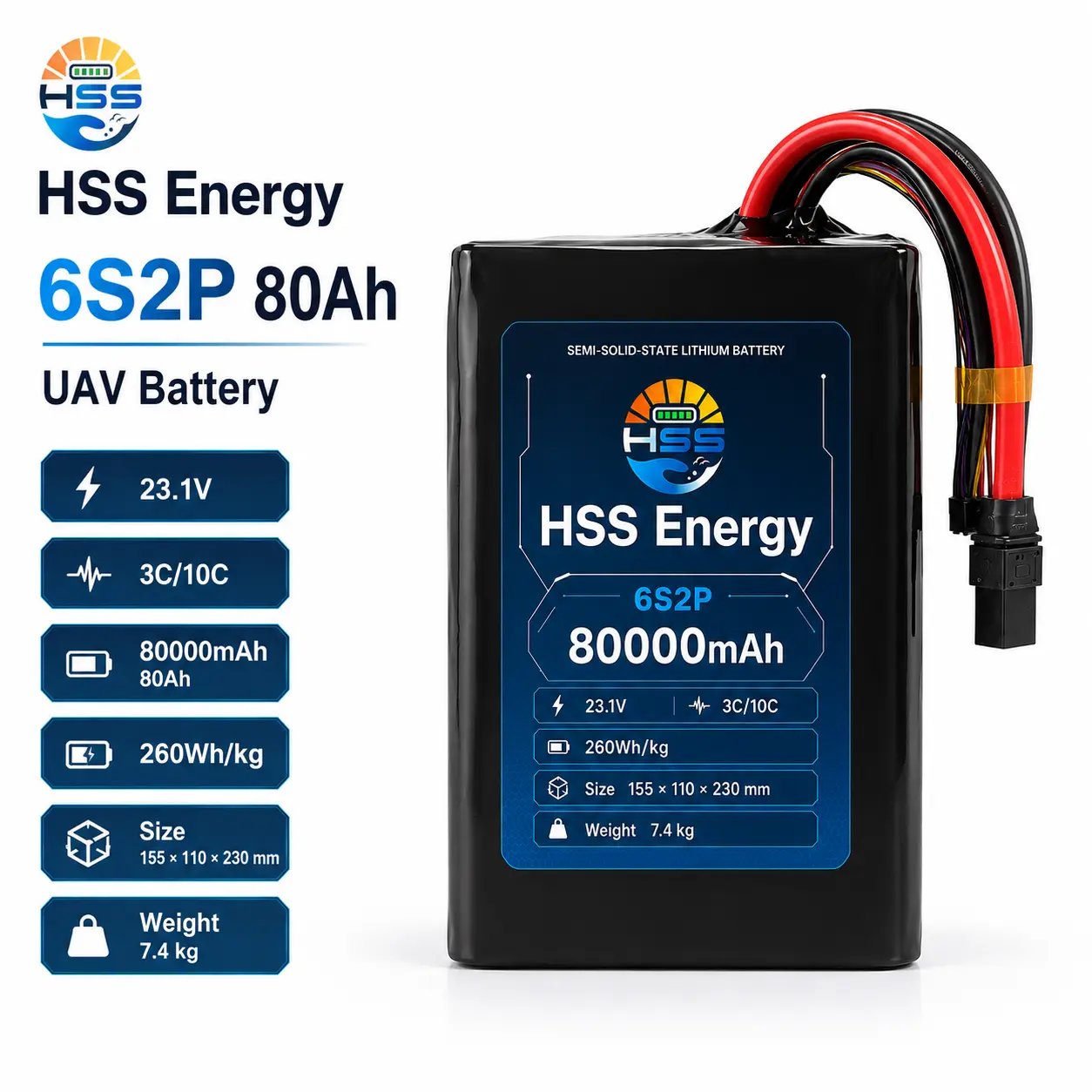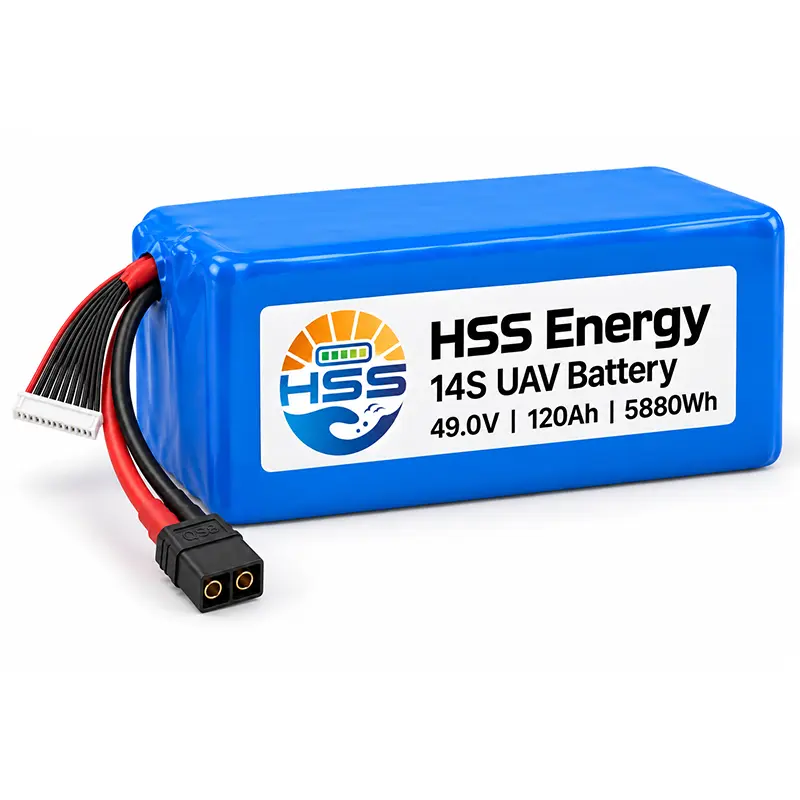
Request configuration review of the HSS Energy 14S 120Ah UAV Battery before ordering mounting hardware. The installed load includes a battery weighing approximately 15.7kg, so supports and handling access deserve attention before cable routing. The 200mm main leads and 150mm balance harness reach different distances from the short end. Specify both routes with the mounting drawing rather than using the wires to carry the body.we can review the specified configuration for OEM/ODM sourcing, bulk orders, and factory-direct supply before production.
The 14S 120000mAh UAV battery is a complete 5880Wh nominal-energy battery assembly. Its capacity can be relevant to energy-intensive UAV projects, but the 15.7kg body also makes support, handling and transport preparation central procurement questions. It should not be selected as a direct replacement merely because another pack is marked 14S.
|
Parameter |
Specification |
|
Model |
14S120Ah |
|
Cell designation |
120118356-120000mAh |
|
Cell type |
Semi solid |
|
Series configuration |
14S |
|
Nominal voltage |
49.0V |
|
Capacity |
120Ah / 120000mAh |
|
Nominal energy |
5880Wh (nominal voltage × capacity) |
|
Cell energy density |
390Wh/kg (cell value) |
|
Maximum charge current |
60A (0.5C) |
|
Charge cutoff voltage |
60.2V |
|
Discharge cutoff voltage |
35.0V at T > -20°C; 28.0V at T < -20°C |
|
Continuous discharge current |
180A (1.5C) |
|
Maximum discharge current |
360A (3C), up to 10 seconds |
|
Condition |
Specification |
|
Working temperature |
-43 to 55°C |
|
Storage temperature |
-20 to 40°C |
|
Storage humidity |
<85% RH |
|
Cycle-life reference |
500 cycles |
|
Mechanical item |
Specification |
|
Body dimensions (W × T × H) |
175 × 130 × 410mm; each ±5mm |
|
Approximate body weight |
15.7kg |
|
Optional interface |
Configuration |
|
Main cable and connector |
6AWG, 200mm; QS8s |
|
Balance harness and connector |
22AWG, 150mm; XH-15P (B0–B14) |
Nominal energy is voltage multiplied by capacity. Cell energy density is not finished-pack energy density. Working-temperature limits do not establish charging-temperature permission.
For a 49V 120Ah battery, nominal voltage, charge cutoff and usable system voltage are different planning inputs. The large energy figure does not override the 180A continuous-current boundary. The body and lead arrangement also need a mounting solution that supports the battery independently of its cables.
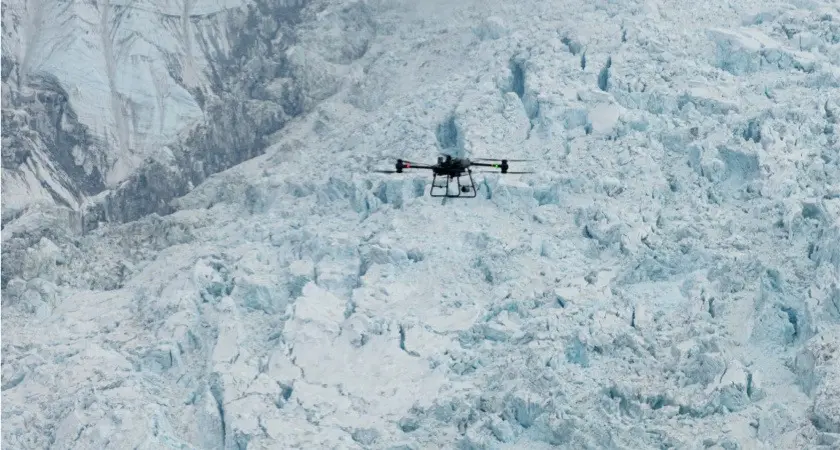
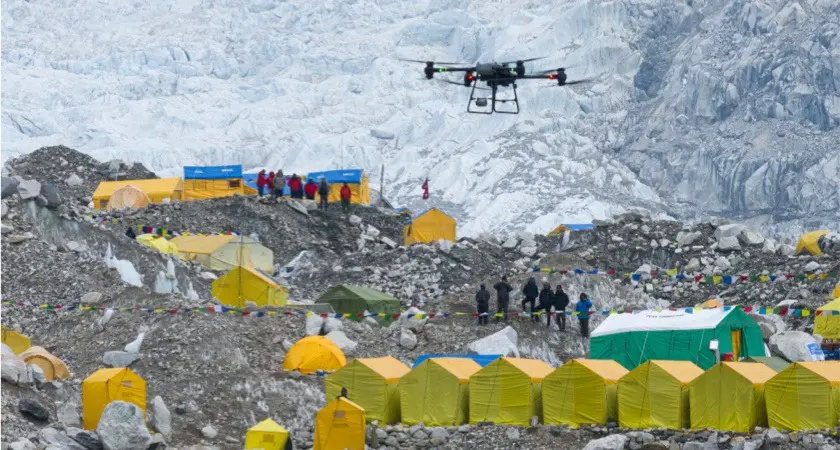
DJI’s documented delivery work in Nepal illustrates the practical separation between an airborne route and ground logistics in a mountain environment. These are independent application images, not HSS-powered flights or evidence of this pack’s high-altitude performance. They underline why a mission plan must consider both the aircraft and the people handling equipment.
Support the complete 14S 120Ah battery pack on an appropriate mounting surface and secure it against movement. Leave room for the main and balance connections. Do not lift by the leads, place restraint loads on the cable exit, or let the battery’s body press against exposed terminals.
At the remote working sites in the Nepalese base camp, the space for equipment access and operation may be limited. It is necessary to clearly determine the placement of the packaging boxes when replacing the equipment, as well as how to protect the terminal equipment before installation.
|
Avoid this mistake |
Use this approach |
|
Treating 14S as a complete charger specification |
Match the 60.2V cutoff and maximum 60A charge current to the agreed charging profile. |
|
Using the body dimensions as the shipping-carton dimensions |
Specify protective packing first, then obtain actual external dimensions and gross weight. |
|
Lifting the pack by its cables |
Support the body and use an appropriate handling arrangement. |
|
Treating the 360A peak as normal flight current |
Use the 180A continuous limit; the separate peak is limited to up to 10 seconds. |
|
Reading a working-temperature limit as charging permission |
Check the model-specific charging conditions separately. |
The 14S 120Ah UAV Battery quotation should distinguish the approved battery configuration from its packing and freight scope. Specify destination, order quantity, receiving conditions and any customer packaging requirements. Final route, transport documents and carrier acceptance depend on the actual configuration and shipment.
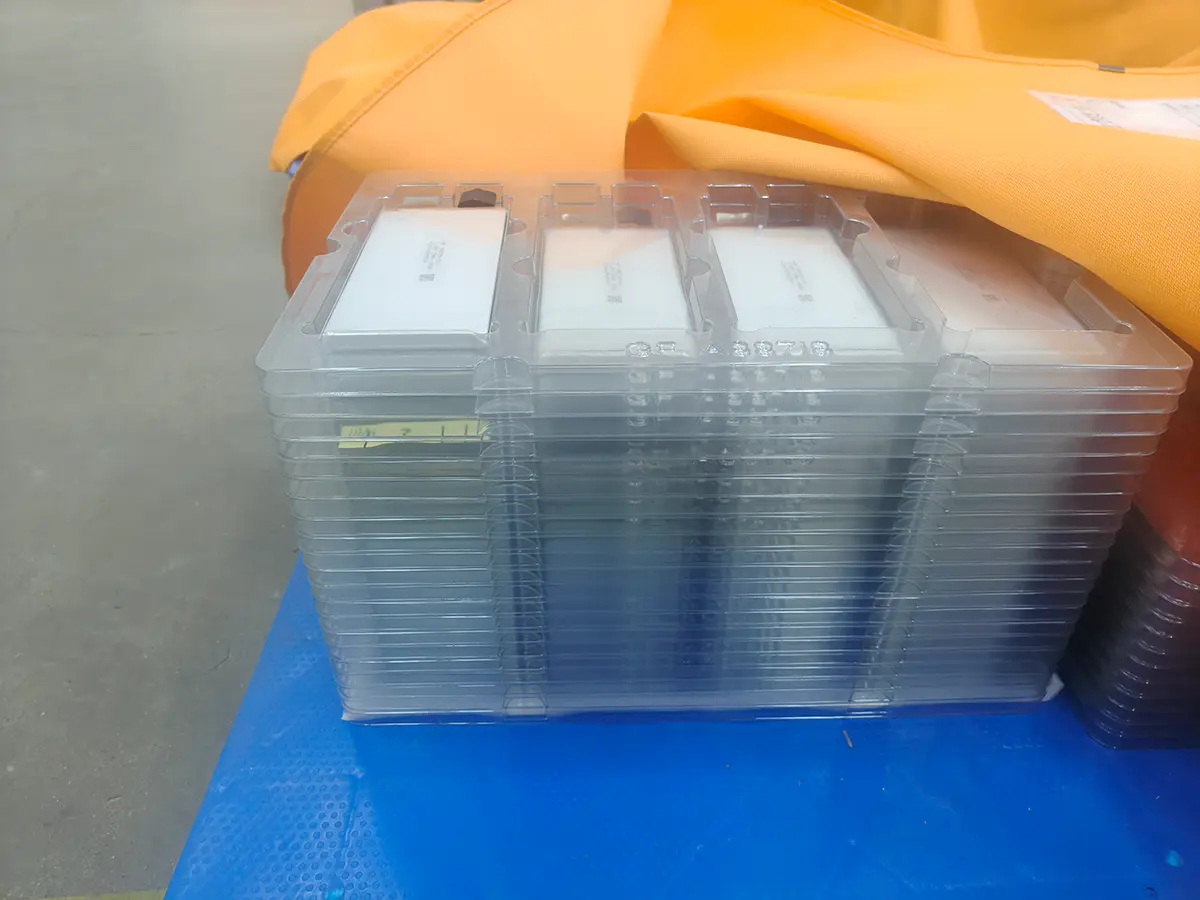
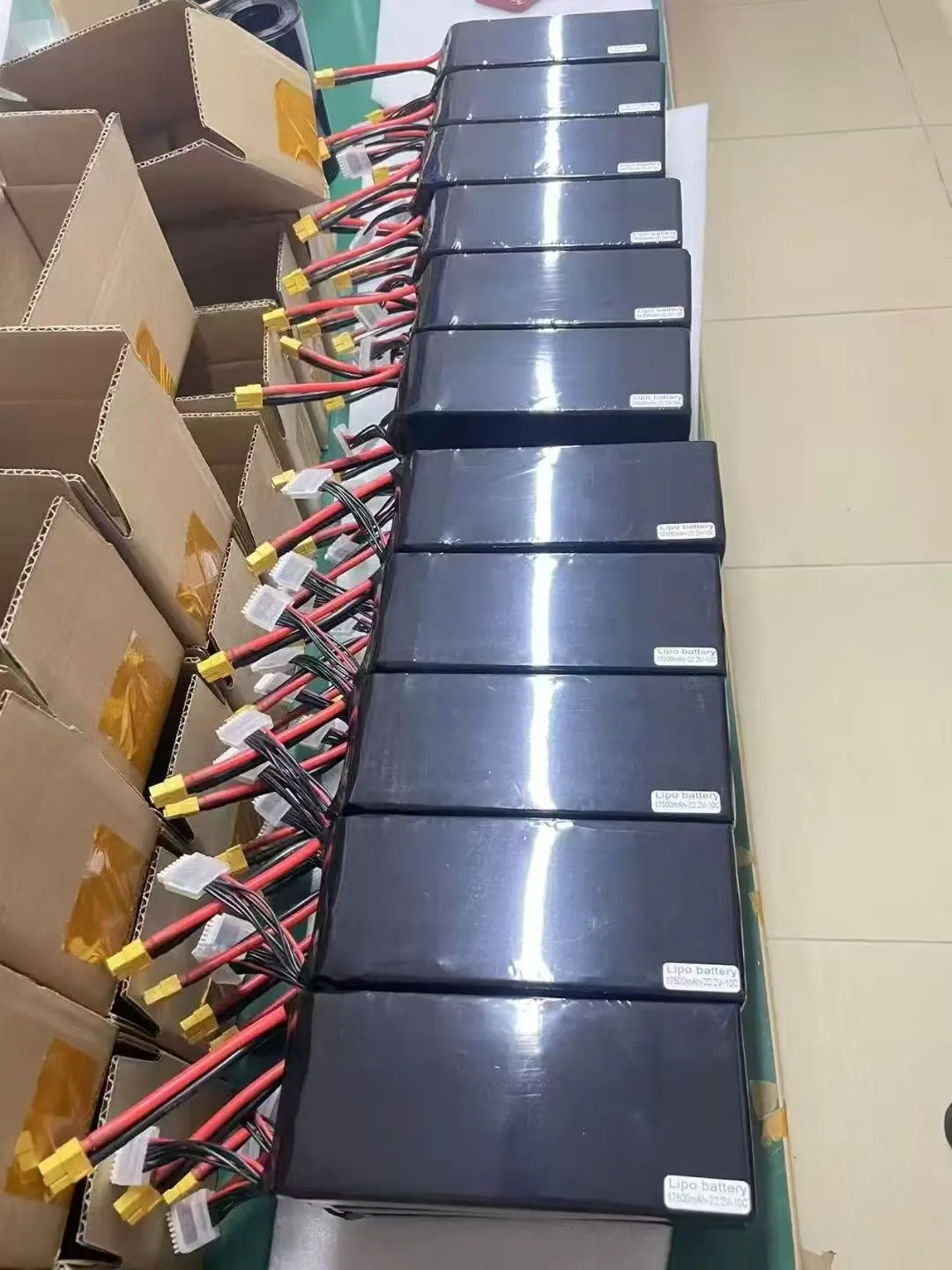
The partner packing-area photograph shows battery packs beside divided cartons, illustrating packing preparation for other configurations. For this ordered model, agree how the body is immobilized, how terminals are protected and how cable exits avoid compression. The final packing specification should identify the protection around the complete battery, not only the outer box.
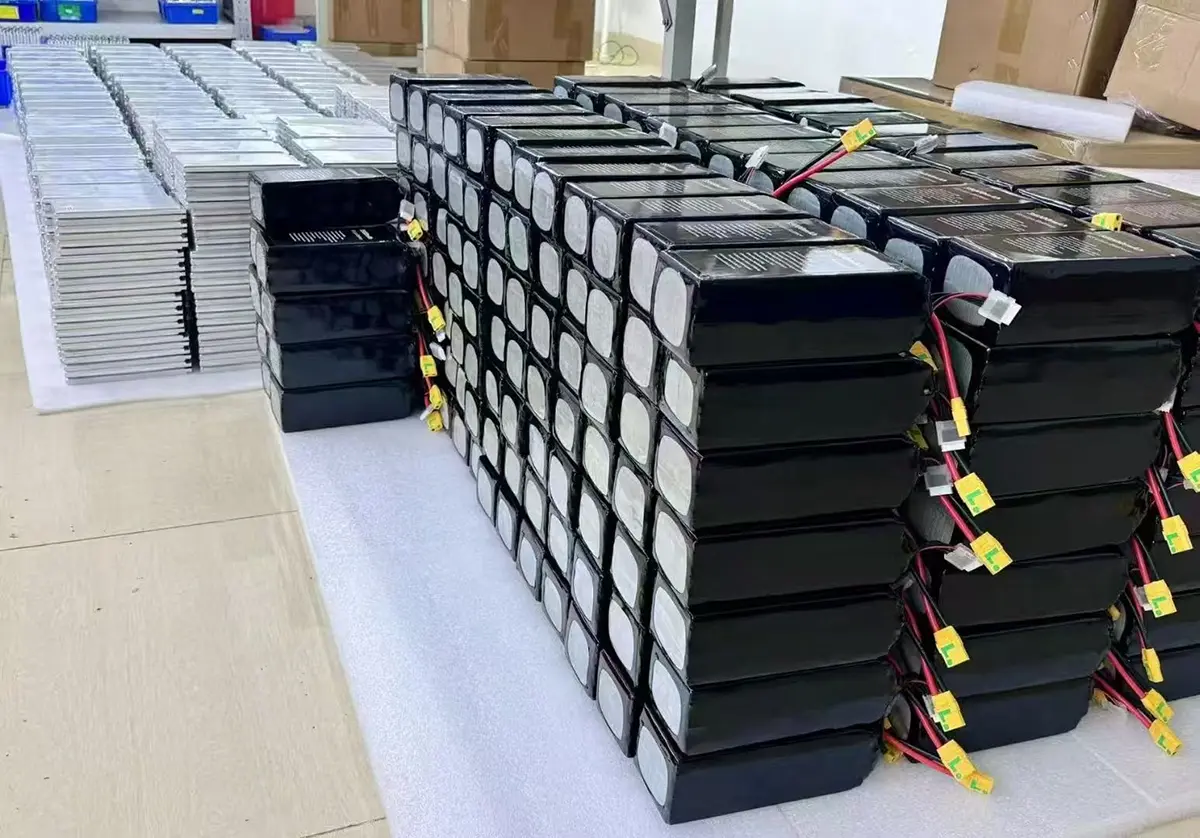
Battery batches on protective foam show an intermediate staging condition. Foam beneath a batch is not evidence of a sealed or transport-approved package. A 49V drone battery order needs a final packing arrangement matched to its mass and dimensions, followed by the relevant shipment details rather than an estimate based only on bare-pack weight.
Set the receiving checks and the handling of discrepancies in the order terms. After-sales service is provided according to the agreed transaction conditions. Keep the final configuration, packing list and receiving observations together so that any subsequent service discussion can identify the supplied item and its condition.
Send the mounting drawing, intended electrical load, order quantity and destination. Add packaging, label, document and receiving requirements so the quotation can distinguish product configuration from packing and delivery conditions.
The body height is 410mm with a ±5mm tolerance. The full W × T × H dimensions are 175 × 130 × 410mm, each ±5mm. Allow additional space for short-end cables and the mounting system.
That figure is the approximate battery-body mass, not the packed gross weight or a freight quote. The final carton or crate, protective materials, quantity and route affect shipment details. Request external packing dimensions and gross weight for the agreed packing arrangement.
Provide the required label information, pack separation, outer-package requirements and any receiving constraints for review. These details should be agreed with the final battery configuration and transport route. Custom branding does not replace required product identification or applicable shipment markings.
A universal air-shipping commitment is not made. Destination, configuration, quantity, applicable documentation and carrier acceptance must be reviewed for the specific shipment. Include the required delivery location and timing in the inquiry before treating a transport method as available.
No. A working-temperature range is not a blanket charging-temperature allowance. Follow the charging conditions applicable to the final configuration, including the specified voltage and current limits. A cold-weather operating target should be raised during configuration review, not inferred from one line of the specification.
No. It is a cell-level energy-density figure. For handling and aircraft calculations, use the complete pack’s approximate 15.7kg mass and 5880Wh nominal energy, plus the mass of the mounting arrangement and any additional equipment.
Record package identification and photographs of the external condition before installation. Keep a damaged pack out of service and contact the agreed support channel; do not open or charge it as an acceptance test. Handling of discrepancies and any return arrangement follows the order conditions and applicable shipment requirements.
The service scope, term, assessment procedure and any repair, replacement or return conditions are those agreed for the transaction. They should be recorded before purchase. This page does not promise a universal warranty duration, free replacement or fixed response time across all custom orders.
For the 14S 120Ah UAV Battery, provide the final destination, required quantity, mounting and connector requirements, requested documentation and preferred packing arrangement. State the receiving constraints and required date. Product price, packing scope and freight can then be addressed without treating bare-pack data as shipment data.
Address
A3, 1204-1, 1142 Jimei North Avenue, Software Park Phase III, Xiamen Torch High-tech Zone, Xiamen, China
Tel