A motorcycle battery can match the system voltage and still be wrong for the bike. Motor power, controller current, acceleration demand, charger, battery space and connector layout all affect whether the pack will perform properly in real use.
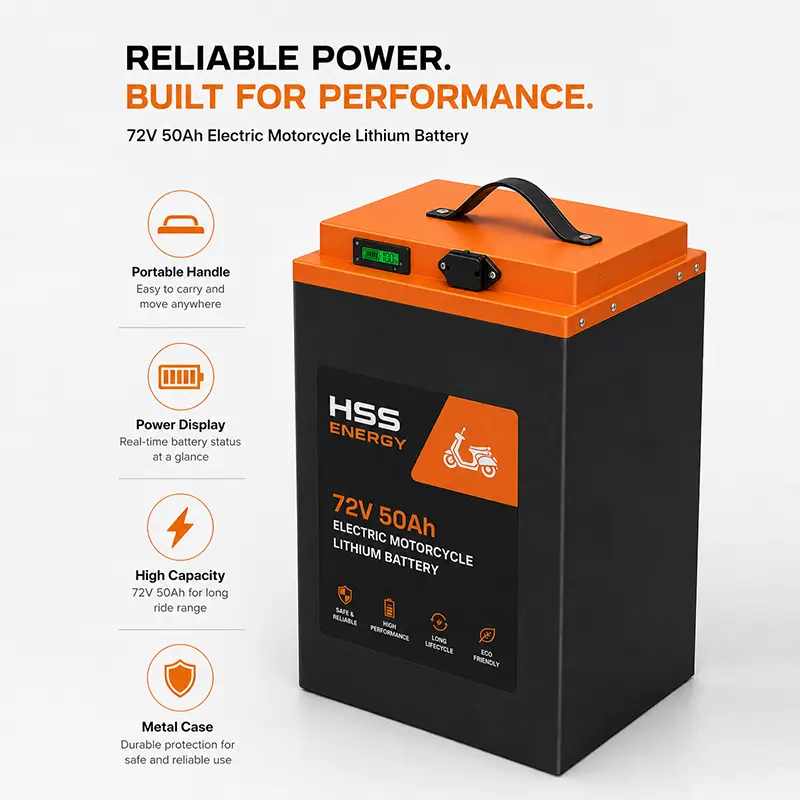
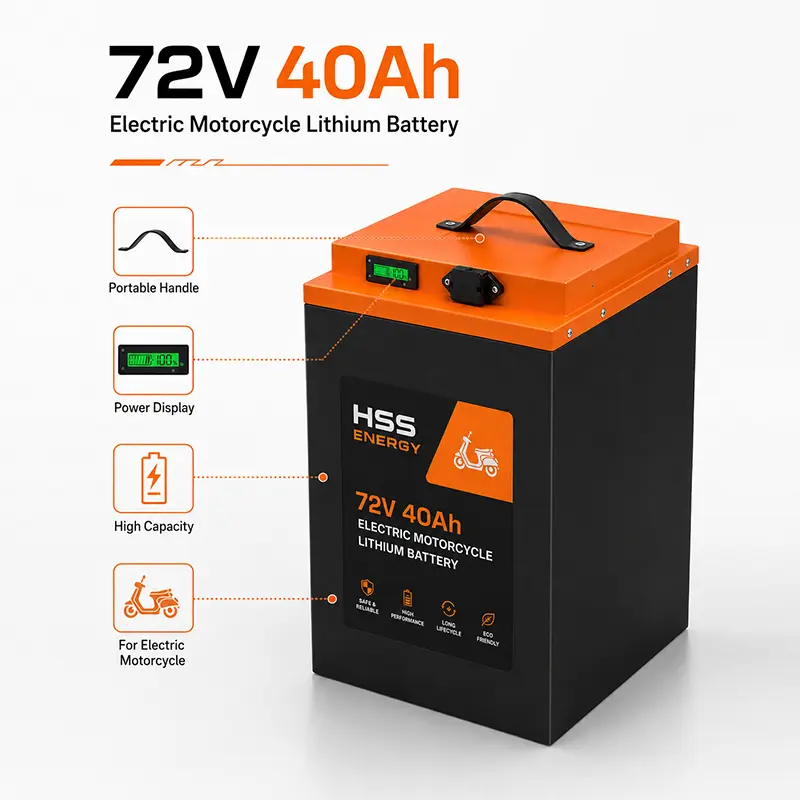
HSS Energy supplies NCM lithium-ion batteries for electric motorcycles, performance scooters and other high-power two-wheelers. Common platforms cover 48V to 72V with capacities typically from 20Ah to 60Ah. Continuous discharge can be configured from approximately 60A to 400A, while selected high-power configurations can support peak current up to 800A, depending on the cells, BMS, cables, connector and overall battery design. Our Electric Motorcycle Batteries series includes products such as the 72V 30Ah Electric Motorcycle Lithium Battery, 72V 50Ah Electric Motorcycle Lithium Battery, and so on.
|
Send Your Motorcycle Specs for a Battery Fit Review Voltage • Motor • Controller • Battery Space • Charger • Connector |
· motor power and controller current
· continuous and peak discharge demand
· acceleration and hill-climbing load
· required riding range or operating time
· charger voltage and charging profile
· battery compartment dimensions
· cable size and high-current connector
· communication and display requirements
|
Capacity and current are different decisions A larger Ah rating gives more stored energy, but it does not automatically give the battery more current capability. A 72V 60Ah pack for moderate discharge and a 72V 30Ah high-rate pack can behave very differently under the same controller. |
HSS Energy works with 48V, 60V and 72V-class electric motorcycle projects, covering typical capacities from 20Ah to 60Ah. Discharge capability is configured around the vehicle rather than fixed across the range.
Depending on the project, continuous discharge may range from approximately 60A to 400A, with peak-current requirements reviewed separately. For selected high-power designs, peak current can reach up to 800A. To support these loads, the complete current path matters: cells, BMS, busbars, cables, terminals and connectors all need to be selected together.
The standard chemistry for this electric motorcycle battery range is NCM lithium-ion. For applications with demanding acceleration or high controller current, high-discharge cells can be selected according to the required performance, thermal design, pack structure and availability.
· Molicel P50B
· Reliance RS50
· EVE 50PL
· TP50XG
· Samsung 50S
· other suitable high-rate NCM cells for the project
Optional CAN, RS485 and Bluetooth communication can be integrated where the motorcycle, display or controller requires battery data.
For higher-current applications, connector selection becomes part of the battery design. Common options include Anderson, QS8 and QS10, with cable size, connector rating and layout matched to the expected current. A matching charger can also be supplied for the approved battery configuration.
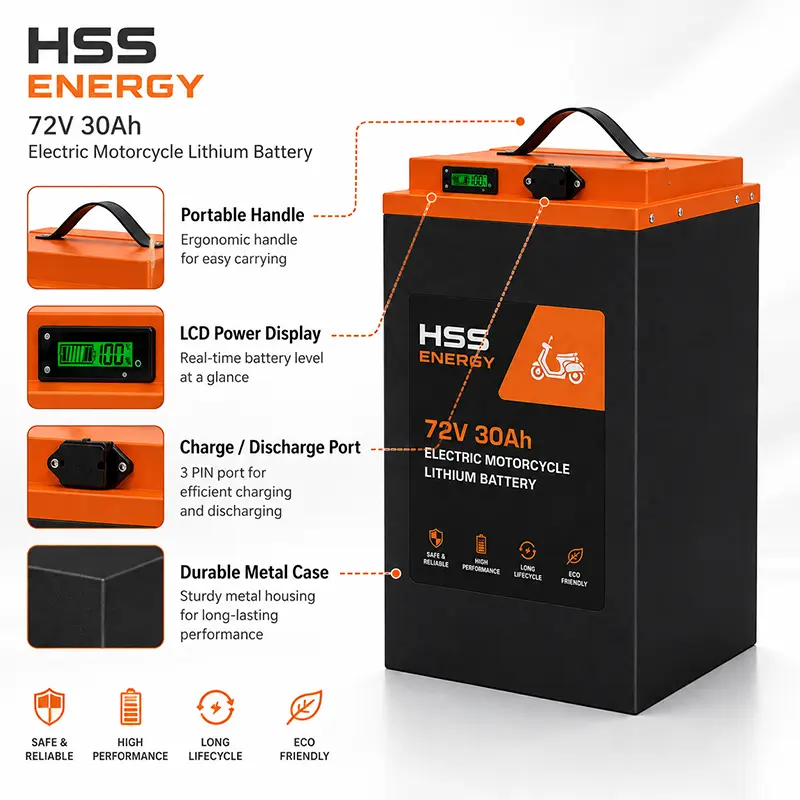
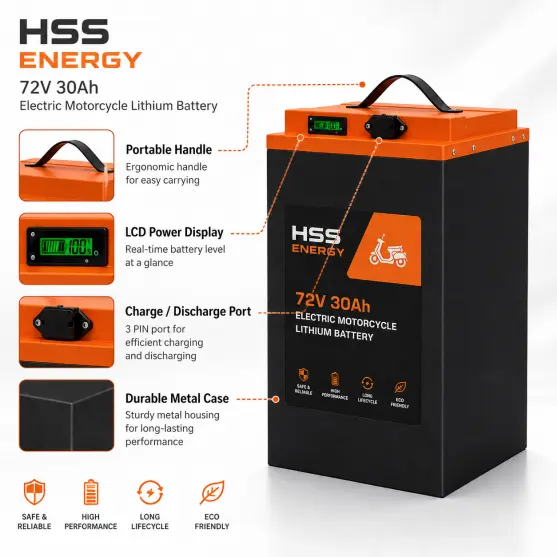
One HSS Energy reference product is a 72V 30Ah electric motorcycle lithium battery with a rigid metal enclosure. The supplied configuration shows an integrated carrying handle, LCD battery-level display, dedicated charge / discharge interface and enclosed metal housing.
This is one reference construction. Final current rating, BMS, connector, charger, dimensions and communication should be confirmed for the actual motorcycle.
Replacing an existing battery should be treated as a vehicle-level compatibility review. The controller, motor, charger, fuse or protection, cable size, low-voltage behavior, connector polarity and available space all need to work with the new pack.
For high-power motorcycles, this becomes even more important. A battery may have sufficient voltage and capacity but still be unsuitable if its BMS, connector or thermal design cannot support the controller's real current demand.
1. motorcycle brand and model
2. system voltage
3. motor power
4. controller continuous and peak current
5. required capacity or riding range
6. battery compartment dimensions
7. charger specification
8. preferred connector
9. CAN / RS485 / Bluetooth requirements
10. estimated order quantity
|
Fastest way to start Photos of the original battery, controller, charger and battery compartment are also useful for replacement projects. Send these together with the vehicle specifications for a faster first review. |
What chemistry is used for this battery range?
The standard chemistry for this category is NCM lithium-ion, selected for high-power and high-rate electric motorcycle applications.
What voltage and capacity ranges are available?
Common HSS Energy electric motorcycle battery platforms cover 48V to 72V, with typical capacities from 20Ah to 60Ah.
What discharge current can the battery support?
Typical continuous-discharge configurations range from approximately 60A to 400A. Selected high-power configurations can support peak current up to 800A, subject to the final cells, BMS, cables, connector and thermal design.
Which communication options are available?
CAN, RS485 and Bluetooth are available depending on the project configuration.
Which high-current connectors can be used?
Anderson, QS8 and QS10 are common options. The connector and cable specification should match the approved current requirement.
Can you provide a charger with the battery?
Yes. A matching charger can be supplied for the approved battery configuration.
Can I specify the cell brand?
Yes, subject to project requirements and availability. High-rate cell options can include Molicel P50B, Reliance RS50, EVE 50PL, TP50XG and Samsung 50S.