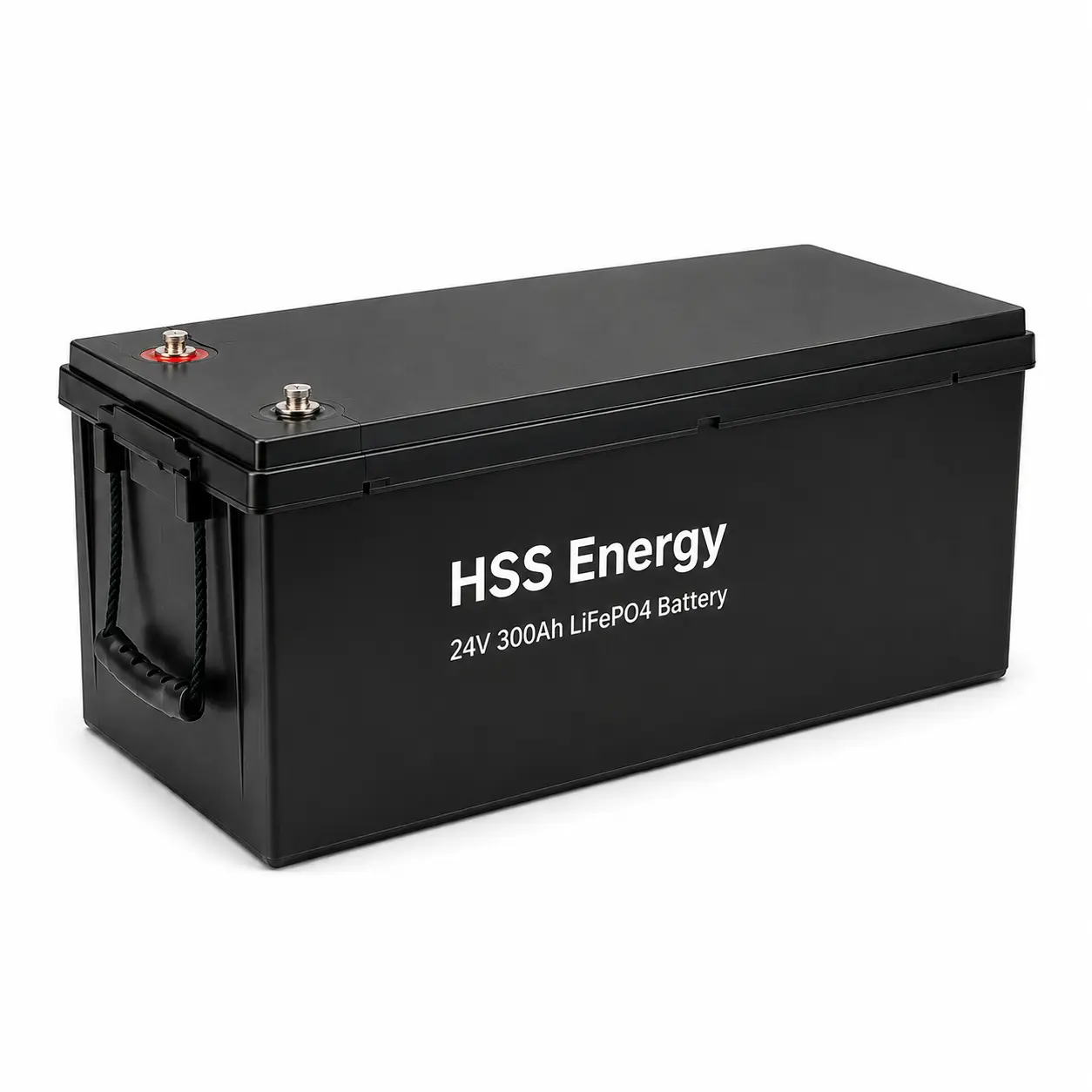
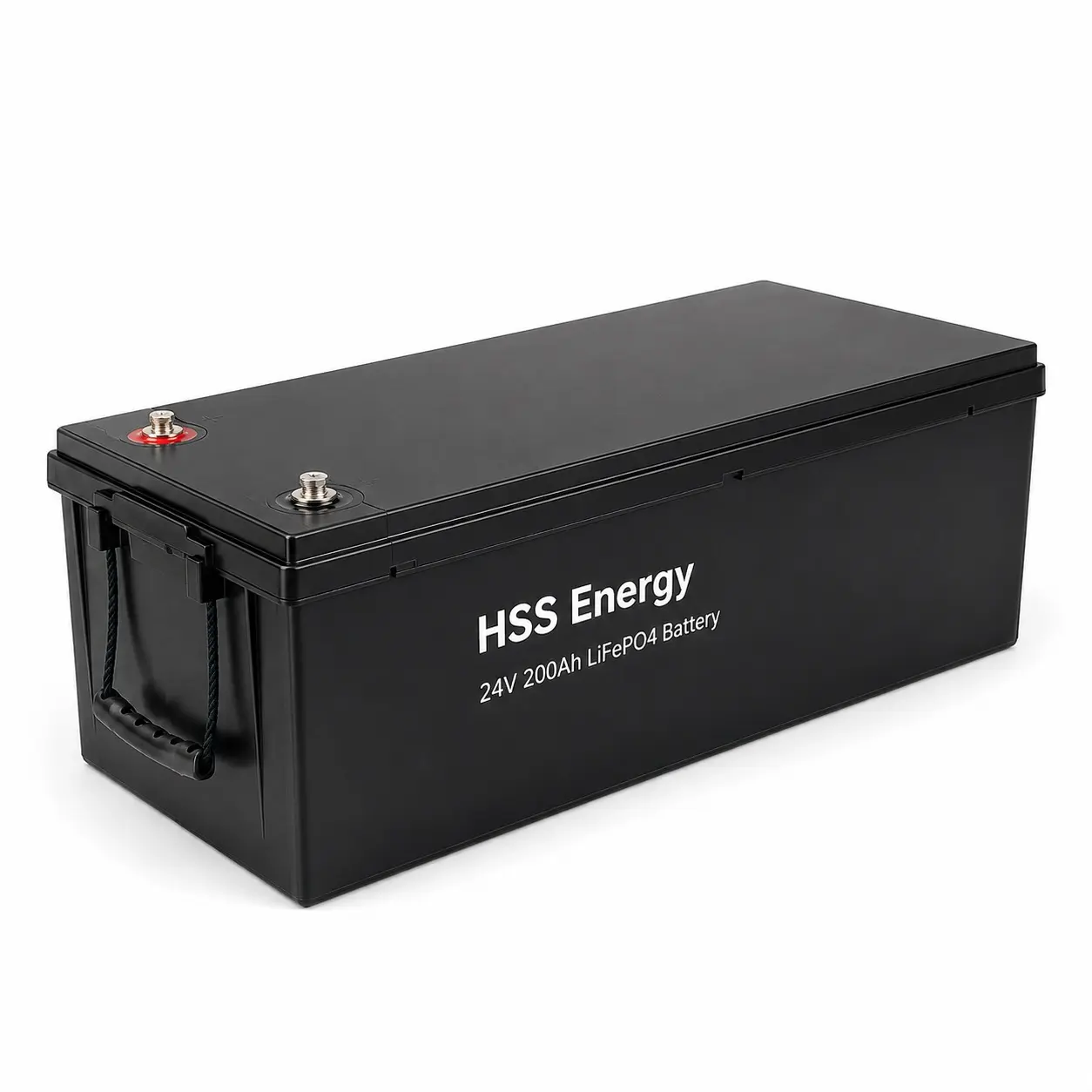
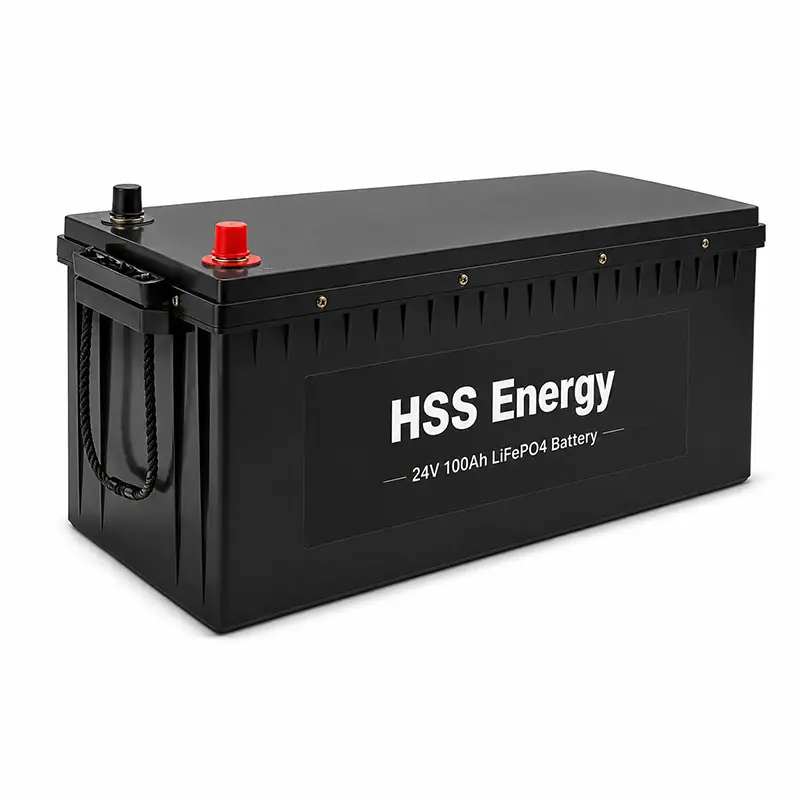
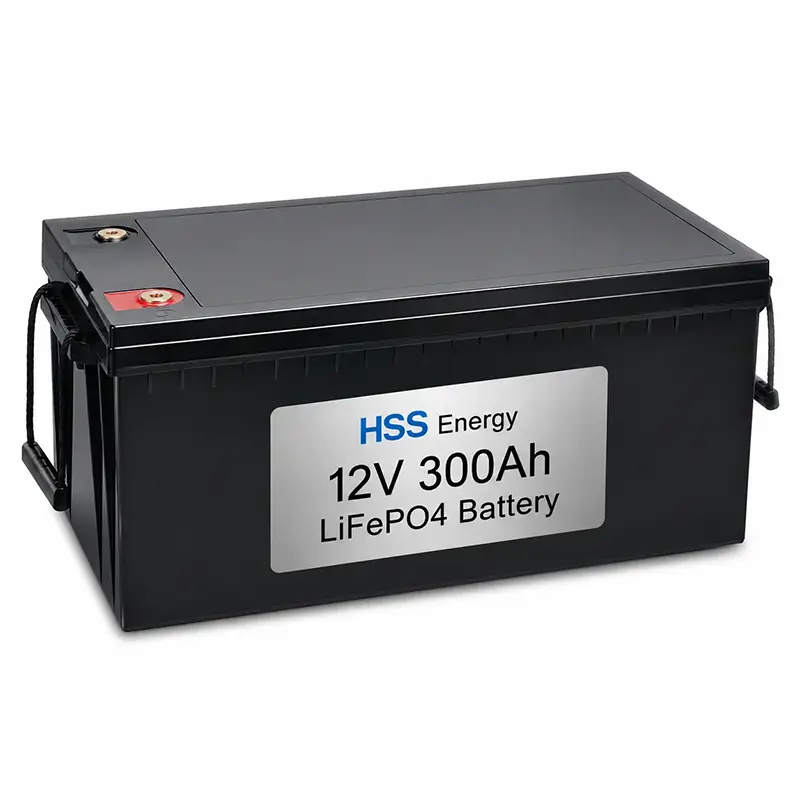
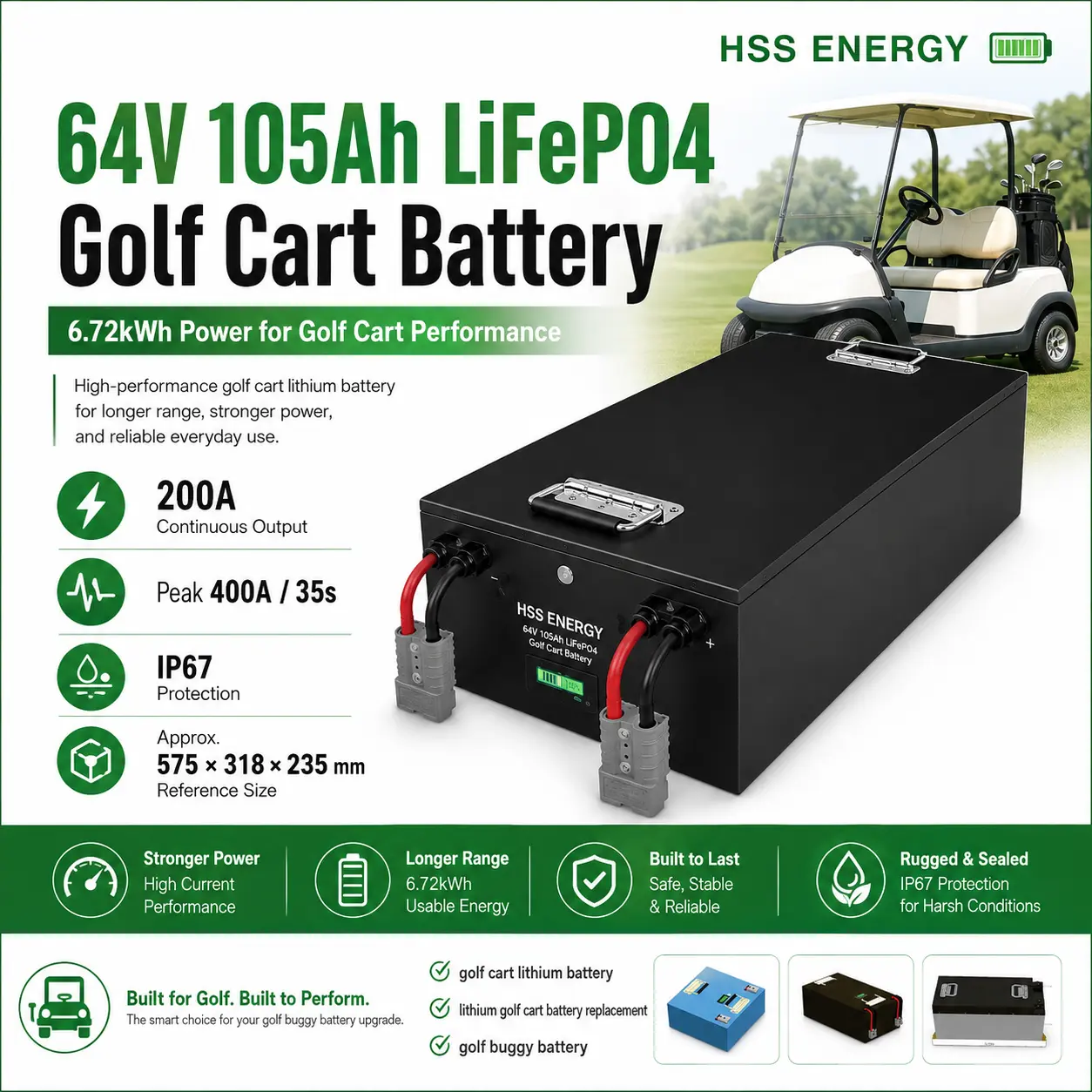
Moving from 12V to 24V is usually about current as much as capacity. For suitable systems, a higher DC voltage can reduce current for the same power level, which can make cable, fuse and inverter planning easier. If a project is outgrowing a 12V battery but does not need a 48V architecture, a 24V LiFePO4 Battery is often the practical middle ground. Our 24V LiFePO4 Batteries series includes products such as 24V 300Ah LiFePO4 Battery, 24V 100Ah LiFePO4 Battery, and so on.
HSS Energy supplies 24V-class LiFePO4 batteries for solar and off-grid systems, backup power, RV and camper house loads, marine auxiliary power and other 24V DC equipment. Most 24V LiFePO4 batteries are 25.6V nominal, but voltage alone is not enough to confirm a fit.
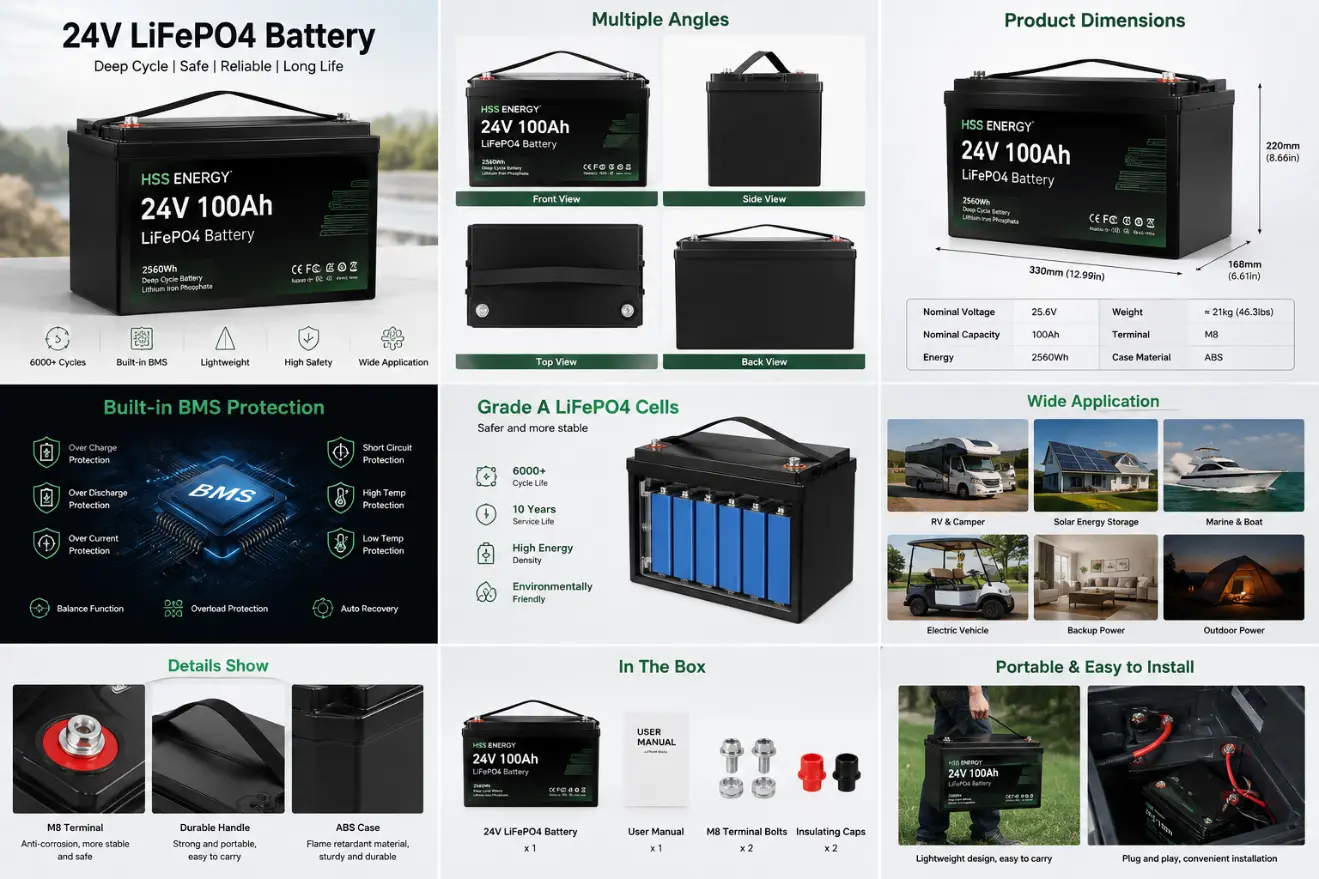
Representative 24V 100Ah category visual supplied by HSS Energy. Model-specific values shown in the image are not category-wide specifications.
· the equipment, inverter or controller is already built around a 24V DC architecture
· a 12V system would require more current than you want to carry through the existing power path
· the project needs more stored energy or output capability without moving to a 48V-class battery bank
· a single 24V battery bank is preferred over two separate 12V batteries connected in series
· the charging source - such as a solar controller, charger or DC-DC unit - is compatible with the approved 24V LiFePO4 profile
Typical project directions include small solar and off-grid systems, backup power, RV or camper house power, marine auxiliary loads and other equipment already designed around a 24V battery bank.
|
When 24V may not be the best choice For small, low-current equipment that is already standardized around 12V, changing voltage can add unnecessary integration work. At the other end, higher-power residential or commercial storage may be better served by 48V / 51.2V or a high-voltage battery platform. The right voltage should follow the system architecture, not simply the largest available battery capacity. |
Two 24V batteries with the same Ah rating can behave very differently in the same system. Continuous discharge current, peak demand, charger profile, BMS limits, cable and fuse sizing, terminal layout, enclosure size and operating temperature all affect the final selection.
This matters even more when replacing an existing lead-acid bank. Two 12V lead-acid batteries connected in series do not automatically translate into a drop-in 24V LiFePO4 replacement. Charger behavior, equipment cut-off voltage, current demand, wiring and available space should be reviewed before changing chemistry.
The supplied category image shows one 24V 100Ah LiFePO4 example with the following listed values:
· 25.6V nominal voltage and 100Ah capacity
· 2560Wh nominal energy
· 330 x 168 x 220 mm dimensions
· approximately 21 kg weight
· M8 terminals and an ABS case
These values belong to the illustrated model only. Final specifications, BMS settings, protection thresholds and cycle-life claims should follow the approved product data for the ordered configuration.
For OEM projects, HSS Energy can review capacity, BMS configuration, terminals, enclosure, communication and packaging requirements around the actual equipment. The supplied visual also illustrates a built-in BMS concept; exact protection functions and thresholds should be confirmed for the selected model rather than assumed across the full category.
If you already know your system voltage, normal and peak current, inverter or charger model, required runtime and available battery space, send us those details together with the application. We can help confirm whether a 24V LiFePO4 platform is the right starting point before quotation.