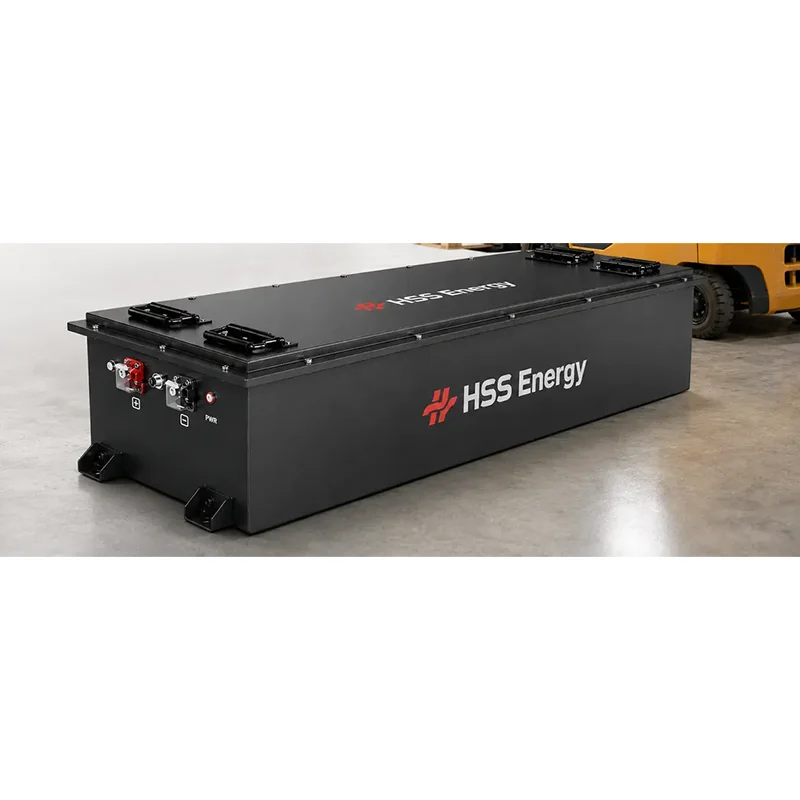
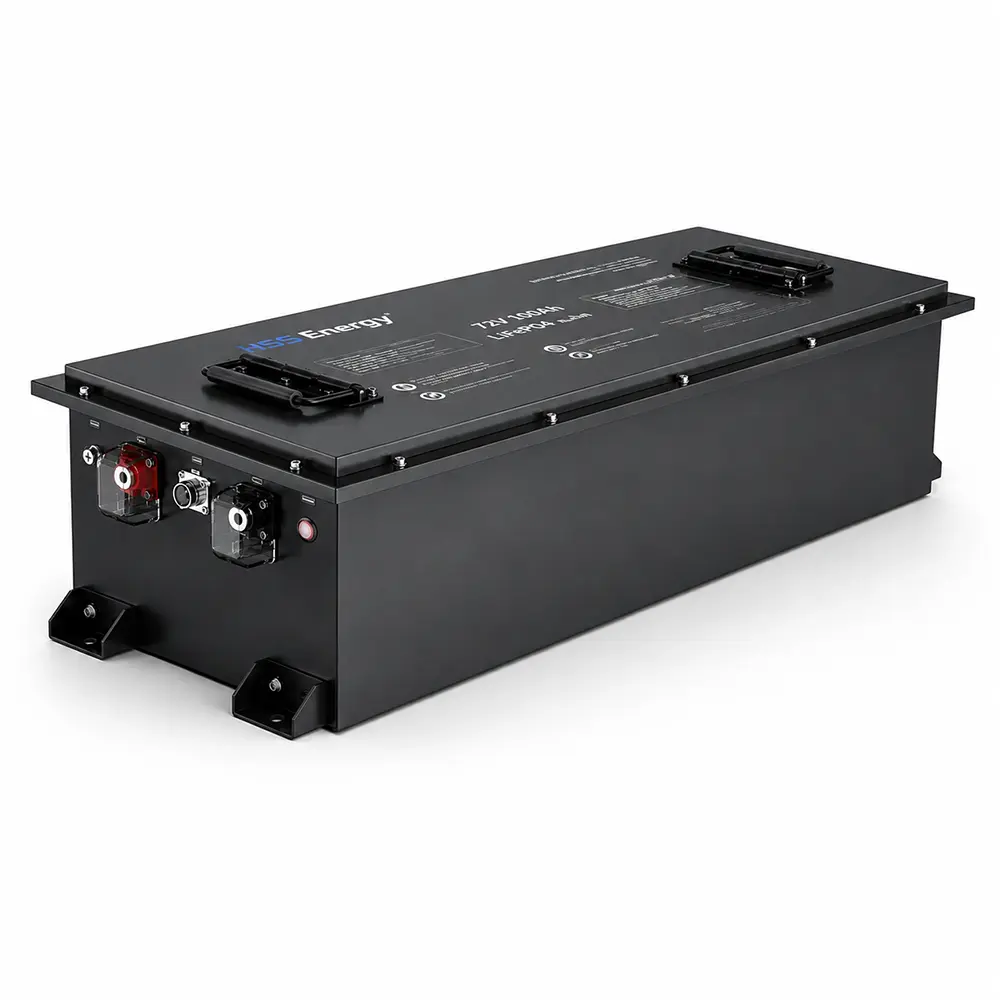
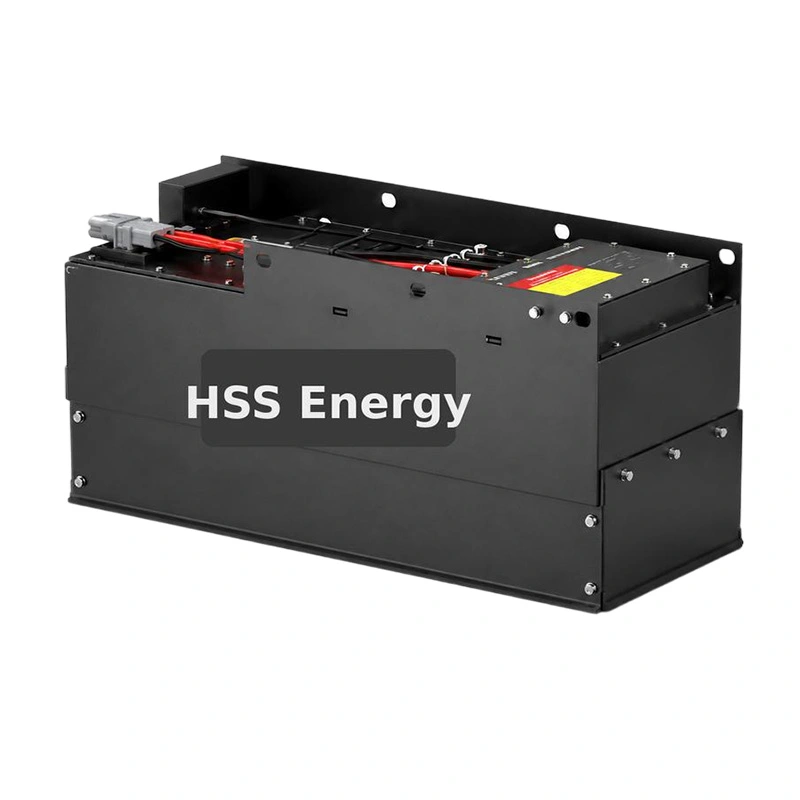
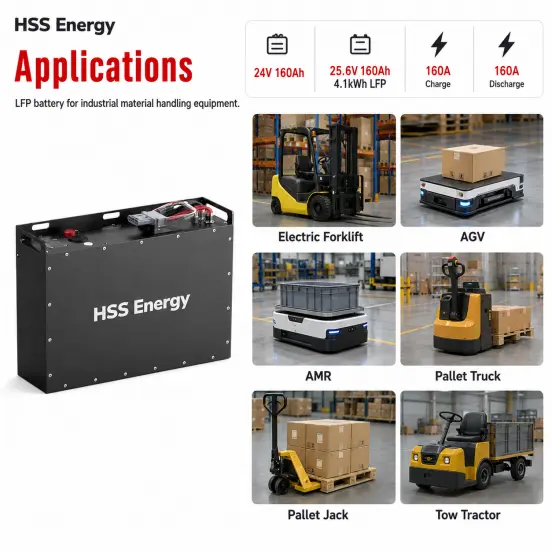
A forklift battery has to keep up with the vehicle, the load and the working schedule—not just fit inside the battery compartment. HSS Energy supplies lithium traction batteries for electric forklifts, AGVs, AMRs, pallet trucks, pallet jacks, tow tractors and other material-handling equipment.
Common voltage platforms span 24V to 72V, with capacities typically from 100Ah to 690Ah. Continuous discharge is generally designed around 1C, while the final current rating is confirmed against the controller, motor, lifting demand and duty cycle. Our Forklift Lithium Batteries series includes products such as the 24V 160Ah LiFePO4 Forklift Battery, 48V 210Ah LiFePO4 Forklift Battery, and so on.
|
Who we supply Warehouse and factory operators · forklift OEMs · AGV/AMR integrators · equipment distributors · logistics and material-handling fleets |
|
Send Your Equipment Specs for a Battery Fit Review |
· longer productive operating time between charges
· opportunity charging during breaks or shift changes
· less routine maintenance than flooded lead-acid batteries
· a compact integrated pack for a defined vehicle platform
· capacity and current capability matched to real traction and lifting loads
For material-handling fleets, duty cycle matters as much as Ah. A truck working one light shift has very different requirements from equipment running continuously across multiple shifts.
HSS Energy works across the 24V–72V range. The exact nominal voltage is matched to the vehicle electrical system rather than forcing the project into one standard battery format.
|
Voltage Platform |
Typical Project Direction |
|
24V-class |
Pallet trucks, stackers, compact forklifts and other lower-voltage material-handling equipment |
|
36V / 48V-class |
Warehouse forklifts and medium-duty traction applications where controller and motor demand require a higher-voltage platform |
|
60V / 72V-class |
Higher-power or heavier-duty equipment where system voltage and current need to be reviewed together |
|
Do not select by voltage alone Voltage and capacity are only the first screening points. Motor and controller current, lifting load, charger power, battery compartment, cable size and connector all affect the final configuration. |
|
|
Equipment |
Key Selection Points |
|
Electric Forklifts |
Traction current, lifting load, shift length, charger power and battery space |
|
AGVs and AMRs |
Predictable runtime, charging windows, CAN communication and repeatable battery behavior |
|
Pallet Trucks and Jacks |
Compact dimensions, connector layout and practical runtime |
|
Tow Tractors |
Continuous traction load, peak current and daily operating hours |
Replacing a flooded lead-acid traction battery with LiFePO4 can eliminate routine watering and simplify battery maintenance, but the conversion is still a system change. The existing charger, controller, connector, cable size, protection, battery weight and compartment dimensions should all be reviewed before approval.
Charging time is part of the operating plan. If the vehicle has short charging windows between shifts, charger power must be reviewed together with battery capacity. A larger battery is not always better if the available charger cannot restore enough energy in the available window.
CAN and RS485 can be supported where communication with the vehicle controller or fleet system is required. Anderson connectors are commonly used, while cable length, terminal layout and other connector types can be matched to the equipment.