An FPV battery has to match more than the drone's voltage. Pack weight, discharge capability, connector, flight style and available battery space all affect how the aircraft behaves in the air.
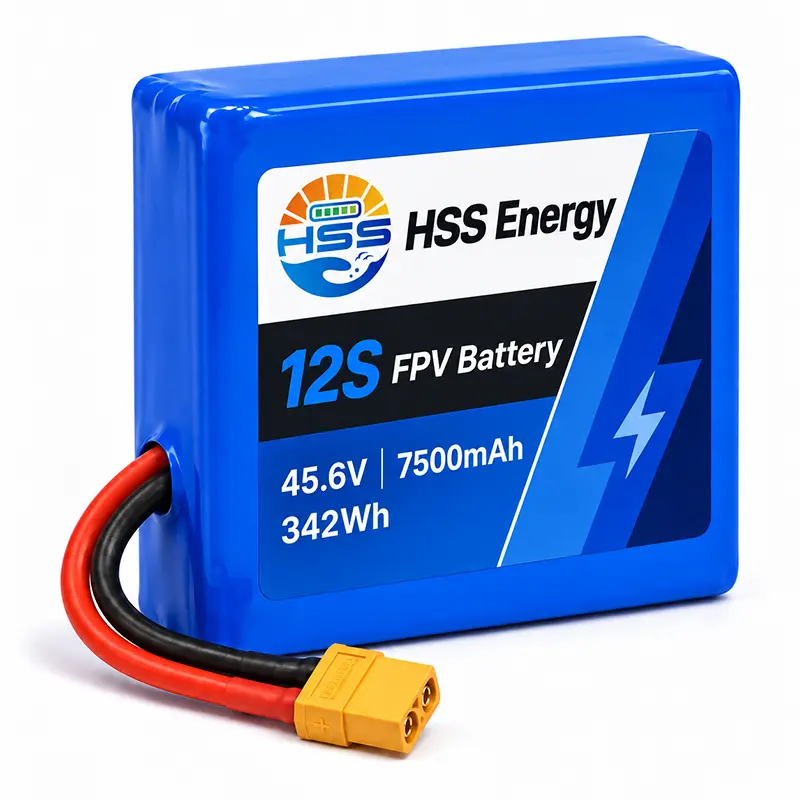
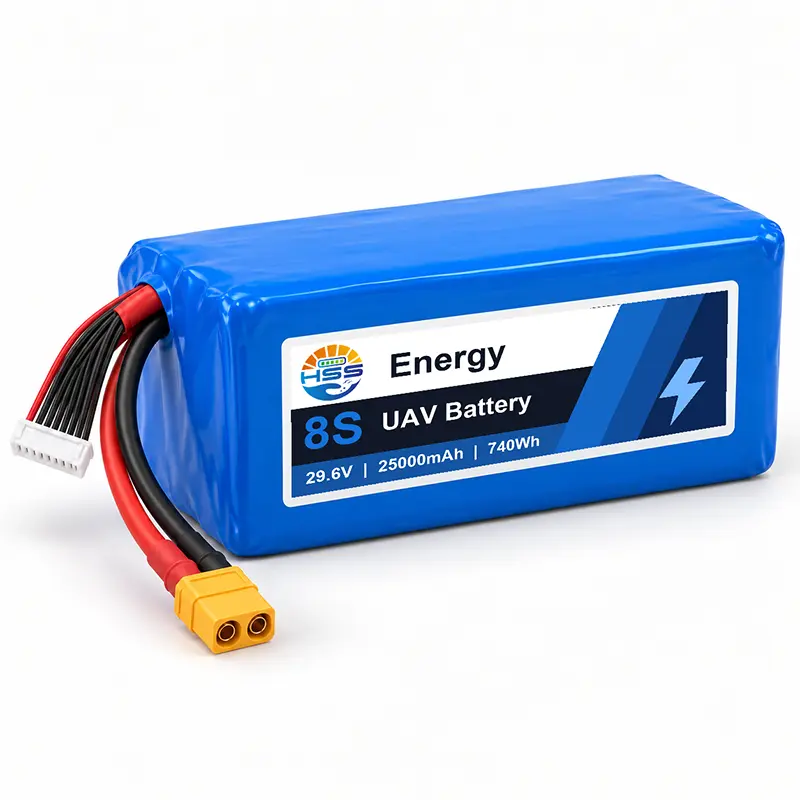
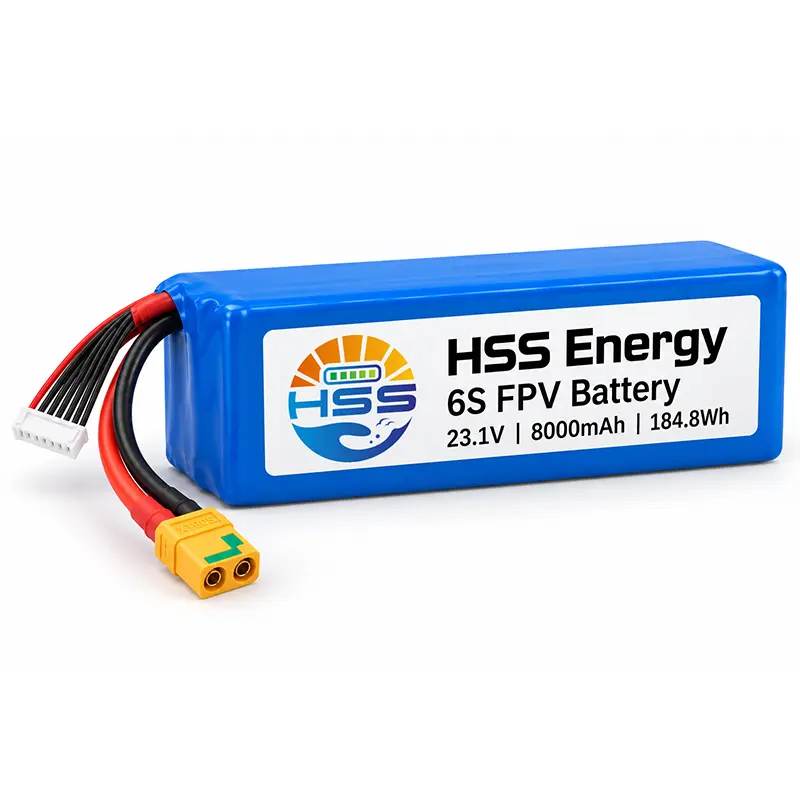
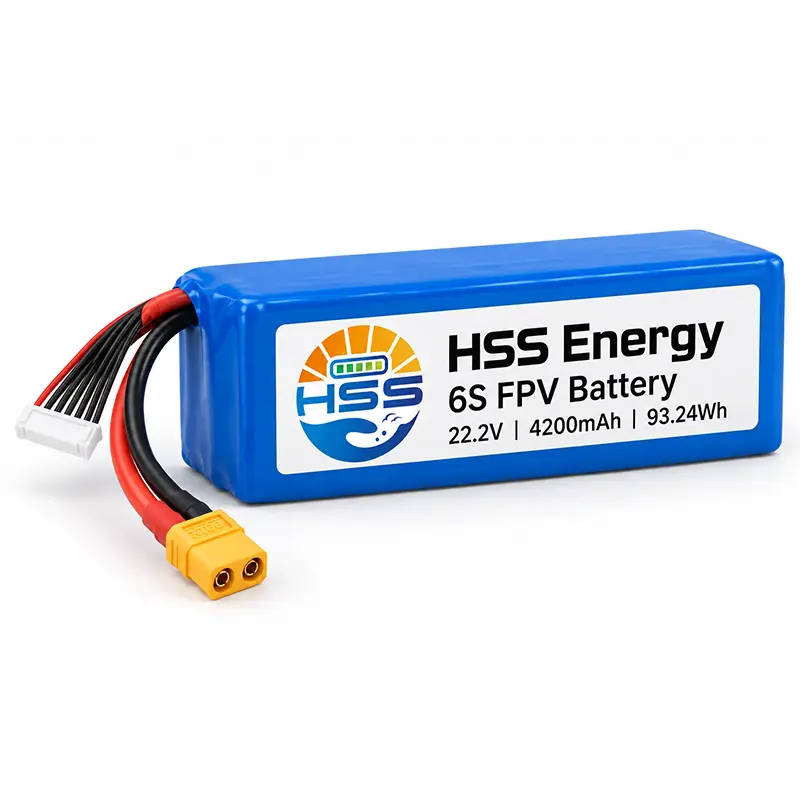
HSS Energy supplies FPV drone batteries for freestyle, racing and cinematic platforms. Common configurations cover 3S, 6S, 8S and 12S, with capacities typically from 450mAh to 9000mAh. Depending on the project, discharge capability generally ranges from 15C to 100C.
LiPo is the main chemistry for this category, especially where low weight and high discharge performance are important. Li-ion configurations can also be evaluated when the project places more emphasis on energy capacity and flight time. Our FPV Drone Batteries series includes products such as 6S 9000mAh FPV Battery, 6S 3200mAh FPV Battery, and so on.
|
Send Your FPV Setup for a Battery Match Review Series Count • Motor / ESC • Current Demand • Capacity • Weight • Connector |
|
FPV Application |
Key Battery Priorities |
|
Freestyle FPV |
Balance discharge capability, pack weight and practical flight time. |
|
Racing Drone |
Low weight and strong current delivery; oversizing capacity can hurt agility. |
|
Cinematic FPV |
Stable power delivery and useful flight time, with capacity matched to payload and frame size. |
HSS Energy FPV battery projects commonly use 3S, 6S, 8S and 12S platforms, covering compact packs through larger FPV configurations.
Typical capacity ranges from 450mAh to 9000mAh, while discharge ratings generally fall between 15C and 100C depending on the pack design.
|
Higher C-rate is not automatically better The right discharge rating should follow the motor, ESC, propeller setup, aircraft weight and real current demand. Adding discharge capability that the aircraft cannot use may increase cost or weight without improving the mission. |
For most FPV applications, soft-pack LiPo batteries are the main choice because they combine high discharge capability, compact packaging and low weight.
Li-ion can also be considered for selected projects where energy capacity and longer flight time are more important than maximum discharge performance.
· Main power connectors: XT60 / XT90
· Balance connector: JST-XH
· Cable length and gauge matched to the approved current requirement
· Polarity and connector position confirmed against the aircraft layout
FPV batteries in this category are generally supplied as straightforward power packs and normally do not include CAN, RS485, Bluetooth or an integrated charger.
· 6S 3200mAh FPV Battery
· 6S 9000mAh FPV Battery
· 3S 1000mAh FPV Battery
These SKUs illustrate the spread from compact FPV packs to larger-capacity configurations. Final discharge rating, dimensions and weight should follow the approved SKU specification.
1. drone type or frame size
2. required series count - 3S / 6S / 8S / 12S
3. motor and ESC information
4. expected current demand
5. preferred capacity
6. maximum battery weight
7. available battery space
8. XT60 / XT90 or other connector requirement
9. expected order quantity
|
Fastest way to start For custom FPV projects, send photos or drawings of the existing battery and aircraft mounting area together with the motor and ESC information. |
What FPV battery platforms are available?
HSS Energy commonly works with 3S, 6S, 8S and 12S FPV battery platforms.
What capacity range is available?
Typical capacities range from approximately 450mAh to 9000mAh, depending on the aircraft and required flight time.
What discharge ratings are available?
Common project configurations range from about 15C to 100C. The required discharge capability should be matched to the motor, ESC and real current demand.
Is LiPo or Li-ion better for FPV drones?
LiPo is the mainstream choice where high discharge and low pack weight are important. Li-ion may be considered where longer flight time and energy capacity are the priority.
Which connectors are commonly used?
XT60 and XT90 are common main-power connectors, with JST-XH typically used for the balance lead.
Do FPV batteries include communication or a charger?
Generally no. These packs are normally supplied without CAN, RS485, Bluetooth or an integrated charger.
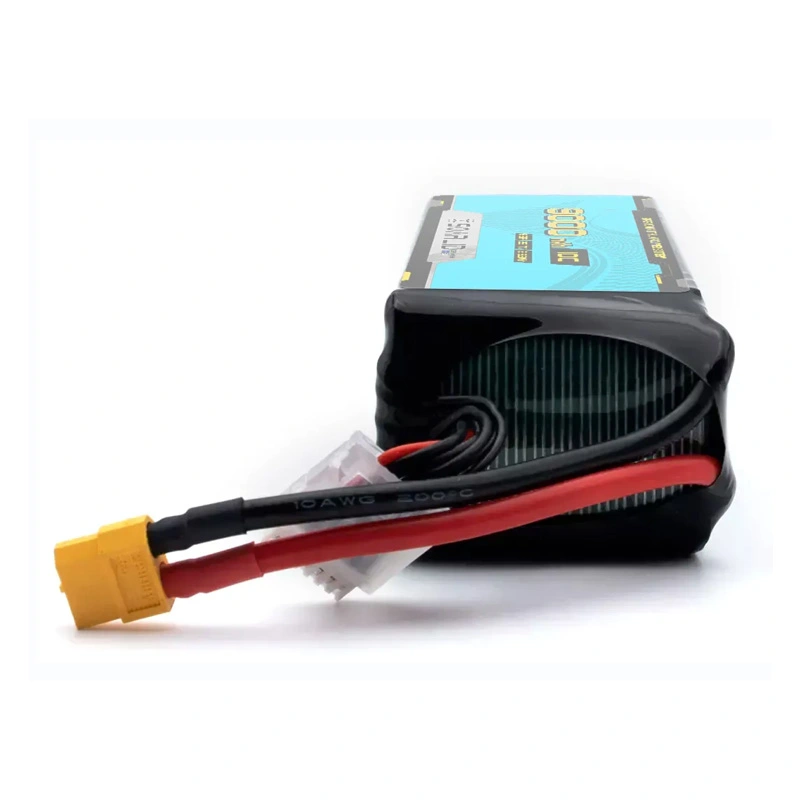
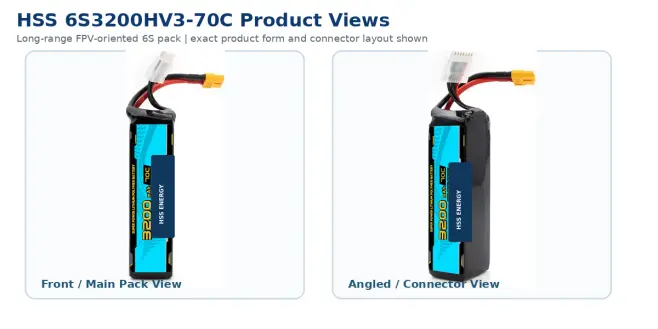
| 213.3Wh Nominal Energy |
Approx. 824g Pack Weight |
300Wh/kg Cell Energy Density |
165 x 71 x 33mm Pack Size |
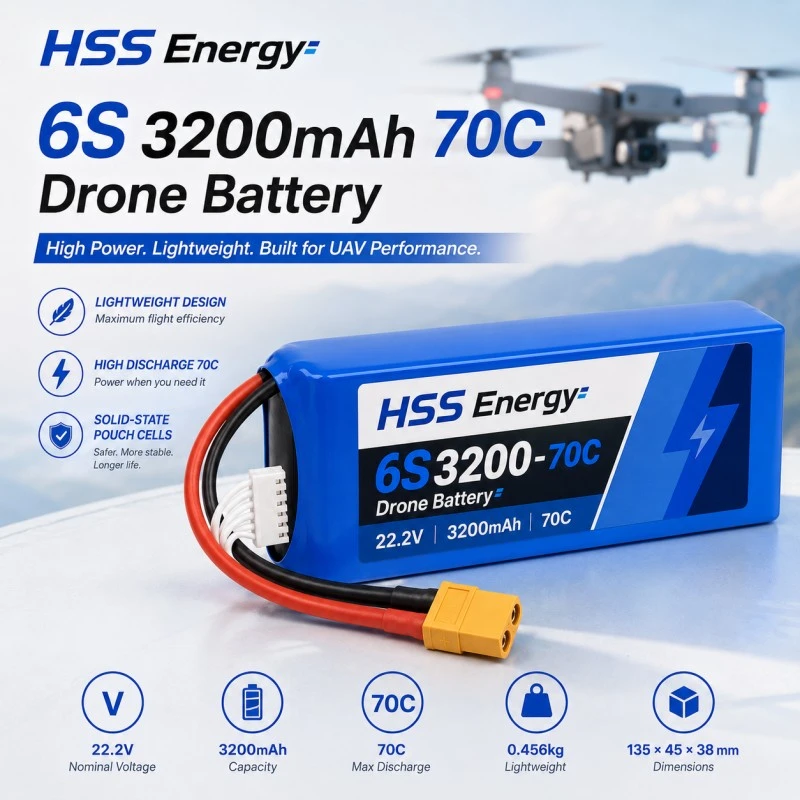
| 71.04Wh Nominal Energy |
Approx. 456g Pack Weight |
70C Label Rate |
135 x 45 x 38mm Pack Size |