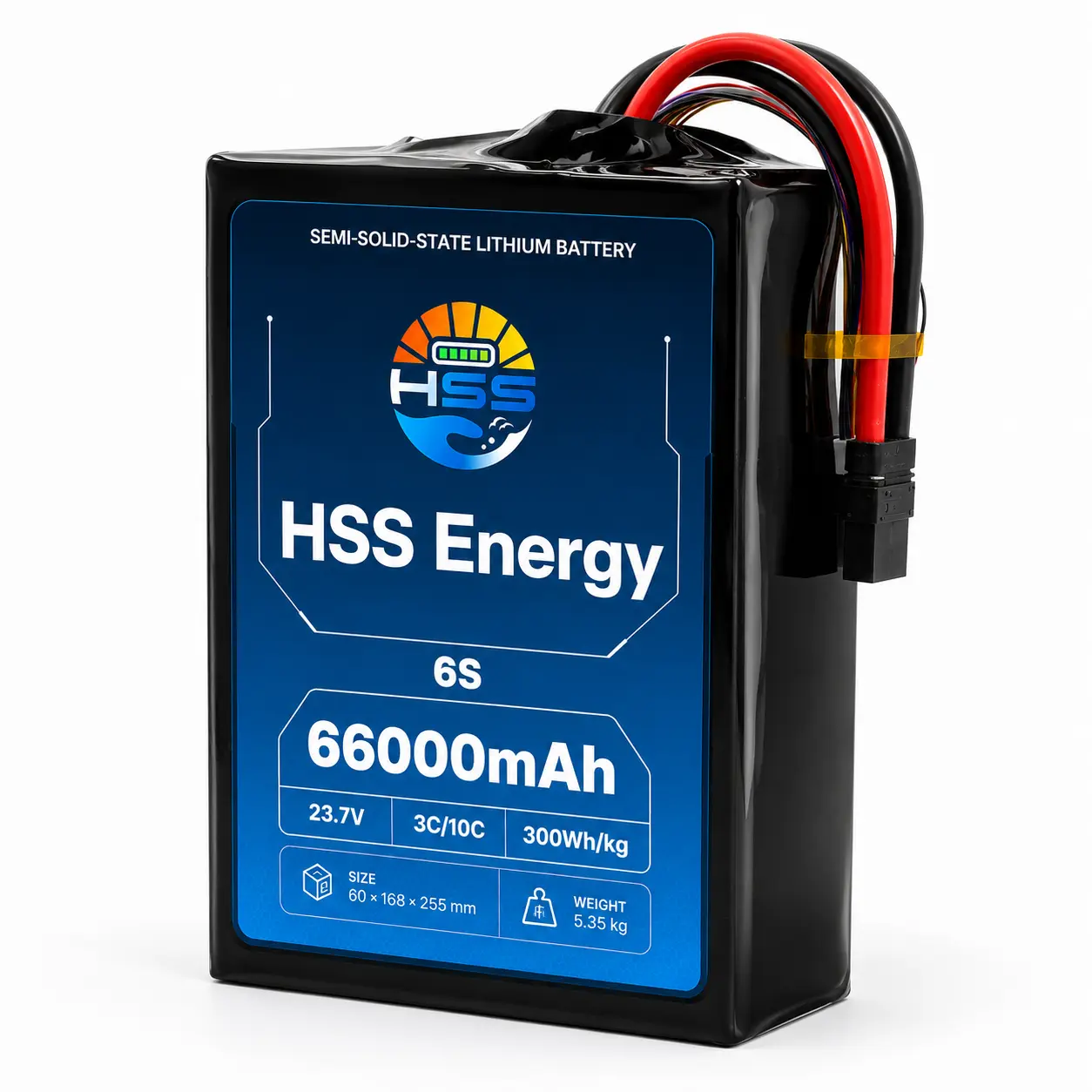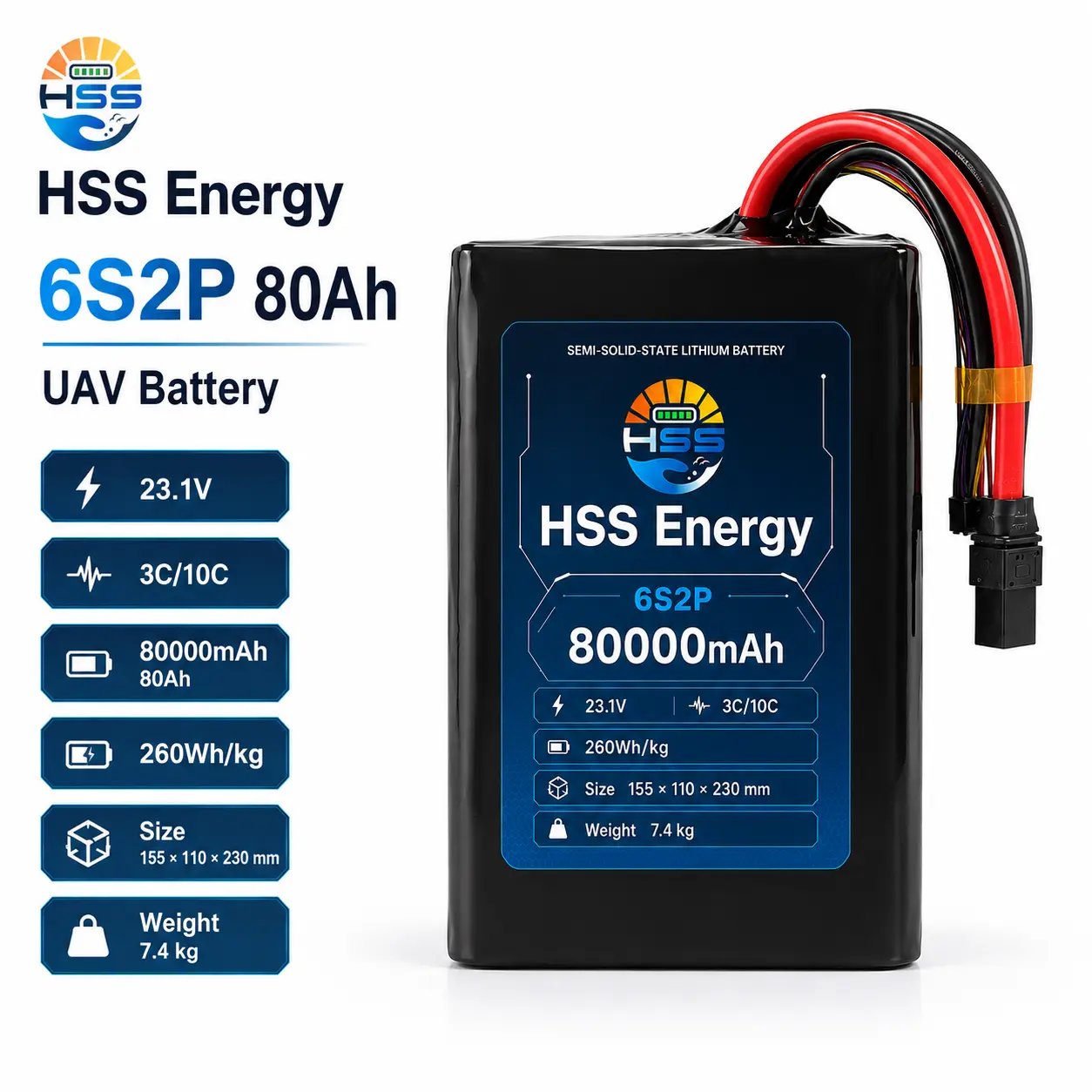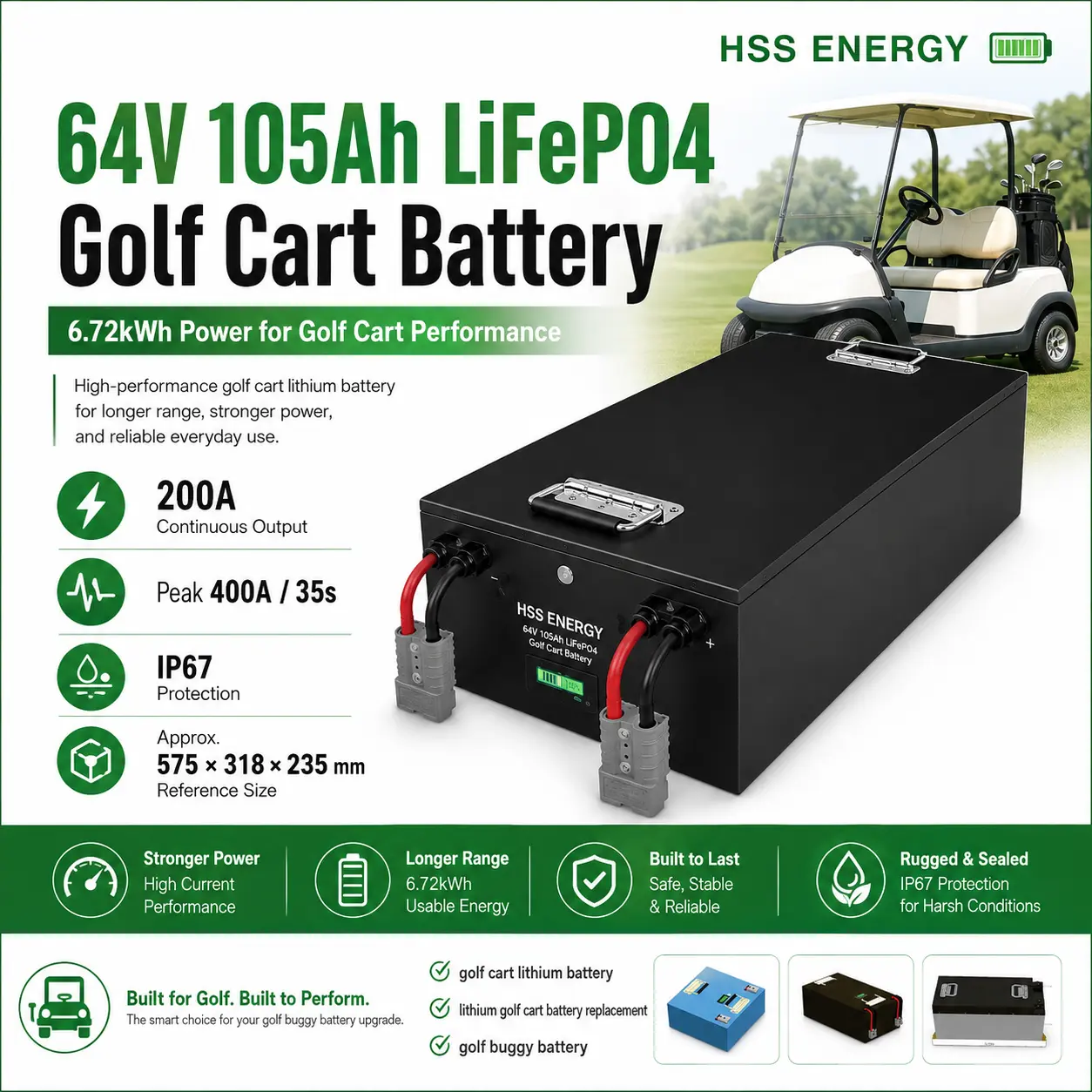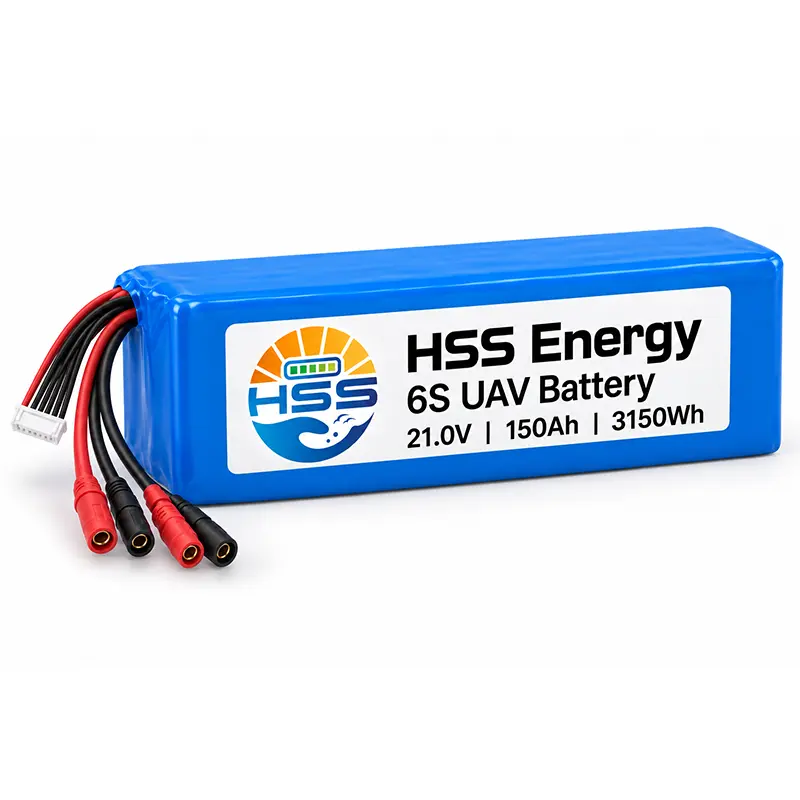
Before ordering the HSS Energy 6S 150Ah UAV Battery, define how both output pairs will connect to the aircraft. Two positive and two negative leads require room for separate cable routes and matching interfaces. The specified current limits apply to the complete pack, not independently to each pair. Include the connection arrangement in the order specification so the selected hardware matches the intended load.
For bulk orders or customized battery inquiries, provide your connection specifications and intended load for technical review before purchase.
The 6S 150000mAh UAV battery stores energy in one complete pack. The optional dual-lead layout provides two main connection routes; it does not create two independent 150Ah batteries. The balance harness serves the series-group connection requirements and is not a substitute for the main power leads.
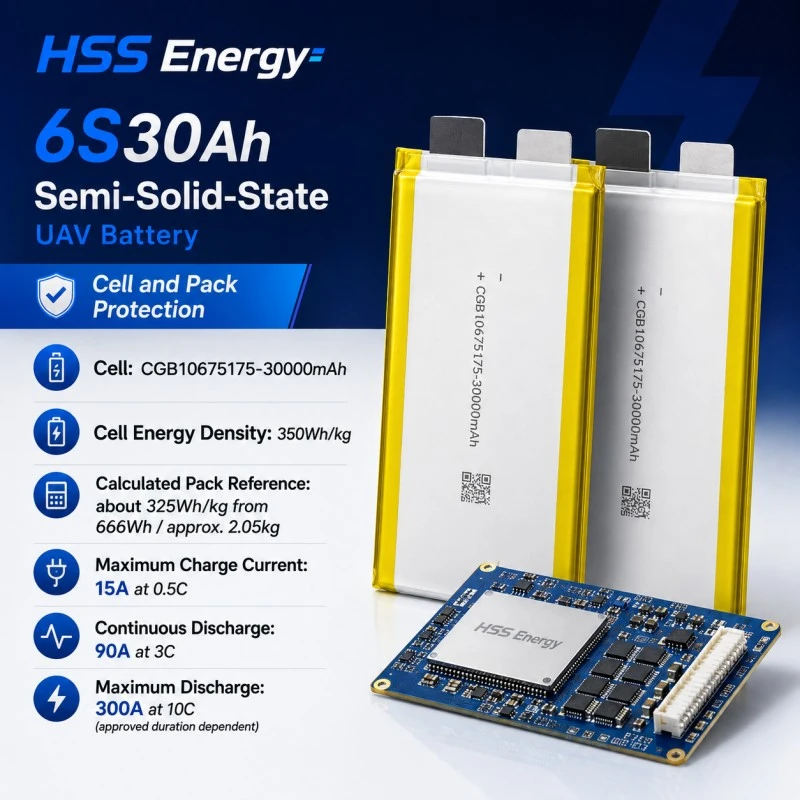
The energy-storage cells and the external output harness serve different functions. Partner cell stacks illustrate the component stage before a finished pack is configured; they are not an internal wiring diagram. Adding another external connection does not add another set of energy-storage cells.
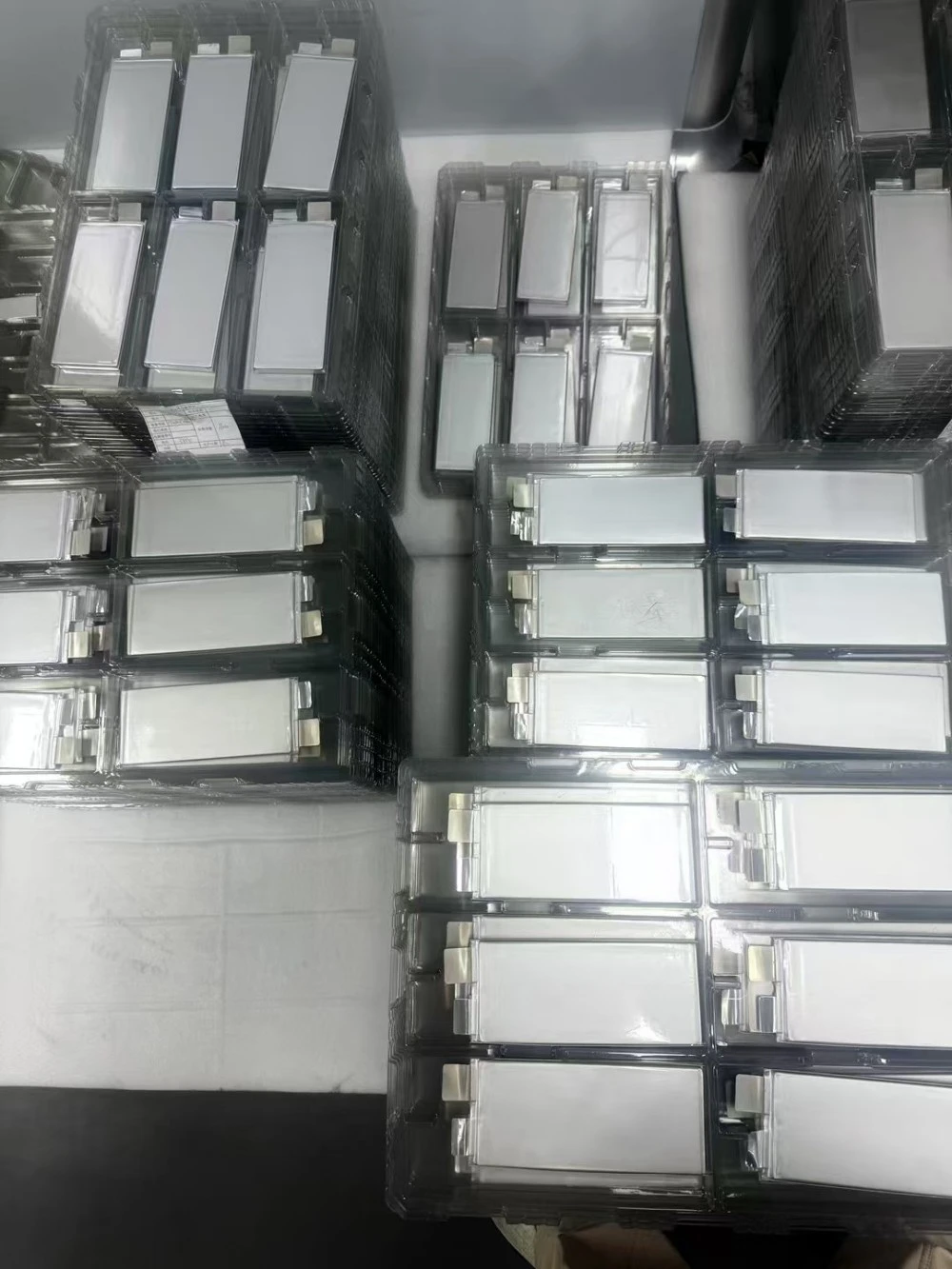
Where two outputs share a battery bus, the currents demanded by separate loads add at the pack. Where paths feed the same load, current division depends on the resistance of the complete paths. These principles explain why two visible output pairs do not establish equal sharing, isolation or independent protection.
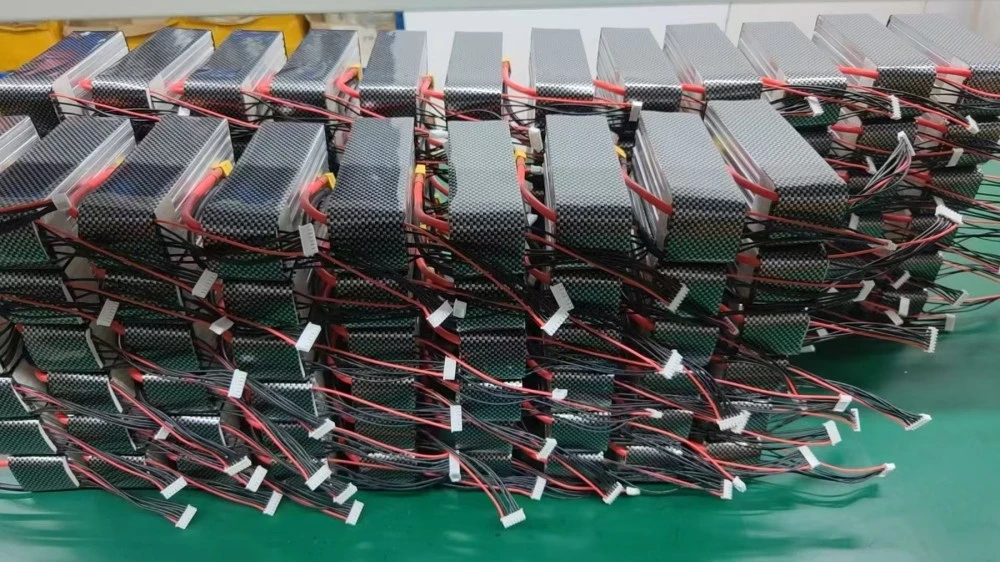
For a 21V 150Ah battery, the value of optional dual leads is layout flexibility when the aircraft design calls for it. Main-lead routing and the balance connection can be reviewed separately, while the total pack-current boundary remains common. A connector name alone cannot define the capability of either branch.
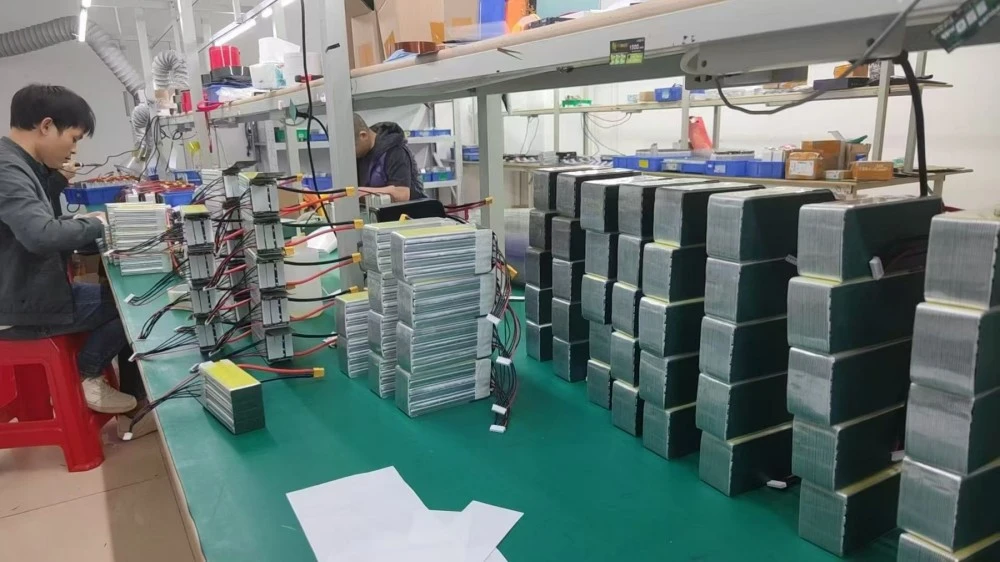
Our partners’ assembly workstations show pack handling and wiring as physical production tasks. Define lead count, cable length, polarity and mating interfaces in the ordered configuration. These workshop photographs show related pack-production activities, not a model-specific internal circuit.
|
Parameter |
Specification |
|
Model |
6S150Ah |
|
Cell designation |
155118365-150000mAh |
|
Cell type |
Semi solid |
|
Series configuration |
6S |
|
Nominal voltage |
21.0V |
|
Capacity |
150Ah / 150000mAh |
|
Nominal energy |
3150Wh (nominal voltage × capacity) |
|
Cell energy density |
400Wh/kg (cell value) |
|
Maximum charge current |
150A (1C) |
|
Charge cutoff voltage |
25.8V |
|
Discharge cutoff voltage |
15.0V at T ≥ 0°C; 13.2V at T < 0°C |
|
Continuous discharge current |
300A (2C) |
|
Maximum discharge current |
750A (5C), 10 seconds, SOC > 50% |
|
Condition |
Specification |
|
Working temperature |
-40 to 55°C |
|
Storage temperature |
-20 to 40°C |
|
Storage humidity |
<85% RH |
|
Cycle-life reference |
500 cycles |
|
Mechanical item |
Specification |
|
Body dimensions (W × T × H) |
105 × 125 × 410mm; each ±5mm |
|
Approximate body weight |
8.2kg |
|
Optional interface |
Configuration |
|
Main cable and connector |
6AWG, 150mm × 2 output pairs; AS150 |
|
Balance harness and connector |
22AWG, 150mm; XH-7P (B0–B6) |
Nominal energy is voltage multiplied by capacity. Cell energy density is not finished-pack energy density. Working-temperature limits do not establish charging-temperature permission.
The 6S 150Ah UAV Battery can be evaluated for UAV platforms with the voltage range, mass allowance and load profile to use this capacity. An aircraft with physically separate connection points may benefit from a planned cable layout. Separate connectors do not, by themselves, create an independent emergency-power system.
Assess the 6S 150Ah battery pack with a system drawing showing each load, connector and cable route. Include the 8.2kg battery mass in mounting and balance calculations. Keep aircraft peak demand distinct from steady flight demand, and account for all simultaneously active loads.
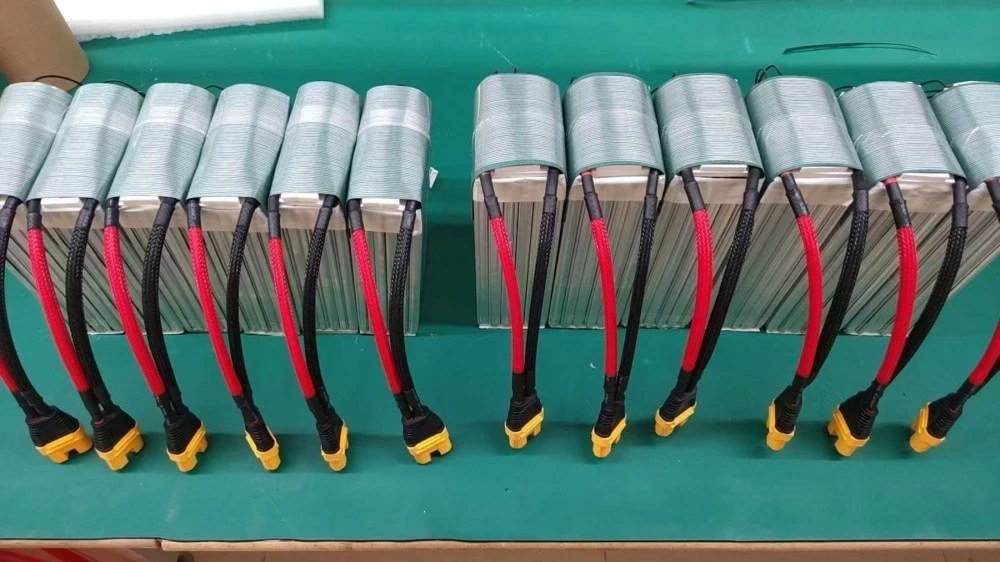
Confirm polarity and mating interfaces before connection. Protect unused connectors against unintended contact. The power leads must not become lifting handles or carry the battery’s weight, and the balance harness should not be pinched beneath restraints. Do not improvise a parallel adapter or a one-lead charging/other-lead discharge arrangement.
The 150Ah semi solid battery designation does not make pouch edges or cable exits structural attachment points. The partner cell-edge photograph illustrates the thin sealed perimeter beneath a pouch-based design. Use the finished pack’s approved support arrangement rather than concentrating force on an edge or terminal area.
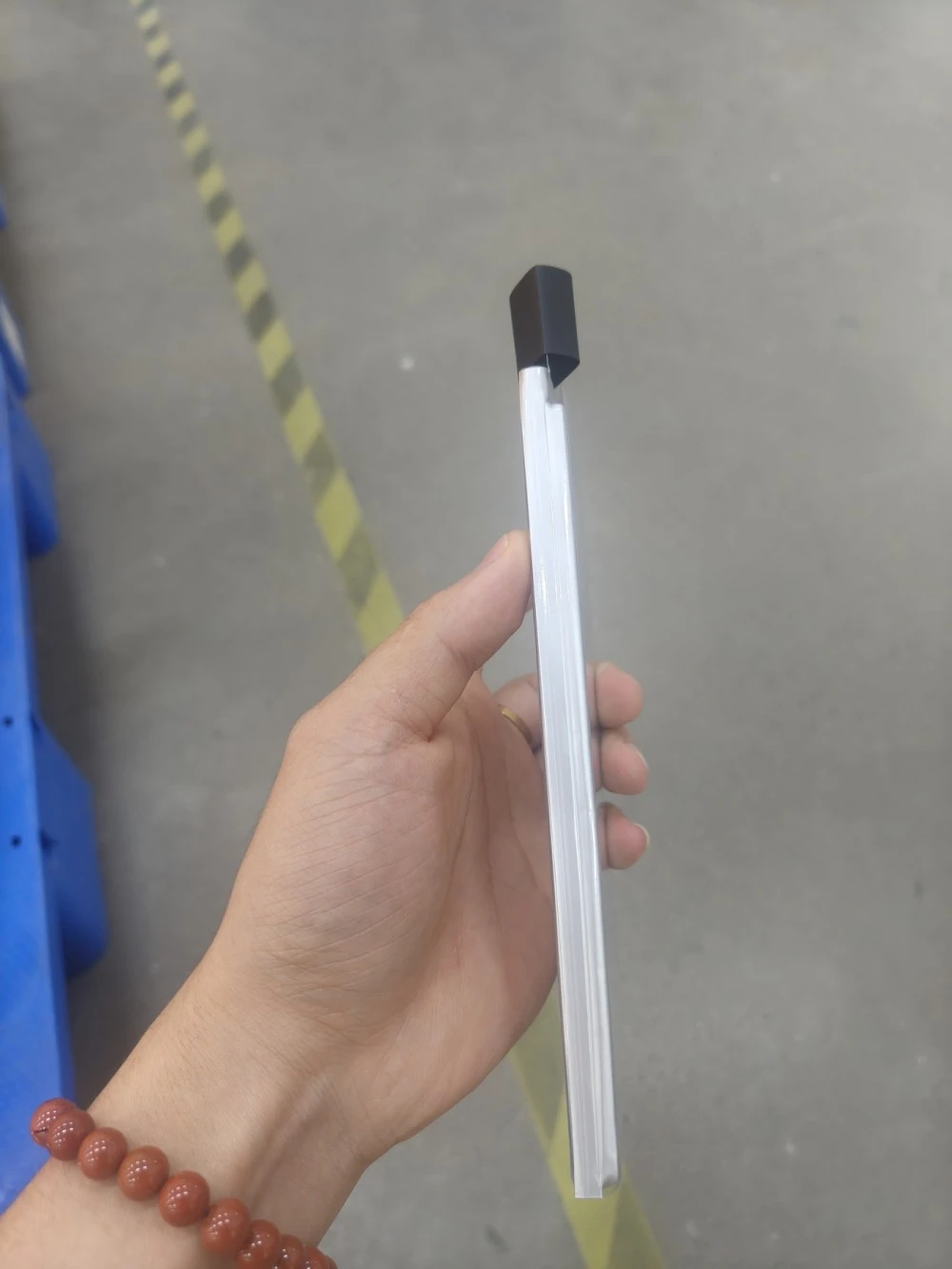
For a 150000mAh drone battery, keep operating observations with the pack identification: unusual connector heating, changes in loaded voltage, visible wrap damage and changes in charge behavior. Investigate a change before returning the pack to flight service. Do not open the wrap or repair internal connections as routine field maintenance.
Between deployments, follow the agreed storage state of charge and inspection schedule. Protect connectors and retain the pack identification with its operating record. Have damaged wiring or wrapping assessed before reuse.
Provide a connection sketch identifying each load, mating plug, cable route and intended charging connection. HSS Energy can review the requested lead configuration alongside the pack specification and quotation.
The 300A continuous rating is for the battery pack, not a stated per-output rating. The two output pairs require a defined connection and current-sharing arrangement; the rating should not be doubled.
No. The pack remains 150Ah with 3150Wh of nominal energy. A second output route changes the external connection arrangement, not the stored energy. Loads using the same battery draw from that common energy source.
That can be considered as a system configuration, but it is not established by the presence of two plugs. The combined demand must remain within the complete-pack limits, and each branch needs suitable wiring, connectors and protection. Submit the intended load arrangement for configuration review before using it.
No. Current sharing depends on the complete path resistance, including cable length, contacts and joints. Identical-looking plugs do not prove equal electrical paths. The system design and evaluation must establish the intended distribution; no automatic 50/50 sharing claim is made for this pack.
Not automatically. Two routes can still share cells and internal connections. Independent backup requires a defined isolation and protection architecture. Do not describe a dual-lead pack as redundant power without that system-level evidence.
Do not assume that arrangement is supported. It can affect current paths, charger behavior and protection. Use only an arrangement reviewed for the final pack and aircraft configuration; the dual-lead option is not permission for simultaneous charging and operation.
No. The figure applies to the cell platform. The complete battery includes wiring, insulation and other pack components. Its published nominal energy is 3150Wh and its approximate mass is 8.2kg; use complete-pack values for aircraft integration.
Stop using the pack in the aircraft and arrange an assessment. Record which connection was affected, the load and charging conditions, and photographs of the damage without opening the pack. Do not continue flying to see whether the symptom disappears or replace internal wiring in the field.
For the 6S 150Ah UAV Battery, identify the loads on each route, combined continuous and transient demand, required cable lengths, plug types, polarity and charge connection. Include a drawing of the mounting area.
Address
A3, 1204-1, 1142 Jimei North Avenue, Software Park Phase III, Xiamen Torch High-tech Zone, Xiamen, China
Tel