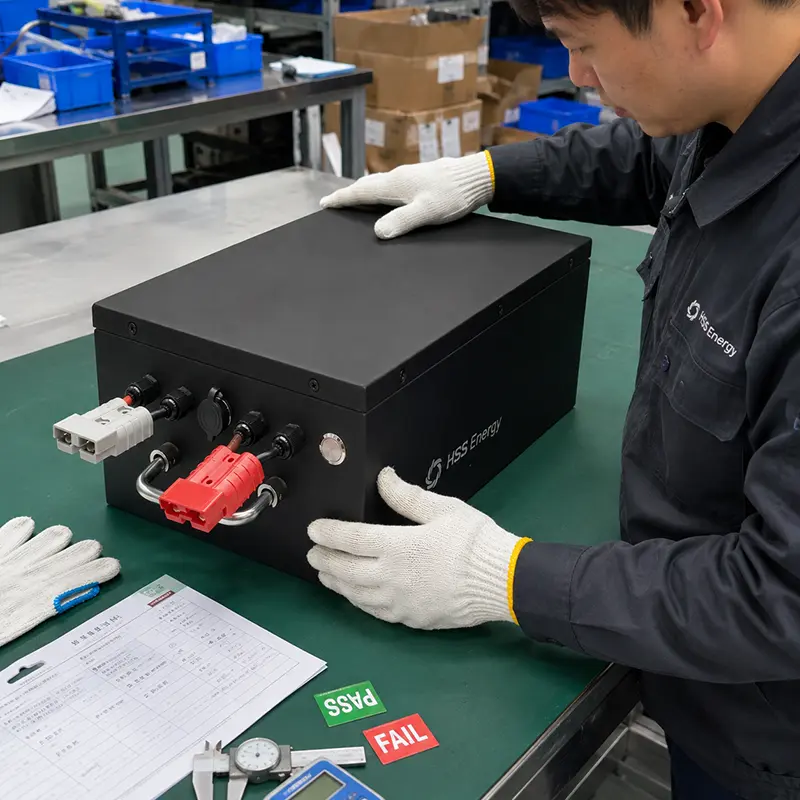
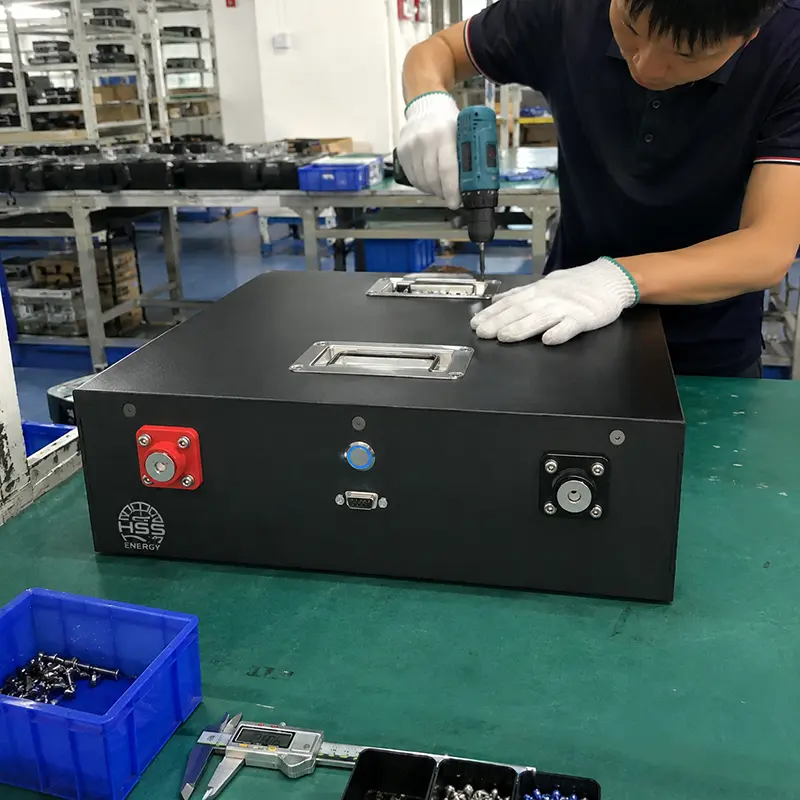
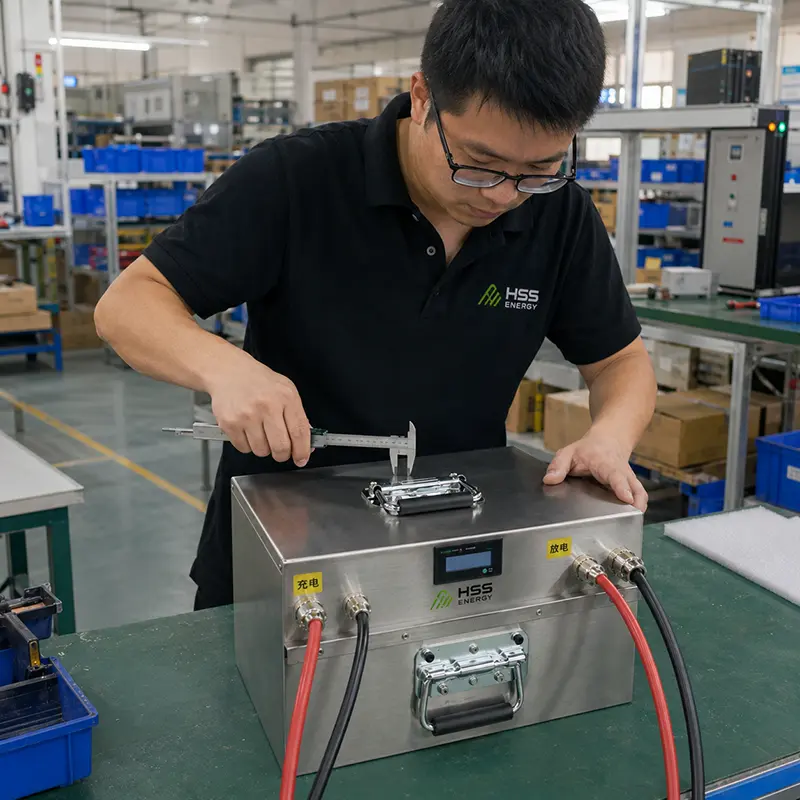
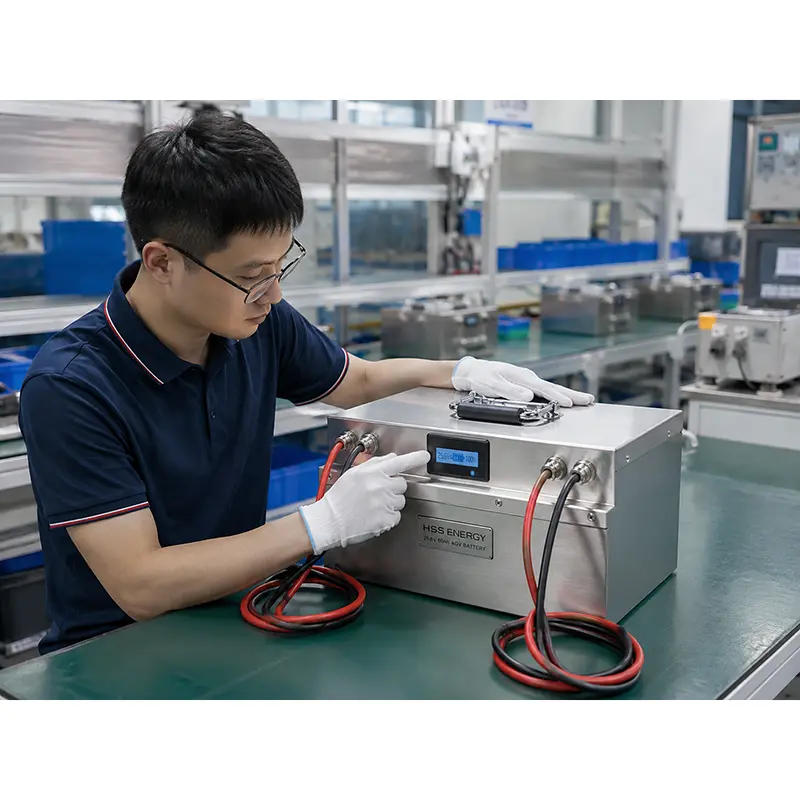
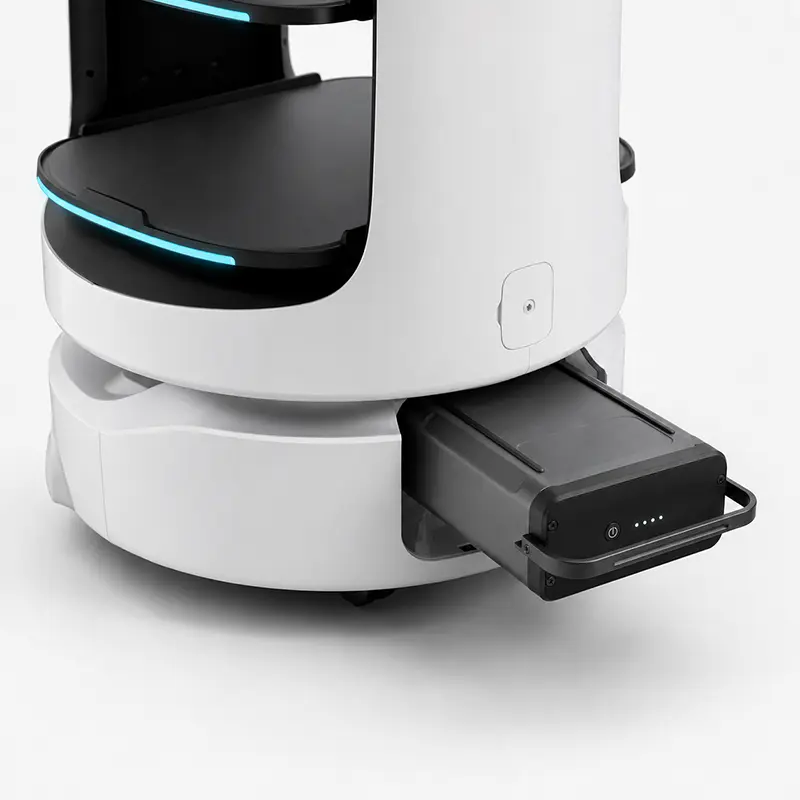
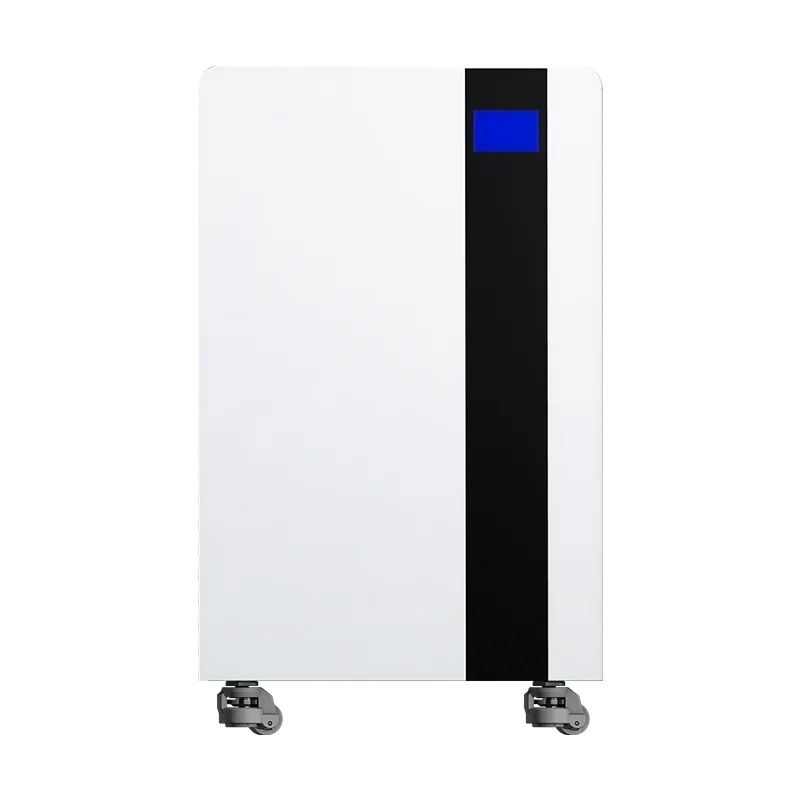
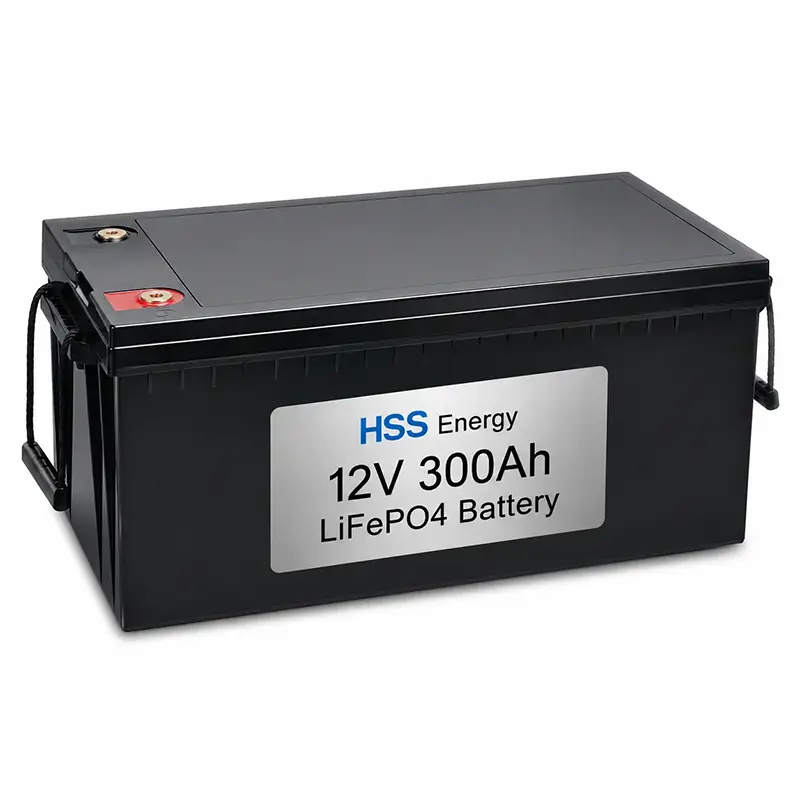
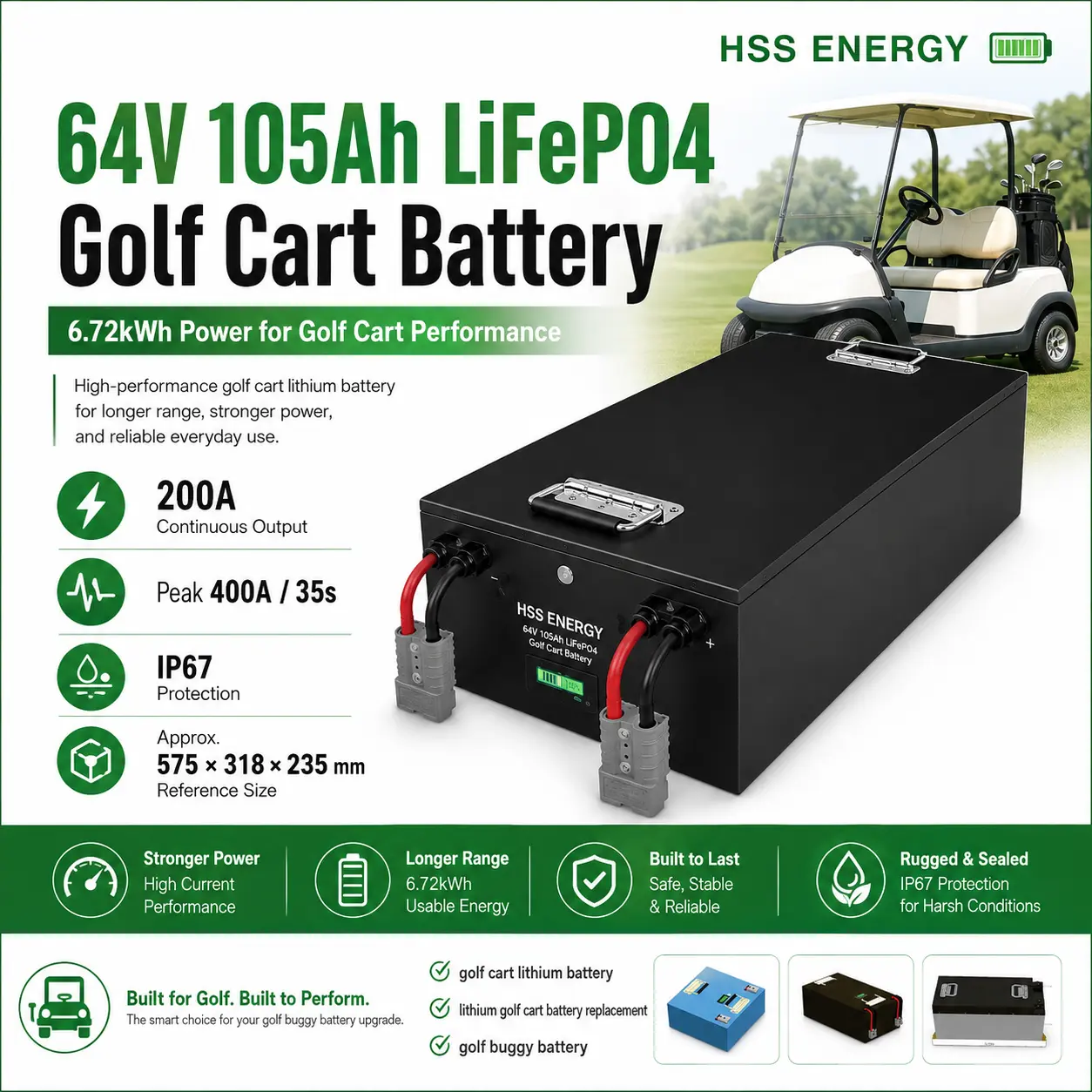
A robot battery has to support more than runtime. It also needs to fit the machine, handle motor and actuator loads, work with the charging strategy and exchange battery data with the robot when communication is required.
HSS Energy supplies Robot Batteries for delivery robots, AGVs, AMRs and other autonomous or mobile robotic platforms. Common voltage platforms cover 24V to 48V, with typical capacities from 20Ah to 100Ah. This category mainly uses LiFePO4 chemistry, with the final capacity, current capability, BMS, communication and mechanical layout configured around the robot. Our Robot Batteries series includes products such as 48V 60Ah AMR Battery, 24V 100Ah LiFePO4 Battery, and so on.
|
Send Your Robot Specs for a Battery Configuration Review Robot Type • Voltage • Runtime • Current • Battery Space • Charging • Communication • Quantity |
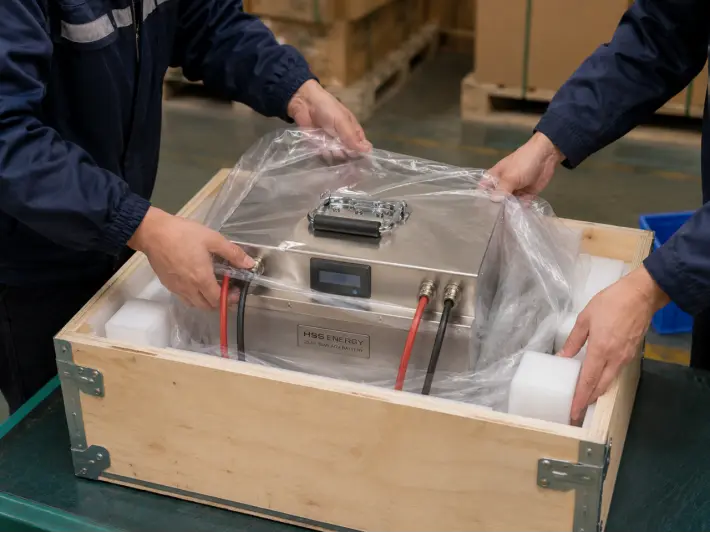
A delivery robot travelling continuously, an AGV moving loads between workstations and an AMR operating dynamically around people and equipment can require different battery configurations even at the same nominal voltage.
· required operating time
· normal and peak current
· motor or actuator load
· charging frequency and available charging window
· battery-space dimensions and weight limit
· communication and monitoring requirements
|
Runtime and peak current are separate decisions A battery can have enough Ah for the required shift but still be unsuitable if the BMS or cell configuration cannot support acceleration or other short-duration load peaks. |
HSS Energy robot battery projects commonly cover 24V to 48V, with capacities typically from 20Ah to 100Ah. LiFePO4 is the main chemistry for this category, especially where repeated cycling, predictable operation and daily use are priorities.
The voltage platform should follow the robot controller and drive system. Capacity should then be selected around operating time, charging opportunities and available space. A larger battery is not automatically better because more Ah also means more size, weight and charging time.
|
Robot Platform |
Battery Priorities |
|
Delivery Robots |
Operating time, compact integration, vehicle weight and frequent stop-and-go movement. |
|
AGVs |
Duty cycle, load weight, route length, charging window and communication with the vehicle control system. |
|
AMRs |
Dynamic load profile, runtime, peak current, battery monitoring and automatic charging strategy. |
Depending on the approved configuration, CAN, RS485 and Bluetooth can be supported for battery data, monitoring or integration with the robot controller. The exact communication protocol should be confirmed for the specific project rather than assumed from the interface name alone.
A matching charger can also be configured. For robots operating throughout the day, battery capacity and charger power should be reviewed together so that available charging windows match the operating schedule.
Robot batteries often need to fit a fixed chassis or battery bay. Connectors are therefore matched to the actual robot or machine rather than standardized across the category. For OEM projects, HSS Energy can review enclosure dimensions, cable direction, connector position, service access and mounting requirements together with the electrical specification.
· 25.2V 25.6Ah Delivery Robot Battery
· 25.6V 60Ah AGV Battery
· 25.6V 100Ah AGV Battery
· 48V 30Ah AMR Battery
· 48V 60Ah AMR Battery
These are selected examples rather than the full product range. Other 24V-48V / 20Ah-100Ah configurations can be developed according to runtime, current demand, battery space, communication and charging requirements.
For new robot platforms and replacement projects, HSS Energy can review voltage, capacity, current capability, LiFePO4 cell configuration, BMS, CAN / RS485 / Bluetooth, charger, connector, enclosure, dimensions, cables, labeling and other project-specific requirements.
|
Typical development workflow Requirement -> Battery Proposal -> Prototype -> Robot Test -> Confirmation -> Bulk Production |
Testing the sample in the real robot is useful for confirming runtime, current behavior, communication, charging and physical fit before the production specification is finalized.
Send the robot type and application, required voltage, required operating time, normal and peak current, motor information, battery-space dimensions, charging method, CAN / RS485 / Bluetooth requirements, connector requirements and expected order quantity.
|
Fastest way to start If available, send a robot electrical diagram, existing battery specification or battery-compartment drawing with the enquiry. |
What voltage and capacity ranges are common?
HSS Energy robot battery projects commonly cover 24V to 48V and approximately 20Ah to 100Ah.
What chemistry is used?
This category mainly uses LiFePO4.
Can the battery communicate with the robot?
Yes. CAN, RS485 and Bluetooth are optional depending on the project. The exact protocol needs to be confirmed with the robot controller.
Can you provide a charger?
Yes. A matching charger can be configured for the approved battery system.
Can the battery enclosure and connector be customized?
Yes. Mechanical dimensions, enclosure, connector and cable layout can be reviewed around the actual robot.