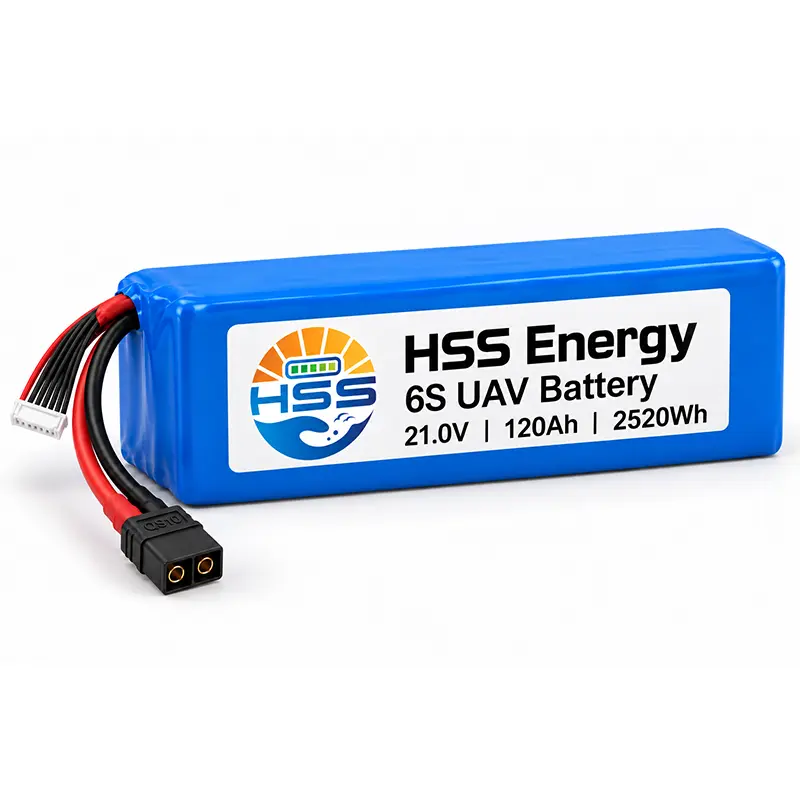
Specify the HSS Energy 6S 120Ah UAV Battery in a sourcing inquiry alongside the intended charger. Compared with the 80Ah version in this range, it provides more nominal energy but retains the same 240A continuous discharge rating. Its 60A maximum charge current is lower, so increased capacity should not be treated as permission to charge faster. Before placing a bulk order, confirm the charging requirements, installation dimensions, and operating conditions with our sales team.
The 6S 120000mAh UAV battery occupies the middle of these three 6S capacity options. It offers more nominal energy than the 80Ah version but also adds body size and mass. It is a capacity-selection candidate, not an automatic endurance upgrade for every aircraft.
A 21V 120Ah battery separates the energy decision from the current decision. This model has the same 240A continuous rating as the 80Ah option, even though its nominal capacity is higher. That distinction is useful for customers who need to compare route energy without confusing it with a higher propulsion-current allowance.
Its defined 0.5C maximum charge rate also makes charging-station planning explicit. A larger capacity can require more charging resources between sorties; buying the pack and checking the charger later can leave the fleet with an avoidable turnaround constraint.
|
Parameter |
Specification |
|
Model |
6S120Ah |
|
Cell designation |
120118356-120000mAh |
|
Cell type |
Semi solid |
|
Series configuration |
6S |
|
Nominal voltage |
21.0V |
|
Capacity |
120Ah / 120000mAh |
|
Nominal energy |
2520Wh (nominal voltage × capacity) |
|
Cell energy density |
400Wh/kg (cell value) |
|
Maximum charge current |
60A (0.5C) |
|
Charge cutoff voltage |
25.8V |
|
Discharge cutoff voltage |
15.0V at T ≥ 0°C; 13.2V at T < 0°C |
|
Continuous discharge current |
240A (2C) |
|
Maximum discharge current |
360A (3C), 10 seconds, SOC > 50% |
|
Condition |
Specification |
|
Working temperature |
-40 to 55°C |
|
Storage temperature |
-20 to 40°C |
|
Storage humidity |
<85% RH |
|
Cycle-life reference |
500 cycles |
|
Mechanical item |
Specification |
|
Body dimensions (W × T × H) |
85 × 125 × 400mm; each ±5mm |
|
Approximate body weight |
6.6kg |
|
Optional interface |
Configuration |
|
Main cable and connector |
4AWG, 150mm; QS10 |
|
Balance harness and connector |
22AWG, 150mm; XH-7P (B0–B6) |
Nominal energy is voltage multiplied by capacity. Cell energy density is not finished-pack energy density. Working-temperature limits do not establish charging-temperature permission.
Choose the 6S 120Ah UAV Battery only after comparing the additional energy with the mass and compartment space it consumes. The following values are nominal specification comparisons, not measured flight-duration results.
|
Selection factor |
6S80Ah |
6S120Ah |
6S150Ah |
|
Nominal energy |
1680Wh |
2520Wh |
3150Wh |
|
Approximate mass |
4.4kg |
6.6kg |
8.2kg |
|
Body W × T × H |
75 × 117 × 350mm |
85 × 125 × 400mm |
105 × 125 × 410mm |
|
Continuous discharge |
240A |
240A |
300A |
|
Maximum charge |
80A |
60A |
150A |
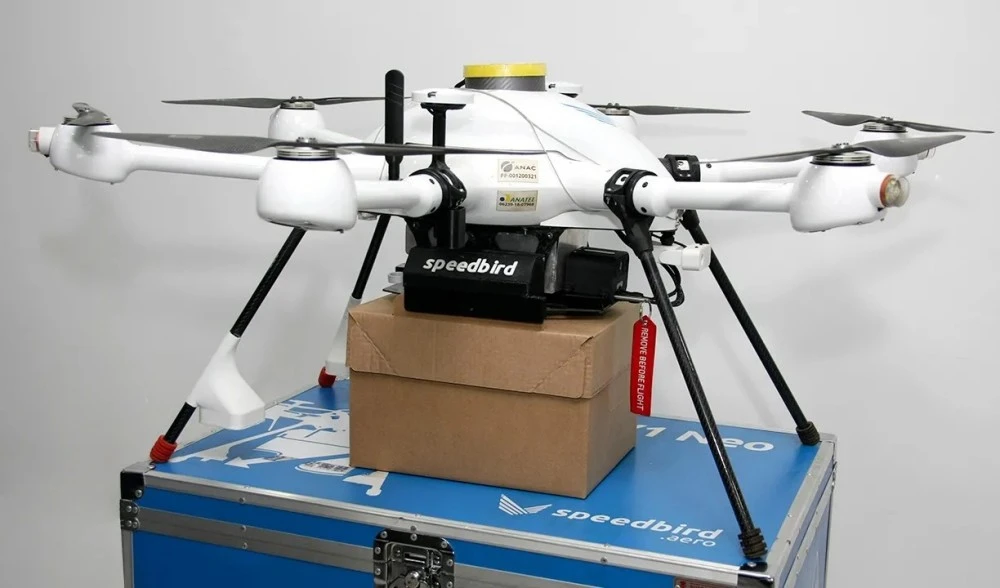
Brazilian drone-delivery operations documented by iFood and Speedbird illustrate a route-and-ground-support workflow. They are independent application references, not installations of this battery. For a 6S 120Ah battery pack, compare outbound and return demand, payload changes and reserve policy before increasing capacity.
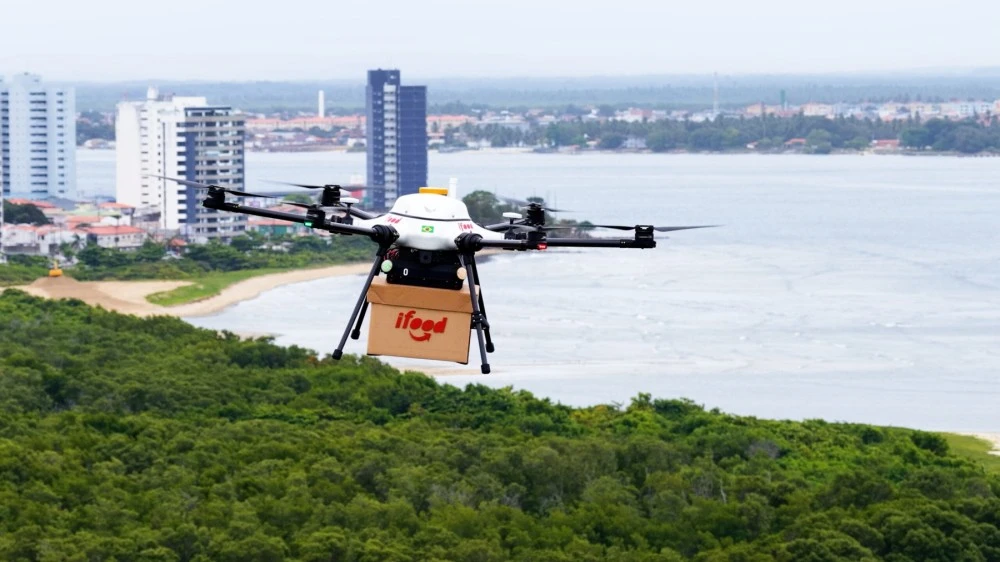
Ground preparation matters alongside airborne energy. Check how packs will be identified, exchanged and charged between missions. For evaluation planning, measure the complete charging cycle with the intended charger; dividing capacity by maximum charge current does not include the complete charge process.
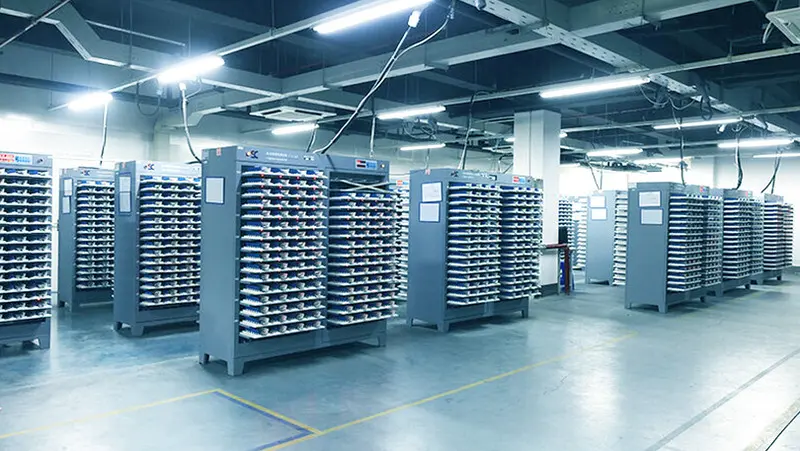
Outgoing checks include dimensions, capacity and voltage stability. For a customized 6S 120Ah semi solid battery, agree the relevant test conditions and acceptance criteria for the final configuration. Equipment photographs show the manufacturing environment; they do not replace a result sheet linked to the ordered pack.
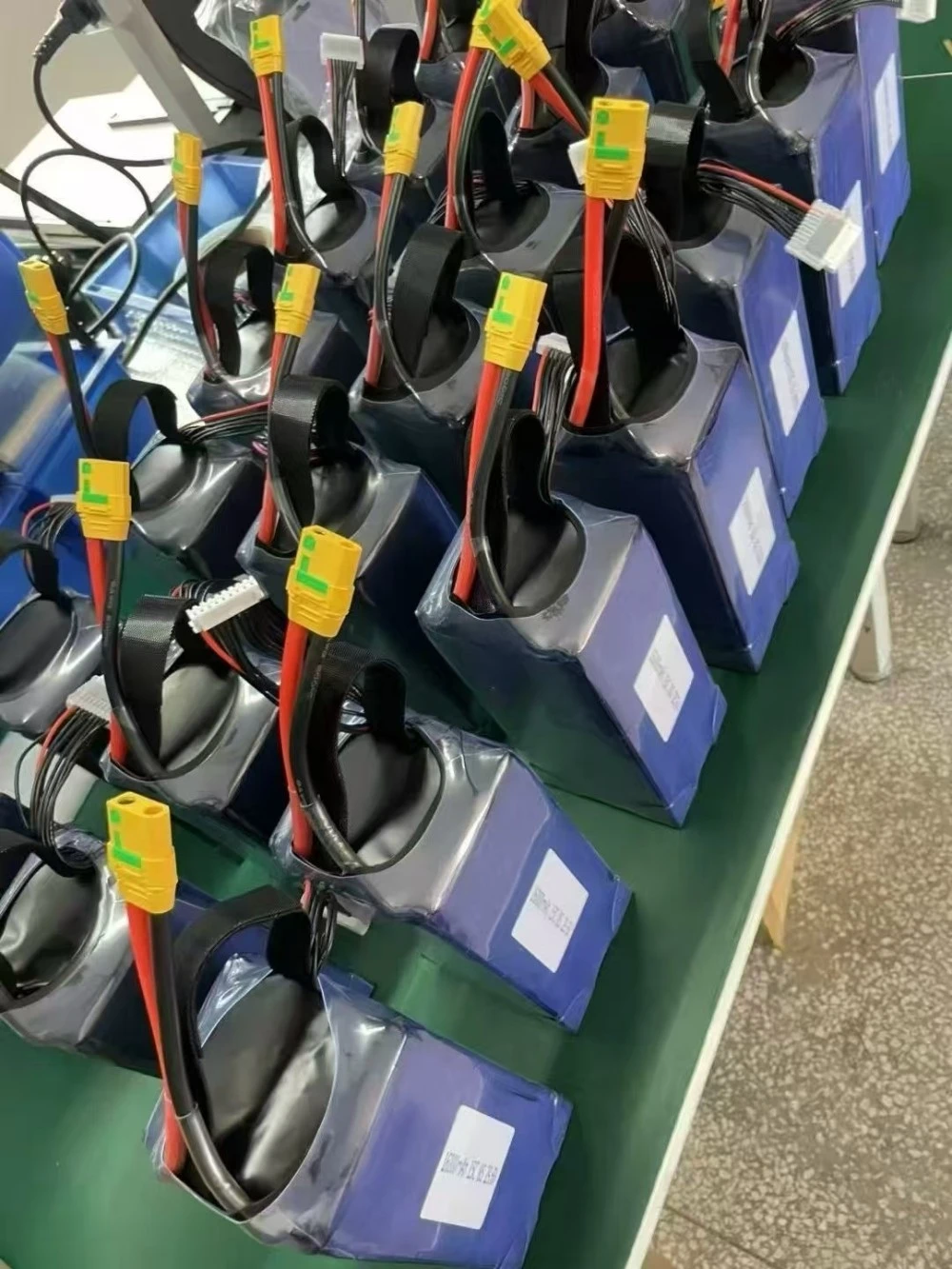
Compare body measurements with the agreed drawing and tolerance. Keep cable clearance separate from body dimensions, and identify the supplied cable and connector configuration. Batch-pack photographs show why a visible wrap color alone is not enough to identify an ordered configuration.
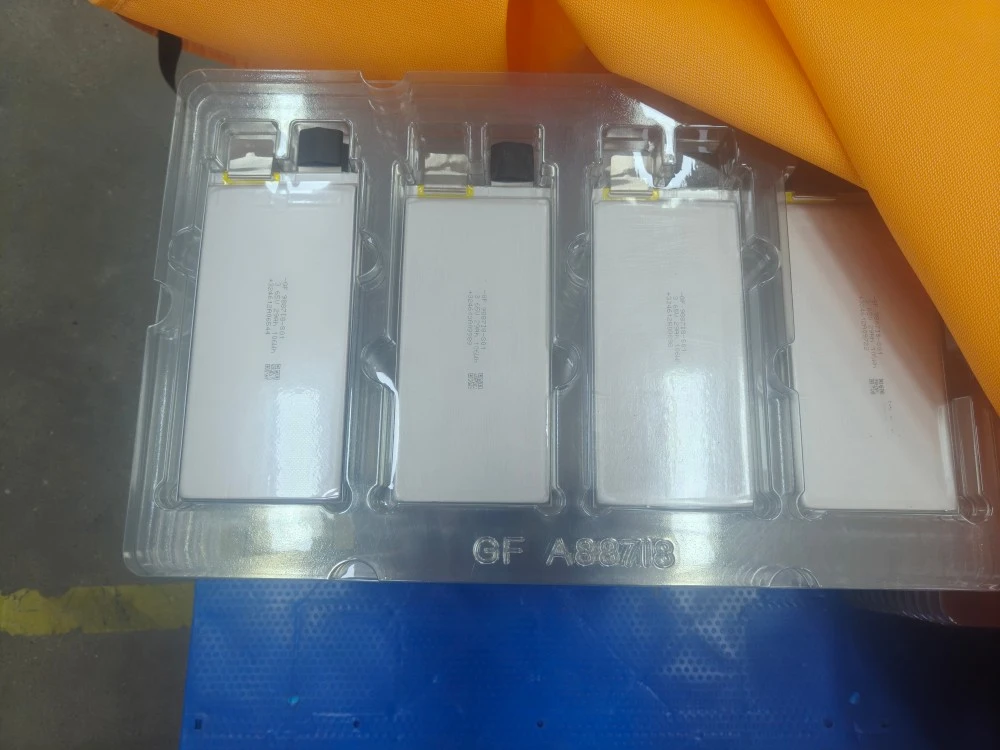
Capacity is measured by controlled discharge over time, not inferred from an open-circuit voltage reading. Charge preparation, discharge current, temperature and cutoff conditions should accompany an acceptance comparison. Cell trays shown here illustrate upstream handling and separation, not a capacity result for the finished pack.
For the 21V 120000mAh battery, distinguish a voltage reading after rest from voltage behavior under load. Both observations depend on conditions. A procurement acceptance plan should state the observation method and agreed limit rather than use “stable voltage” as an undefined pass statement.
Send the present battery specification, route power data, allowable battery mass, charger details and planned batch quantity. HSS Energy can discuss the configuration and the test or reporting requirements to be included in the order.
It gives 50% more nominal energy within these two 21V specifications, but it also increases approximate pack mass from 4.4kg to 6.6kg. Aircraft power demand and usable reserve can change. Flight time therefore needs route-representative testing rather than a direct capacity percentage.
Capacity and discharge capability are separate specifications. Both packs list 240A continuous discharge, but their C-rates differ because their capacities differ. Select this model for the appropriate energy and installation tradeoff, not for an assumed increase in continuous current.
No. The specified maximum charge current is 60A (0.5C), with a 25.8V charge cutoff. A 120Ah capacity does not imply a 120A charging allowance.
No fixed two-hour charging time is promised. Capacity divided by current is only an idealized starting calculation. The actual cycle depends on starting state of charge, the charger profile, the final charging stage and operating conditions. Evaluate turnaround using the intended charging equipment.
Identify the configuration and drawing revision first, then agree dimensional tolerances, capacity-test conditions and the voltage-stability assessment. If individual or batch reports are required, specify their format and scope in the order. Do not assume every optional report is automatically included.
No. 400Wh/kg is a cell-level value. The finished pack also includes its connections, insulation, leads and wrapping. Use the complete-pack energy and mass when comparing the aircraft installation.
Compare the conditions before deciding. Different discharge rates, temperatures, cutoff settings and charge preparation can produce different results. Acceptance should follow the mutually agreed method for this configuration, not a test from a different battery or operating condition.
Selected HSS Energy models have certification, but applicability depends on the exact product and document scope. A changed cell, structure or electrical configuration needs a separate review. Testing and documentation can be coordinated around customer requirements; coverage and approval are not assumed in advance.
Ask HSS Energy to review the 6S 120Ah UAV Battery against your allowable mass, usable bay dimensions, required continuous current and charging resources. Include route power records and reserve requirements. The larger option should solve a demonstrated constraint, not simply increase the capacity number.
Address
A3, 1204-1, 1142 Jimei North Avenue, Software Park Phase III, Xiamen Torch High-tech Zone, Xiamen, China
Tel