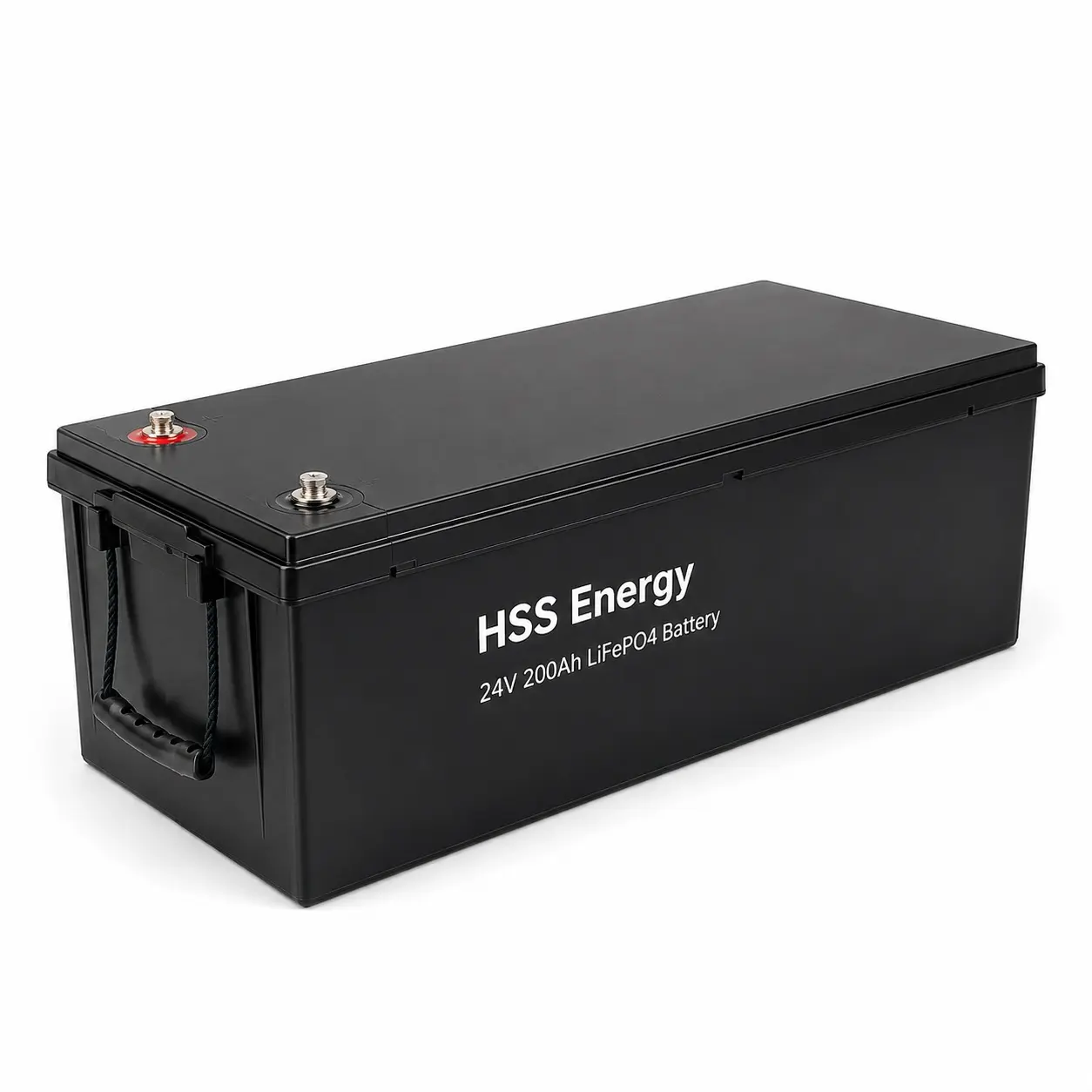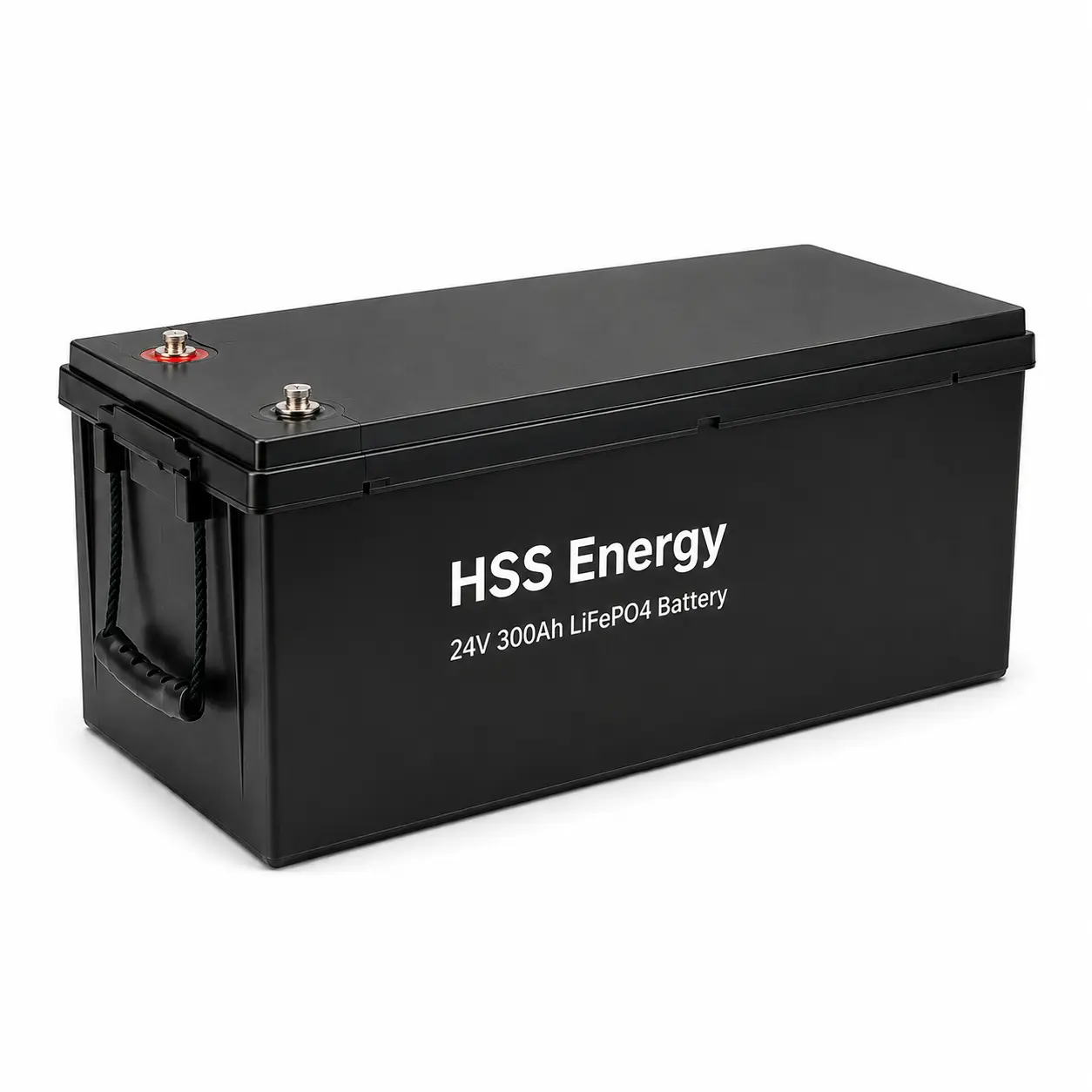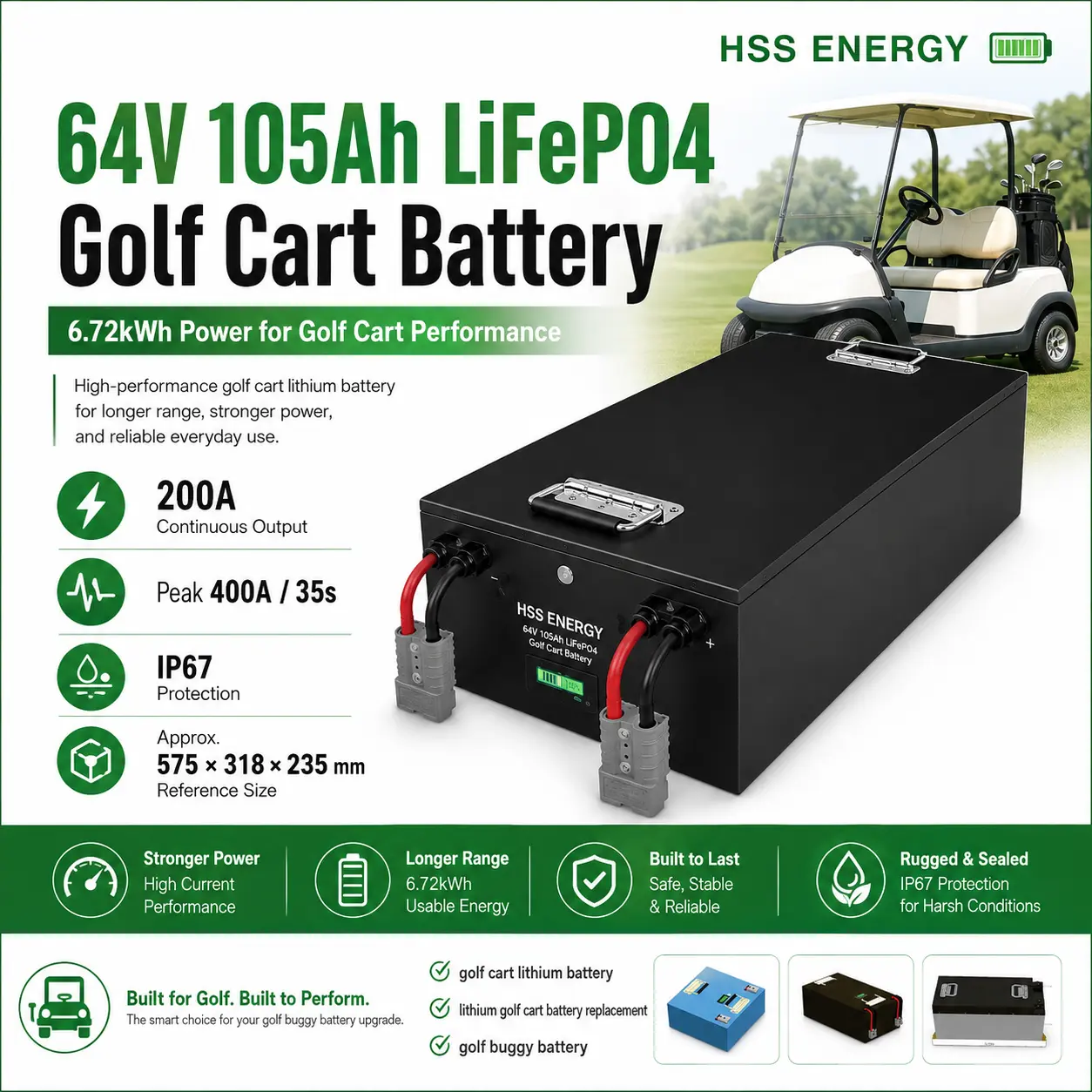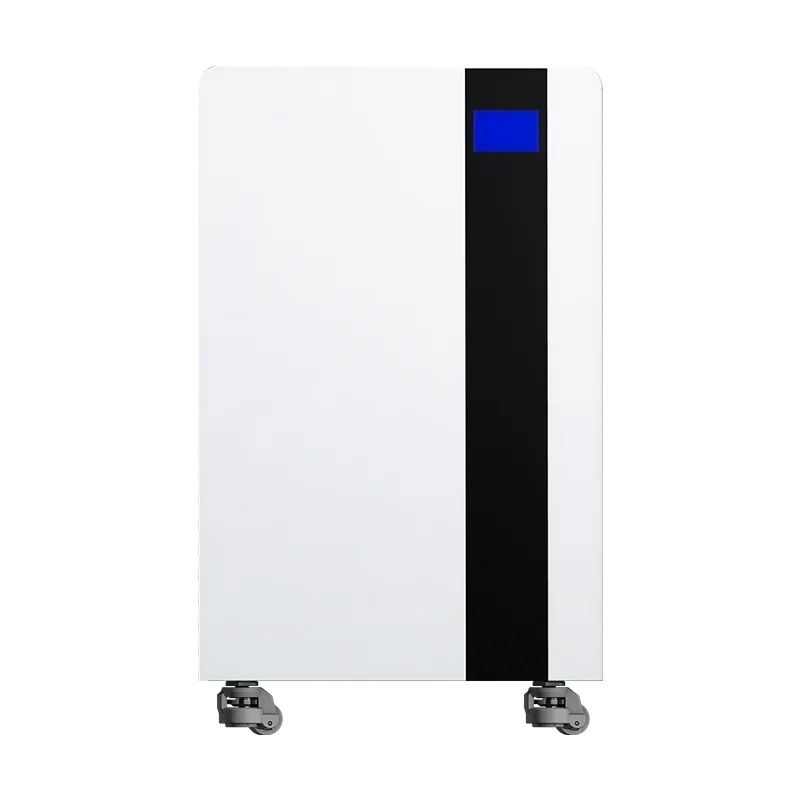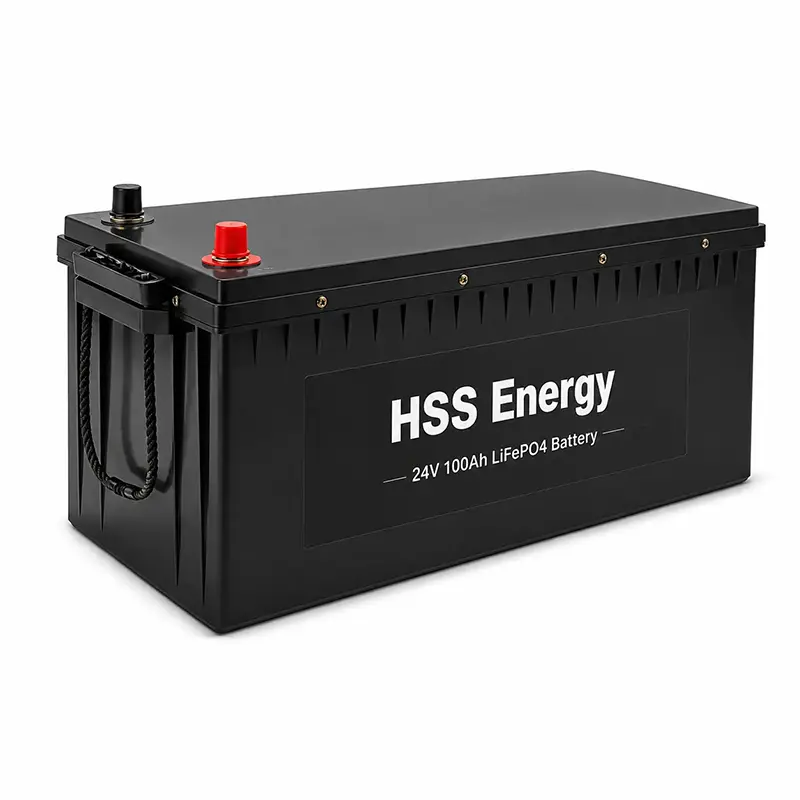
The China 24V 100Ah LiFePO4 Battery gives HSS Energy a compact 25.6V nominal platform for projects already designed around a 24V-class electrical architecture. Selection should confirm charger profile, sustained and surge demand, cable and fuse sizing, terminal layout, environmental exposure, approved parallel rules and the released BMS configuration before production.
|
24V Voltage class |
25.6V Nominal |
100Ah Capacity |
19 kg Weight |
Supported Parallel |
|
|
24V100Ah SKU decision Choose this SKU when the project already lives in a 24V-class system and needs a compact LFP pack for onboard loads, small solar or auxiliary equipment. It is not the right choice when the application actually needs a larger reserve bank or a separately defined heavy-duty traction pack. |
|||||
Use market-class language and engineering nominal language together: 24V system class, 25.6V LiFePO4 nominal.
|
Parameter |
Reference value |
|
Market Voltage Class |
24V |
|
Engineering Nominal Voltage |
25.6V |
|
Nominal Capacity |
100Ah |
|
Source-Listed Charge Rate |
0.2C-1C |
|
Source-Listed Discharge Rate |
0.2C-2C |
|
Weight |
19 kg |
|
Parallel Connection |
Supports multiple parallel connection |
|
Dimensions (L × W × H) |
490 × 171 × 240 mm |
|
Typical Product Role |
Compact 24V auxiliary / marine / solar entry |
When evaluating a 24V 100Ah lithium battery, convert the source-listed C-rate into project current before approval. Charger sizing, sustained load, surge demand and BMS limits should be checked against the exact ordered configuration instead of treating the C-rate range as a universal continuous-current guarantee.
|
Why a 24V architecture changes system planning For the same power target, a 24V system usually works at lower current than an equivalent 12V arrangement, which can reduce cable stress and simplify DC-side design. That benefit does not remove the need to review the exact pack current boundary, charger behavior and terminal hardware. |
Voltage-class matching is only the first step; charging behavior and real load demand decide whether the conversion is suitable.
|
Conversion sequence for this SKU 1 Confirm the 24V-class bus - Record the existing battery grouping, charger behavior and the equipment voltage architecture before changing chemistry. 2 Approve the charger path - Check charger voltage, charging stages, solar controller settings and any alternator or DC-DC path for the released LiFePO4 configuration. 3 Match real load demand - Compare sustained demand, surge demand and duty cycle with the approved current capability and BMS limits for the ordered pack. 4 Plan expansion deliberately - Multiple parallel connection is listed, but pack count, fusing, cable symmetry and balancing practice must be approved for the project. |
This SKU suits customers moving a 24V deep cycle battery application from lead-acid to LiFePO4 while keeping the existing 24V-class system architecture. The key advantage is a compact 25.6V nominal platform; the key decision is whether the charger, duty cycle and approved pack current boundary match the real application.
|
Decision point |
What to verify |
Why it matters |
|
System architecture |
Existing equipment remains in the 24V class; released pack uses 25.6V nominal LiFePO4. |
Voltage label alone does not confirm charger or load compatibility. |
|
Charging path |
LiFePO4-compatible profile, charge stages, controller settings and low-temperature behavior. |
Legacy lead-acid charging logic may need adjustment before conversion. |
|
Load boundary |
Sustained current, surge current, duty cycle and the exact approved BMS/current limit. |
100Ah capacity does not by itself define allowable output current. |
|
Expansion path |
Approved parallel quantity, fuse strategy, equal cable paths and pack balancing. |
Parallel support is a project design decision, not an unlimited-capacity claim. |
Primary product role: compact 24V marine / mobility / solar entry, with backup and industrial auxiliary as secondary territory.
|
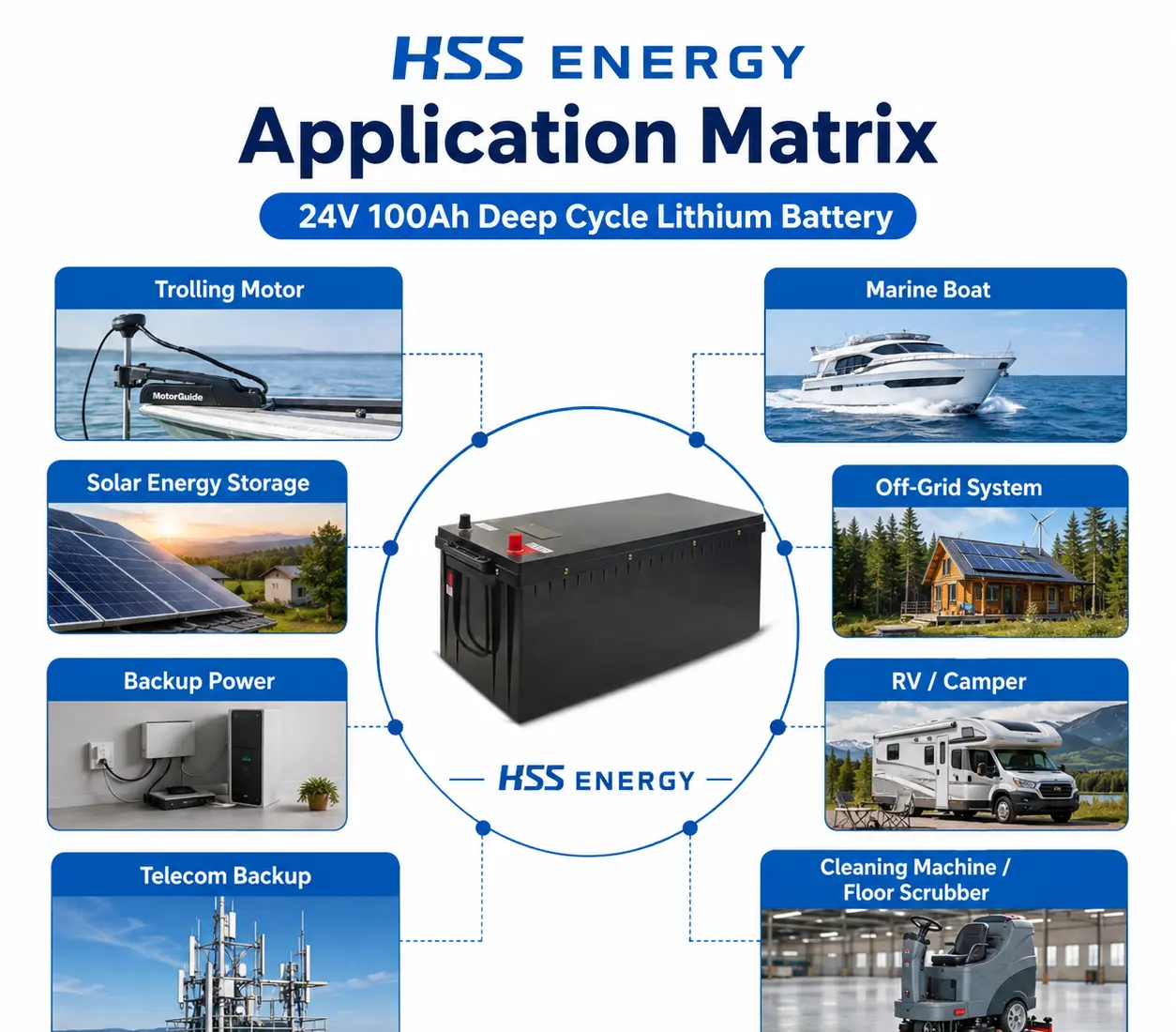
Marine & onboard role A 24V marine battery project should review the onboard charging source, cable routing, corrosion exposure, duty cycle and the exact pack current approval. House loads, fish-finder power and onboard auxiliary systems may fit when the installation envelope and charger settings are aligned. |
|
Trolling-motor fit review For a 24V trolling motor battery application, confirm continuous running demand, peak-thrust behavior, wiring protection, low-speed endurance expectations and the exact charger profile used on the boat. A matching voltage class does not automatically approve every trolling system. |
|
Small solar, off-grid and utility support For a lead acid replacement battery project in compact solar, off-grid cabin, telecom backup, RV auxiliary or cleaning-machine service, confirm charger compatibility, operating environment and the approved parallel strategy before assigning this SKU. |
Use the approved drawing and project configuration - not a generic family description alone - to lock the production version.
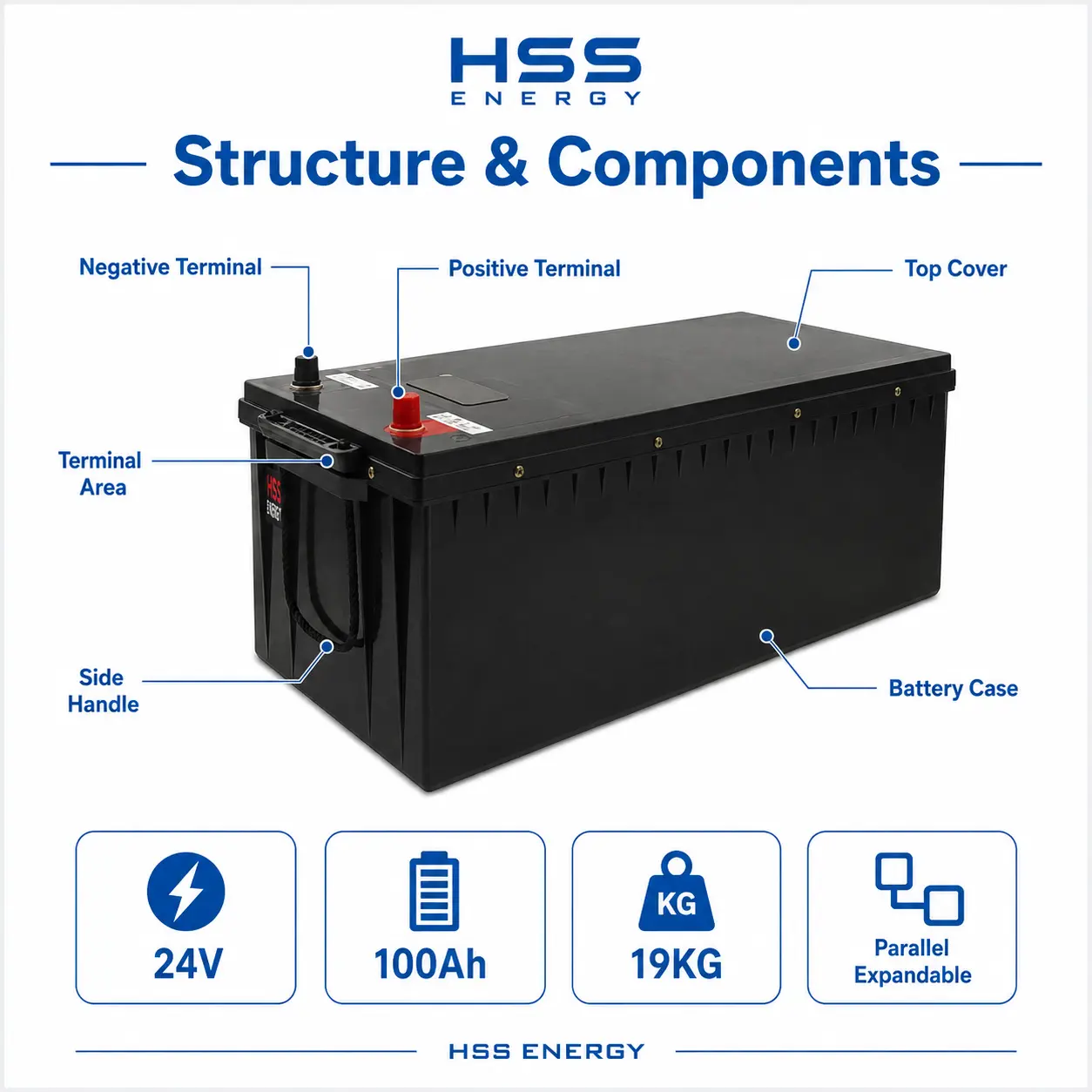
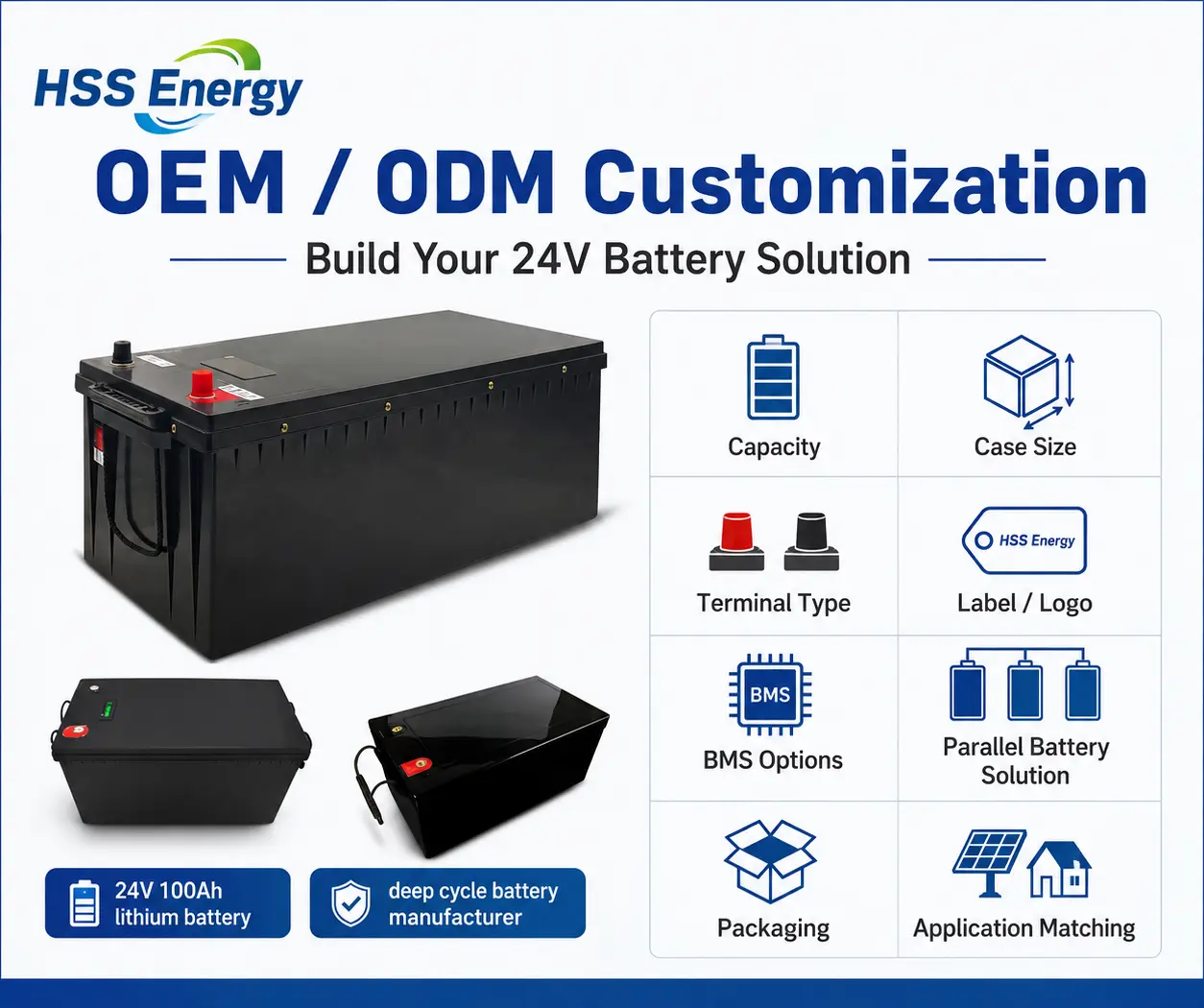
• Terminal hardware: Confirm polarity, terminal type, mating lugs, fastening torque, insulation method and service access.
• Enclosure & side-handle layout: Use the provided mechanical size and handle position for compartment planning, lifting access and retention design.
• BMS options: Protection thresholds, current behavior and any communication or monitoring functions must follow the approved BMS option list.
• Parallel solution: The project should define how many packs may be paralleled, how balancing is managed and how system protection is allocated.
• Application matching: Boat, solar, cabin, telecom or cleaning-machine use should be declared up front so the configuration fits the real duty cycle.
• OEM / ODM scope: Capacity, case details, terminal style, label/logo and packaging can be reviewed against MOQ, engineering feasibility and compliance scope.
|
Configuration rule Do not infer waterproof rating, a specific Bluetooth package, a different continuous-current statement or unlimited parallel count unless those points are approved for the ordered version. The released configuration should follow the confirmed BMS, terminal, charger, enclosure and documentation scope. |
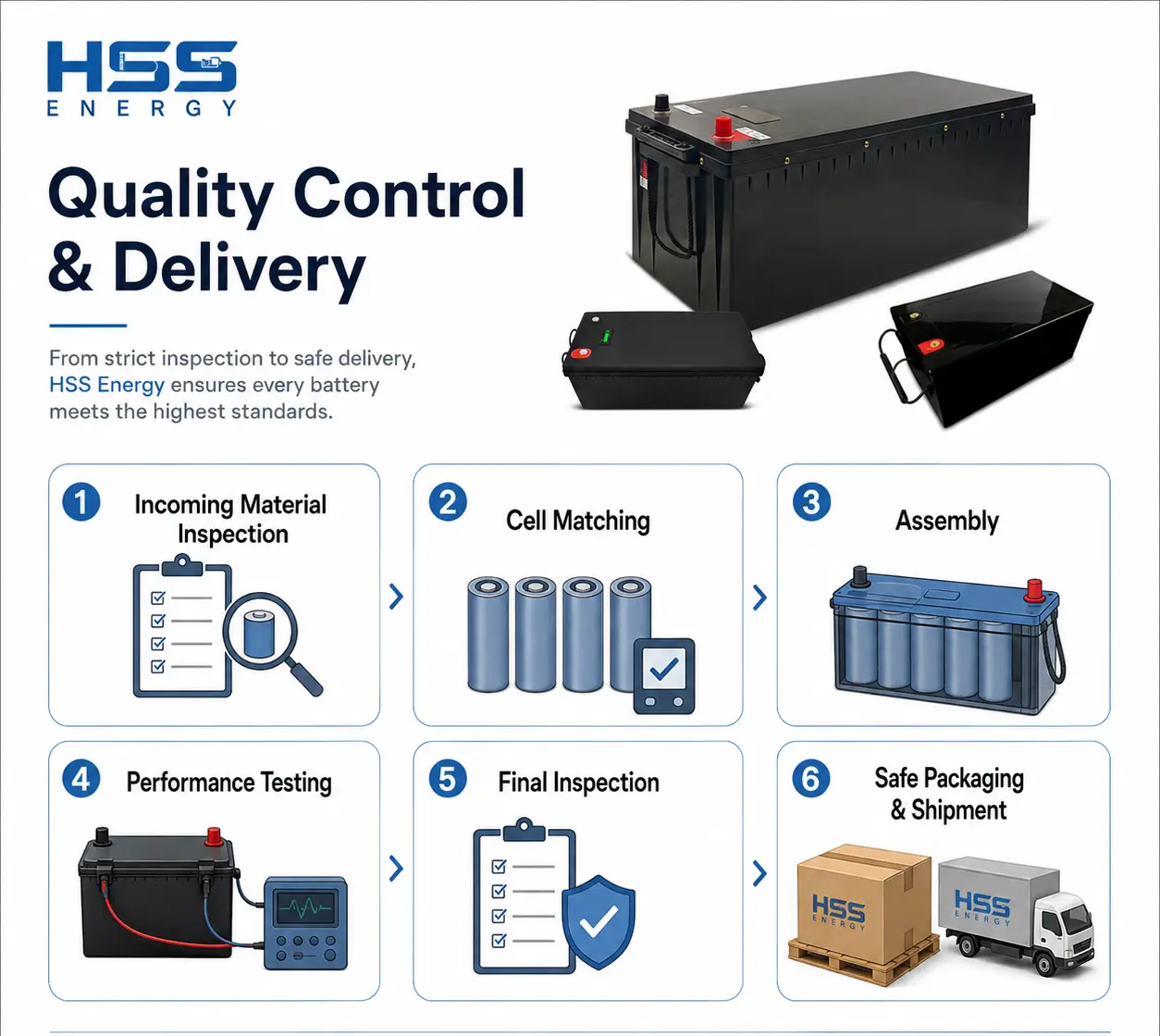
The process visuals support supplier capability review; they do not automatically mean every option and every test applies to every ordered version.
24V is the market and system class. The engineering nominal voltage for an 8S LiFePO4 configuration is 25.6V.
Potentially yes, but only after matching the motor demand, expected runtime, charger profile, cable protection and the approved pack current capability.
No. Capacity and output are separate questions. This source package presents charge and discharge in C-rate language, so the exact approved current capability must be confirmed from the ordered configuration.
Multiple parallel connection is listed, but the approved pack count, protection layout, cable strategy and balancing practice should be confirmed before ordering.
Only after checking voltage profile, charging stages and any equalization or recovery functions. A charger designed for legacy lead-acid settings is not automatically suitable.
Send the existing battery model or label, application type, motor/inverter/load details, charger information, compartment dimensions, terminal preference, operating environment, quantity and any OEM function requests.
Address
A3, 1204-1, 1142 Jimei North Avenue, Software Park Phase III, Xiamen Torch High-tech Zone, Xiamen, China
Tel