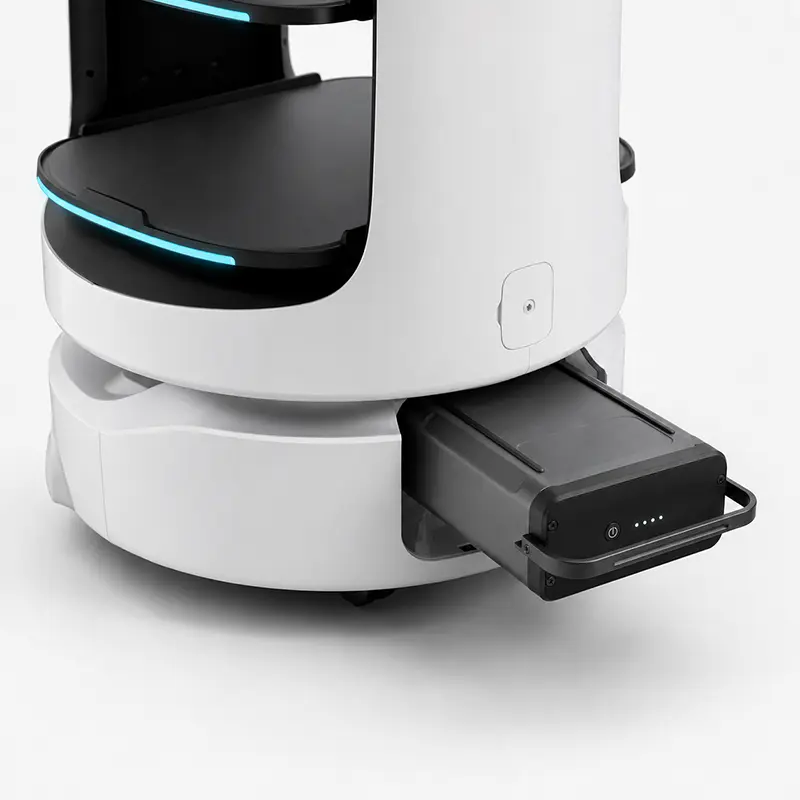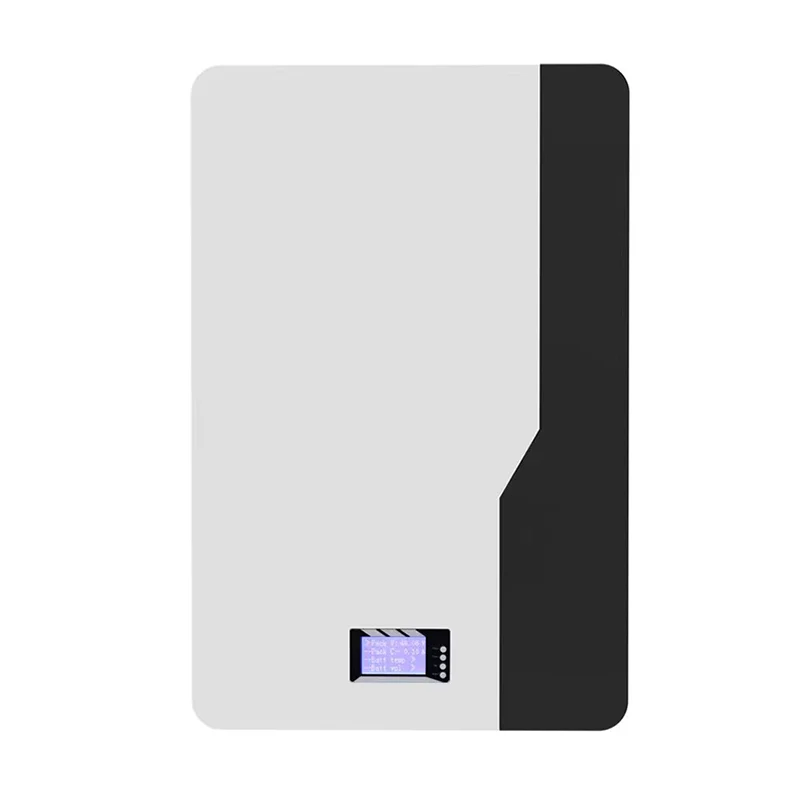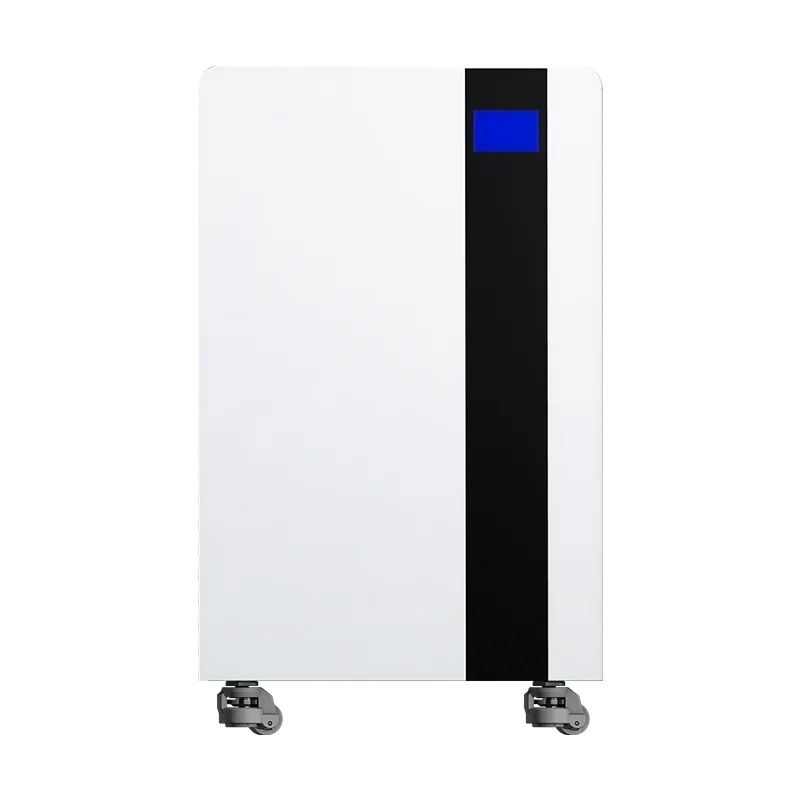
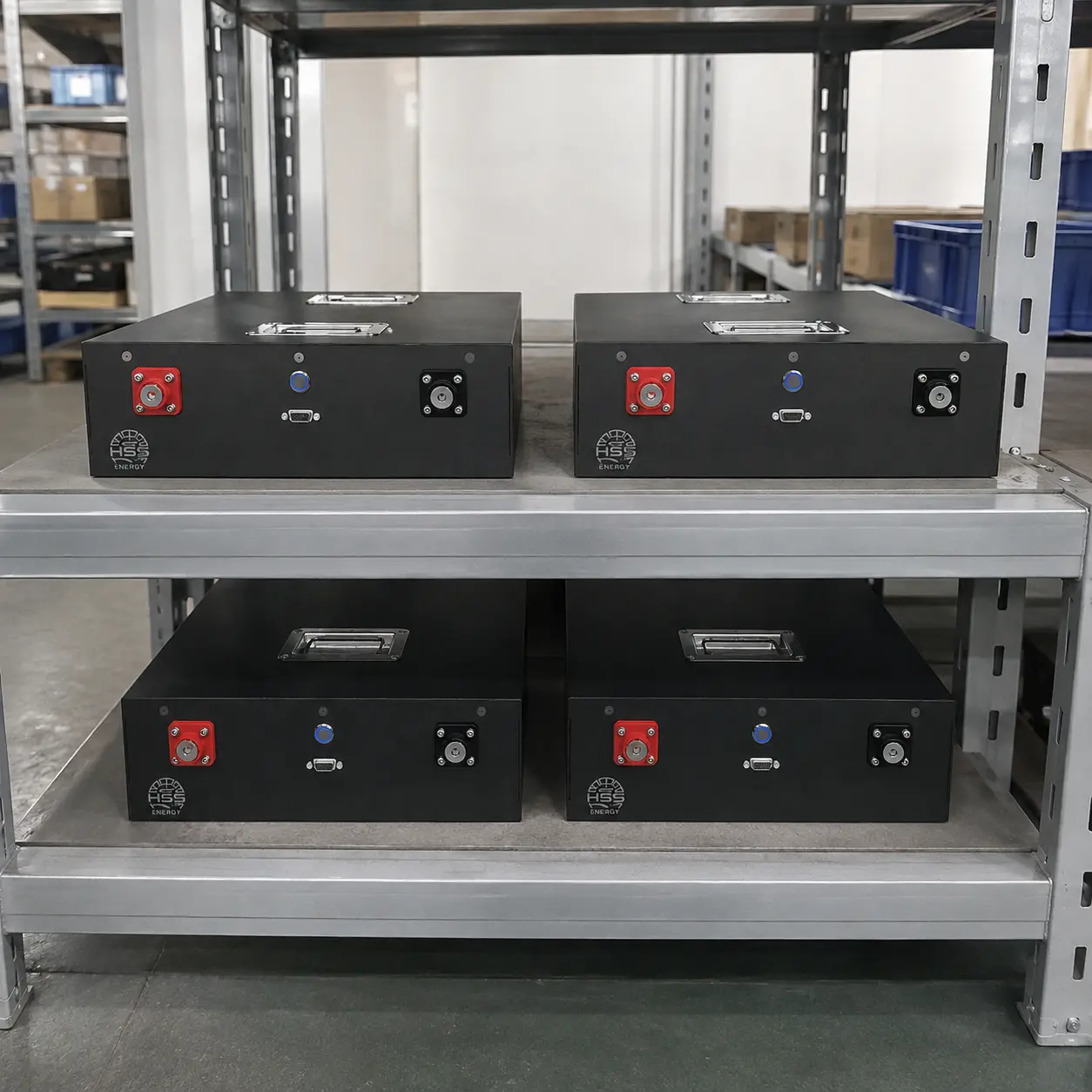
HSS Energy 48V 30Ah AMR Battery uses a compact 16S1P LiFePO4 architecture for replacement-focused AMR projects. The reference platform uses Gotion 30Ah cells, 51.2V nominal voltage, 1.536kWh energy, CAN + RS485 and a 285 × 230 × 185 mm enclosure. The 51.2V nominal route should be treated as part of the robot's electrical system, not as a generic substitute for every product marketed as 48V. HSS therefore confirms the controller window, charger voltage, battery-bay geometry, connector direction and communication mapping as one project. This makes the page more useful to integrators and distributors who need an actual replacement or OEM battery rather than a catalogue-level voltage match.
|
Parameter |
HSS Reference / Release Boundary |
|
Reference Cell |
Gotion 30Ah |
|
Configuration |
16S1P |
|
Chemistry |
LiFePO4 / LFP |
|
Market Voltage Class |
48V |
|
Nominal Voltage |
51.2V |
|
Capacity |
30Ah |
|
Nominal Energy |
1.536kWh |
|
Operating Voltage Range |
40–58.4V |
|
Reference Dimensions |
285 × 230 × 185 mm |
|
Communication |
CAN + RS485 |
|
Current Parameters |
30A charge / 45A discharge |
The values above define the current HSS reference platform. Current-function definition, connector, protocol mapping, charging interface and final enclosure release must be confirmed against the target AMR. IP rating, cycle life, weight and certification scope are not fixed without exact-pack evidence. They are intended to help customers screen the project without turning unverified market information into fixed product claims. Current function, connector family, protocol mapping, charging interface and enclosure release still depend on the target AMR. Keeping that evidence boundary visible is particularly important for foreign-trade projects, where a specification may later be used in a quotation, purchase order or customer-facing datasheet.
A 48V 30Ah mobile robot battery should be selected from battery-bay geometry, mounting, connector direction and service clearance. Compact AMRs often have little tolerance for connector direction, cable bend radius or service clearance, so dimensional approval must cover more than overall length, width and height. Mounting features, removal path and access for technicians can determine whether the battery is practical in daily fleet use. HSS therefore treats mechanical fit as an integration task rather than assuming a public market size is universal.
|
L×W×H Battery compartment |
Mounting Hole / bracket position |
Connector Direction + cable bend |
Service Removal + access clearance |
A 51.2V 30Ah robot battery follows a 16S LiFePO4 route with a 40–58.4V operating range. Check the charger and controller window before replacing any 15S / 48.0V platform. This is why the charger and controller window must be verified before replacing a 15S / 48.0V platform. A battery can look correct by market voltage and capacity while still using a different upper-charge voltage and operating range. For replacement customers, confirming the series architecture early helps avoid charger incompatibility and unnecessary redesign of the robot-side electrical system.
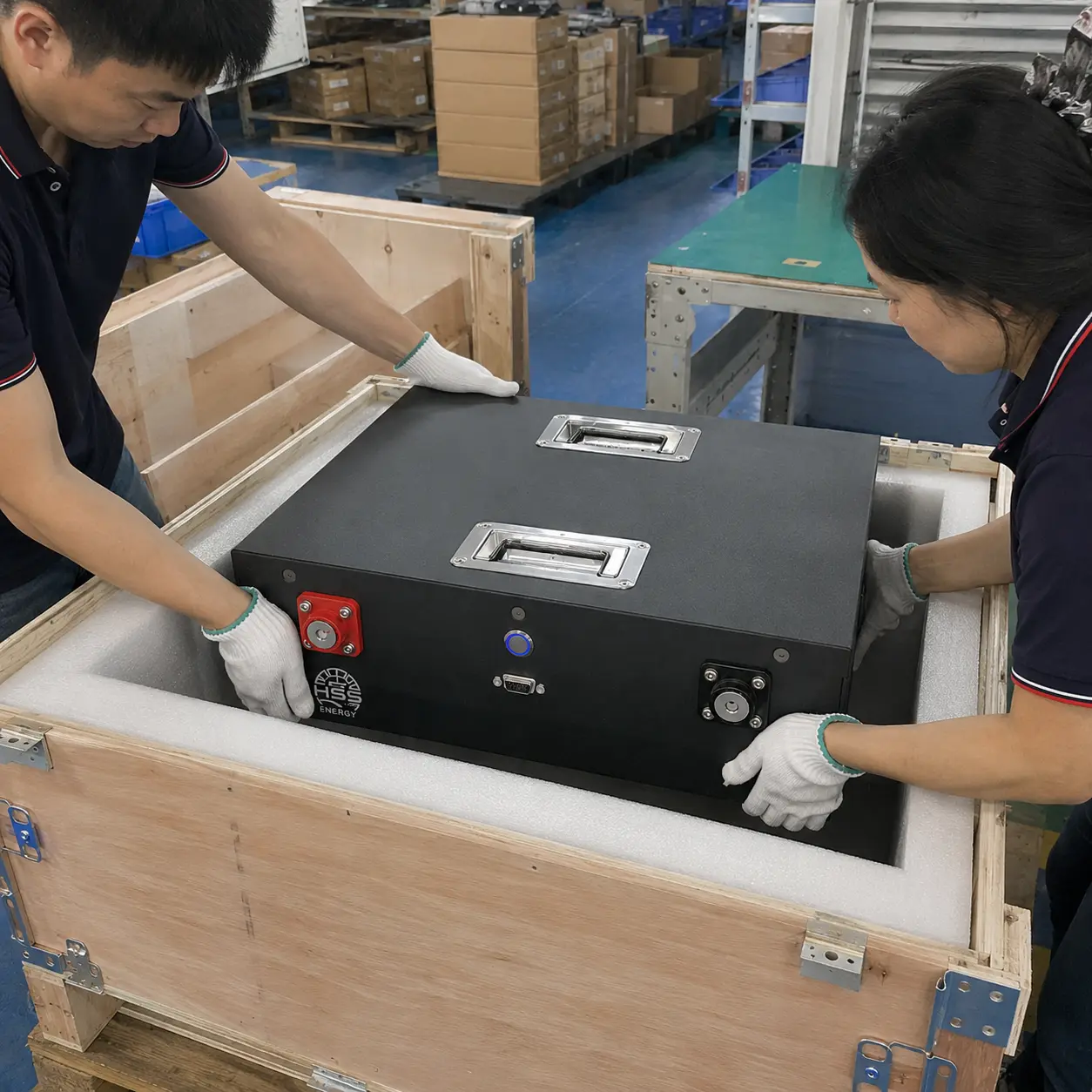
A 48V 30Ah LiFePO4 robot battery with CAN or RS485 still needs protocol matching. For the 48V 30Ah AMR Battery, confirm mapping, pinout and dock-charging control. Protocol matching includes more than choosing a connector: bitrate or baud rate, message IDs or register maps, scaling, alarm behavior and fault response all need to line up with the target AMR. Dock charging adds another integration layer because contact layout, charge enable and safe disconnect logic must also be confirmed. This is why communication documents are valuable inputs during the quotation stage, not only after the hardware sample is built.
|
Integration Item |
What to Confirm |
|
CAN / RS485 |
Bitrate / baud rate, IDs or registers, scaling, alarms |
|
Power Connector |
Family, polarity, current rating, cable gauge |
|
Charging Interface |
Charger voltage/current, contact layout, charge enable |
|
Fault Response |
Wake-up, shutdown, safe disconnect and recovery logic |
A 30Ah AMR replacement battery is approved after the old label, battery-bay size, charger, connectors and communication data are reviewed. Use a higher-capacity SKU when the robot needs more energy between charges. The replacement path starts with evidence from the existing robot so HSS can preserve the correct voltage route, battery-bay fit, connector and communication behavior. The 30Ah option is best suited to robots that can meet their energy target with a compact pack or access regular charging. When the route requires more energy between charging windows, moving to a higher-capacity SKU may be more appropriate than forcing the 30Ah pack beyond its intended duty cycle.
|
1. Collect Label, robot model, photos |
2. Verify Voltage, charger, load |
3. Match Bay, connector, protocol |
4. Validate Sample fit + function |
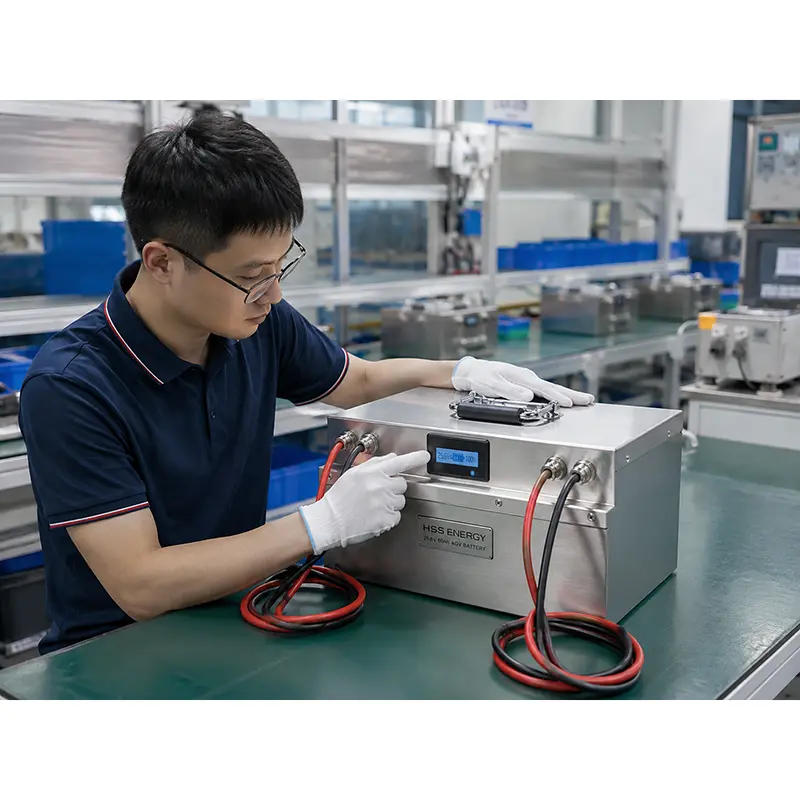
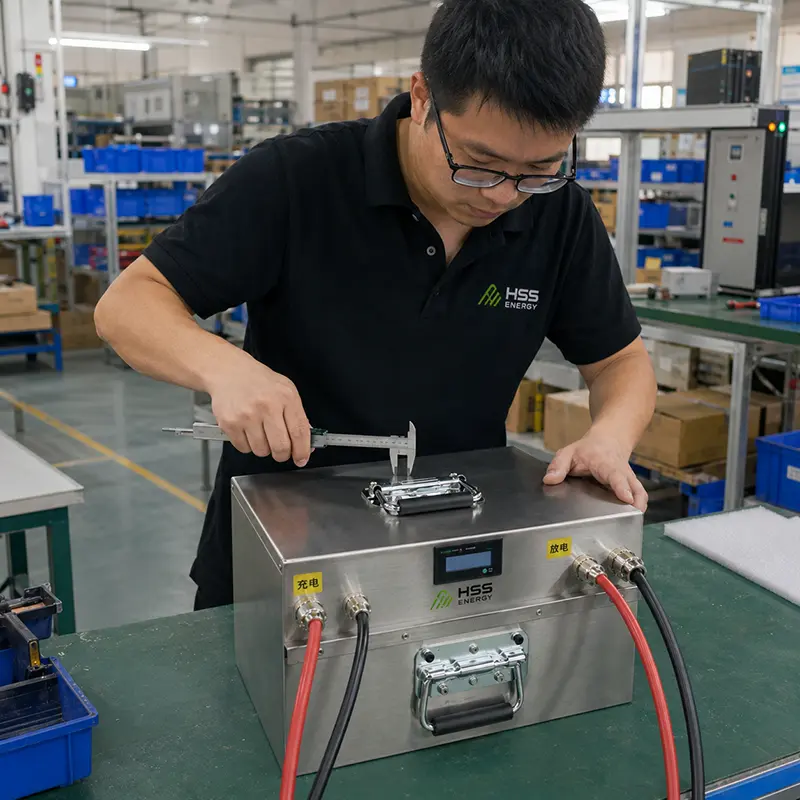
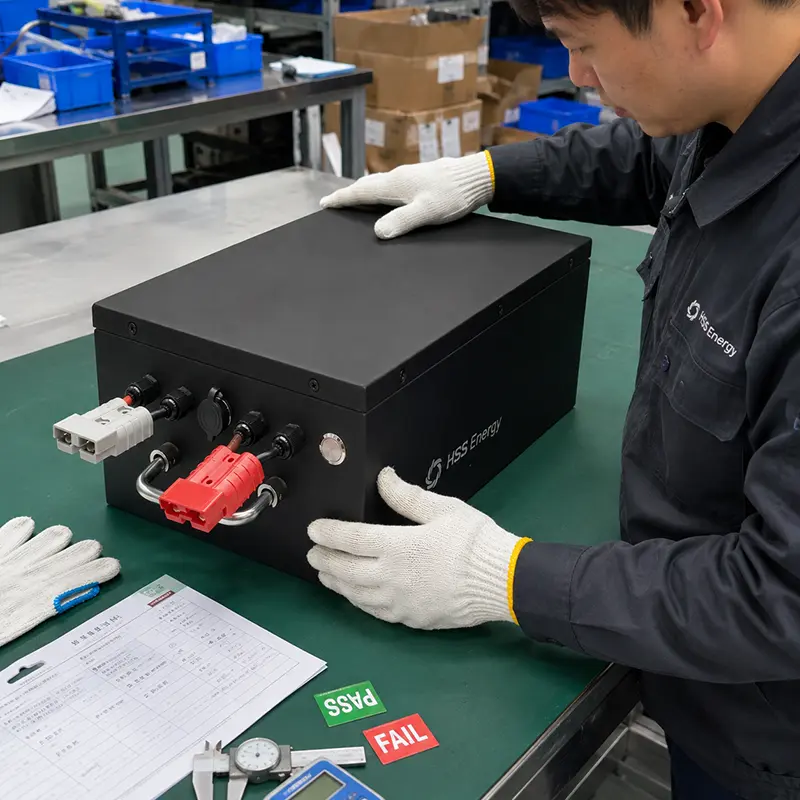
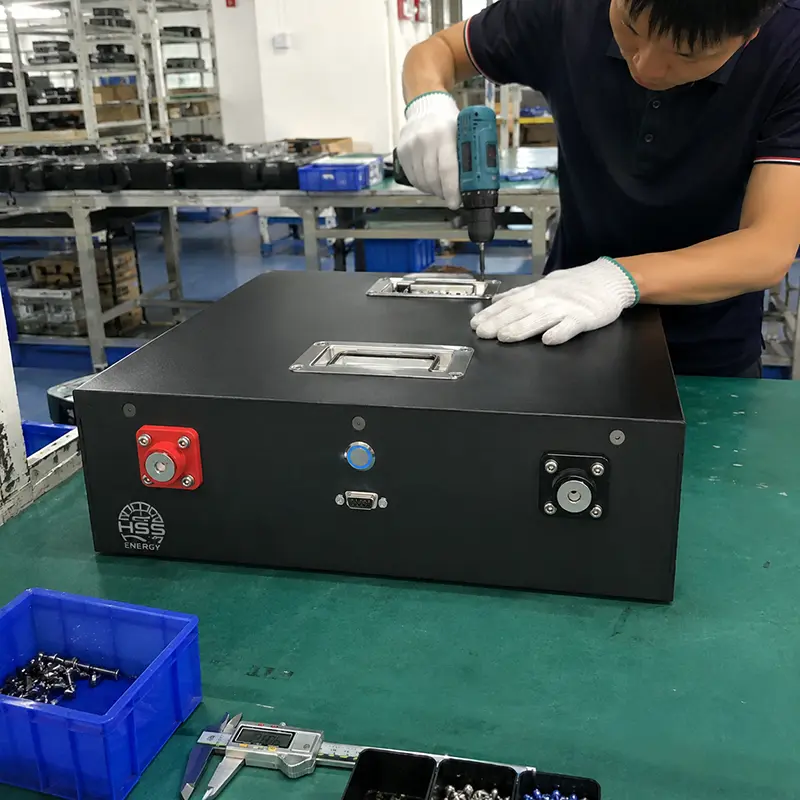
OEM configuration can adjust enclosure, connectors, BMS settings and charger strategy. Validation covers cell matching, BMS function, aging checks and final inspection. Those variables can be documented in the approved drawing and production specification after the target AMR is validated. For OEM and export customers, this gives a clearer path from sample to repeat production because the enclosure, interfaces and control behavior are not left as informal assumptions. The same process also supports later service or replacement orders for the same robot platform.
|
Cell Matching |
BMS Function |
Aging / Validation |
Final Inspection |
Selected Customer Feedback
|
United Kingdom | 5/5 "Very satisfied" Service 5/5 | On-time shipment 5/5 28 Feb 2026 |
|
|
South Korea | 5/5 "the battery quality is good" Service 5/5 | On-time shipment 5/5 03 Feb 2026 |
|
|
Japan | 5/5 "Truly excellent quality" Service 5/5 | On-time shipment 5/5 29 Jan 2026 |
|
Evidence note: selected feedback reflects prior HSS Energy battery orders and general service / product experience; it is not performance evidence for this exact 48V 30Ah AMR configuration. The feedback is used only as general supplier and service context and should not be interpreted as test evidence for this exact 48V 30Ah configuration. Keeping that distinction clear protects the credibility of the page while still giving customers a view of prior customer experience with HSS Energy's battery supply and delivery performance.
|
customers Question |
HSS Engineering Answer |
|
Why is it called 48V if nominal voltage is 51.2V? |
48V is the market class. This reference SKU uses 16S LiFePO4: 51.2V nominal and 40–58.4V operating range. |
|
Can it replace another 48V 30Ah battery directly? |
Not from the label alone. Voltage route, charger, battery bay, connectors and communication must be checked. |
|
Does CAN + RS485 mean plug-and-play? |
No. Protocol mapping, bitrate / baud rate, pinout and fault behavior still require confirmation. |
|
Can it support dock charging? |
Yes as a project integration path after charger voltage/current, contacts and control logic are confirmed. |
|
When should I choose a larger battery? |
Choose a higher-capacity platform when required energy between charging windows exceeds what a compact 30Ah pack can support. |
For a 48V 30Ah AMR Battery replacement review, send HSS Energy the robot model, old battery label, battery-bay size, connector photos, charger and CAN/RS485 data. Add the expected runtime, steady and peak load, charging method and protocol file when possible. A complete inquiry package lets HSS evaluate whether the compact 30Ah platform is appropriate, what interfaces must be matched and whether another capacity or voltage architecture would be a better fit before a sample quotation is prepared.
|
Robot Model + payload |
Battery Bay L×W×H + mounting |
Charger Voltage + current |
|
Connector Power / charge / COM |
Protocol CAN / RS485 document |
Duty Cycle Load + runtime target |
Address
A3, 1204-1, 1142 Jimei North Avenue, Software Park Phase III, Xiamen Torch High-tech Zone, Xiamen, China
Tel