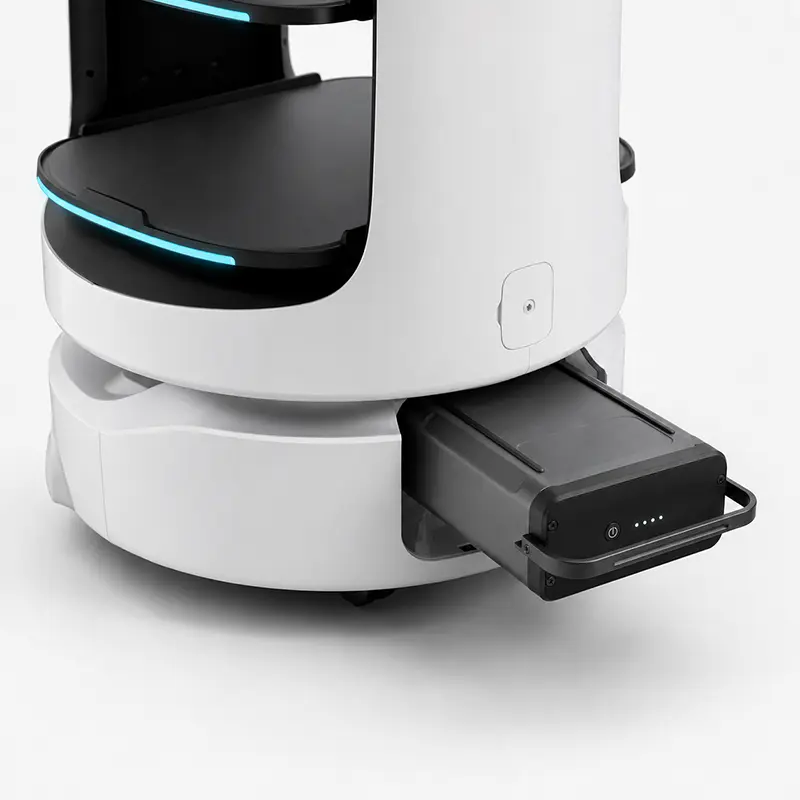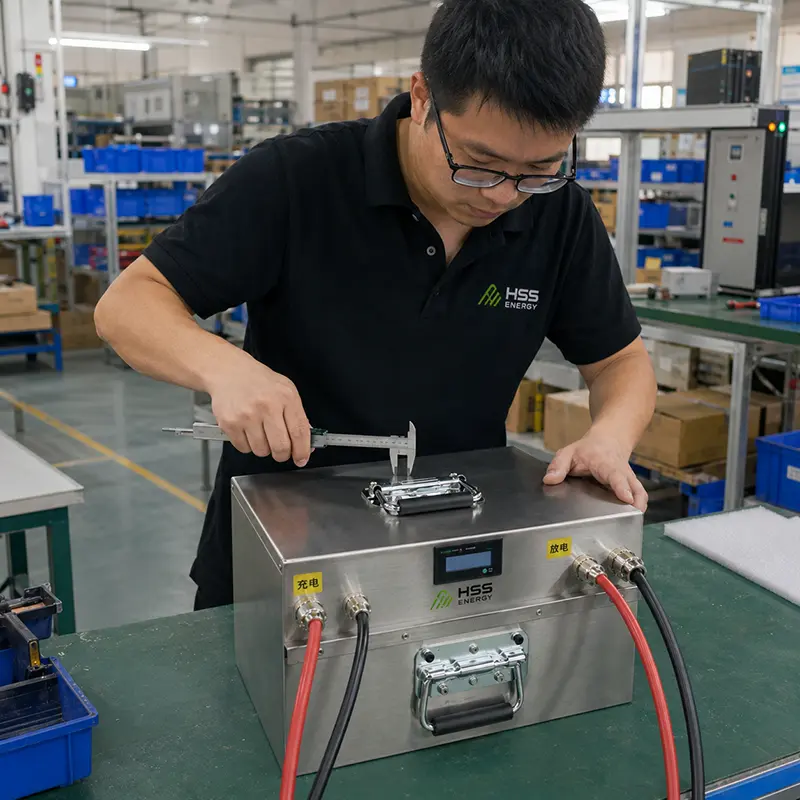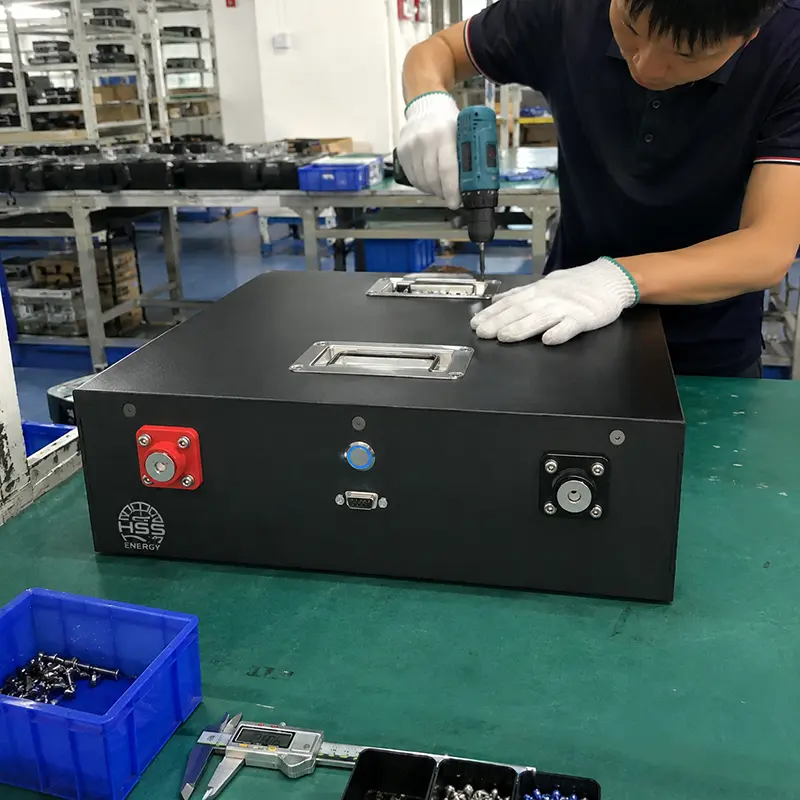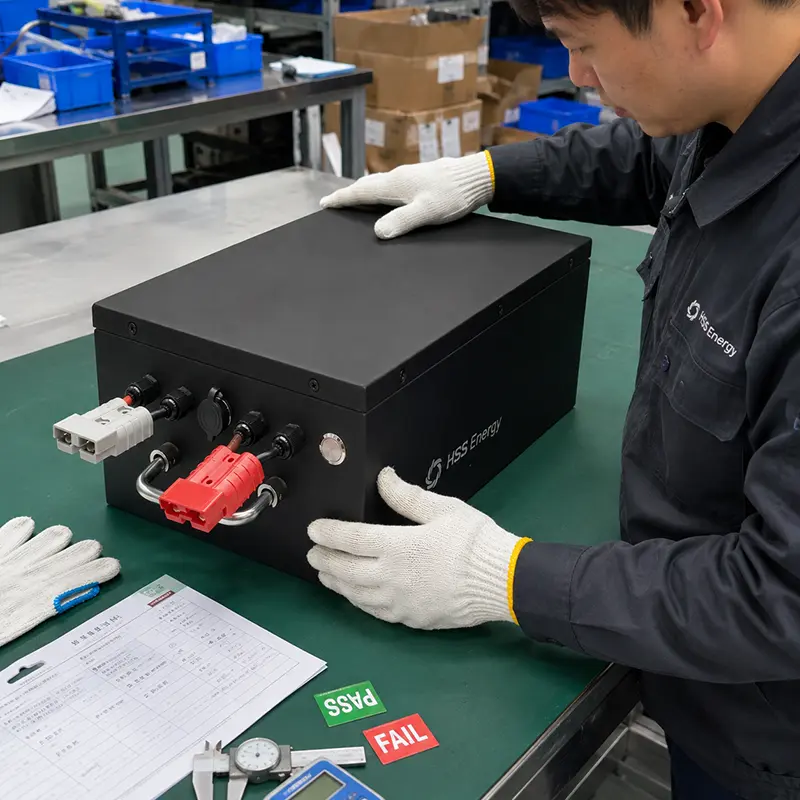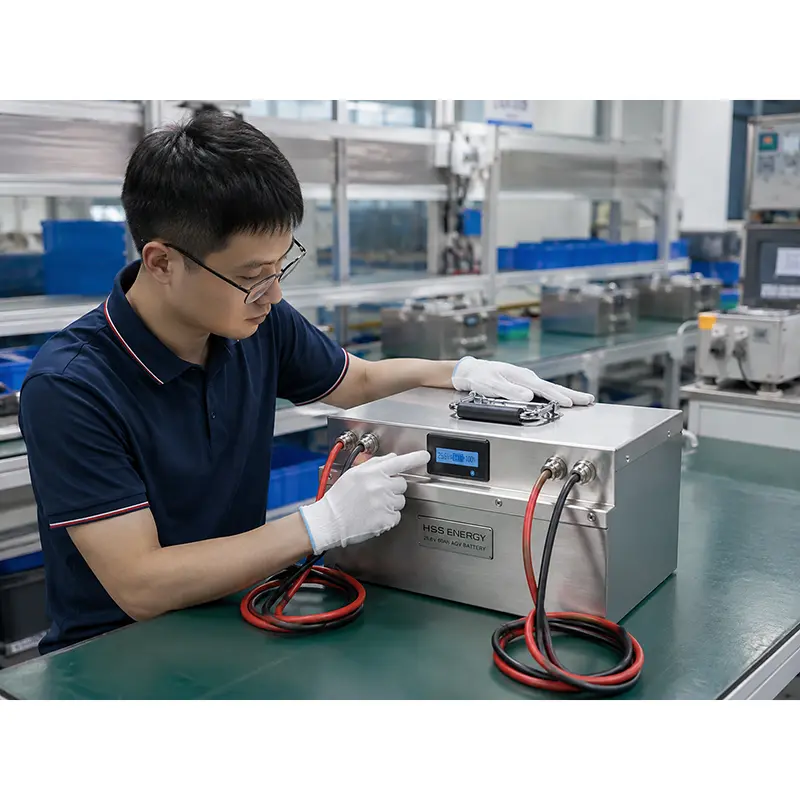
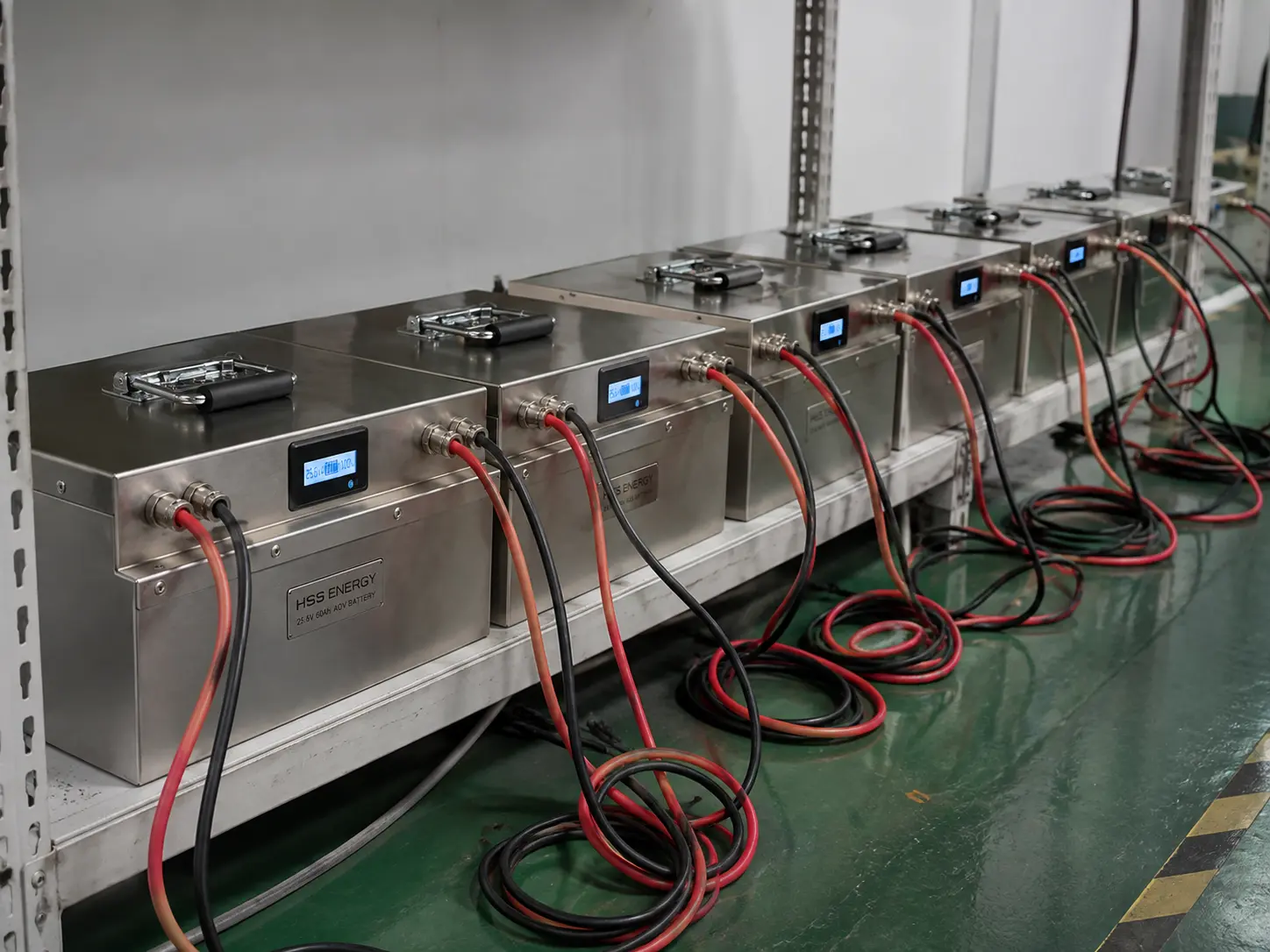
HSS Energy 25.6V 60Ah AGV Battery is for compact AGVs where 8S voltage matching, battery-bay fit and charging strategy matter more than a generic 24V label. Current, enclosure, connector and protocol are confirmed for the target vehicle. A nominal '24V' label alone is not enough because AGV platforms can use different lithium architectures, charger windows and communication methods. HSS therefore treats the target vehicle as part of the battery specification: average and peak load, service clearance, charging schedule, connector direction and protocol mapping all influence the final configuration. This approach is better suited to OEM and foreign-trade projects where a battery must integrate into an existing robot rather than merely meet a voltage number.
|
Parameter |
HSS Reference Configuration / Project Confirmation |
|
Market Voltage Class |
24V-class |
|
Nominal Voltage |
25.6V |
|
Configuration |
8S LiFePO4 |
|
Capacity |
60Ah |
|
Nominal Energy |
1.536kWh |
|
Upper Charge Reference |
29.2V (8 × 3.65V); final charger profile project-confirmed |
|
Charge Method |
CC-CV; manual / dock / opportunity charging by project |
|
Continuous / Peak Current |
Project-confirmed from AGV load and peak duration |
|
Communication |
CAN / RS485 project-selectable; mapping confirmed by project |
|
Enclosure / Weight |
Project-confirmed after battery-bay review |
|
Connector / Pinout |
Project-configured |
A 24V 60Ah AGV battery can use a 25.6V nominal 8S LiFePO4 route. Confirm controller and charger limits against the 29.2V charge reference. The important engineering check is whether the controller and charger are designed for the corresponding 8S voltage window, including the 29.2V upper-charge reference. Confirming that route early prevents a common replacement error in which a battery is selected by the market label but operates outside the actual charger or controller limits. For repeat orders, the approved voltage architecture should be recorded in the project drawing and technical agreement.
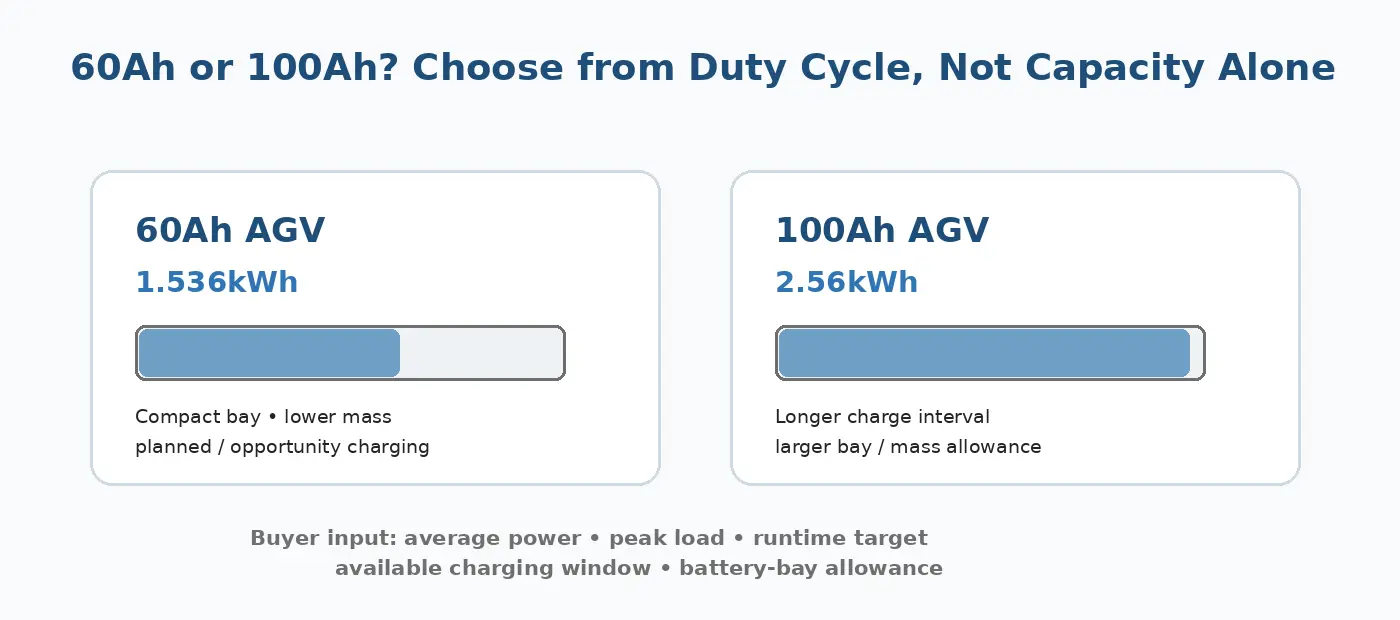
A 25.6V 60Ah LiFePO4 AGV battery provides 1.536kWh nominal energy. Runtime still depends on average power, peak load and charging windows. That figure gives customers a starting point for runtime planning, but the useful operating time still depends on average traction power, payload, auxiliaries, peak load, usable SOC and the amount of charging available during the shift. In fleets using opportunity or dock charging, a compact 60Ah pack may be commercially more attractive than a larger battery because it reduces enclosure size and mass while the charging strategy covers the energy deficit.
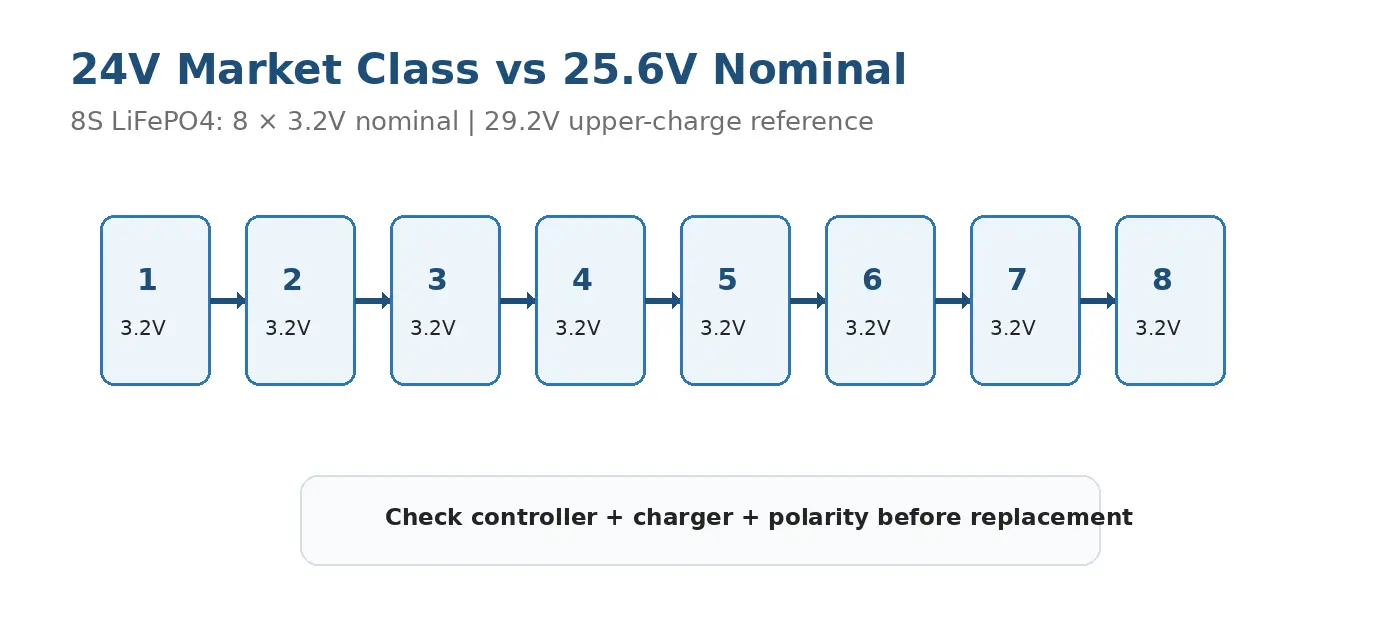
8S architecture visual. The 29.2V value is an upper-charge reference, not a substitute for charger approval.
A 60Ah AGV lithium battery suits space-conscious vehicles and fleets using planned or opportunity charging. Consider 100Ah when longer intervals between charges justify more size and mass. This makes the 60Ah platform particularly relevant to compact AGVs that operate predictable routes and can access planned charging windows. customers should compare not only nominal runtime but also the space, mass and service advantages gained by staying with a smaller battery. When the route has longer uninterrupted work periods or fewer charging opportunities, the 100Ah alternative becomes more attractive even though it requires more room and allowable mass.
|
Input |
Why It Matters |
|
Battery-bay L×W×H |
Defines feasible enclosure and service clearance |
|
Average / peak load |
Sets current and BMS requirement |
|
Runtime target |
Tests whether 60Ah energy is sufficient |
|
Charging window |
Determines manual, dock or opportunity-charging strategy |
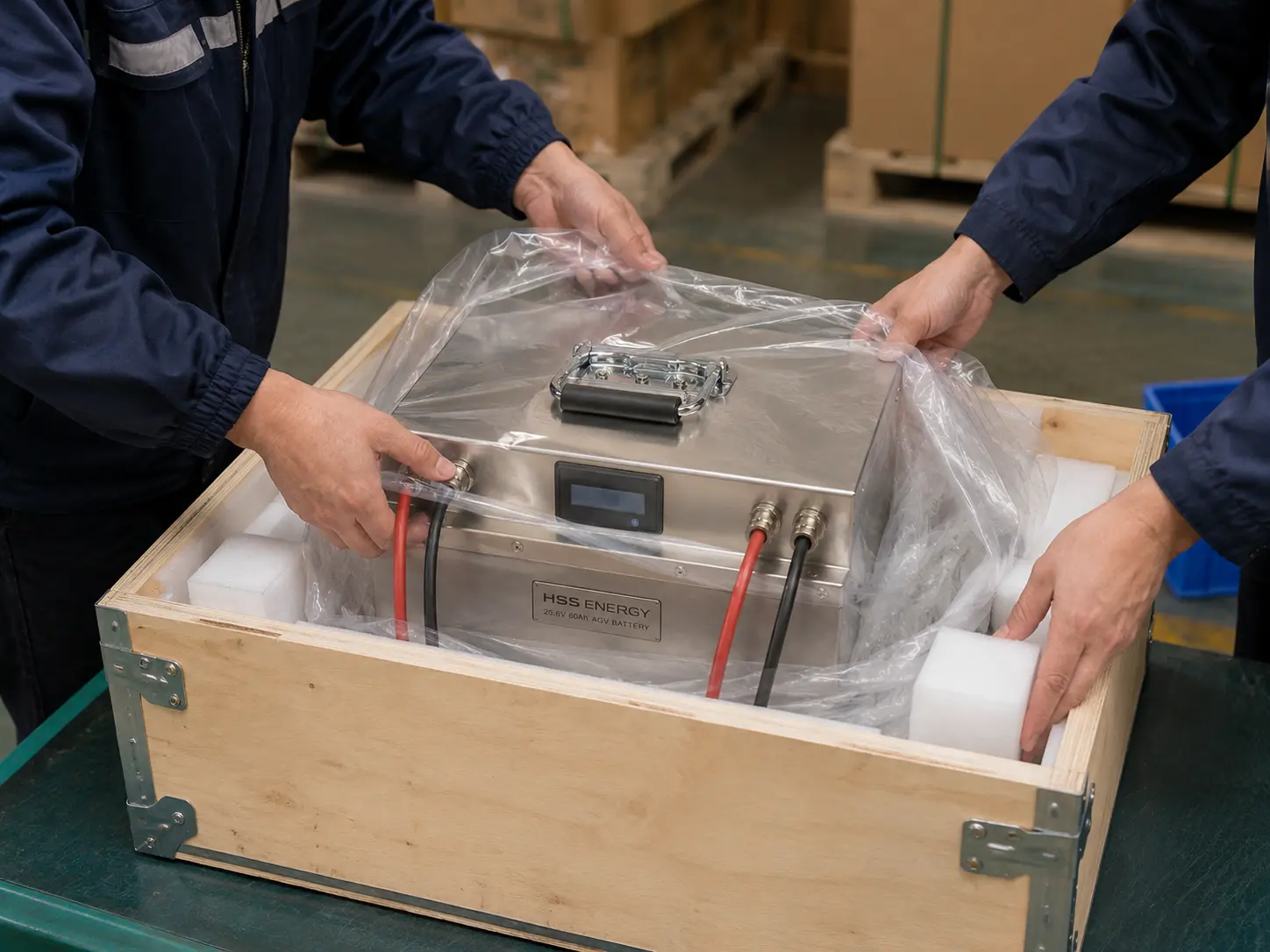
Mechanical approval checks battery-bay L×W×H, mounting, connector direction and service clearance. Market pack shapes vary, so no outside size is treated as a universal standard. The review should also consider how the battery is inserted and removed, whether cables can bend without strain, and whether technicians can access the connector after installation. These practical details affect field service and can determine whether a nominally suitable battery is actually usable in the robot. HSS keeps the enclosure project-specific so the final drawing reflects the real vehicle rather than a market-average pack shape.
For a 25.6V 60Ah robot battery, CAN or RS485 alone does not guarantee compatibility. Protocol, pinout, charging contacts and fault handling must match the AGV and dock. Two devices may both advertise CAN or RS485 while using different message IDs, baud rates, scaling, heartbeat behavior or fault logic. The same principle applies to dock charging: electrical contacts, charge-enable logic and safe disconnect conditions must match the AGV. For foreign-trade customers, providing the communication document early can shorten sample development and reduce the risk of a battery that powers the robot but cannot communicate correctly.
|
Integration Point |
Confirm Before Sample Approval |
|
Main power |
polarity, connector family, cable route and current rating |
|
CAN |
bitrate, IDs, scaling, heartbeat / fault handling |
|
RS485 |
baud rate, address, register map and polling logic |
|
Dock charging |
charger profile, contacts, interlock and safe disconnect |
Engineering rule: interface availability is only the starting point; electrical and protocol behavior must be validated on the target AGV. A connector or communication port becomes useful only after electrical ratings, pin definitions and protocol behavior are verified on the target vehicle. HSS therefore treats protocol mapping, dock-charging control and fault response as part of the integration scope rather than optional afterthoughts. This is especially important for OEM projects where the battery must work consistently across a fleet rather than in a single manual test.
A 24V 60Ah AGV replacement battery should not be approved from the label alone. For this 25.6V 60Ah AGV Battery, confirm the 8S route, bay fit, charger, connector and communication. Replacement approval should combine the existing battery label with evidence from the AGV, charger and battery bay. A correct replacement maintains the voltage architecture, fits the physical space, uses the required connector and reproduces the communication behavior expected by the vehicle. By documenting these items before sample release, HSS can give distributors and fleet operators a clearer basis for repeat orders and after-sales support.
For replacement or OEM review, send the battery label, AGV model, bay drawing, charger data and communication file. It is also useful to include average power, peak current and desired runtime, because those values determine whether 60Ah is the right energy class and what current capability the BMS and connector must support. For commercial planning, sample quantity and expected annual demand help HSS evaluate component availability and production repeatability at the same time as the engineering review.
|
1 Collect |
2 Match |
3 Configure |
4 Validate |
|
label, bay, charger |
8S voltage + load |
enclosure + interfaces |
fit + charging + comms |
Evidence boundary: external market dimensions, weights, currents, IP ratings and cycle-life values are benchmarks only and are not presented as fixed HSS specifications.
|
Cell Matching |
BMS Function |
Aging / Validation |
Final Inspection |
|
consistency checks |
protection + communication |
project-defined checks |
configuration + packing |
|
customers Question |
HSS Engineering Answer |
|
Why is this a 25.6V battery if customers also search 24V? |
24V is the market class; an 8S LiFePO4 pack is 25.6V nominal with a 29.2V upper charge reference. |
|
Does 60Ah guarantee a full shift? |
No. Runtime depends on average power, peak load, usable SOC and charging opportunities. |
|
Can an existing 24V charger be reused? |
Only after output voltage, current, CC-CV profile, connector, polarity and control logic are checked. |
|
Can CAN or RS485 be matched? |
Yes, after the target protocol, bitrate / baud rate, mapping and fault behavior are confirmed. |
SEND YOUR AGV BATTERY REQUIREMENTS
For a 25.6V 60Ah AGV Battery fit review, send HSS Energy voltage, current, charger/dock, battery-bay and CAN/RS485 requirements. The strongest inquiry package includes a battery-bay drawing, connector photos, protocol file, charging method and target runtime. With those inputs, the project can move more quickly from preliminary selection to a defined sample configuration and then to a production specification suitable for repeated fleet supply.
Address
A3, 1204-1, 1142 Jimei North Avenue, Software Park Phase III, Xiamen Torch High-tech Zone, Xiamen, China
Tel