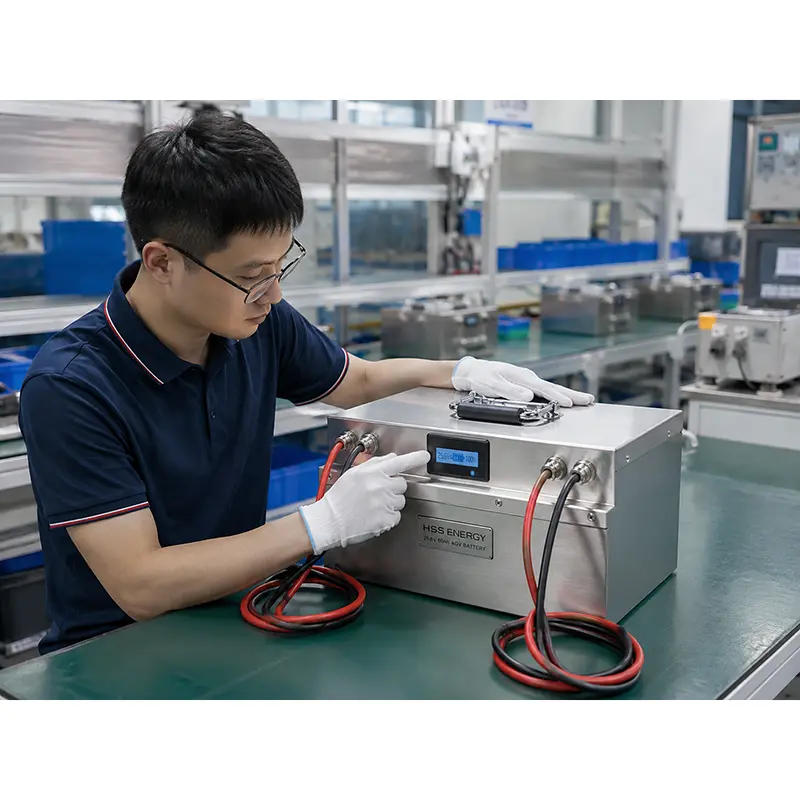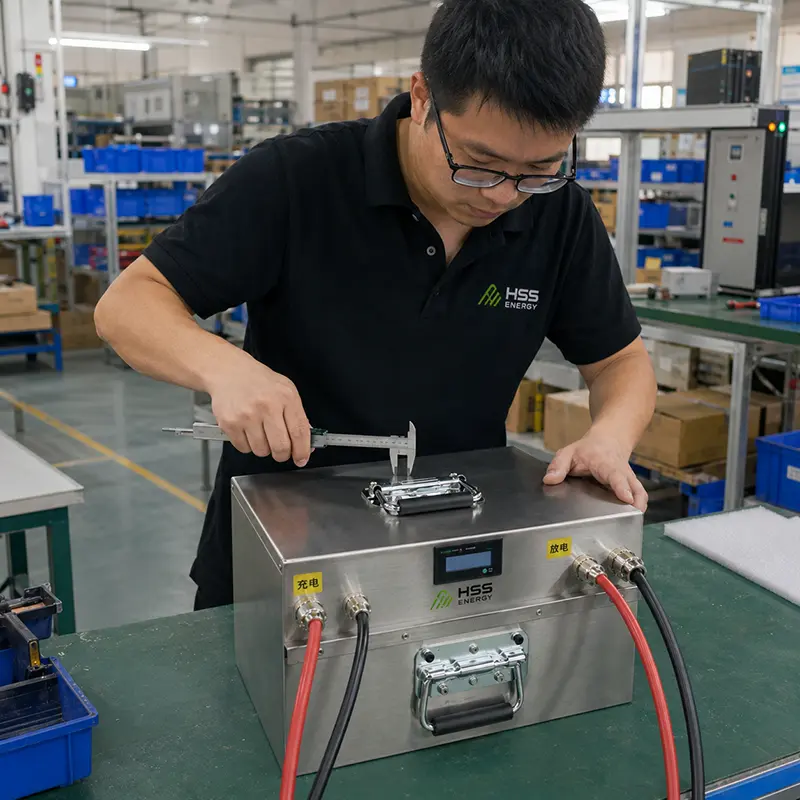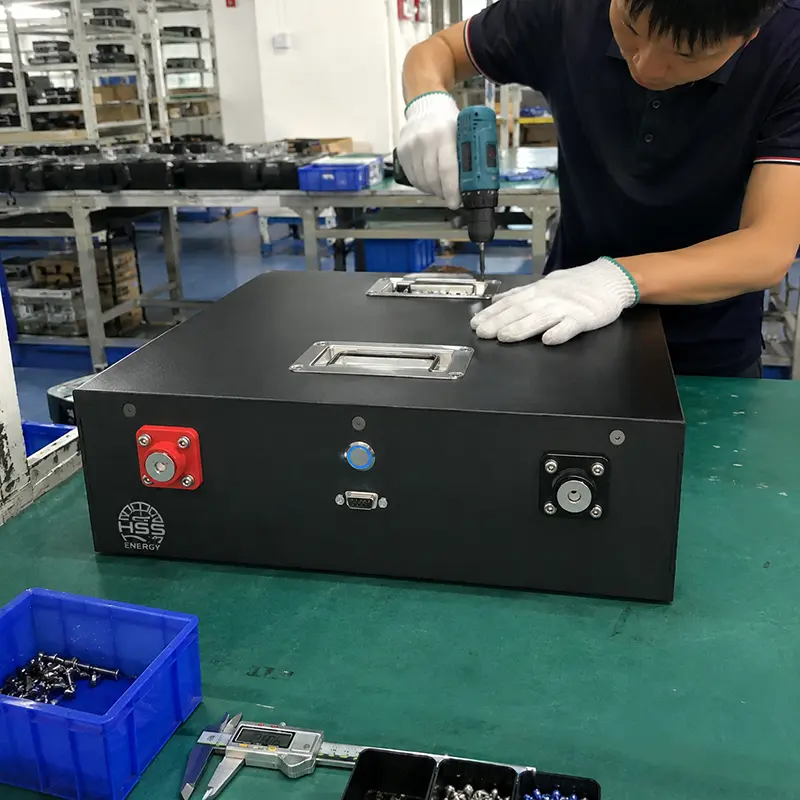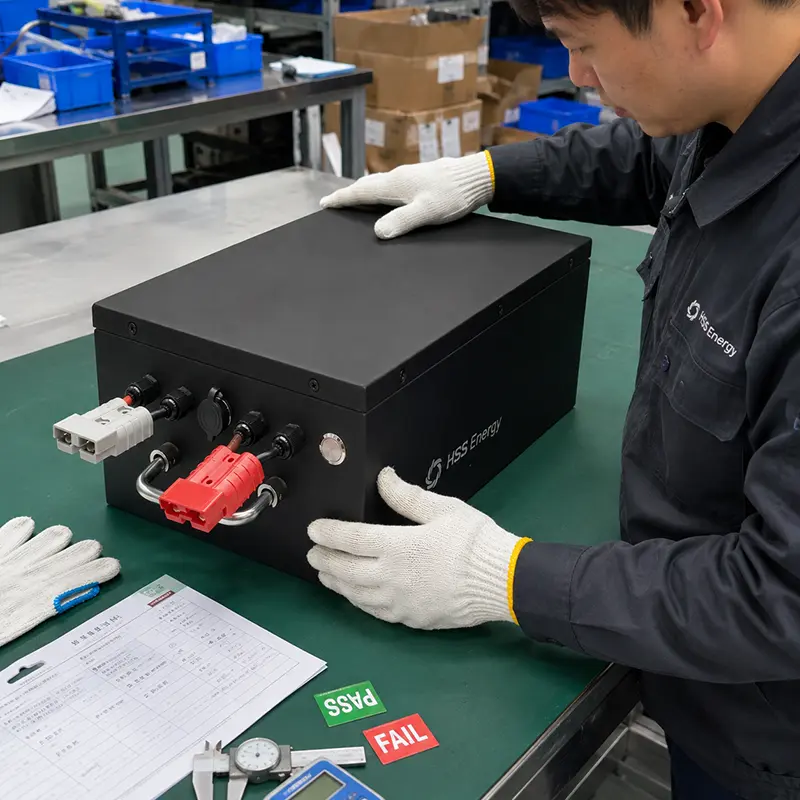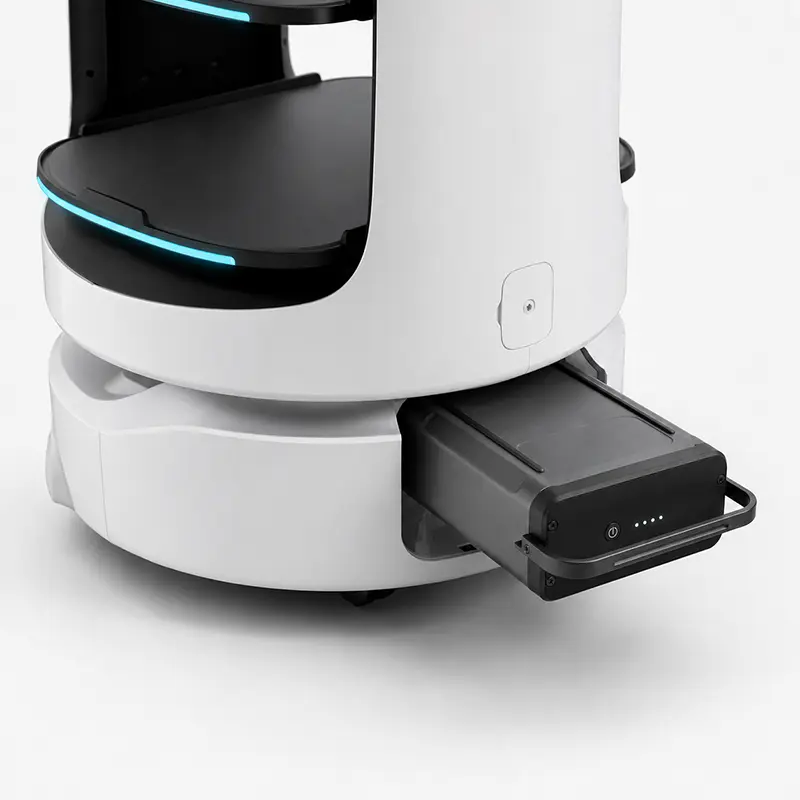
HSS Energy 25.2V 25.6Ah Delivery Robot Battery is a replacement-first platform for aging or unavailable robot batteries. It matches the original pack's voltage route, mechanical fit, charger, connector and identification signals before sampling. This approach is especially useful for delivery and service robots that remain mechanically serviceable but cannot stay in operation because of battery availability. Rather than presenting a universal replacement claim, the page guides the customers through the items that normally cause field problems: voltage architecture, dock charging, enclosure geometry, latch engagement, connector pinout and robot-side signal behavior. The result is a more practical basis for sample approval and repeat replacement orders.
|
Parameter |
Market Replacement Reference |
HSS Project Confirmation |
|
Product Role |
Delivery / service robot replacement battery |
Replacement-first platform; original battery or robot evidence required |
|
Market Voltage |
25.2V market-facing replacement class |
Confirm the original nameplate |
|
Reference Rated Voltage |
25.55V external replacement reference |
Confirm against original battery label before release |
|
Capacity |
25.6Ah |
Target capacity; final pack validation required |
|
Reference Energy |
~654Wh external reference class |
Final HSS label follows approved pack configuration |
|
Architecture |
7S8P rechargeable Li-ion |
Cell choice and pack design confirmed after replacement review |
|
Upper Charge Reference |
29.4V |
Charger / BMS profile matched to original robot system |
|
Discharge Cut-off Reference |
19.6V external reference |
Protection threshold project-confirmed |
|
Charge Current |
5A standard / 8A max continuous external reference |
HSS charge current project-confirmed |
|
Discharge Current |
15A / 20A max continuous external reference |
HSS discharge current project-confirmed |
|
Reference Envelope |
240 × 180 × 89 mm market reference |
Final dimensions released after original-pack measurement |
|
Connector / NTC / ID / Communication |
Original battery / robot evidence required |
Project-configured and validated on target robot |
A 7S8P delivery robot battery uses a different voltage curve from 8S LiFePO4. Charger and robot limits must follow the original architecture. That distinction affects charge voltage, discharge behavior, BMS thresholds and the way the robot interprets remaining energy. A replacement customers should therefore confirm the original chemistry and series count before changing cell technology or charger settings. For service organizations, keeping the original electrical architecture where possible can simplify dock validation and reduce the amount of robot-side modification required during a replacement program.
25.2V is the market-facing replacement class used on this page; 25.55V is the rated-voltage value from the external replacement reference and must be checked against the original battery label. The two voltage descriptions should not be treated as contradictory: one is a market-facing product class and the other is an external rated-voltage reference. Before HSS releases a sample, the original nameplate and charger data should determine which value belongs on the final label and engineering drawing. This is important for customers who manage mixed robot fleets, where apparently similar battery labels can hide different electrical routes.
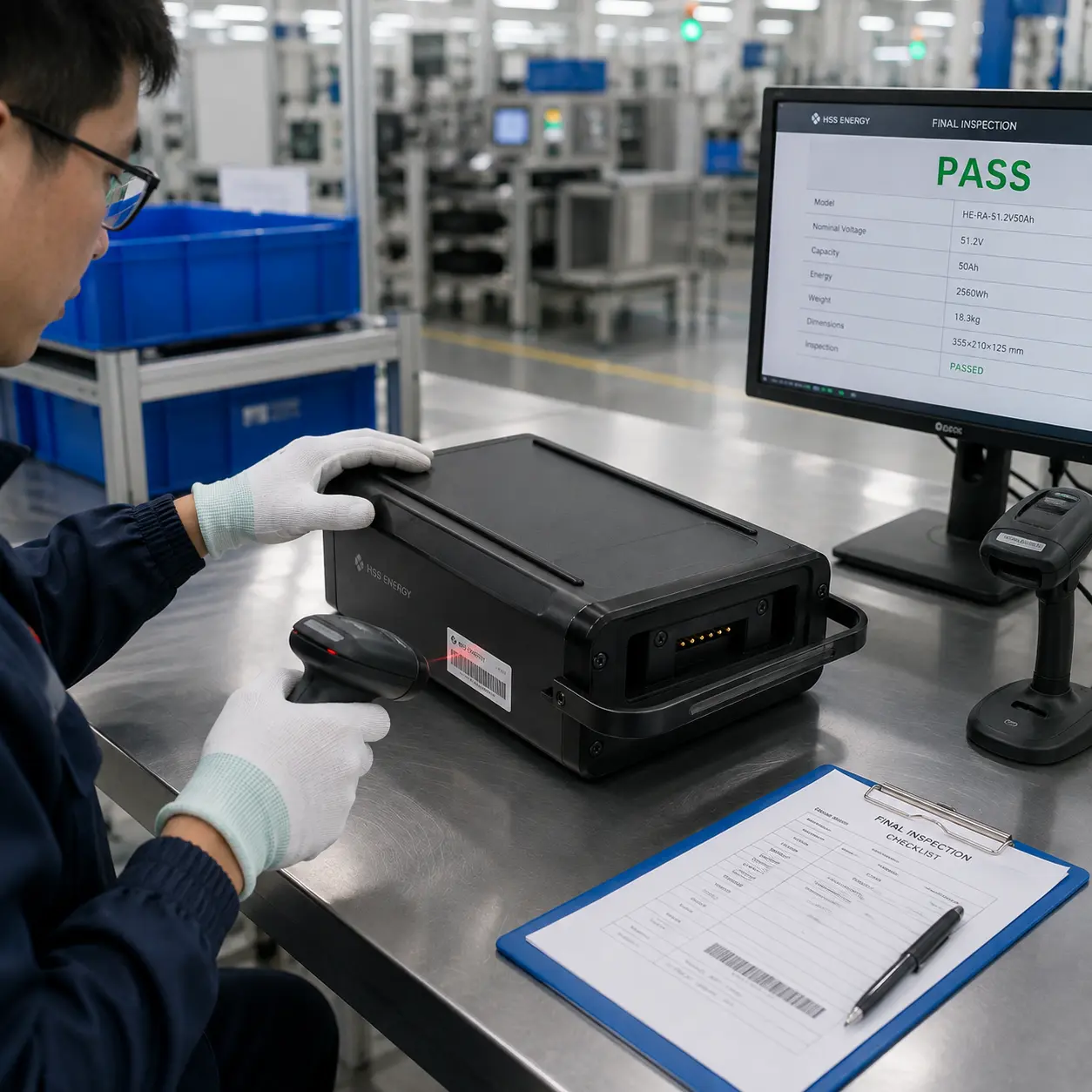
A 25.2V 25.6Ah robot battery is not drop-in compatible until enclosure, latch, connector and service clearance are checked. Mechanical fit can fail even when electrical values appear correct. Battery length, width and height must leave room for insertion, removal and service access, while latch position, guide features and handle direction need to match the original robot design. Connector orientation also affects cable stress and whether the pack can be installed without interference. Reviewing these points before prototype release reduces the risk of reworking an otherwise correct battery.
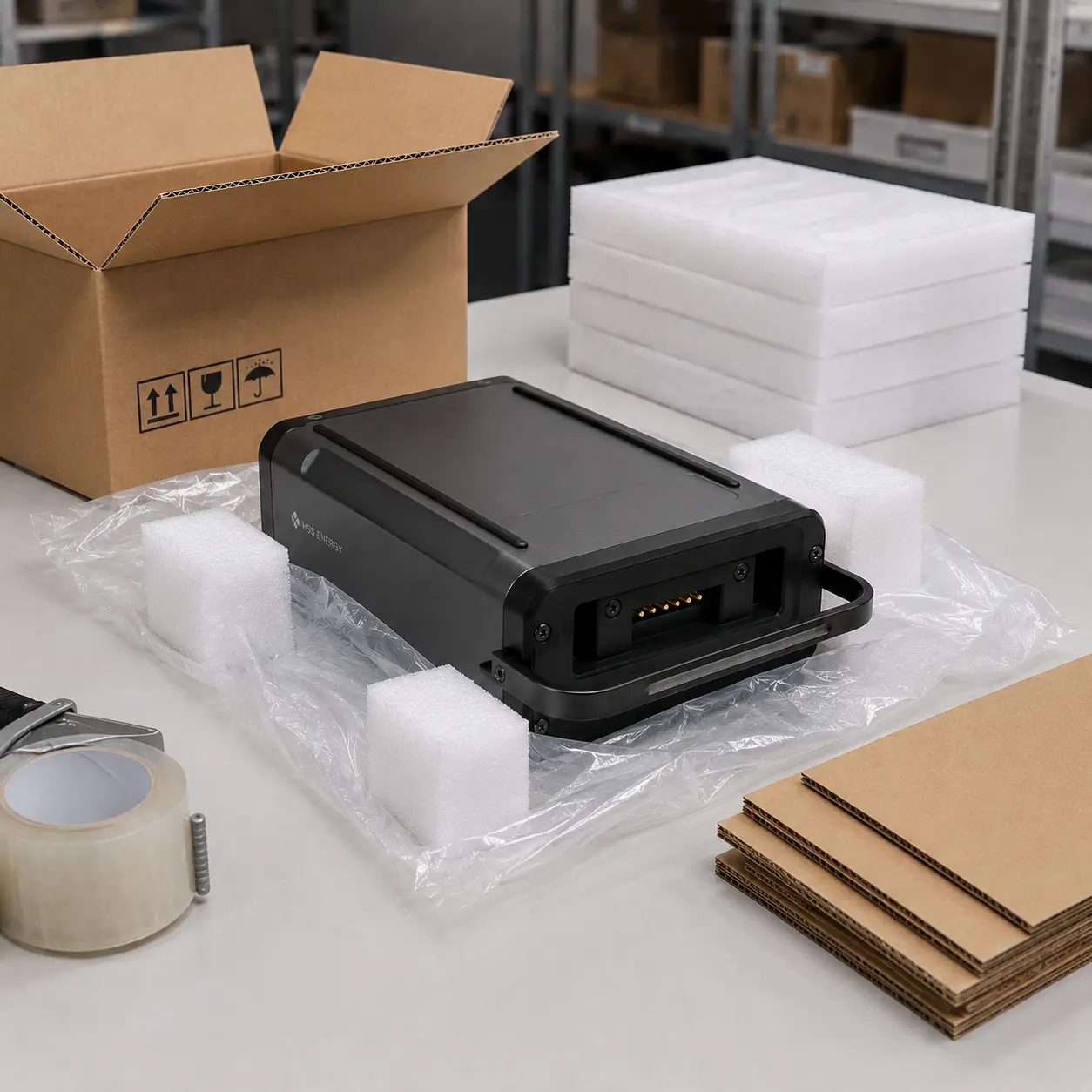
240 × 180 × 89 mm is a market replacement reference envelope, not a released HSS production dimension until the original pack is measured. HSS therefore treats this figure as a comparison point rather than a production promise. The preferred process is to measure the original battery, record tolerances and identify any protruding connectors, handles or guides that change the effective installation envelope. For replacement distributors, this also creates a clearer specification record that can be reused when the same robot model requires additional batteries later.
|
Original-Battery Check |
Replacement Approval Point |
|
Overall L×W×H |
measure actual pack and allowable tolerance |
|
Latch / guide / handle |
match engagement and removal direction |
|
Power connector |
family, polarity and pinout |
|
Signal contacts |
NTC, ID resistor or communication behavior |
A 25.2V delivery robot replacement battery may also need temperature, ID, SOC or fault-signal matching beyond 29.4V charging. These secondary signals can determine whether the robot starts, accepts charging, reports battery percentage correctly or raises a fault after installation. The replacement review should therefore cover not only the main power contacts but also the temperature sensor, identification resistor, communication behavior and any dock interlock used by the original system. When the original pack is available, measuring and documenting those signals is usually the fastest path to a reliable prototype.
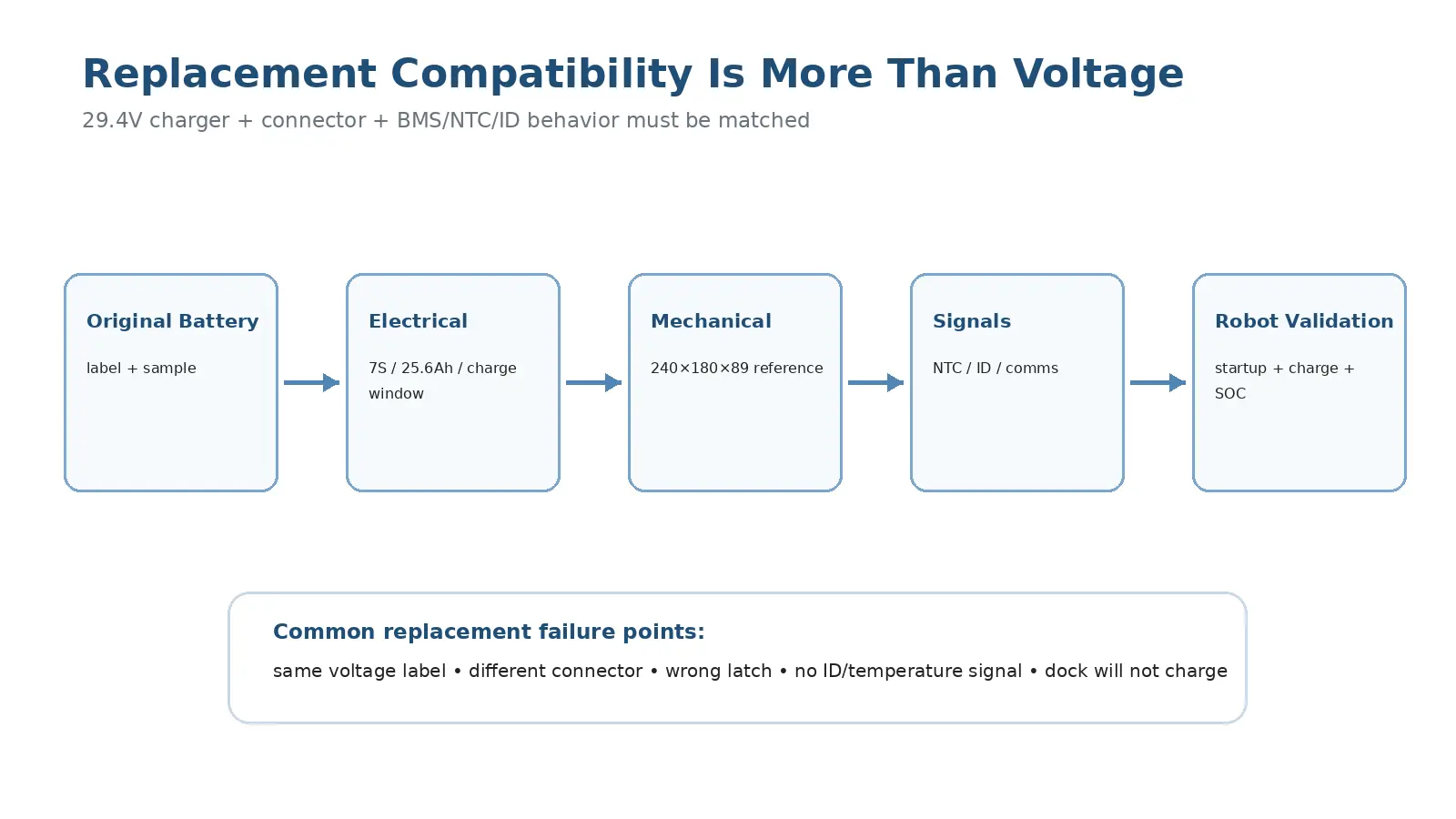
Replacement compatibility review: electrical, mechanical and signal behavior are checked together. This combined review gives foreign-trade customers a clearer acceptance standard: the sample is not approved merely because it reaches the target voltage on a bench. It should fit the robot, connect correctly, charge on the intended dock, start the vehicle, report the expected status and respond safely to fault conditions. That broader validation makes the quotation more meaningful for fleet operators and service partners who need repeatable field replacement rather than a one-time laboratory sample.
|
Compatibility Point |
What HSS Reviews |
|
Charger / dock |
29.4V profile, current, contacts, polarity and interlock |
|
Battery protection |
cell limits, current limits and temperature protection |
|
NTC / ID / communication |
robot recognition, SOC / alarm logic when required |
|
Startup behavior |
power-up, low-battery, charge-enable and fault response |
A 25.6Ah service robot battery fits serviceable robots with an aged or unavailable original battery; the original pack remains the comparison object. The best-fit customer is usually a fleet operator, distributor or repair organization that has a working robot platform but needs a dependable battery replacement route. HSS uses the original battery as the comparison object so the project can preserve as much of the existing robot, dock and wiring as possible. This helps customers evaluate replacement feasibility before committing to tooling, inventory or a larger batch.
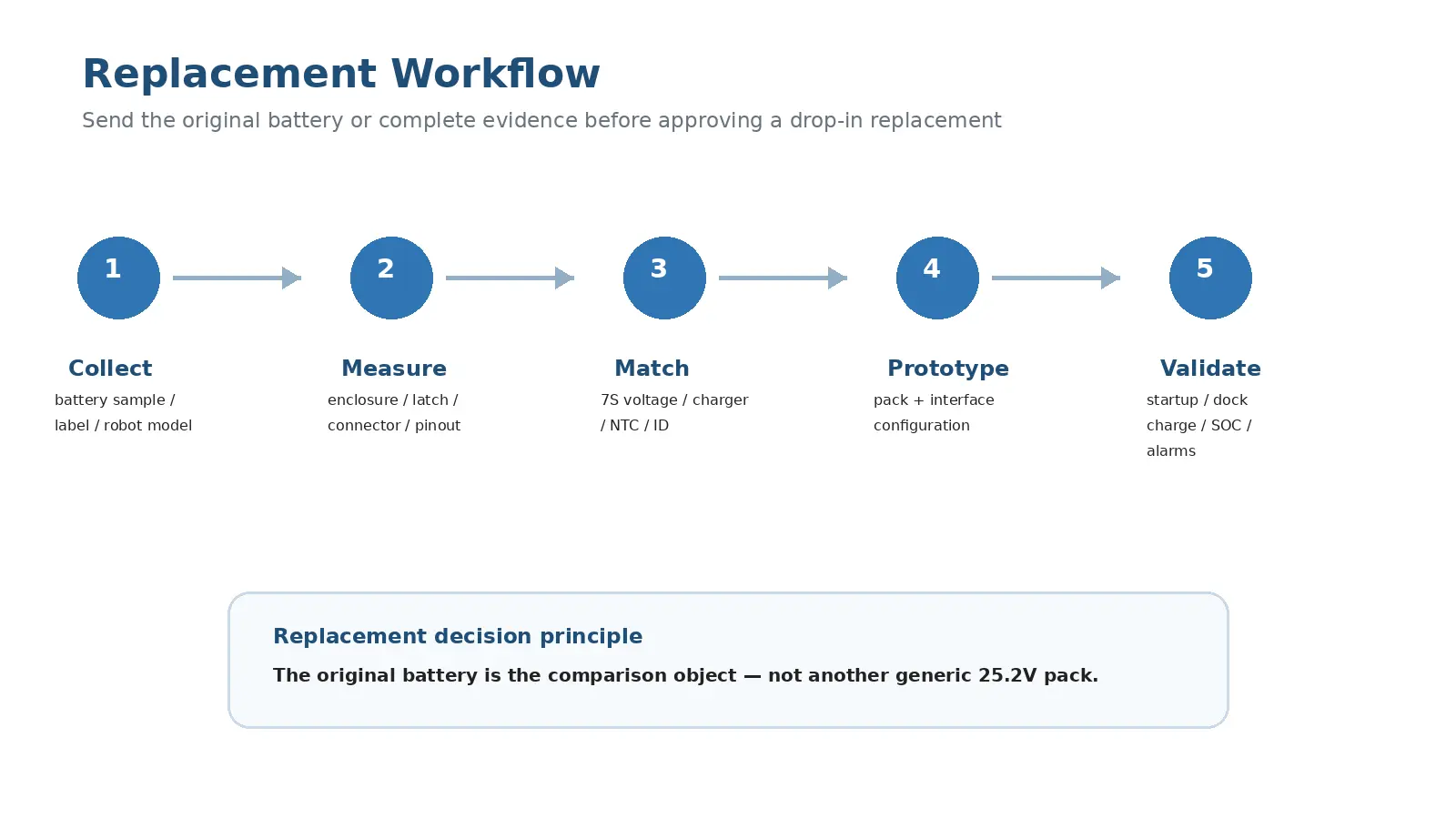
For a 25.2V 25.6Ah Delivery Robot Battery, HSS prefers the original sample. If unavailable, send the label, exact dimensions, connector photos, charger data and robot model before prototype approval. An original sample gives the engineering team direct access to the enclosure, connector, latch, labeling and signal behavior that photos alone may not capture. If shipment of the old battery is not practical, a detailed evidence package should include multiple dimension views, connector close-ups, pin definitions, charger label, robot model and any available service information. The more complete the input, the faster HSS can move from comparison to prototype and then to a repeatable production specification.
|
Best-Fit customers |
Main Risk |
Replacement Decision |
|
fleet operator / distributor / service center |
same voltage label but different interface or signals |
approve only after robot and dock validation |
|
Incoming Sample |
Electrical Match |
Prototype Test |
Robot Validation |
|
measure + document |
charger + protection |
fit + interface |
startup + dock + SOC |
|
customers Question |
HSS Engineering Answer |
|
Can this replace any 25.2V / 25.6Ah robot battery? |
No. Voltage and capacity are only the starting point; enclosure, connector, latch, charger and robot-side signals must match. |
|
Why not replace it with a 25.6V LiFePO4 pack? |
A 7S Li-ion replacement and an 8S LiFePO4 pack use different voltage curves and charging limits. |
|
Is 240 × 180 × 89 mm the final HSS size? |
It is a market replacement reference. HSS releases final dimensions only after the original pack is measured. |
|
What should I send for a replacement review? |
Robot model, original battery label, full dimensions, connector photos, charger label and the battery sample when possible. |
SEND YOUR ORIGINAL ROBOT BATTERY
For a 25.2V 25.6Ah Delivery Robot Battery replacement review or custom 25.2V delivery robot battery project, send HSS Energy the original sample or label, dimensions, connector, charger and robot data. For faster commercial evaluation, also include the number of robots in service, expected sample quantity and likely annual replacement demand. This helps HSS review not only technical feasibility but also connector procurement, enclosure repeatability, production planning and the documentation required for an export order.
Address
A3, 1204-1, 1142 Jimei North Avenue, Software Park Phase III, Xiamen Torch High-tech Zone, Xiamen, China
Tel