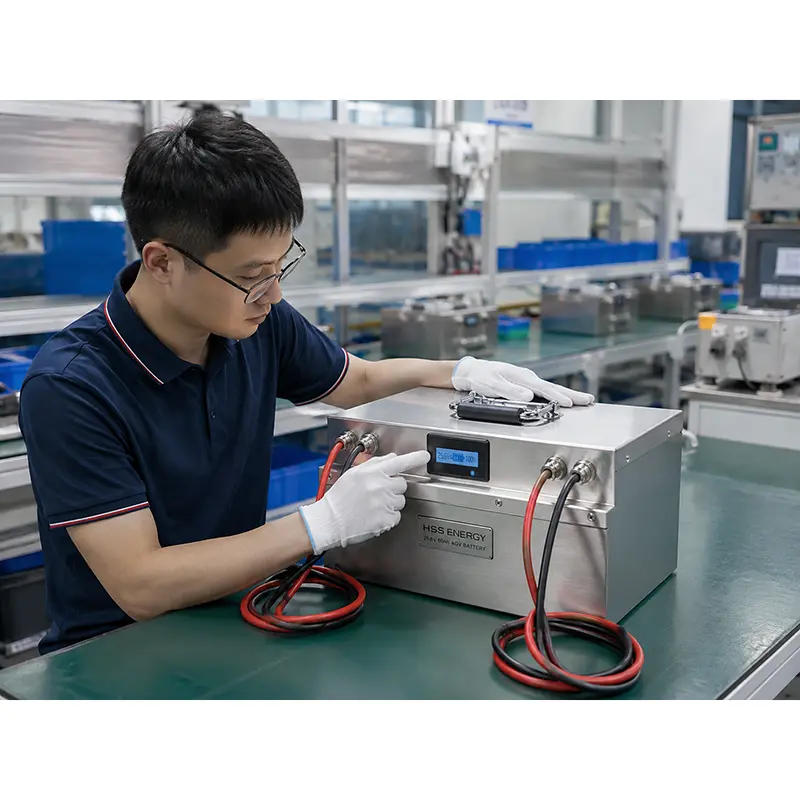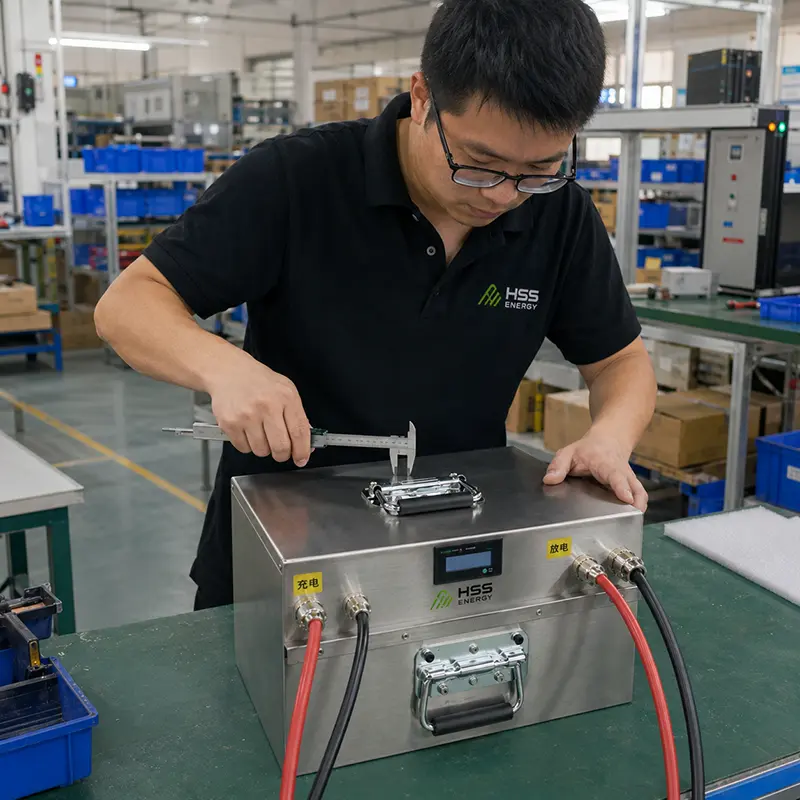
HSS Energy 48V 60Ah AMR Battery is for OEM and replacement customers requiring true 15S / 48.0V LFP rather than a 16S / 51.2V assumption. Selection confirms the controller/charger window, load, CAN/RS485 mapping and battery-bay fit before sampling. This distinction matters because products sold under the same 48V market label may use 15S or 16S LiFePO4 architectures with different upper-charge voltages. Selecting the correct route early protects the controller and charging system and reduces replacement risk. For foreign-trade projects, documenting the approved architecture also gives the customers a clearer technical basis for quotations, datasheets and repeat orders.
|
Specification |
Project-Confirmed Value / Boundary |
|
Product Class |
48V / 60Ah AMR platform |
|
Chemistry |
LiFePO4 / LFP |
|
Architecture |
15S |
|
Nominal Voltage |
48.0V |
|
Capacity |
60Ah |
|
Energy |
2.88kWh |
|
Upper Charge Reference |
54.75V = 15 x 3.65V; final charger profile confirmed by project |
|
Charge Method |
CC-CV; manual or automatic dock charging by project |
|
Current Limits |
Confirmed from measured robot load and peak duration |
|
Communication |
CAN / RS485 project-selectable; protocol mapping confirmed |
|
Connector / Pinout |
Project-configured power, charge and communication interfaces |
A 48V AMR battery must match the controller and charger window. This 15S route uses 48.0V nominal and a 54.75V upper-charge reference. On this 15S route, 48.0V nominal and 54.75V upper-charge reference define the core electrical identity. Those figures should be checked against the actual charger and controller before any plug-and-play claim is made. The same project review can also confirm whether the vehicle expects particular low-voltage behavior or fault handling from the BMS.
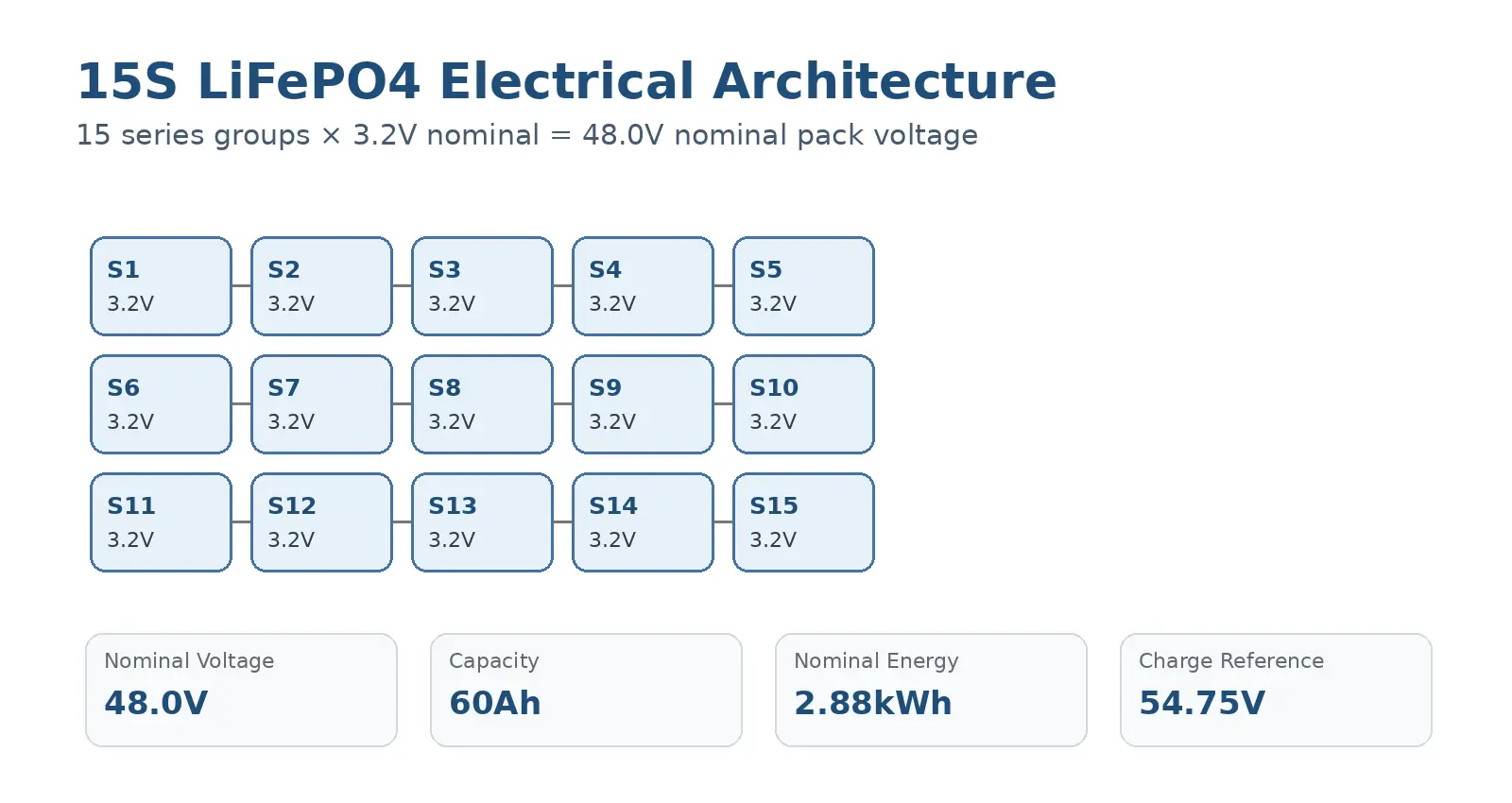
A 60Ah robot battery is sized from average power, runtime, usable SOC and peak-load duration rather than capacity alone. The 2.88kWh nominal energy provides a useful starting point, but practical runtime also depends on payload, auxiliary loads, acceleration cycles, floor conditions and the amount of energy returned through planned charging windows. For fleet customers, balancing battery capacity with opportunity charging can be more efficient than simply increasing Ah without considering the robot's actual duty cycle.
|
customers Input |
Selection Impact |
|
Average power / runtime |
Sets usable-energy requirement |
|
Steady + peak current |
Defines BMS, cable and connector limits |
|
Charging window |
Defines manual, dock or opportunity charging |
A 48V LiFePO4 robot battery with dock charging requires charger, contact, interlock and safe-disconnect review. Automatic charging adds mechanical and control requirements that do not exist with a simple manual charger. Contact alignment, charge-enable logic and safe disconnect behavior must work reliably during repeated docking events. HSS therefore treats the dock, charger, battery and robot controller as one integration path so the sample can be evaluated under the same conditions expected in fleet operation.
|
Manual Charging |
Automatic Dock Charging |
Opportunity Charging |
|
Confirm charger voltage, current, polarity and connector. |
Confirm contact alignment, interlock and safe disconnect. |
Confirm SOC target, charge window and validated charge rate. |
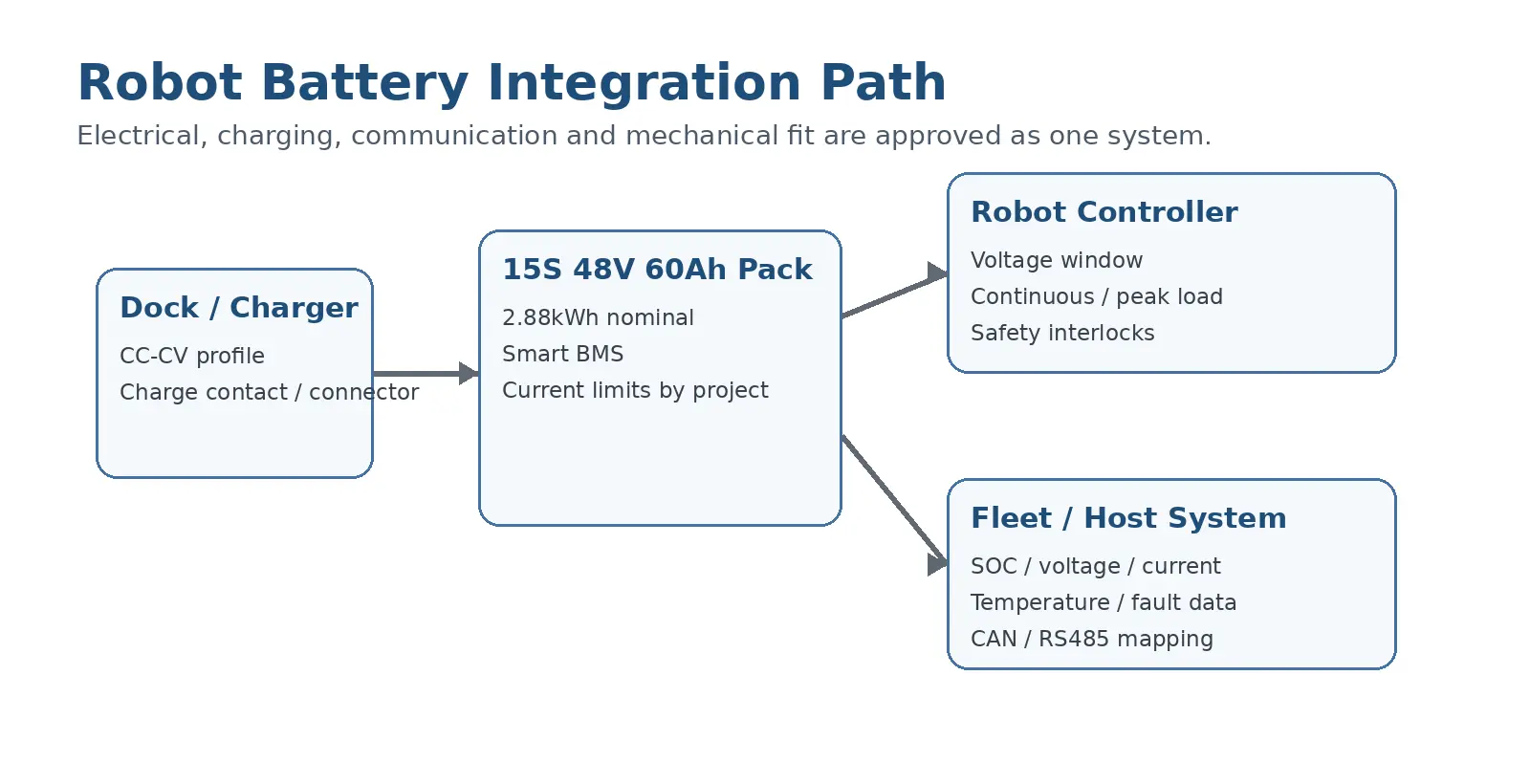
Charging, battery, robot controller and fleet communication are reviewed as one integration path. This makes the battery project more useful to OEM customers because electrical and communication decisions are made together rather than discovered one by one after assembly. Charger limits influence BMS behavior, communication influences SOC and fault reporting, and the physical interface determines whether docking can occur reliably. A combined review can reduce development loops and clarify the acceptance criteria for the final sample.
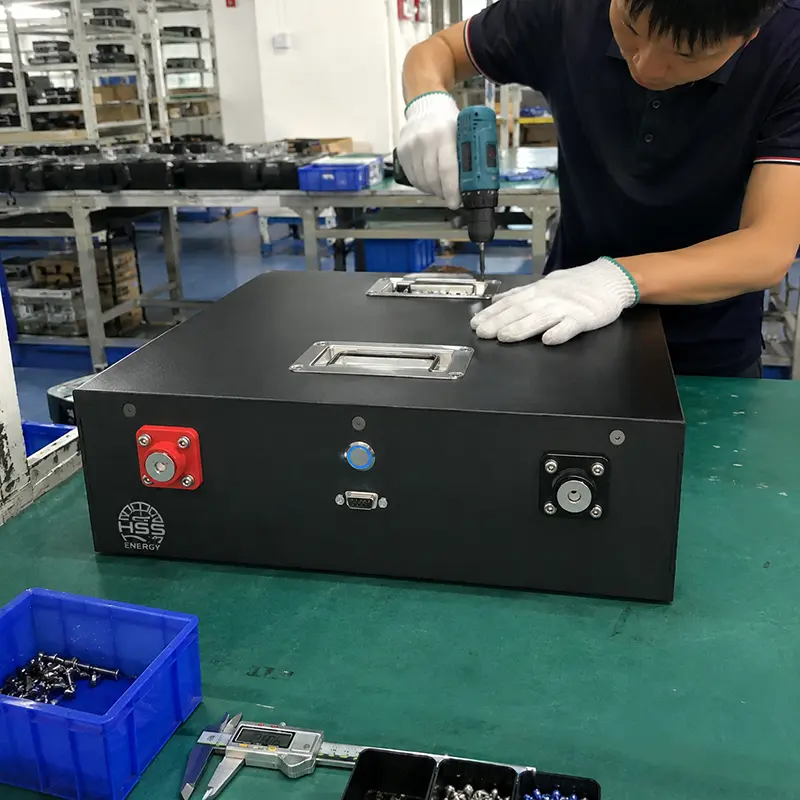
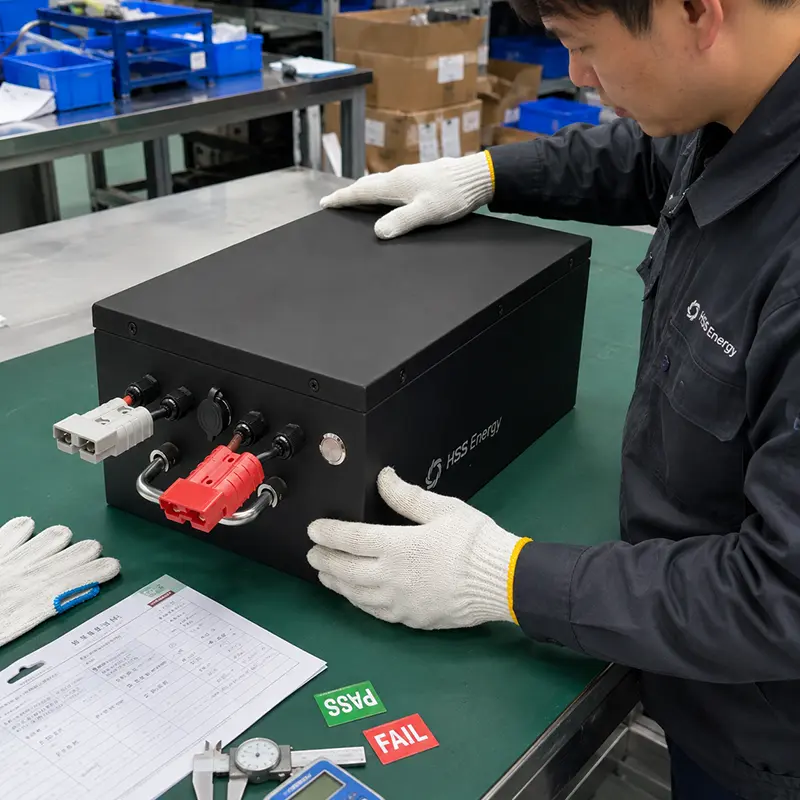
An AMR battery pack needs protocol-level CAN or RS485 matching for SOC, current, temperature, alarms and fault response. Matching means confirming bitrate or baud rate, message IDs or register maps, scaling, heartbeat and fault logic for the target robot. A port labeled CAN or RS485 is only the hardware starting point. For OEM and replacement programs, the communication file should be included with the inquiry so HSS can assess mapping work before the customer commits to a production sample.
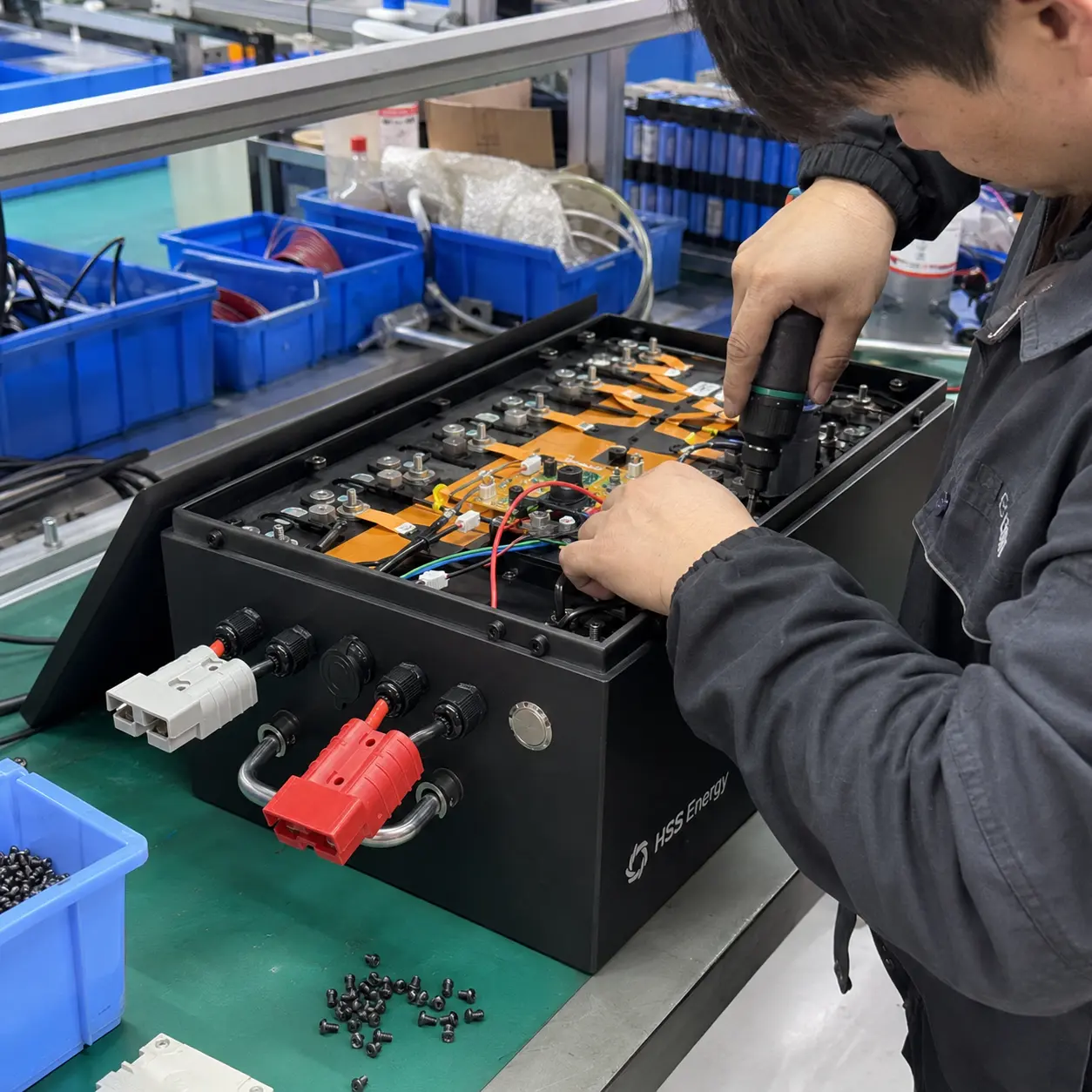
Representative interface layout. Final connector family, cable arrangement and pinout are project-specific.
|
Integration Point |
Project Review |
|
Main power |
Connector family, current rating, polarity, cable gauge |
|
CAN |
Bitrate, message IDs, scaling, heartbeat / DBC if required |
|
RS485 |
Baud rate, address, register map, polling / fault handling |
|
Charging |
Profile, current, interlock, manual or dock-based |
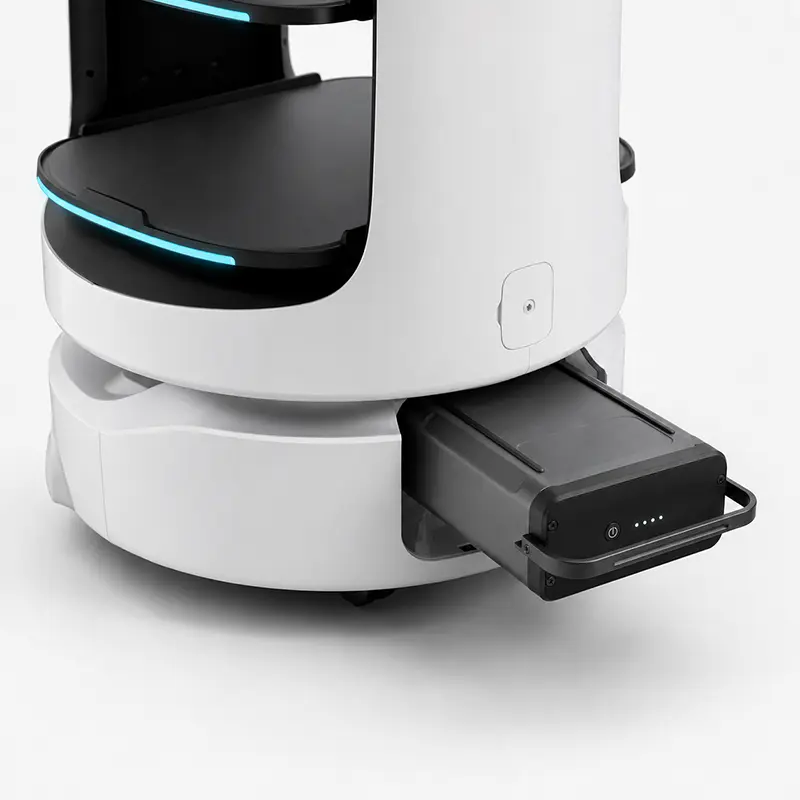
A 48V mobile robot battery is approved from battery-bay size, mounting, connector direction, cable route and service clearance. These mechanical details determine whether the pack can be installed, removed and serviced without stressing cables or blocking adjacent components. HSS therefore releases the final enclosure only after the robot drawing or existing battery evidence is reviewed. This project-specific approach is especially useful where the AMR already has a fixed chassis and battery access path.
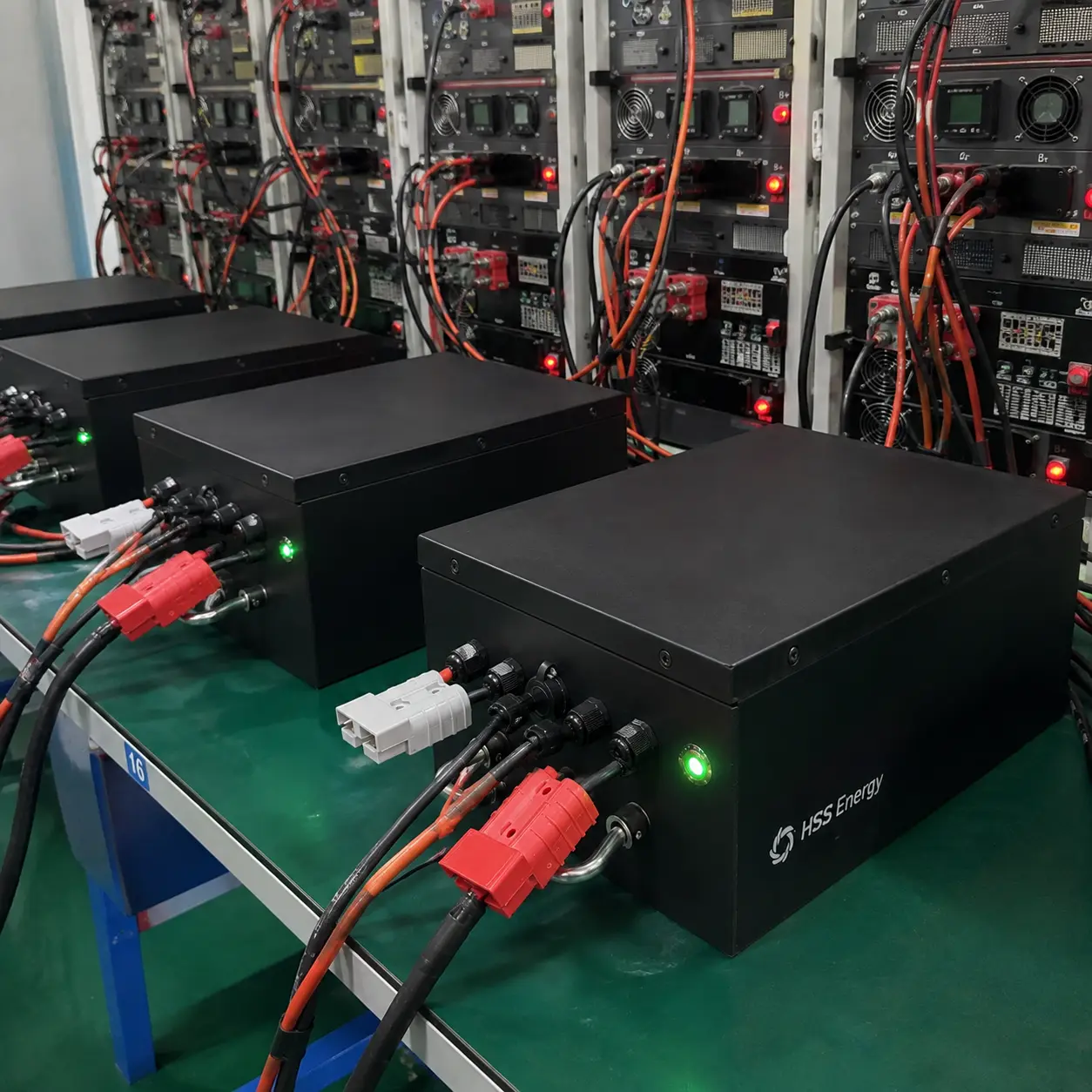
Mechanical-fit reference visual. Final enclosure, mounting and interface positions follow the approved robot drawing.
For a 48V 60Ah AMR Battery, commercial LiFePO4 products use both 15S / 48.0V / 54.75V and 16S / 51.2V / 58.4V architectures. Confirm the charger and controller voltage window before replacement. The correct choice should follow the controller and charger voltage window, not the marketing label alone. HSS keeps the 15S / 16S decision visible because it is one of the most important replacement boundaries in this product class. Confirming it before sample approval can prevent charger incompatibility and avoid unnecessary modifications to the robot.
|
Selection Point |
15S LiFePO4 |
16S LiFePO4 |
|
Nominal Voltage |
48.0V |
51.2V |
|
Upper Charge Reference |
54.75V |
58.4V |
|
Choose When |
True-48V controller / charger window |
System explicitly supports 16S / 58.4V |
Selected Supplier Feedback
|
Germany | 5/5 "good service" Service 5/5 | On-time shipment 5/5 14 Jul 2026 |
|
|
United States | 5/5 "Good product excellent delivery" Service 5/5 | On-time shipment 5/5 30 Jan 2026 |
|
|
Mauritius | 5/5 "formidable" Service 5/5 | On-time shipment 5/5 18 Aug 2026
|
|
|
Question |
HSS Engineering Answer |
|
Is this 15S or 16S? |
15S: 48.0V nominal, 60Ah, 2.88kWh and 54.75V upper-charge reference. |
|
Does 60Ah guarantee a full shift? |
No. Runtime depends on average power, usable SOC, payload, auxiliaries, temperature and charging windows. |
|
Do all 48V 60Ah robot batteries use the same architecture? |
No. Commercial LiFePO4 products include both 15S / 48.0V / 54.75V and 16S / 51.2V / 58.4V versions. Confirm charger and controller limits before replacement. |
|
Can CAN or RS485 be matched? |
Yes, after bitrate / baud rate, mapping and fault behavior are confirmed. |
SEND YOUR ROBOT BATTERY REQUIREMENTS
For a 48V 60Ah AMR Battery fit review, send HSS Energy voltage, current, runtime, charger/dock, battery-bay and communication data. Include the robot model, expected sample quantity and annual demand when available. A complete inquiry allows HSS to review the voltage architecture, duty-cycle energy, enclosure, interfaces and commercial production needs together, which creates a faster path from engineering discussion to a practical quotation.
|
Robot / Controller Model, voltage window, payload |
Current / Runtime Steady current, peak + duration, target hours |
|
Charger / Dock Voltage, current, connector, interlock |
Battery Bay L x W x H, mounting, service clearance |
|
Communication CAN / RS485 protocol information |
Commercial Prototype quantity and annual demand |
Address
A3, 1204-1, 1142 Jimei North Avenue, Software Park Phase III, Xiamen Torch High-tech Zone, Xiamen, China
Tel