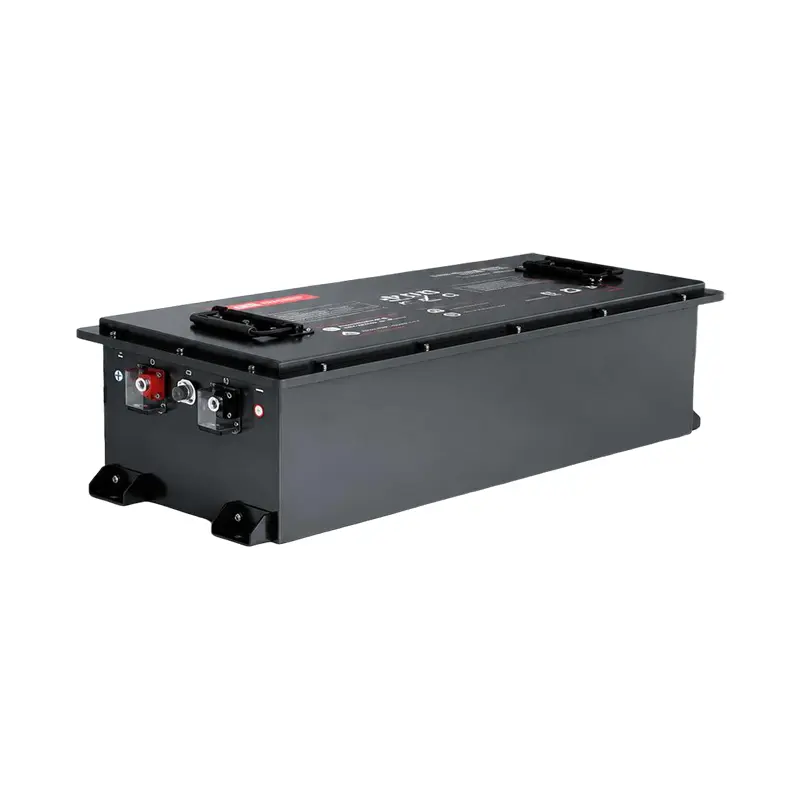
For customers planning a fleet upgrade, the 72V 105Ah Golf Cart Lithium Battery gives HSS Energy factory a clear starting point: one managed LiFePO4 pack in place of a traditional multi-battery lead-acid set. The 24S1P design has a 76.8V nominal platform and an 87.6V charge ceiling. What still needs review is the cart itself - controller limits, charger profile, peak current, tray size, cables and communication. Once those match, the sample can move forward with fewer surprises.
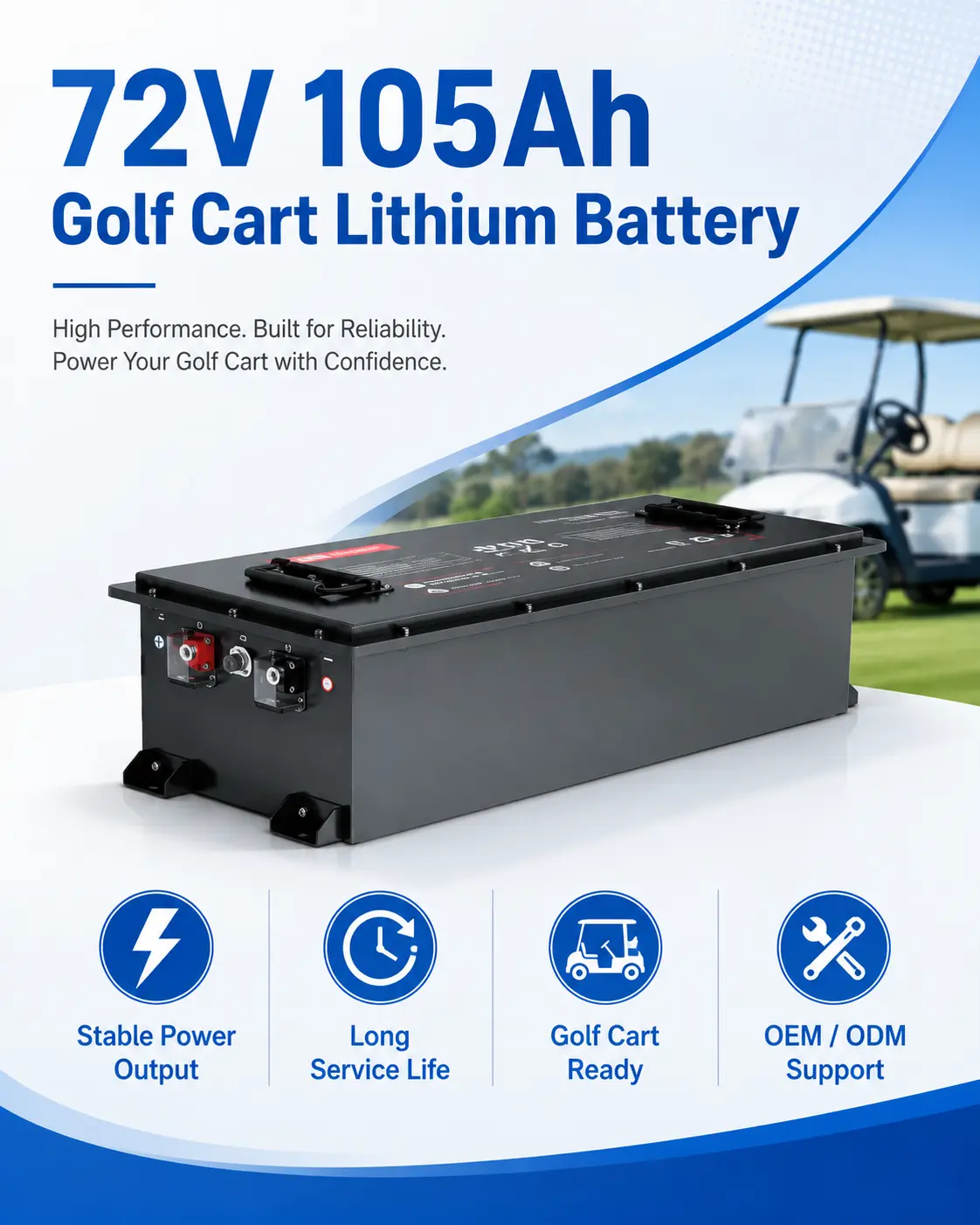
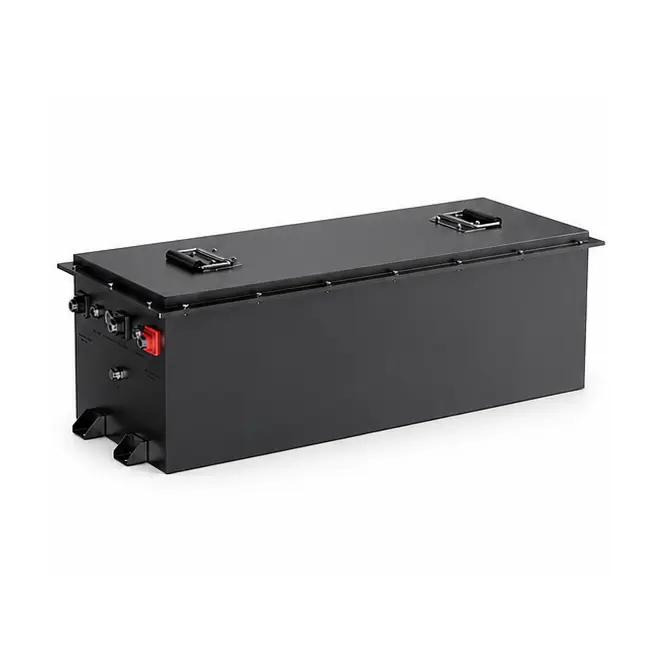
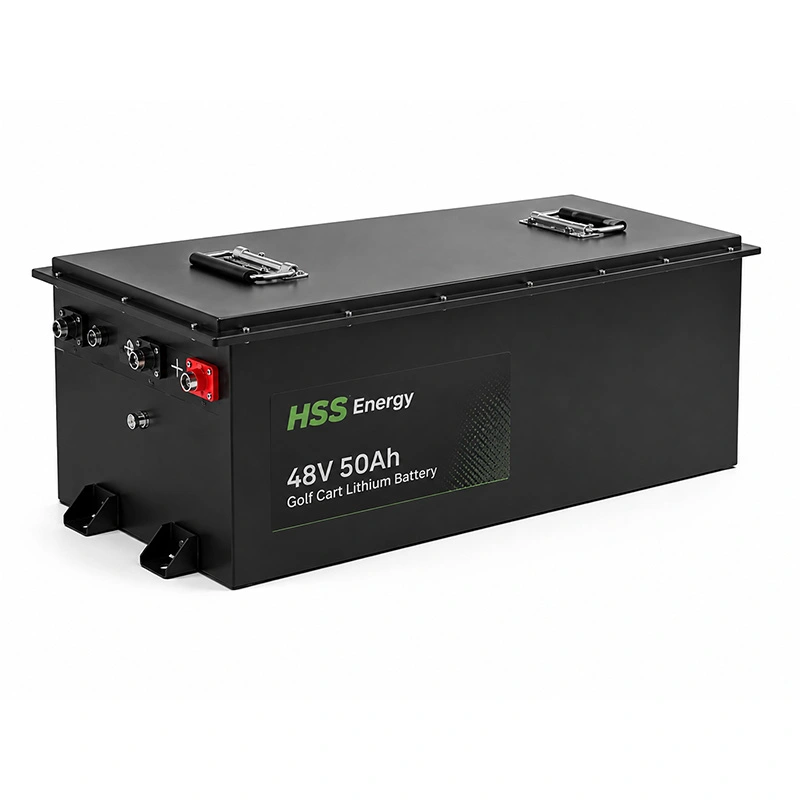
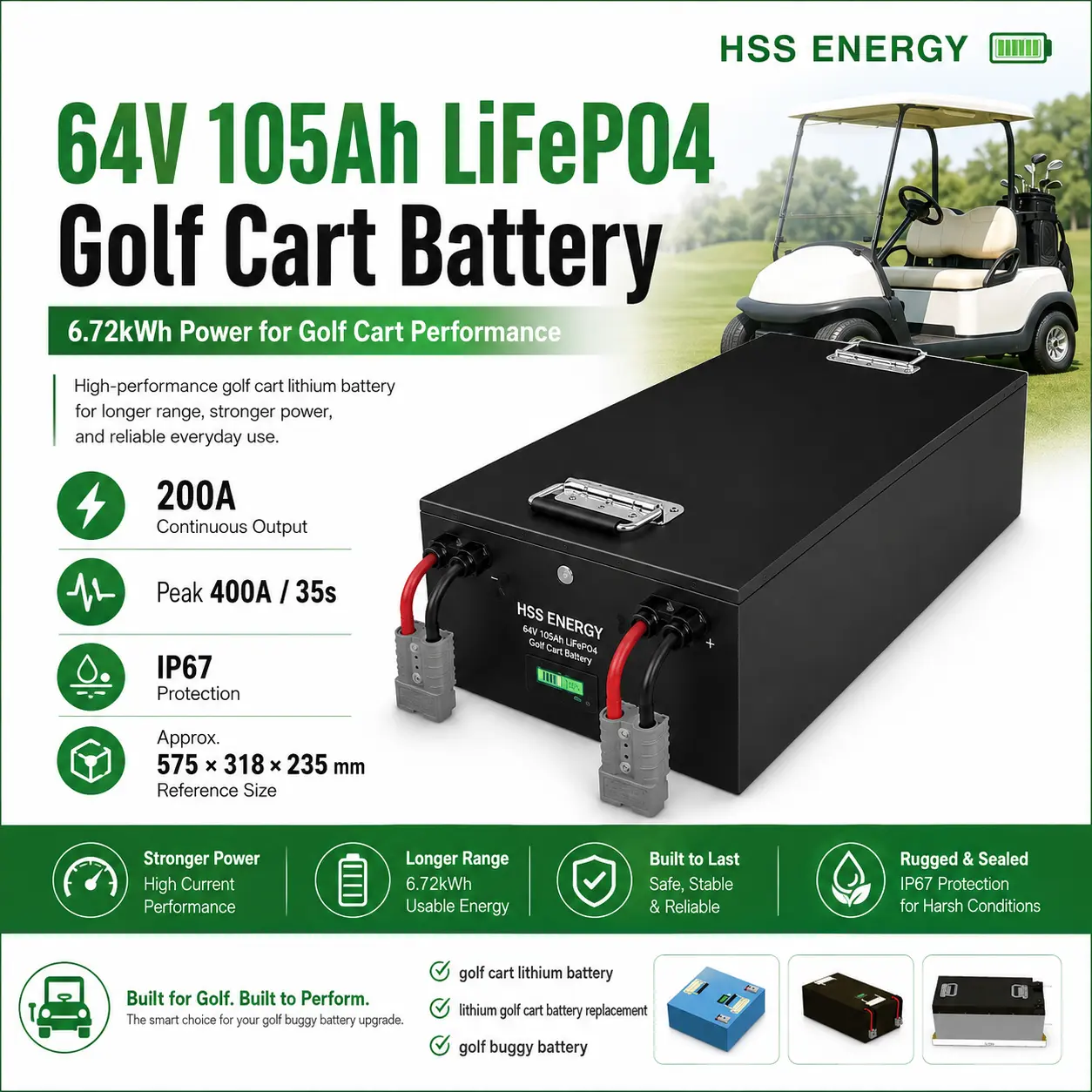
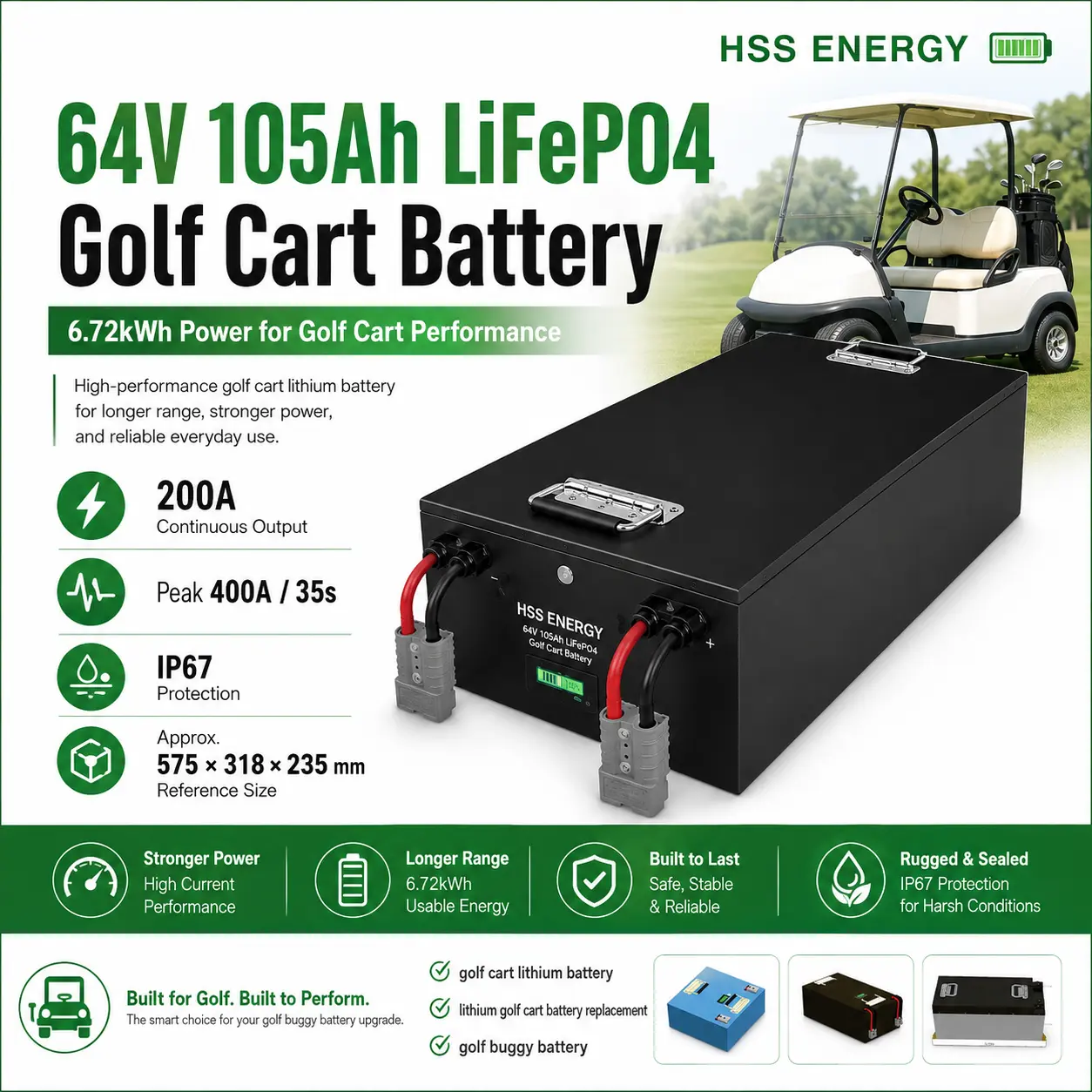
Marketing artwork of the proposed battery enclosure. Final dimensions, labels and terminals follow the approved order drawing.
|
Item |
Confirmed Specification |
|
Chemistry |
LiFePO4 |
|
Cell brand and format |
24 pcs EVE 3.2V 105Ah prismatic cells |
|
Series configuration |
24S1P |
|
Market voltage class |
72V |
|
Nominal voltage |
76.8V |
|
Rated capacity |
105Ah at 25 +/- 2 degrees C |
|
Nominal energy |
8.064kWh, calculated from 76.8V x 105Ah |
|
Maximum charge voltage |
87.6V |
|
Discharge cut-off voltage |
60V |
|
Maximum charge current |
105A |
|
Standard discharge current |
105A |
|
Maximum continuous discharge |
150A |
|
Cycle-life reference |
2,000 cycles with at least 80% remaining capacity; supplied test conditions should be confirmed for publication |
|
Approximate weight |
58kg |
|
Communication / monitoring |
Bluetooth and RS485; protocol and display/app scope require order confirmation |
Lead-acid was the traditional golf-cart choice. Lithium now attracts operators who want less routine maintenance and steadier power as the battery discharges. A lithium golf cart battery conversion is still a system upgrade, not a simple box swap. The charger, controller, cables, contactor and tray must work with the new pack.
|
customers Check |
Traditional Lead-Acid Pack |
HSS LiFePO4 Proposal |
|
Daily upkeep |
Flooded types may require electrolyte checks and terminal maintenance |
No electrolyte watering; inspect cables, terminals and system condition |
|
Discharge behavior |
Voltage sag becomes more noticeable as charge falls |
Managed output with BMS protection across the approved operating range |
|
Charging |
Lead-acid charging profile |
Requires an 87.6V LiFePO4 charging profile for this configuration |
|
Cycle-life reference |
Depends strongly on battery type and depth of discharge |
2,000-cycle reference to at least 80% remaining capacity under supplied conditions |
|
Purchase decision |
Lower initial cost may suit light use |
Potentially lower maintenance and replacement frequency; actual economics depend on duty cycle |
Comparison is qualitative because no specific lead-acid baseline pack was supplied. Weight, runtime and lifetime savings must be calculated against the customers existing battery set and operating pattern.
The product belongs to the 72V vehicle class, but 24 LiFePO4 cells produce 76.8V nominal voltage. A 76.8V golf cart battery in this configuration charges up to 87.6V and uses a 60V discharge cut-off. Check that full voltage window against the charger and controller; the old pack's '72V' label is not enough.
One 105Ah cell at each series position keeps the architecture straightforward, without parallel cell groups. This 24S LiFePO4 golf cart battery uses 24 EVE prismatic cells. The approved bill of materials then fixes the cell lot, busbar arrangement and enclosure details for repeat production.
Acceleration, slopes, passengers and accessories can push current above the cart's cruising demand. The supplied 72V 105Ah LiFePO4 battery design supports 105A standard discharge and up to 150A continuous discharge. The BMS covers over-current, short-circuit, cell-voltage and temperature protection. Bluetooth and RS485 are available; protocol and display integration remain order-specific.
|
Function |
Supplied Setting |
customers Meaning |
|
Operating temperature - charge |
0 to 55 degrees C |
Normal charging range stated in the supplied parameter sheet |
|
Operating temperature - discharge |
-20 to 60 degrees C |
Vehicle duty must remain inside the approved discharge range |
|
Low-temperature charge protection |
-10 +/- 5 degrees C |
BMS protection reference; charger and recovery behavior require final confirmation |
|
Low-temperature discharge protection |
-20 +/- 3 degrees C |
Check winter operating conditions and load demand |
|
High-temperature charge protection |
65 +/- 5 degrees C |
Protection threshold, not a recommended charging temperature |
|
High-temperature discharge protection |
75 +/- 3 degrees C |
Protection threshold, not a recommended continuous operating temperature |
|
Cell over-charge protection |
3.75 +/- 0.05V per cell |
Protection setting distinct from the normal 87.6V pack charge ceiling |
|
Cell over-discharge protection |
2.35 +/- 0.1V per cell |
Protection setting distinct from the normal 60V pack cut-off |
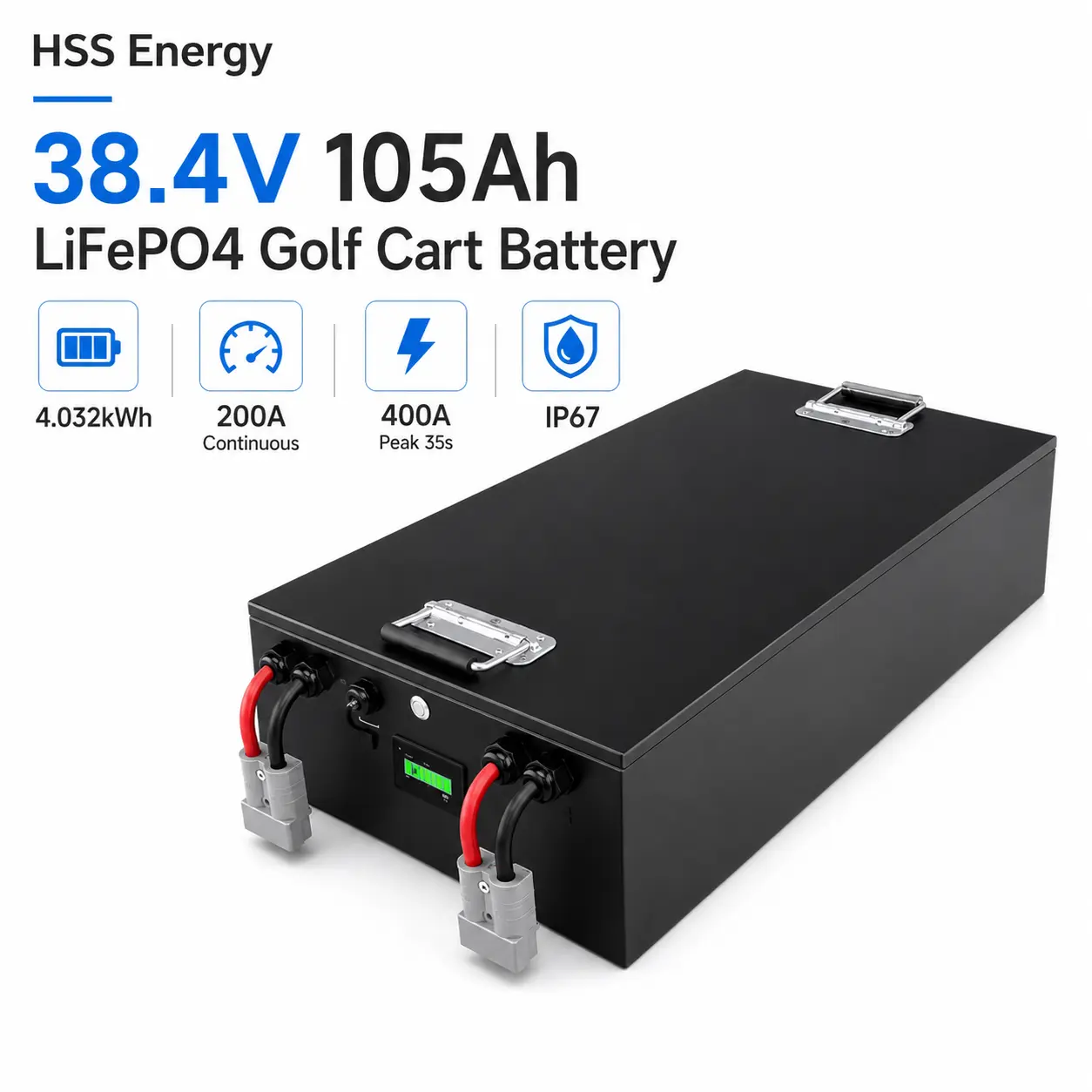
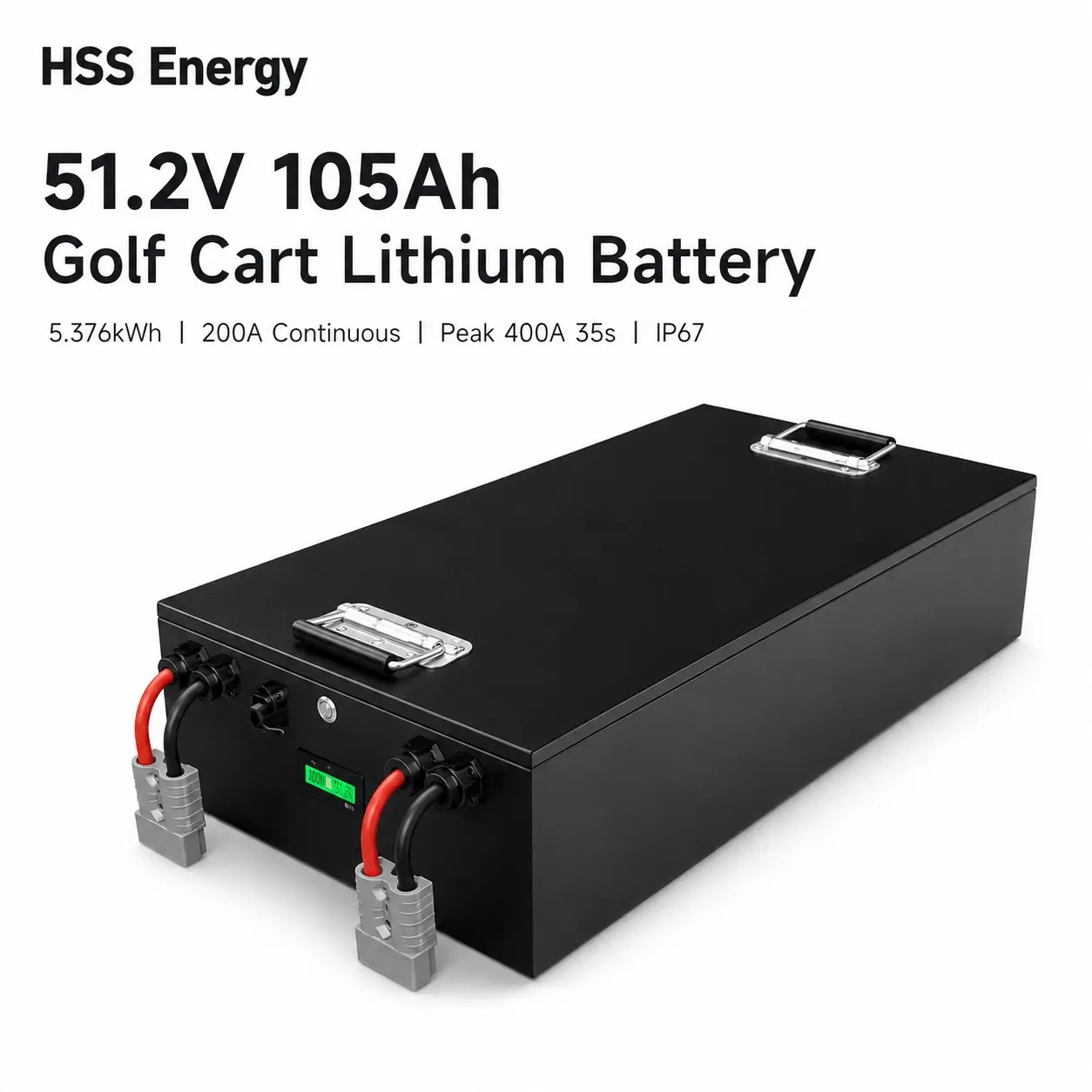
The artwork shows a low-profile metal enclosure with handles, mounting feet and high-current terminals. A 72V golf cart battery must still fit the tray, hold-down points, cable reach and terminal direction. Send the compartment drawing or measured tray size before sampling. At about 58kg, the pack also needs a safe lifting plan.
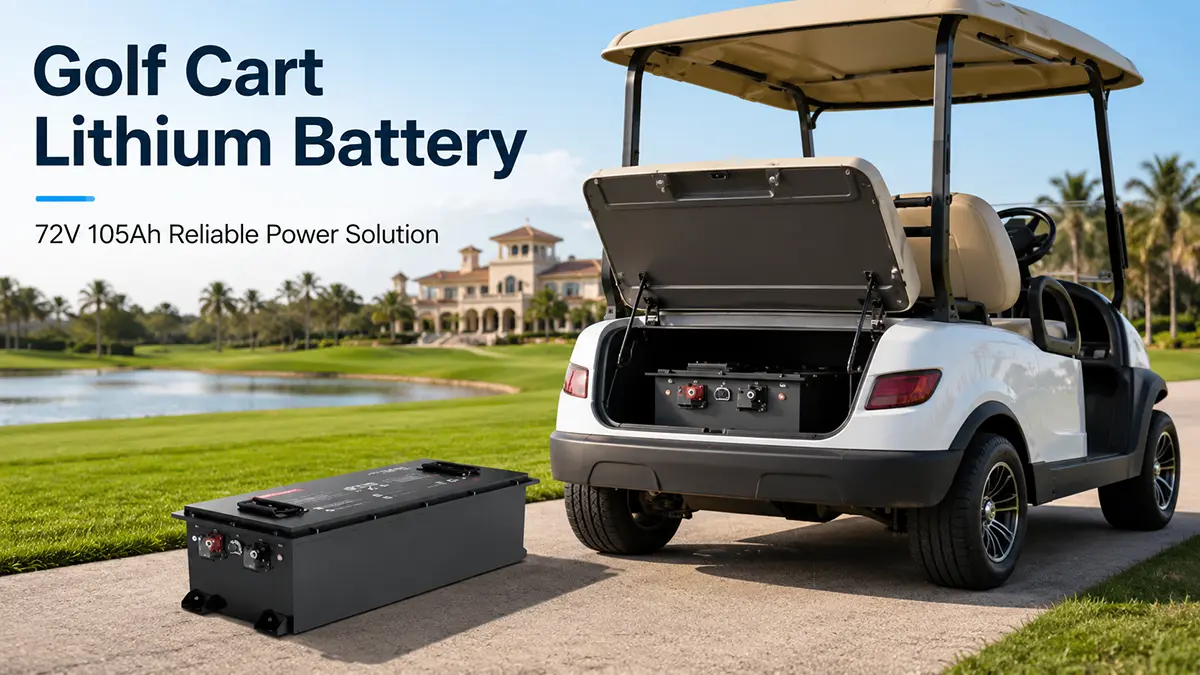
Marketing illustration showing the intended golf-cart application. It is not a verified installation or universal fit claim.
The supplied specification references 2,000 cycles with at least 80% remaining capacity. When comparing a golf cart lithium battery replacement with another lead-acid set, customers can look beyond the initial price to maintenance, charging habits and expected service years. Actual life still depends on depth of discharge, temperature, route and test conditions.
HSS Energy develops lithium battery packs and energy-storage systems through production bases in China totaling about 12,000 square meters. For a golf-cart project, the team reviews vehicle data, freezes the electrical and mechanical drawing, and builds the sample around that record. The approved specification then guides repeat orders, including labels, terminals, communication settings and packaging.
The 72V wording identifies the vehicle voltage class. A 24-series LiFePO4 pack has 76.8V nominal voltage and an 87.6V maximum charge voltage.
No. The charger profile, controller voltage window, normal and peak current, cables, contactor, tray dimensions, terminals and communication requirements must be checked first.
The confirmed configuration uses 24 EVE 3.2V 105Ah LiFePO4 prismatic cells in a 24S1P arrangement.
Use a charger designed for the approved LiFePO4 configuration with an 87.6V charge ceiling and the agreed charging current and communication behavior.
No. A physical RS485 interface does not confirm protocol compatibility. The protocol, pinout, data points and required interaction must be reviewed.
Provide cart brand and model, controller voltage and current limits, existing charger details, battery-tray dimensions, terminal and cable requirements, communication needs, quantity and destination.
Send HSS Energy the vehicle model, controller limits, charger data, tray dimensions and purchase quantity for the 72V 105Ah Golf Cart Lithium Battery. We will use those details to review the electrical window, current capability, enclosure fit, terminals and communication before preparing the sample plan and quotation. This keeps the upgrade decision tied to the cart that will actually use the battery.
Address
A3, 1204-1, 1142 Jimei North Avenue, Software Park Phase III, Xiamen Torch High-tech Zone, Xiamen, China
Tel