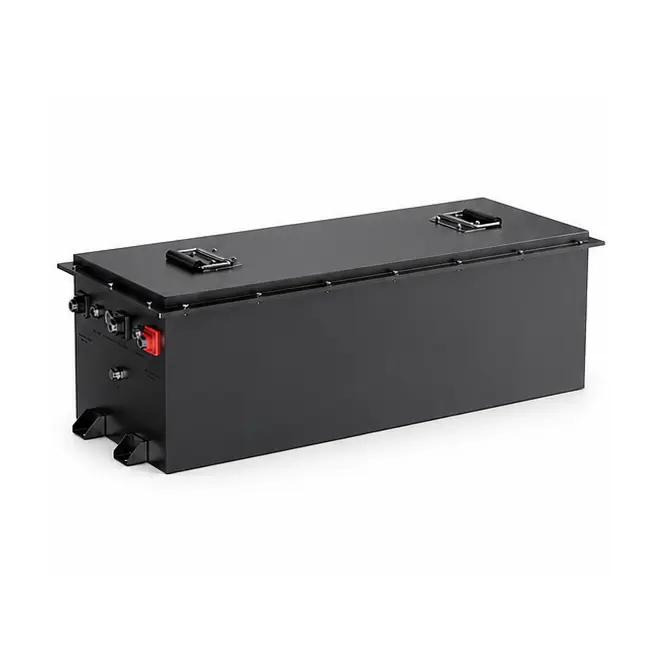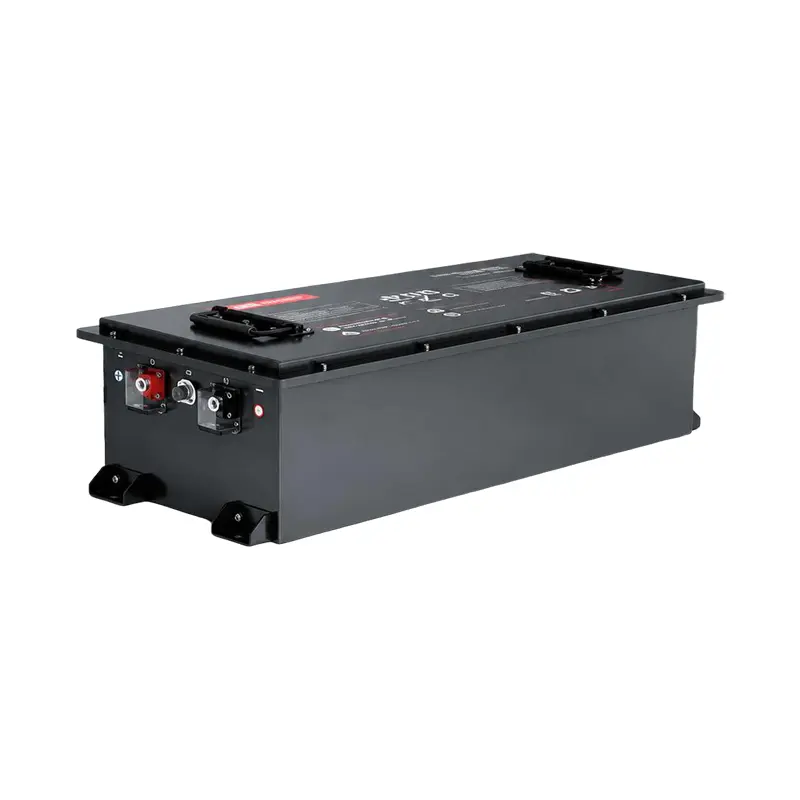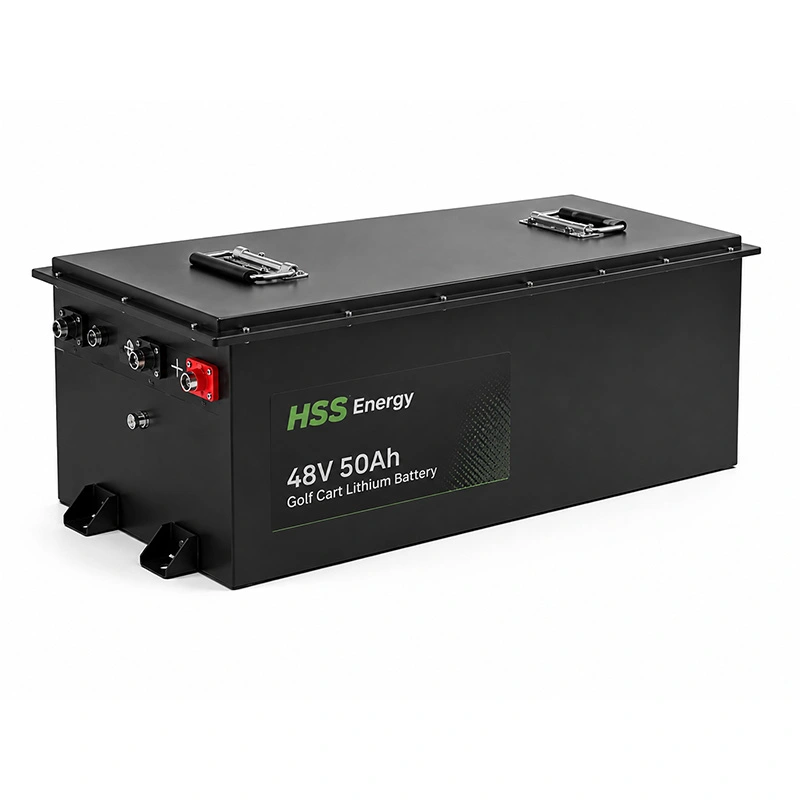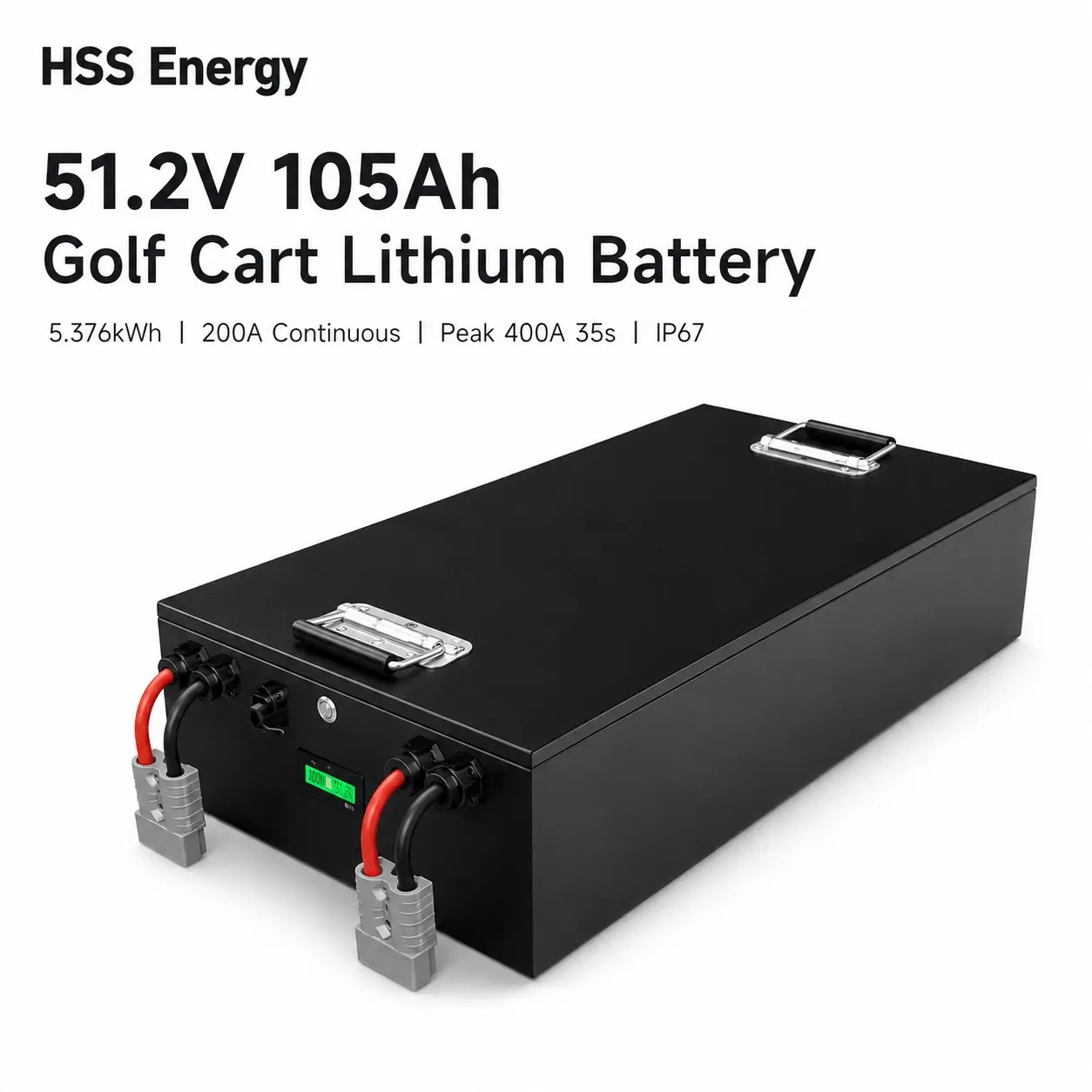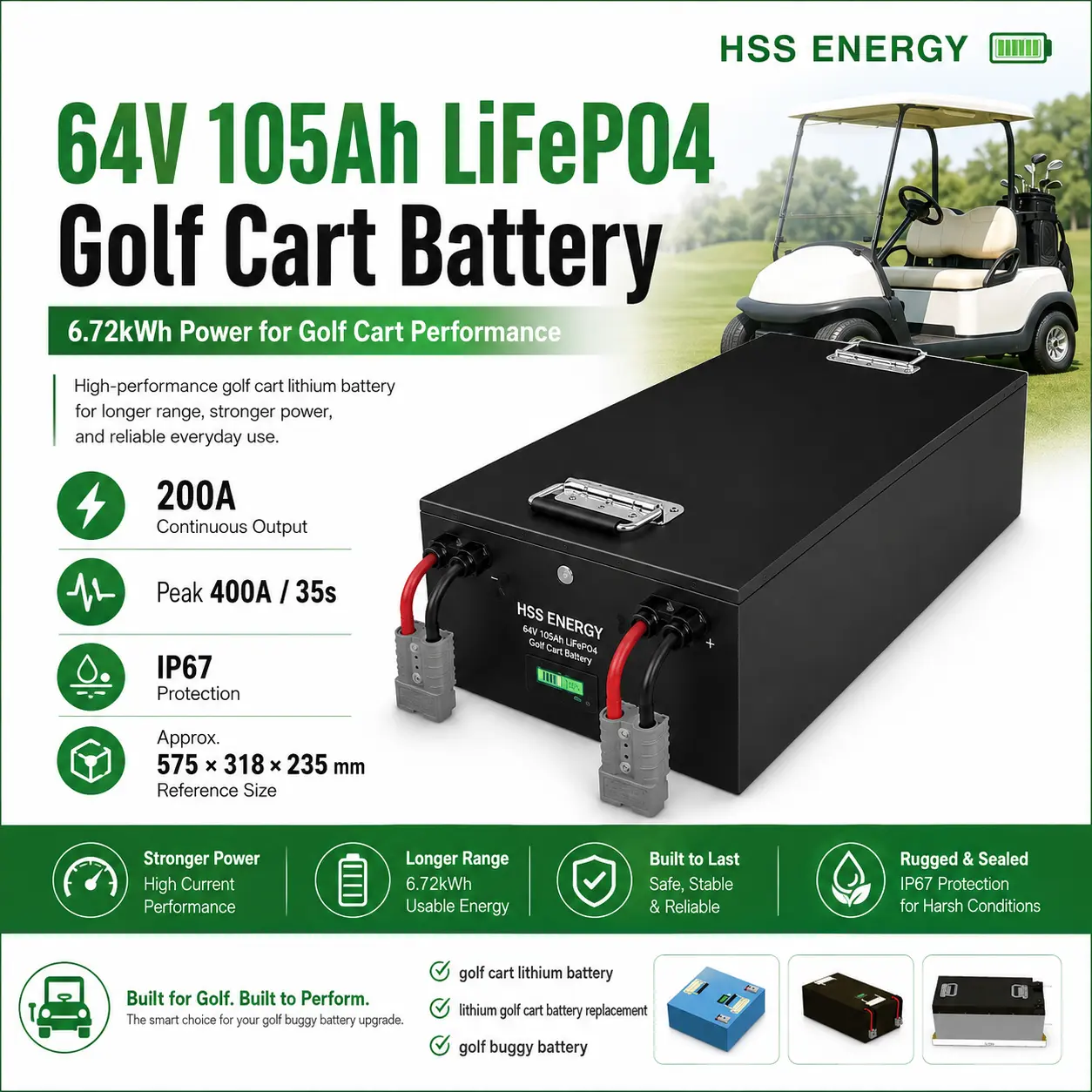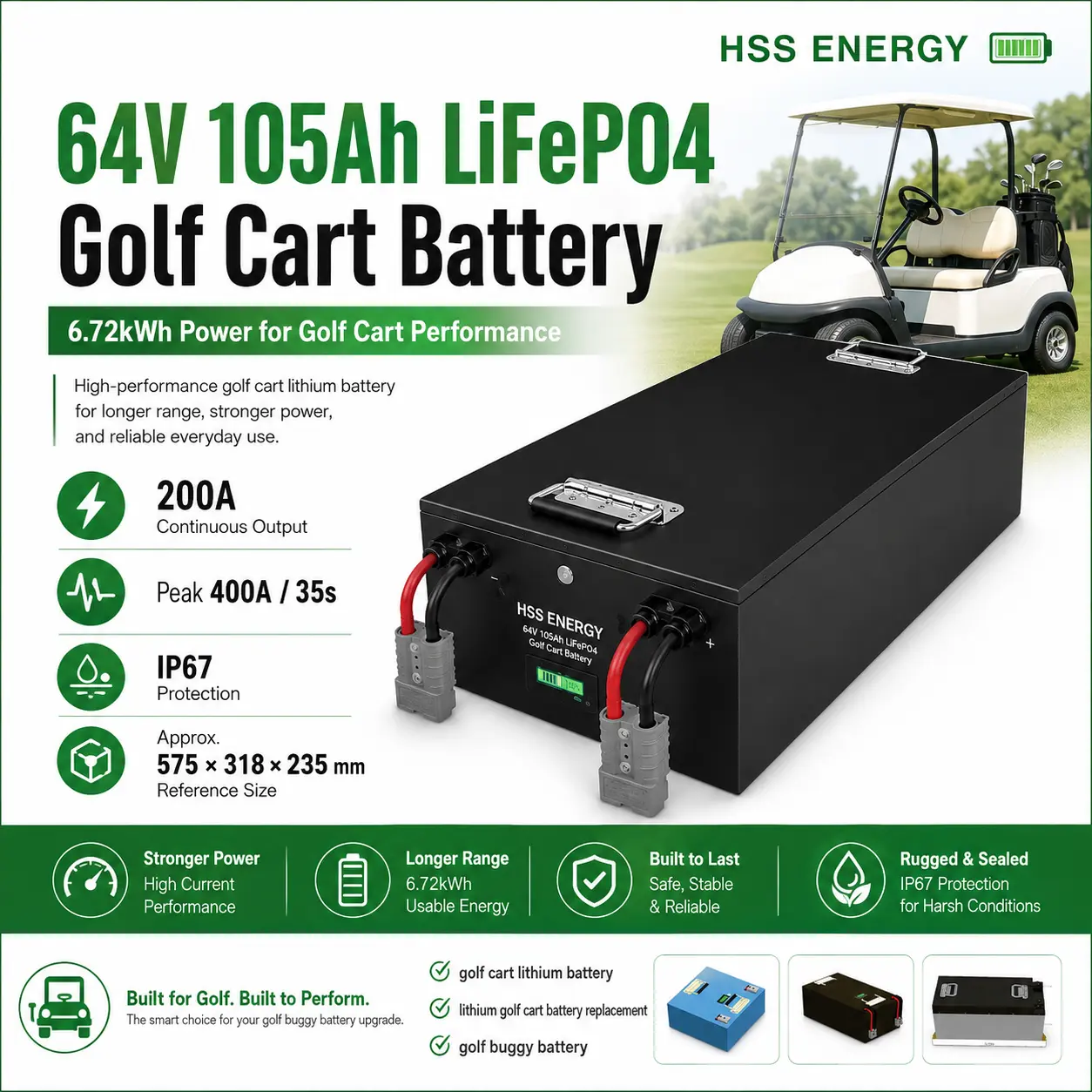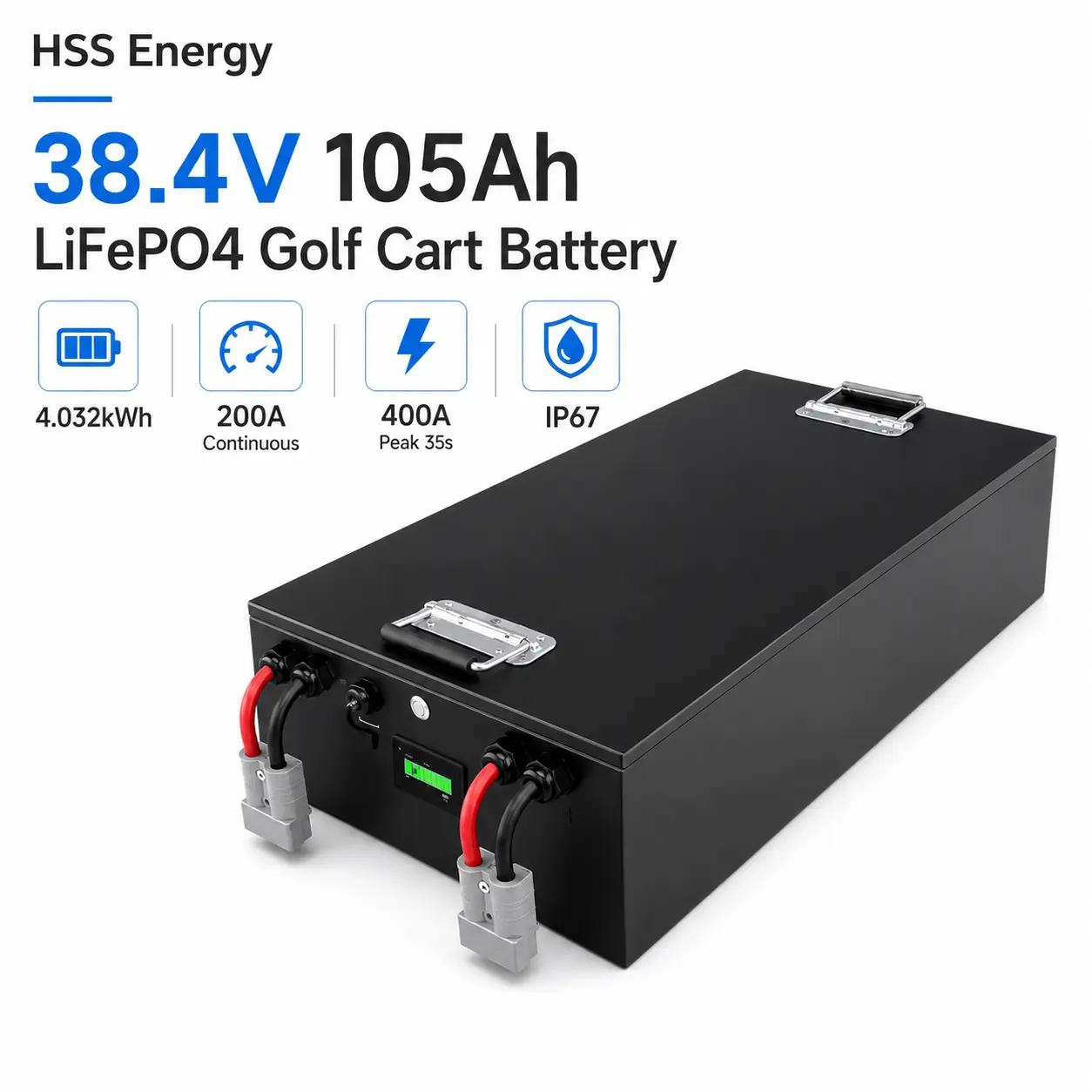
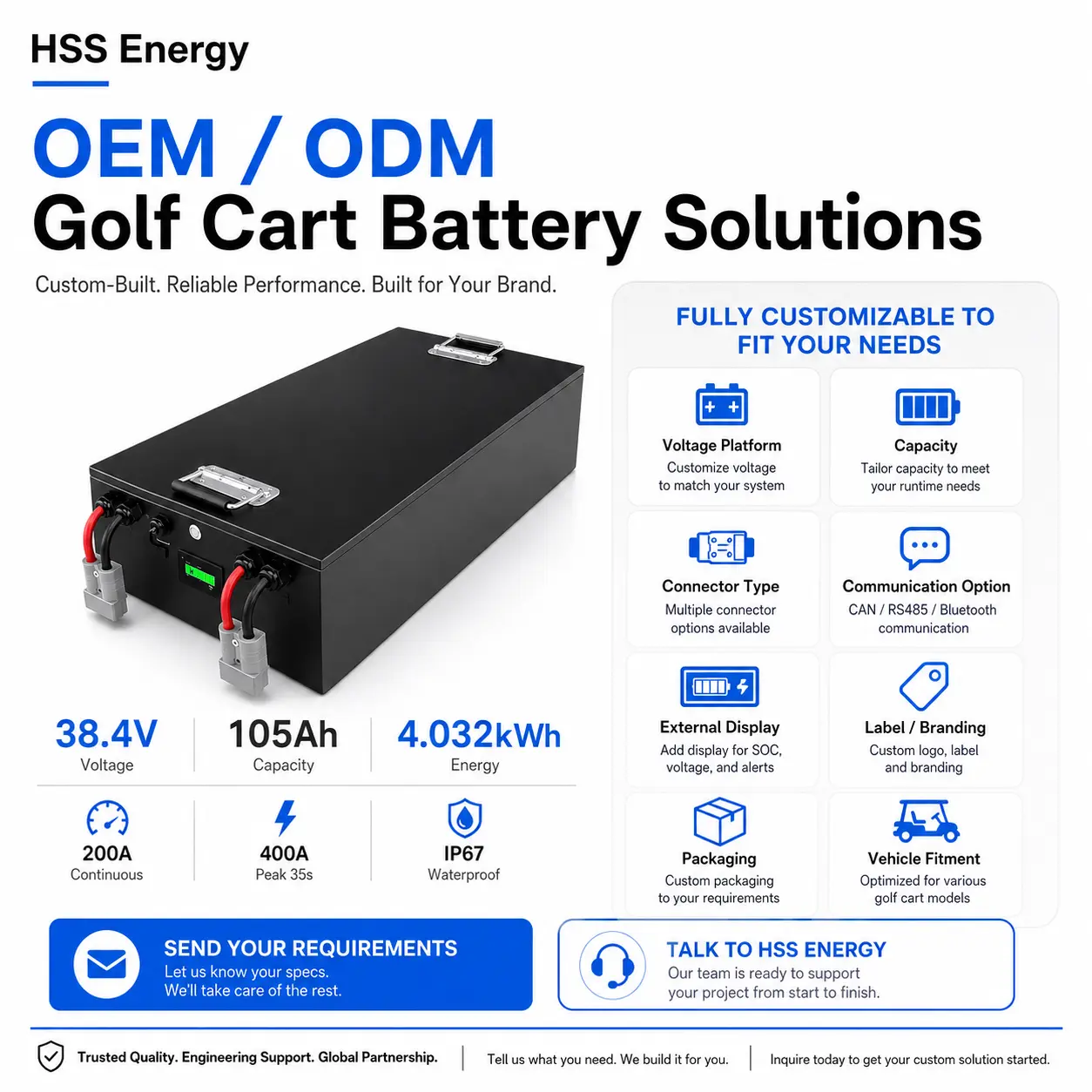
HSS Energy 36V 105Ah Golf Cart Lithium Battery supports 36V-class golf-cart replacement and OEM integration. Its 12S1P platform combines high-current BMS control, configurable communication and a sealed enclosure. Before production, confirm controller range, charger profile, current demand, connector layout, tray clearance and BMS settings.
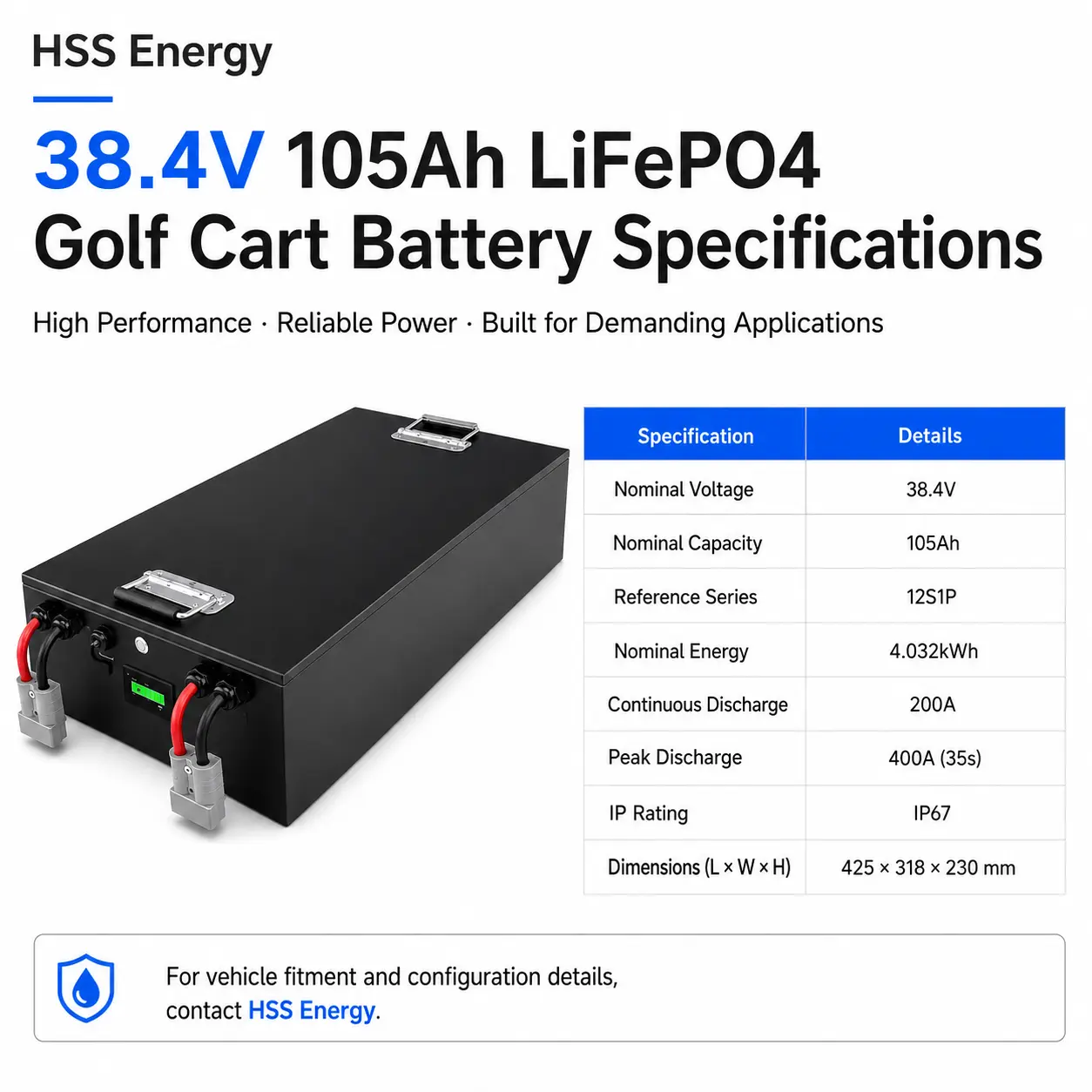
|
Specification |
Details |
|
Market Voltage Class |
36V |
|
Nominal Voltage |
38.4V |
|
Cell Configuration |
12S1P LiFePO4 |
|
Rated Capacity |
105Ah |
|
Nominal Energy |
4.032kWh |
|
Maximum Continuous Discharge |
200A |
|
Peak Discharge |
400A for 35 seconds |
|
Charge Voltage |
43.8V |
|
Standard Charger |
25A option; up to 50A after project review |
|
BMS |
200A Smart BMS, matched to approved pack configuration |
|
Communication |
RS485 standard platform; Bluetooth APP + external SOC display; CAN optional after controller matching |
|
Ingress Protection |
IP67 |
This platform is designed for a structured 36V golf cart lithium conversion project rather than a blind same-voltage swap. The existing battery bank, controller, charger, cable size, fuse strategy, accessory loads and tray layout should all be checked before conversion.
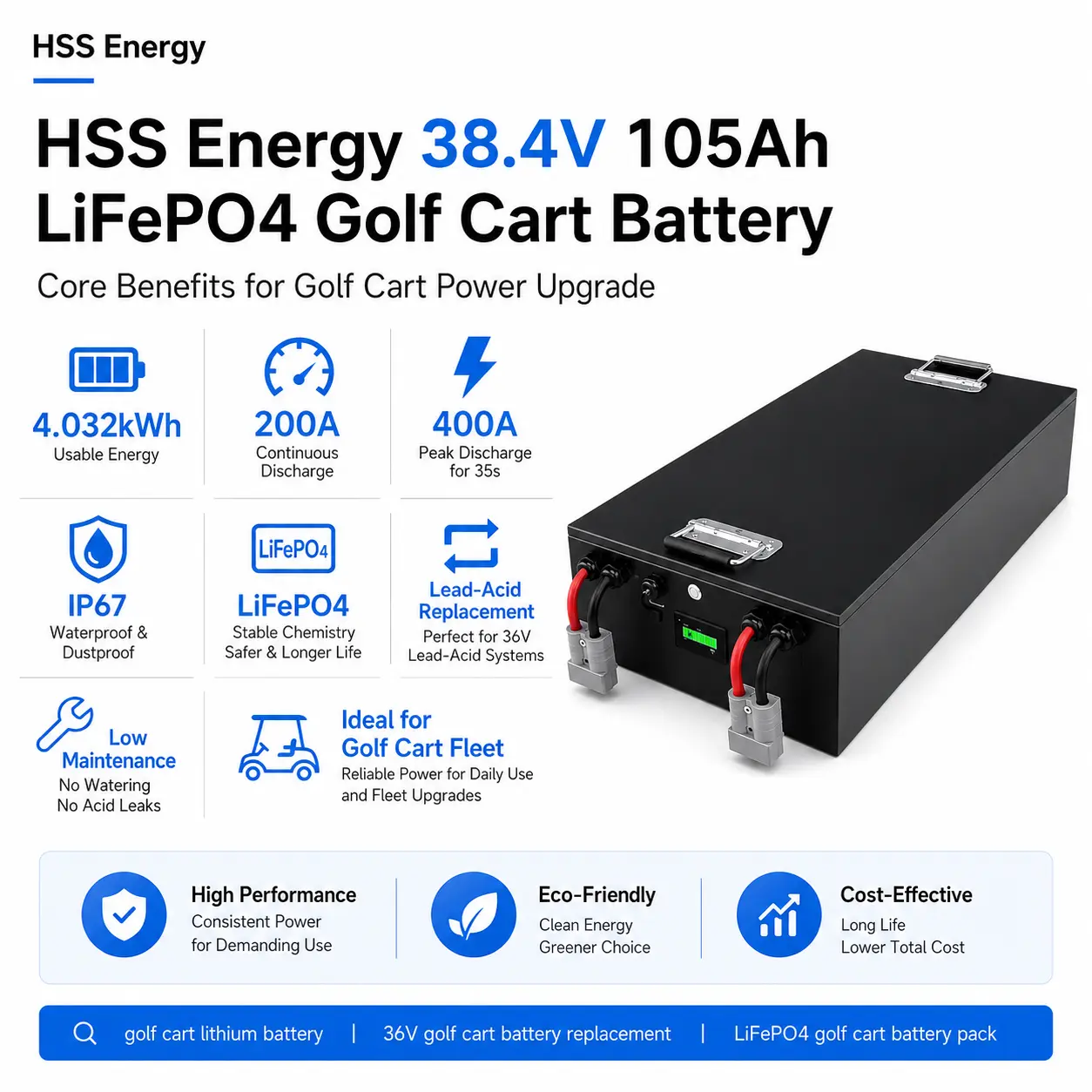
• Higher usable energy through a flatter discharge profile and deeper practical cycling.
• No watering or acid leakage; routine battery-bank maintenance is reduced.
• Lower pack weight than a comparable multi-battery lead-acid bank can reduce vehicle mass.
• BMS-based protection adds pack-level monitoring and current/temperature control.
• Confirm the vehicle is a 36V-class platform and verify controller voltage tolerance.
• Use a LiFePO4-compatible 43.8V charging profile.
• Compare sustained motor current and acceleration / hill-climb surge against BMS limits.
• Confirm connector, cable, fuse and tray retention requirements before production.
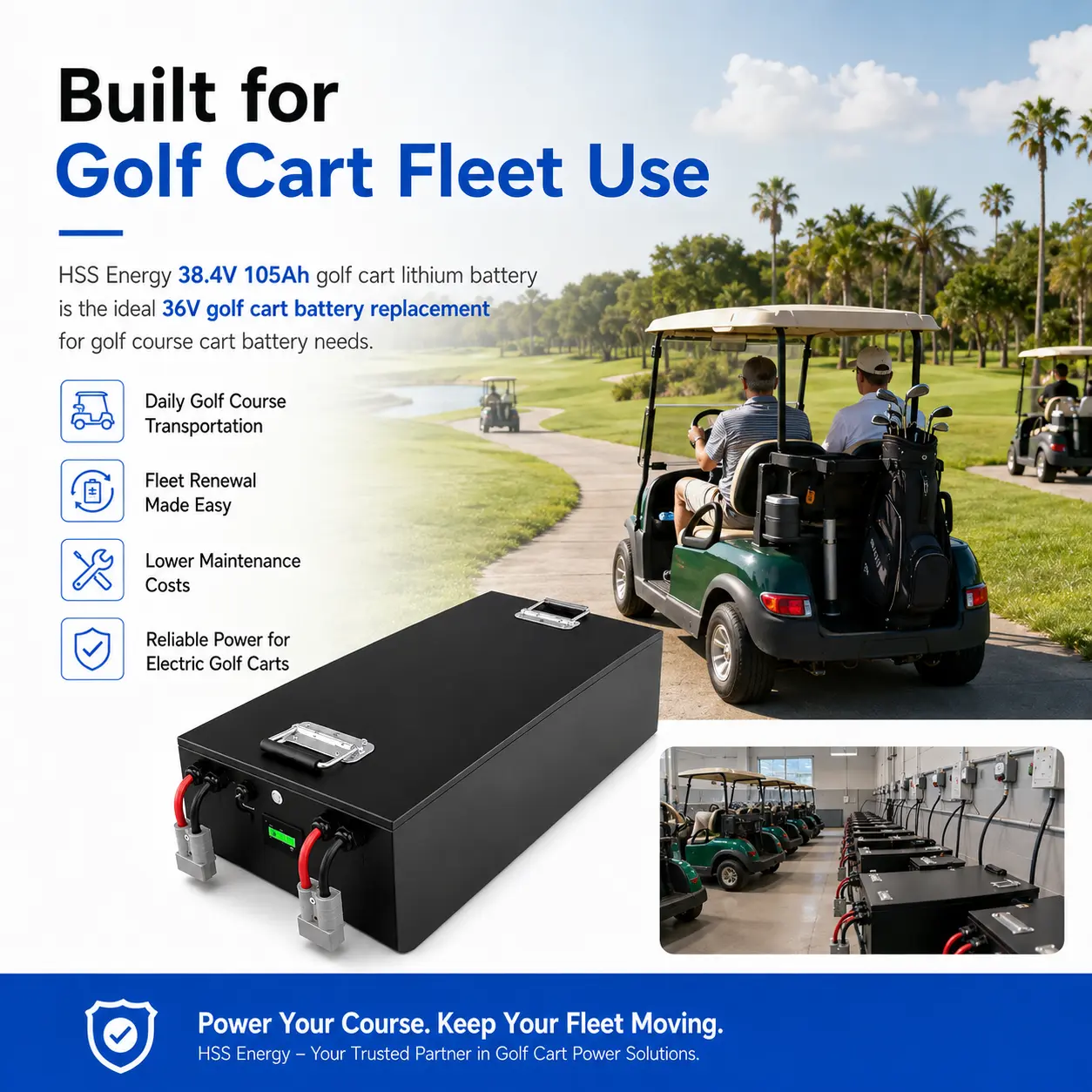
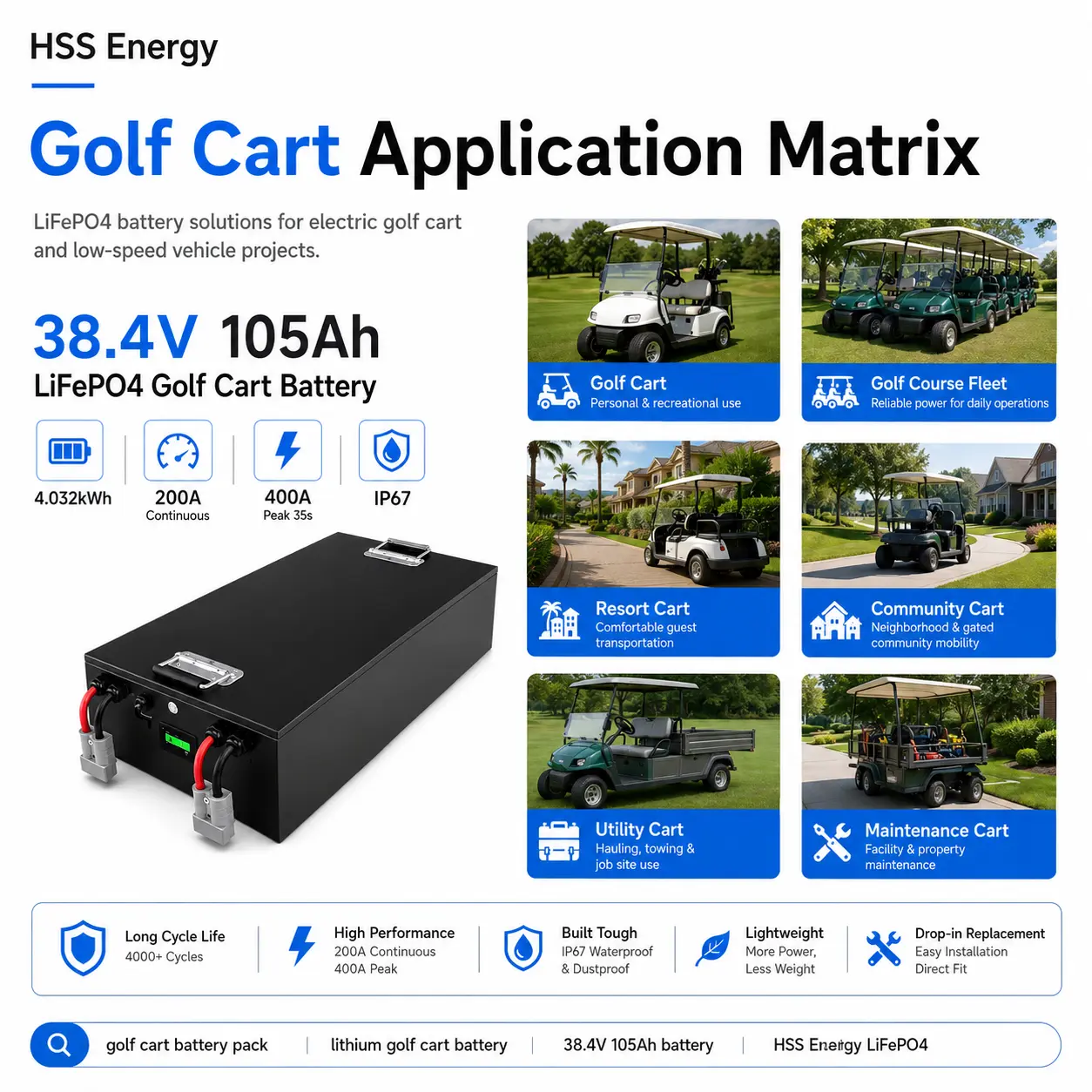
Primary Application Territory• Golf-course fleet carts and fleet renewal programs. • Resort, hotel and campus passenger carts. • Community / gated-area mobility. • Light utility and maintenance carts on standard 36V-class drivetrains. |
customers Role• Fleet operator replacing aging lead-acid banks. • Distributor needing a standardized 36V-class lithium offering. • Golf-cart OEM / modifier requiring an integrated battery module. • Project customers needing connector, display, communication or enclosure customization. |
|
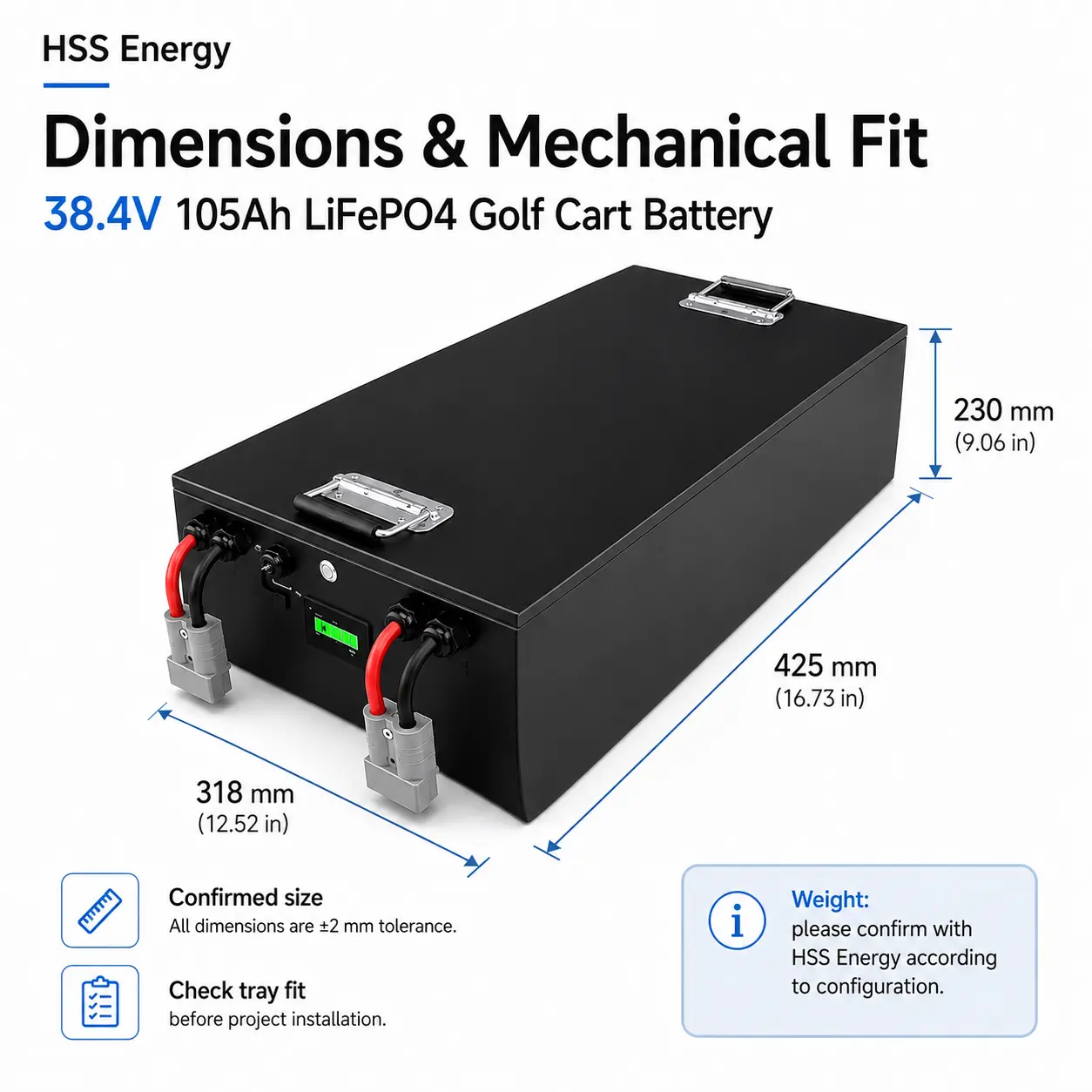
Reference Package • Reference size: 425 × 318 × 230 mm. • Reference weight: 37.5 kg. • Top carry handles and front-facing power / interface zone. • IP67 sealed enclosure platform. |
Custom Fit as a Sales Advantage • Case length, width and height can be rebalanced for a specific battery tray. • Connector position and cable exit direction can be adapted to vehicle layout. • Mounting / retention features can be coordinated with the customer’s chassis design. • Final dimensions remain subject to electrical, thermal, structural and serviceability review. |
|
Specification |
Details |
|
|
Power Interface |
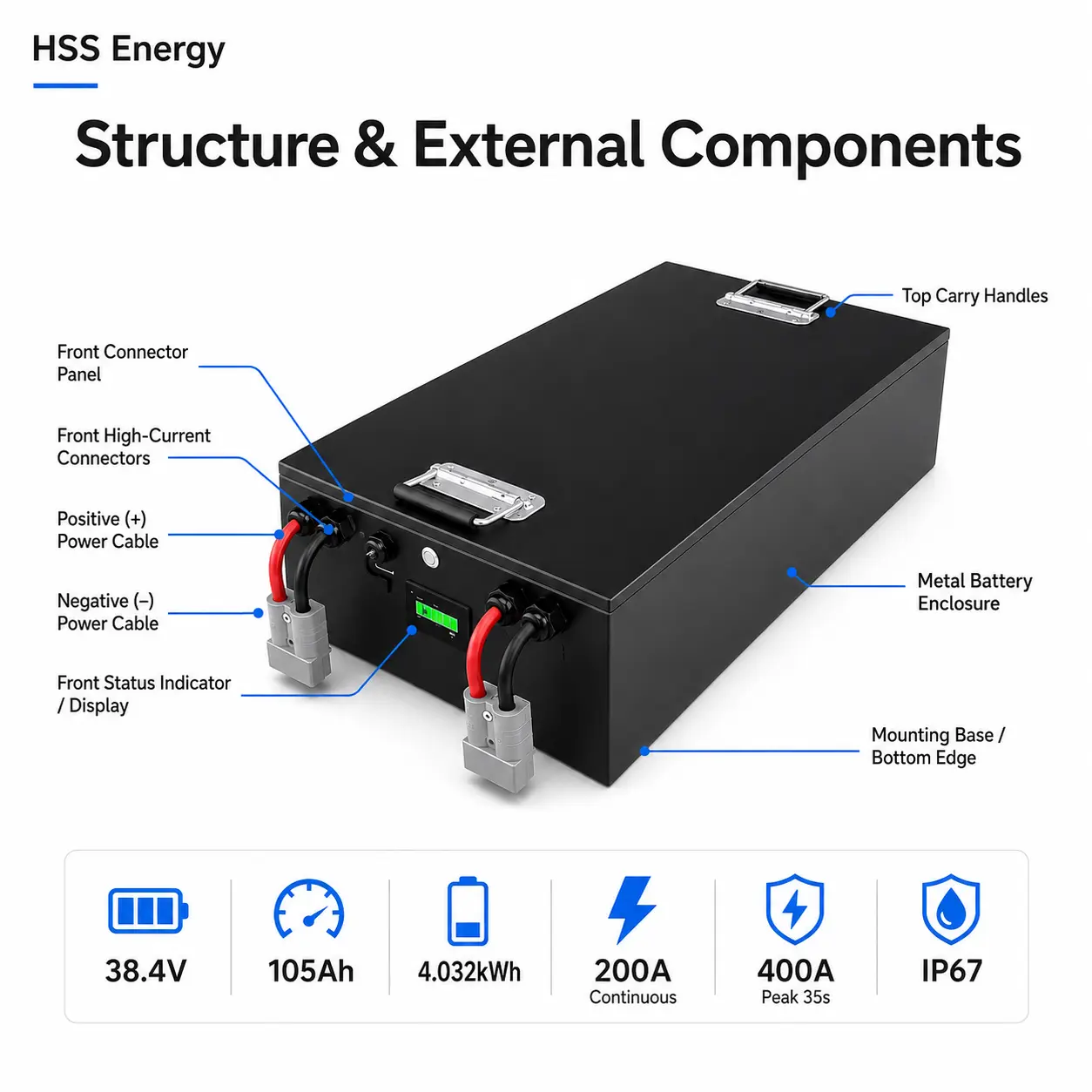
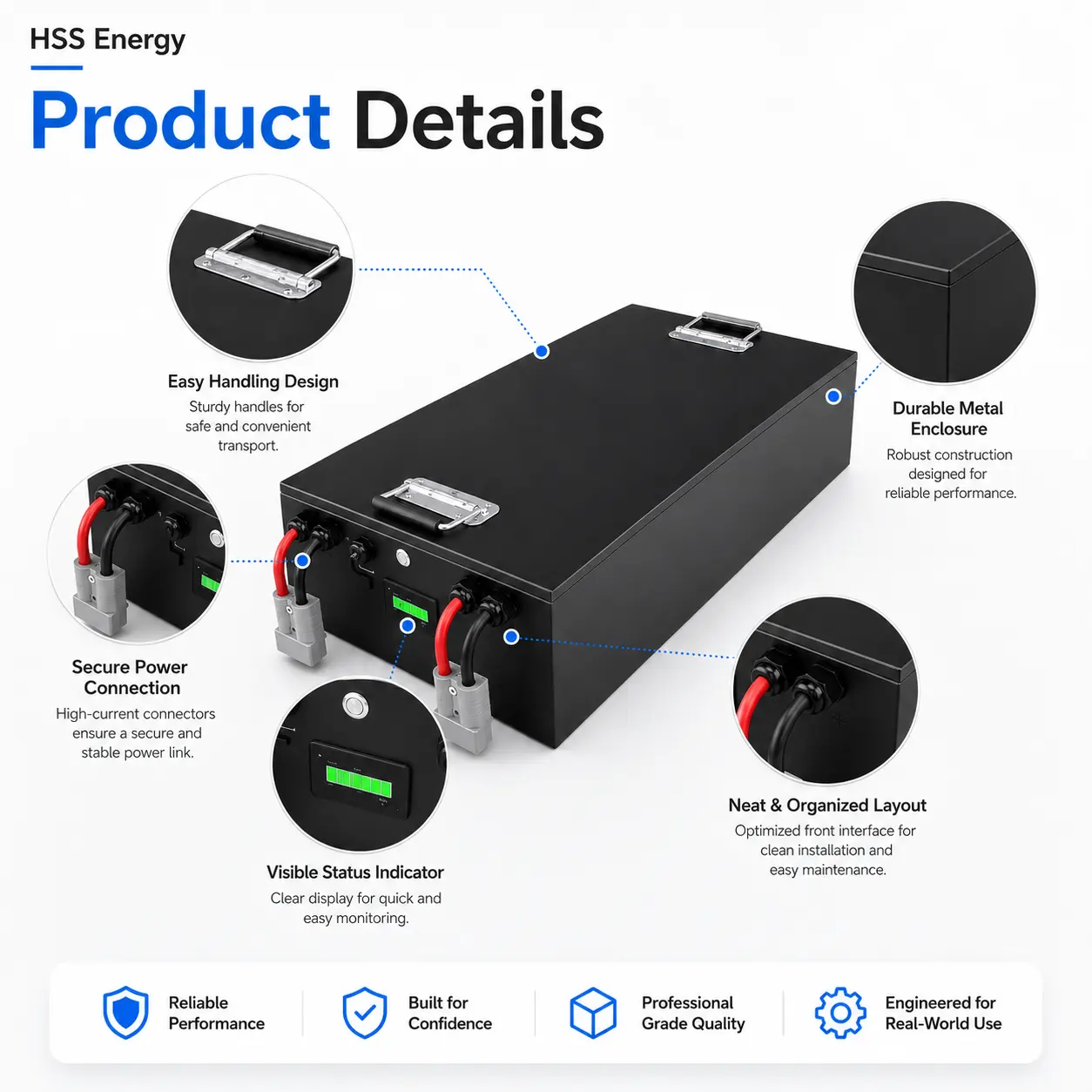
Front high-current connector layout; connector type can be project-selected |
|
|
Status / SOC |
External SOC display available; front status indicator shown in reference configuration |
|
|
Communication |
RS485 platform; Bluetooth APP optional; CAN subject to controller protocol matching |
|
|
BMS |
200A Smart BMS with project-specific protection settings |
|
|
Enclosure |
Metal battery enclosure with top carry handles |
|
|
Vehicle Integration |
Controller, charger, harness, fuse, connector and communication must be reviewed as one system |
|
For a 36V golf cart battery upgrade, the strongest inquiry is not simply “will it fit?” but “what controller, charger, connector, display and communication combination should be approved for this specific cart?”
• Voltage platform and capacity within approved engineering scope.
• Case dimensions and vehicle-fit geometry.
• High-current connector and cable arrangement.
• BMS protection limits and communication interface.
• External display / SOC indication.
• Private label, logo, packaging and project documentation.
Is 38.4V the same as a market “36V” golf-cart battery?
It is the LiFePO4 nominal voltage for a 12-series pack used in the 36V market class. Vehicle controller and charger compatibility must still be confirmed.
Can the case size be changed?
Yes. The 425 × 318 × 230 mm package is the reference size. HSS Energy can evaluate alternative case proportions and interface positions to fit the customer’s battery compartment.
Can we use our existing lead-acid charger?
Do not assume compatibility. This pack uses a 43.8V LiFePO4 charging target, so the existing charger profile should be reviewed before conversion.
Can CAN communication be supplied?
CAN can be evaluated when the golf-cart controller protocol and project requirements are provided. RS485 is the standard platform in the current series matrix.
What should be confirmed before placing an OEM order?
Vehicle voltage class, motor/controller current demand, charger, battery tray, connector, fuse/cable design, communication, display, branding and packaging.
Address
A3, 1204-1, 1142 Jimei North Avenue, Software Park Phase III, Xiamen Torch High-tech Zone, Xiamen, China
Tel