Home Energy Storage Batteries are becoming an important part of modern residential energy systems. By storing electricity and releasing it when needed, a home battery can help households use more of their own solar power, maintain essential loads during outages, and better manage when electricity is consumed. For homeowners, installers, builders, and energy solution providers, understanding how these systems work is essential for selecting a practical and dependable solution.

Home energy storage batteries capture electricity when it is available and store it for later use. They can be paired with rooftop solar, connected to the utility grid, or integrated into a broader home energy management system. The most important considerations include usable capacity, power output, battery chemistry, inverter compatibility, operating temperature, safety architecture, installation requirements, warranty conditions, and future expansion. A properly designed system should be based on actual household loads and operating objectives rather than battery capacity alone.
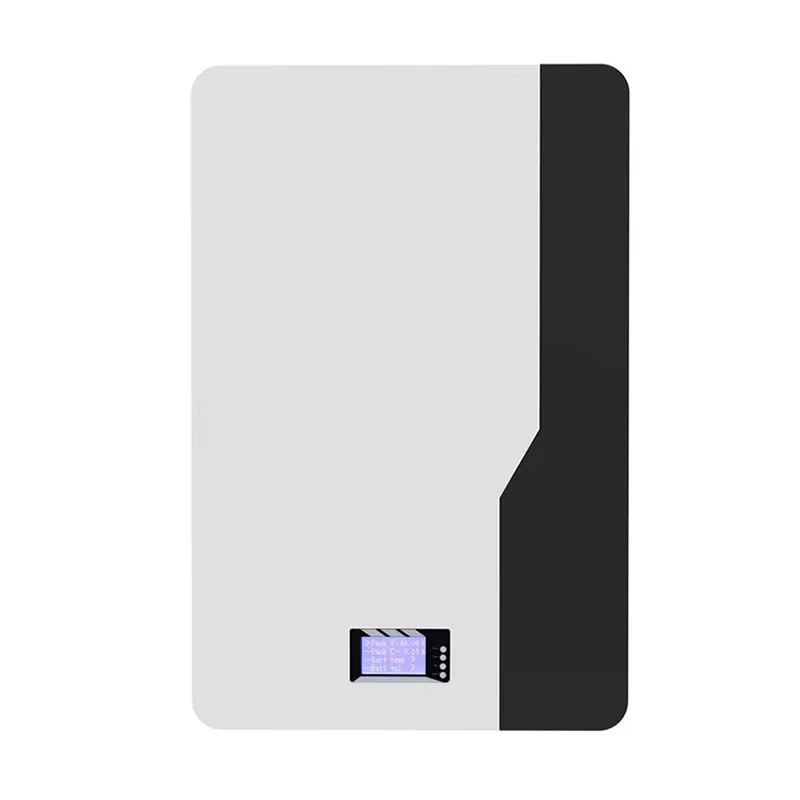
Home energy storage batteries are stationary battery systems designed to store electrical energy and make it available at a later time. Unlike a conventional backup generator that produces electricity from fuel, a battery system stores electricity before it is needed and can deliver it through an inverter when household demand rises or the grid becomes unavailable.
The technology is particularly useful alongside photovoltaic solar panels. Solar production normally peaks during daylight hours, while household electricity consumption may continue into the evening. A battery can capture some of the excess daytime generation and make that energy available later.
Energy storage can therefore become a bridge between when electricity is generated and when electricity is consumed. The U.S. Department of Energy describes storage as a mechanism for capturing energy when supply is high and releasing it when demand increases or supply is limited.
A typical residential energy storage system combines several components that work together rather than functioning as a battery alone. The exact architecture varies according to the manufacturer and application, but the energy pathway is generally straightforward.
The control strategy can be configured around different objectives. For example, a homeowner may prioritize solar self-consumption during the evening, reserve part of the battery for backup, or coordinate charging and discharging with electricity tariffs where permitted.
| Operating Mode | Energy Flow | Typical Purpose |
|---|---|---|
| Solar Charging | PV → Battery | Store surplus daytime generation |
| Self-Consumption | Battery → Home | Use stored energy later |
| Backup | Battery → Critical Loads | Maintain essential equipment during outages |
| Grid Charging | Grid → Battery | Support time-based energy strategies where available |
One of the most common applications is increasing the amount of locally generated solar electricity that can be consumed later. Instead of relying entirely on electricity production and consumption occurring at the same time, the battery provides a controllable storage window.
When appropriately configured, a residential battery can supply designated loads when the utility grid is unavailable. Depending on system design and local requirements, these loads may include lighting, communications equipment, refrigeration, security systems, internet equipment, pumps, or selected heating and cooling equipment.
Electricity demand changes throughout the day. Storage gives homeowners another way to shift energy consumption rather than using electricity immediately whenever it is generated or purchased.
A properly integrated system can combine solar generation, battery storage, and grid electricity. This provides greater flexibility when generation or grid availability changes.
NREL research emphasizes that different objectives—such as resilience, solar self-consumption, and financial considerations—can lead to different battery sizing requirements.
Capacity is usually expressed in kilowatt-hours (kWh). However, the number on a product specification sheet does not automatically tell a homeowner how much electricity can actually be used.
Planning should begin with the loads that matter most. Consider the household's daily consumption, the duration of expected backup, solar generation, seasonal conditions, and whether the system is intended to support the entire home or only selected circuits.
A practical planning process includes:
This approach avoids a common problem: installing a large battery that has plenty of stored energy but insufficient output power for the appliances that need to run simultaneously.
Modern residential systems commonly use lithium-based battery technologies because of their energy density, efficiency, and suitability for stationary storage. However, chemistry is only one part of the system.
| Component | Primary Function | Why It Matters |
|---|---|---|
| Battery Pack | Stores electrical energy | Determines available energy capacity |
| BMS | Monitors and manages battery operation | Supports controlled and protected operation |
| Inverter | Converts DC and AC electricity | Determines power delivery and system compatibility |
| Energy Management System | Controls energy flows | Coordinates charging, discharging, solar, and loads |
| Protection Equipment | Provides electrical and system protection | Supports safe installation and operation |
Battery safety should be considered at the system level. Installation location, electrical protection, temperature management, battery monitoring, enclosure design, fire protection, and applicable local codes can all affect the final installation.
In the United States, UL 9540 is a key standard for energy storage systems and equipment, while UL 9540A evaluates thermal runaway fire propagation characteristics. UL Solutions also notes that residential applications may involve additional considerations addressed by UL 9540B.
Requirements vary by jurisdiction, so homeowners and project developers should confirm applicable electrical, building, and fire requirements with qualified professionals and the relevant local authority before installation.
NFPA materials also emphasize the role of battery management and energy storage management systems in monitoring operating conditions and placing affected components into a safe state when potentially hazardous conditions are detected.
Home Energy Storage Batteries can serve different purposes depending on the household's energy profile.
Store surplus photovoltaic generation for evening and nighttime consumption.
Keep selected essential household circuits operating during grid interruptions.
Coordinate battery operation with household loads and energy management controls.
Integrate storage into the electrical architecture during the building design stage.
When evaluating residential battery systems, looking at one specification in isolation can be misleading. A more complete comparison should consider the relationship between energy, power, operating conditions, controls, and service support.
For a long-term residential project, serviceability and system compatibility can be just as important as the initial battery capacity.
A large kWh rating does not guarantee that the battery can operate high-power appliances simultaneously.
The battery and inverter must work together electrically and operationally.
Seasonal solar production and changes in household consumption can significantly affect system performance.
Installation requirements, monitoring, warranty terms, maintenance, usable capacity, and expansion capability also affect the long-term value of a system.
Electrical and fire requirements differ between jurisdictions and can influence equipment selection and installation location.
For homeowners, distributors, installers, and project developers, choosing a battery supplier involves more than comparing a single product specification. System compatibility, application requirements, configuration, quality control, communication, and long-term service all need to be considered together.
Xiamen HSS Energy Technology Co., Ltd. focuses on energy storage solutions designed around practical residential energy requirements. A project-oriented approach can help customers evaluate battery capacity, power requirements, system integration, application scenarios, and configuration needs before finalizing an energy storage solution.
For projects involving solar generation, backup power, residential energy management, or future system expansion, the right solution should begin with an understanding of the customer's actual electricity consumption rather than simply selecting a battery with the largest advertised capacity.
The most practical energy storage system is one that matches the home's loads, energy sources, installation environment, backup expectations, and future requirements. A detailed project assessment can help turn battery capacity into useful, reliable household energy.
Backup duration depends on usable battery capacity, household load, inverter output, operating conditions, and which appliances are running. A battery supplying only essential loads can generally support those loads for longer than the same battery supplying the entire home.
Yes. Residential batteries are commonly integrated with photovoltaic systems. The exact configuration depends on the inverter architecture, battery voltage, communication protocol, and system design.
Not necessarily. Oversizing can increase initial cost without providing proportional practical benefits. Battery capacity should correspond to household consumption, solar production, backup objectives, and power requirements.
Capacity, measured in kWh, describes how much energy can be stored. Power, measured in kW, describes how quickly the system can deliver or absorb energy. Both are important when planning a residential system.
It depends on the air conditioner's running and startup power requirements and the battery-inverter system's output capability. Large motor-driven or compressor-based loads should be included in the load assessment before installation.
Modern systems are designed for relatively low routine maintenance, but monitoring, inspections, firmware or control updates where applicable, and periodic professional checks may still be appropriate. Always follow the manufacturer's maintenance instructions.
The appropriate location depends on the product's installation instructions, environmental ratings, local electrical and fire requirements, temperature conditions, clearances, and access requirements. Installation should be planned by qualified professionals where required.
Buyers should ask about usable capacity, continuous and peak power, battery chemistry, cycle specifications, operating temperature, inverter compatibility, communication protocols, safety testing, warranty conditions, scalability, installation requirements, and after-sales support.
Home Energy Storage Batteries provide a practical way to shift electricity from one time of day to another, increase the usefulness of solar generation, and maintain selected household loads during grid interruptions. Their effectiveness depends on more than battery capacity: load characteristics, inverter performance, usable energy, control systems, installation conditions, safety requirements, and long-term service all contribute to the final result.
For homeowners and energy professionals planning a new system, the most useful starting point is a clear understanding of how electricity is generated, consumed, and prioritized within the property. From there, battery capacity, power output, system architecture, and expansion requirements can be matched to the actual application.
Whether you are planning a solar-plus-storage home, backup power project, or residential energy management system, Xiamen HSS Energy Technology Co., Ltd. can help you evaluate the appropriate battery configuration according to your project requirements.
Contact us to discuss your home energy storage battery requirements and develop a solution around your actual energy needs.