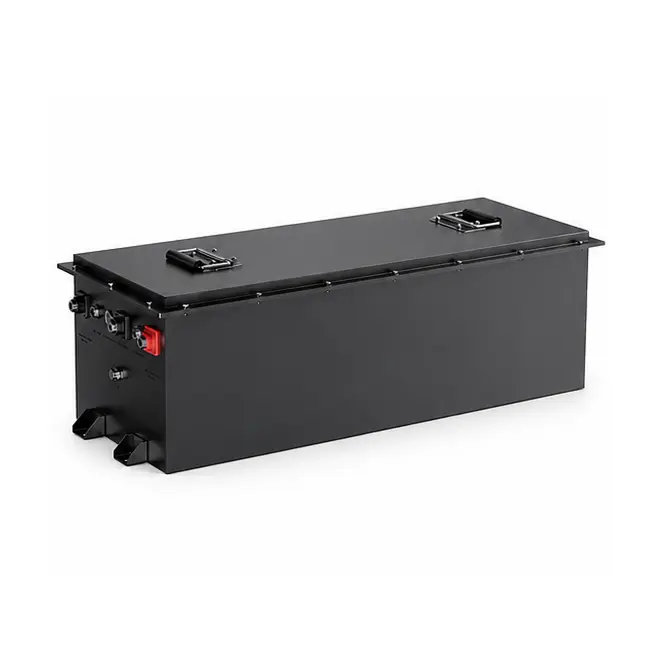
When sourcing the China 72V 100Ah Golf Cart Lithium Battery, HSS Energy customers should start with the cart rather than the voltage label. The pack belongs to the 72V vehicle class, but its 24 LiFePO4 cells produce 76.8V nominal voltage and require an 87.6V charging ceiling. The controller window, peak load, charger profile, tray space and terminals decide whether the upgrade is suitable. Once these points are aligned, the electrical and mechanical drawing can be frozen for sampling.
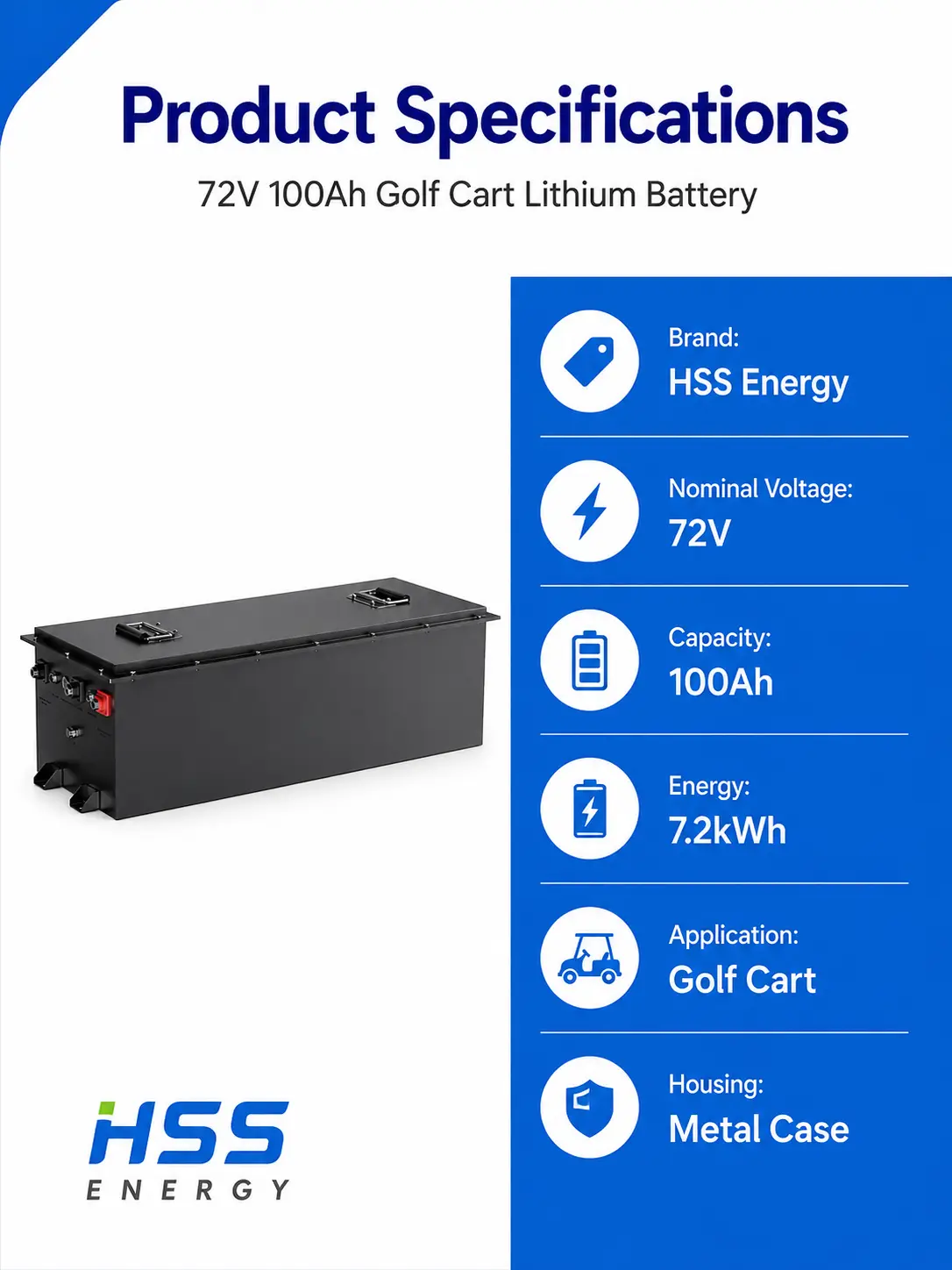
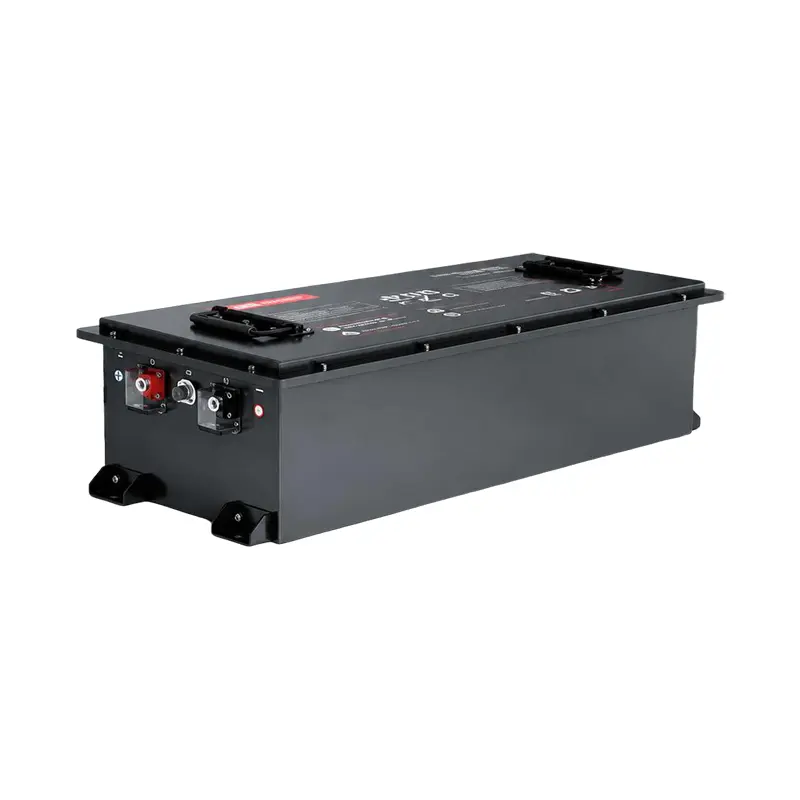
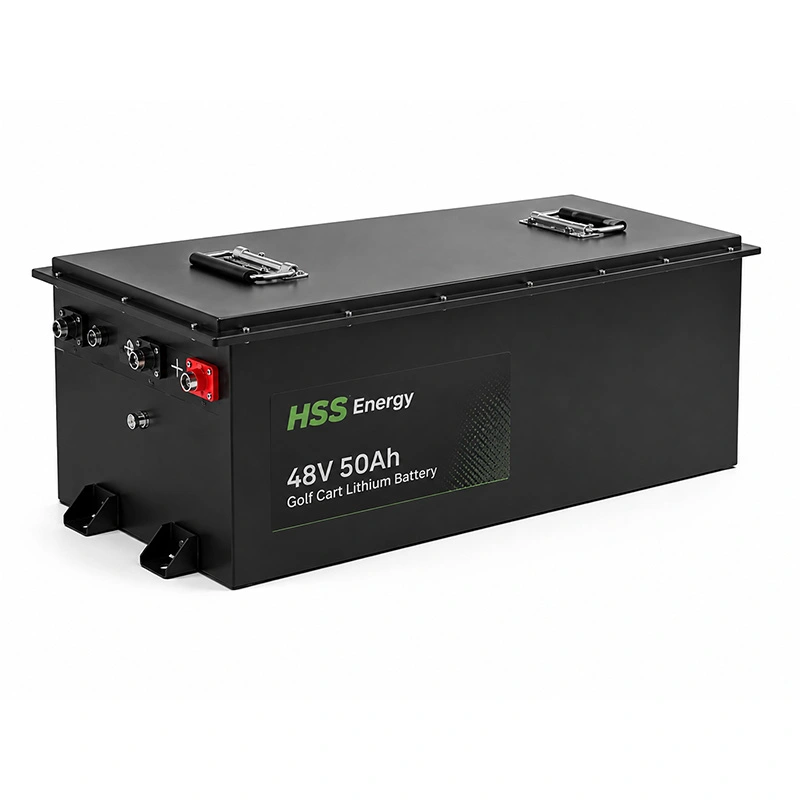
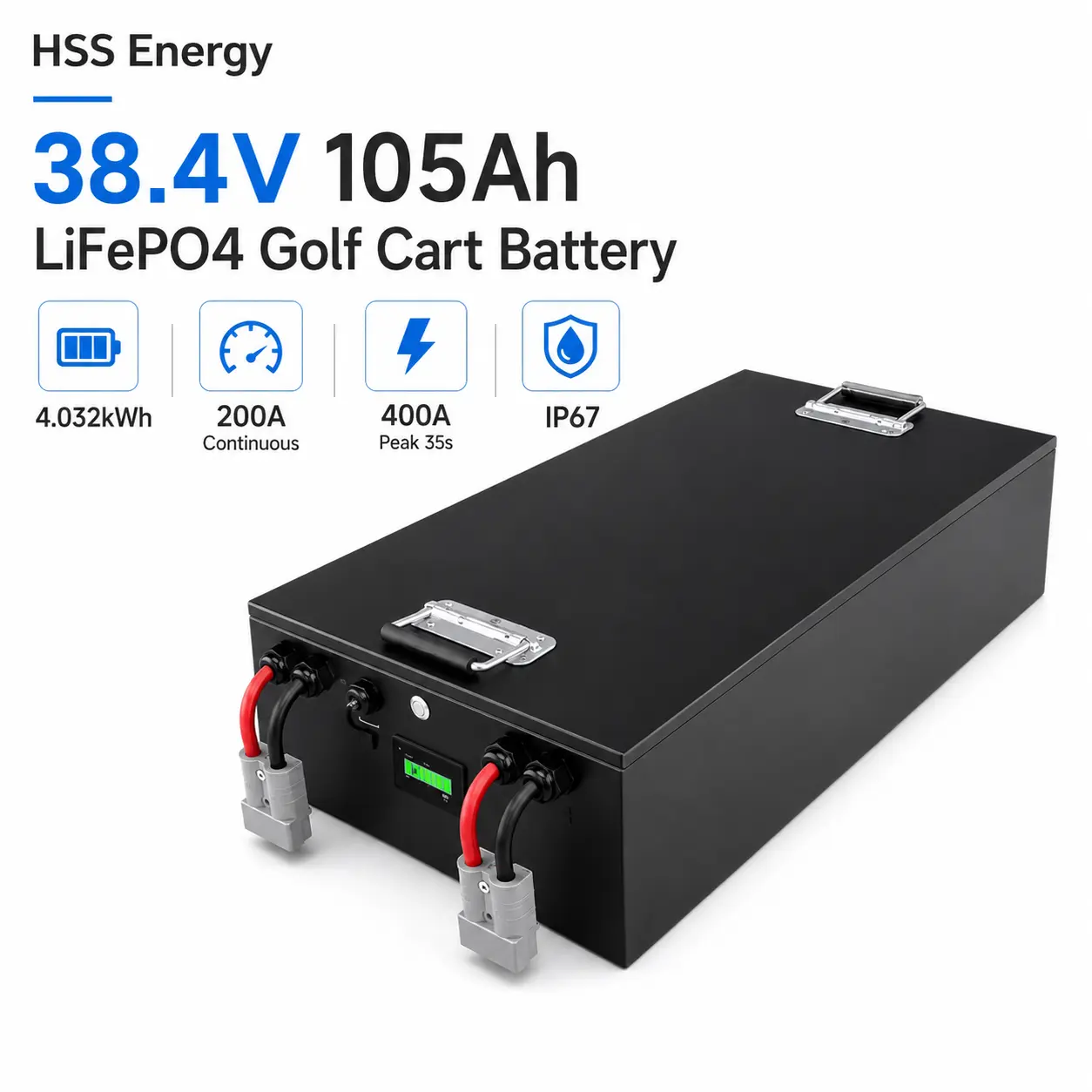
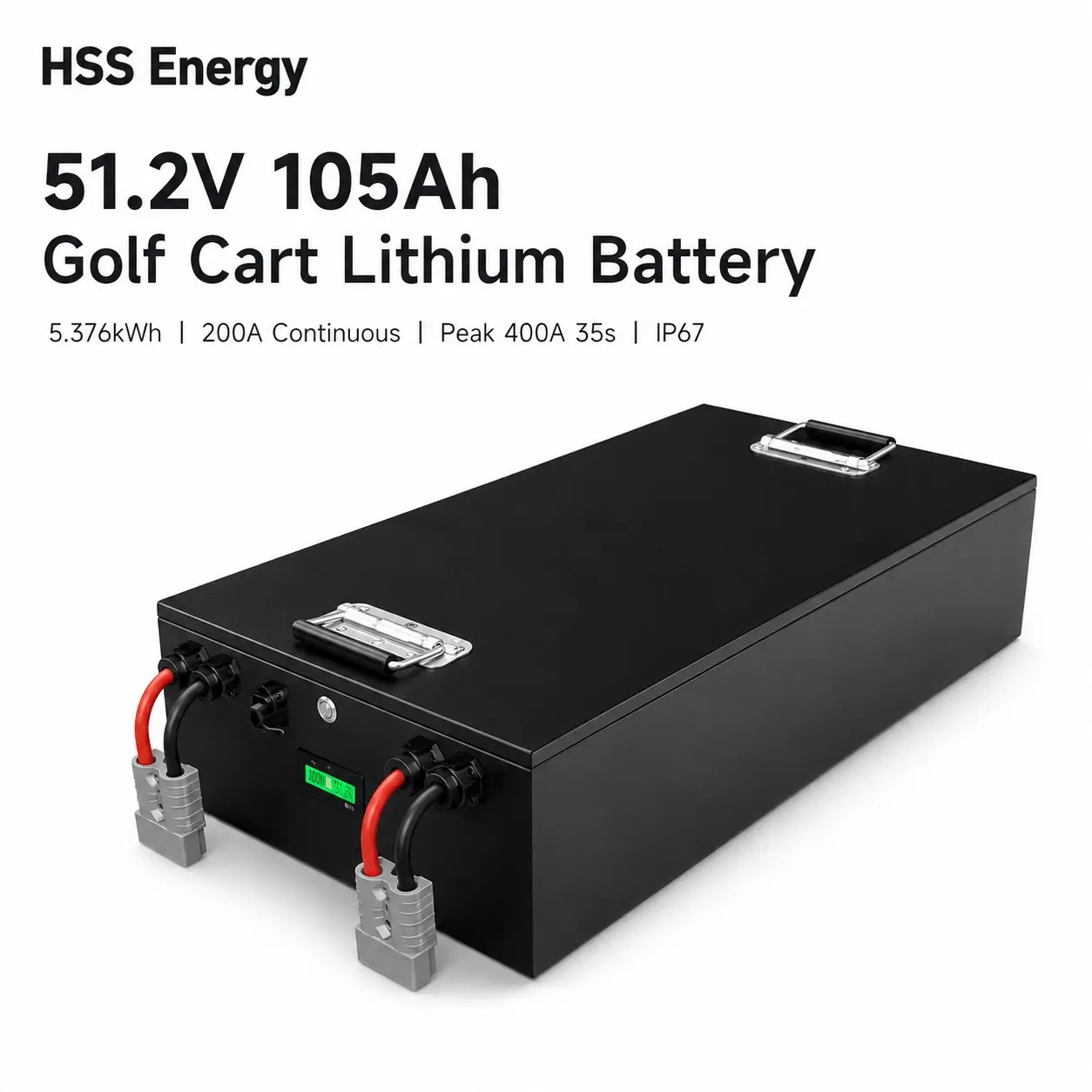
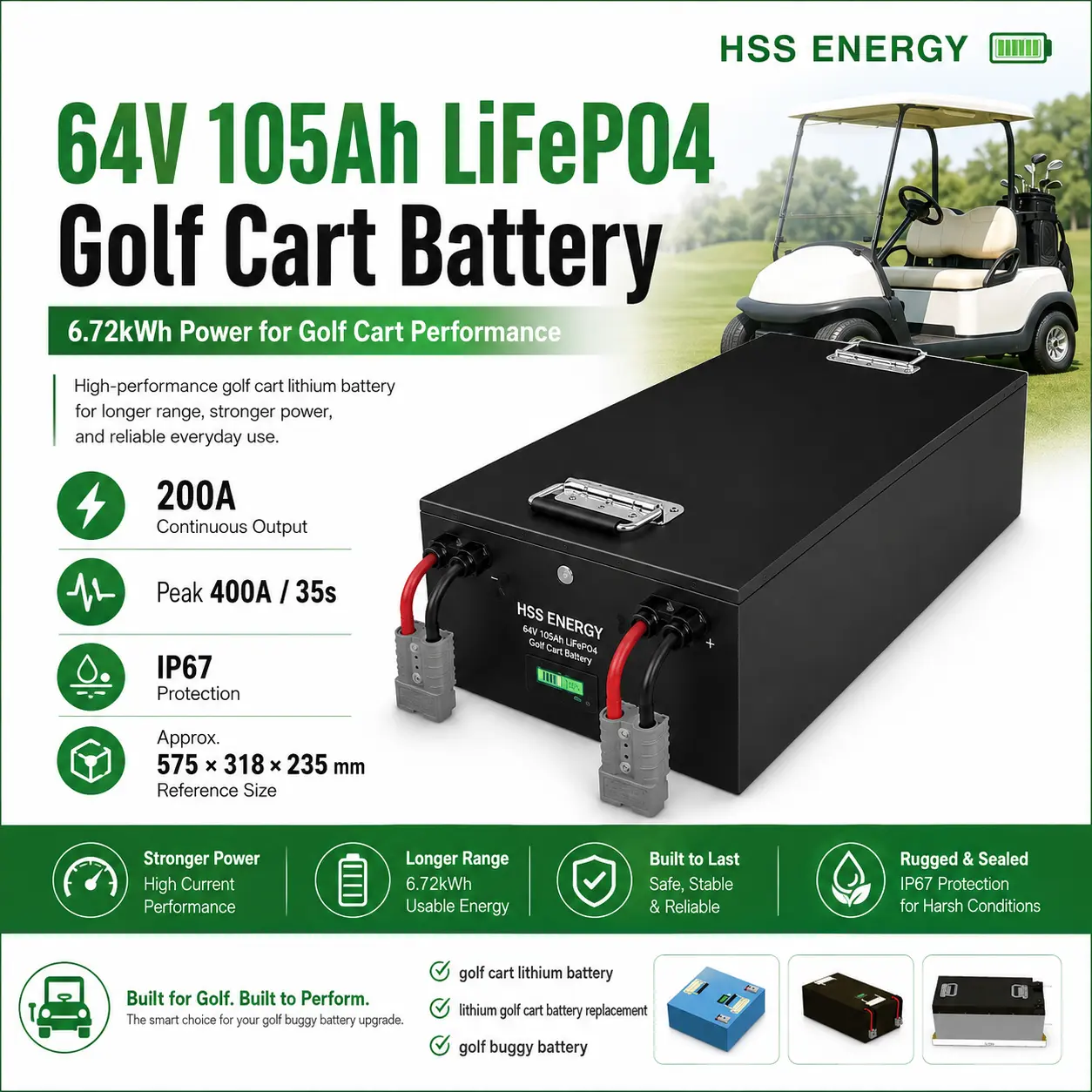
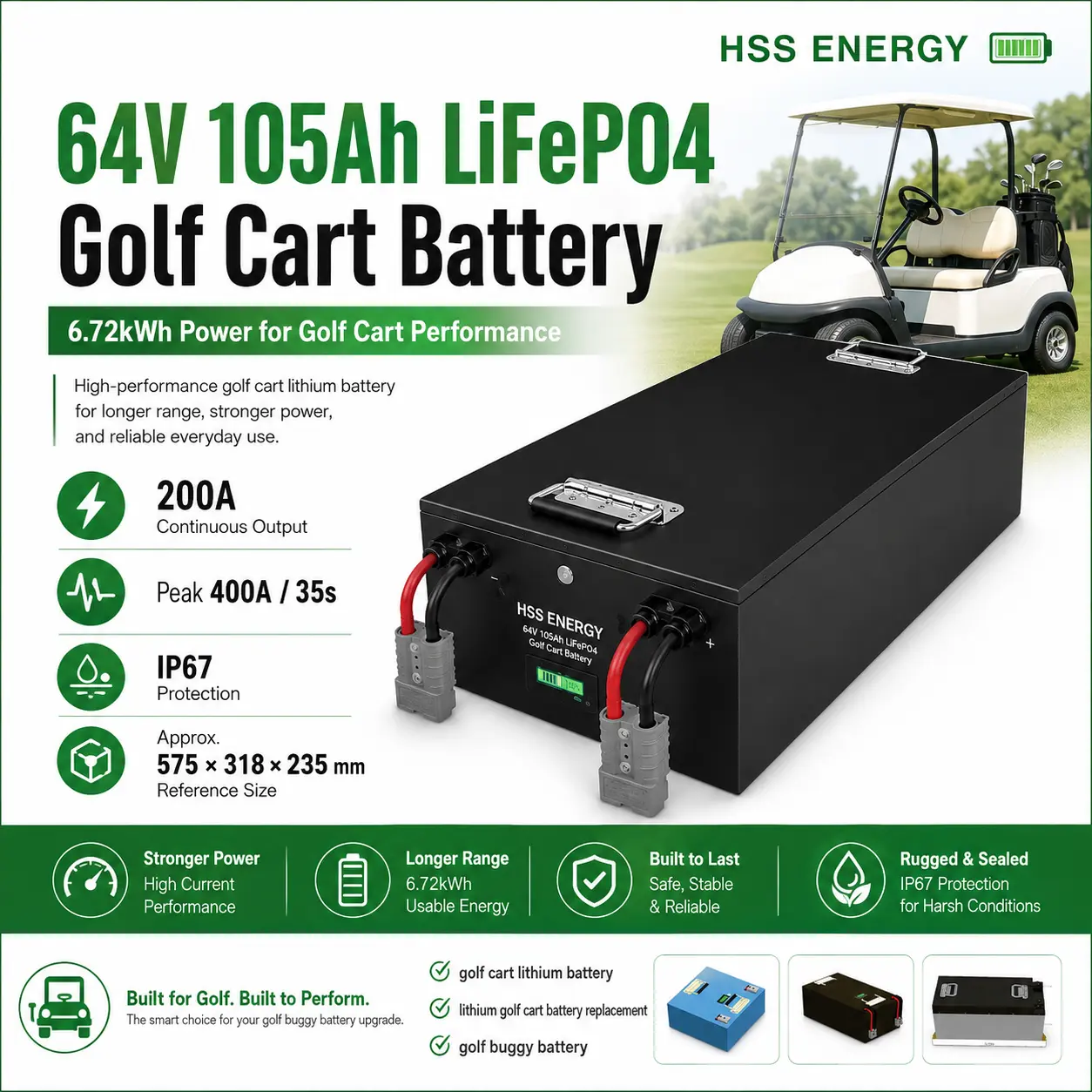
Marketing artwork of the proposed enclosure. The 7.2kWh figure shown in the artwork is not used in the confirmed specifications below.
|
Item |
Confirmed Specification |
|
Chemistry |
LiFePO4 |
|
Cell options |
24 pcs 3.2V 100Ah prismatic cells; REPT, EVE or Gotion selected by approved order configuration |
|
Series configuration |
24S1P |
|
Market voltage class |
72V |
|
Nominal voltage |
76.8V |
|
Pack rated capacity |
100Ah at 25 +/- 2 degrees C, 60V cut-off |
|
Rated nominal energy |
7.68kWh, calculated from 76.8V x 100Ah |
|
Maximum charge voltage |
87.6V |
|
Discharge cut-off voltage |
60V |
|
Maximum charge current |
100A |
|
Standard discharge current |
100A |
|
Maximum continuous discharge |
100A |
|
Cycle-life reference |
2,000 cycles to at least 80% remaining capacity under the supplied 0.5C test method |
|
Approximate weight |
58kg |
|
Communication / monitoring |
Bluetooth and RS485; protocol and display/app scope require order confirmation |
The finished battery is sold to the confirmed 100Ah pack specification rather than simply repeating the cell nameplate. That is why the approved build may use 100Ah cells while the published pack rating remains 100Ah. This distinction matters when customers compare a 72V 100Ah LiFePO4 battery with products that advertise cell capacity as guaranteed system capacity.
Golf-cart markets commonly use 72V as the vehicle class. In this configuration, however, the 76.8V 100Ah battery pack reaches 87.6V when fully charged. The controller, charger, contactor and accessories need to remain inside that working window; a matching tray alone is not enough.
The 24S 100Ah LiFePO4 battery can be configured with approved REPT, EVE or Gotion prismatic cells according to technical requirements, availability and the signed order. One brand is selected for a production batch; brands are not mixed inside the same pack. The approved BOM and cell record then guide sample and repeat production.
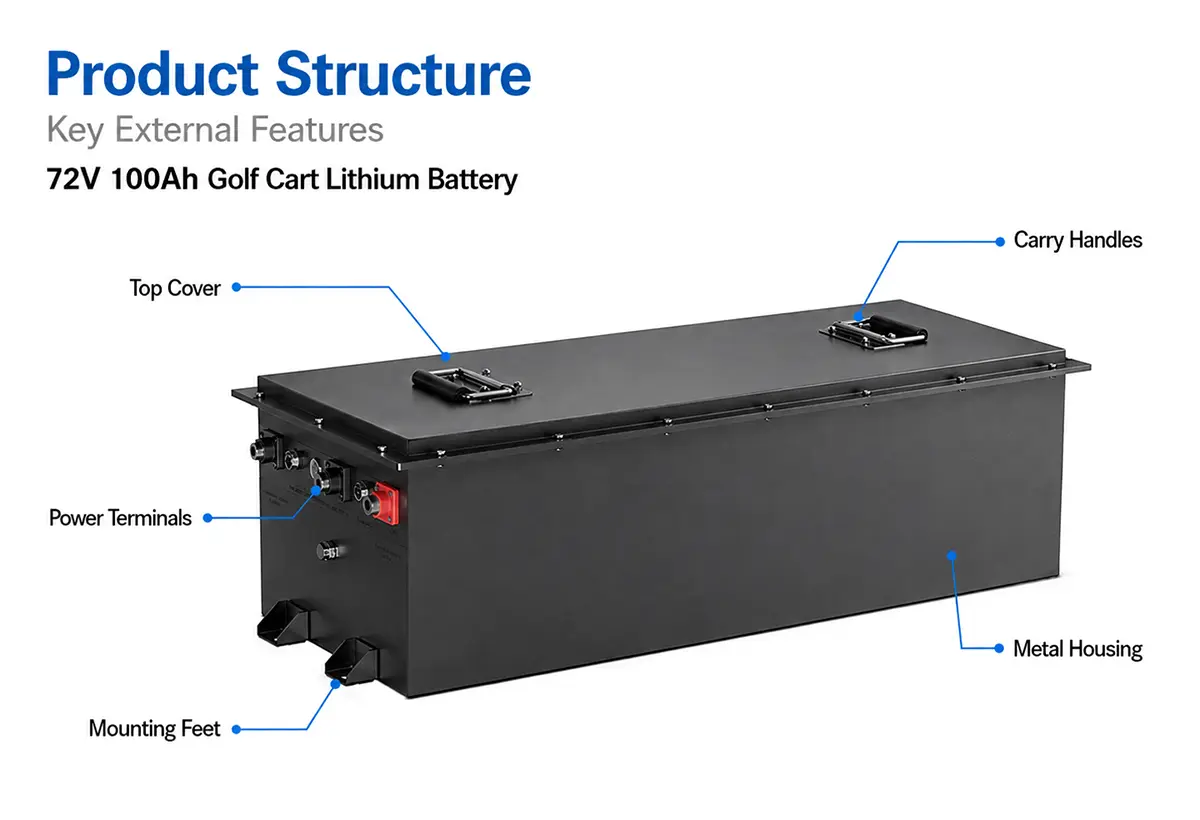
Marketing illustration identifying the enclosure, handles, power terminals and mounting feet. Final mechanical details follow the approved drawing.
A 100Ah lithium golf cart battery in this version is specified for 100A continuous discharge. That figure must be compared with normal driving current, acceleration peaks, hill climbing and accessory loads. Bluetooth and RS485 are available interfaces, but the controller or display protocol still needs separate confirmation.
A lead acid golf cart battery upgrade replaces several individual batteries with one managed lithium pack. The benefit is a simpler battery bank and less routine maintenance, but the conversion is not only a physical swap. Charger behavior, cable size, protection settings, terminal layout and mounting security all affect the result.
For a 72V golf buggy lithium battery project, HSS Energy checks the tray opening, mounting points, terminal direction and service clearance against the proposed enclosure. The supplied image shows an intended golf-cart application, not proof of universal fit. A drawing review is required before sample production.
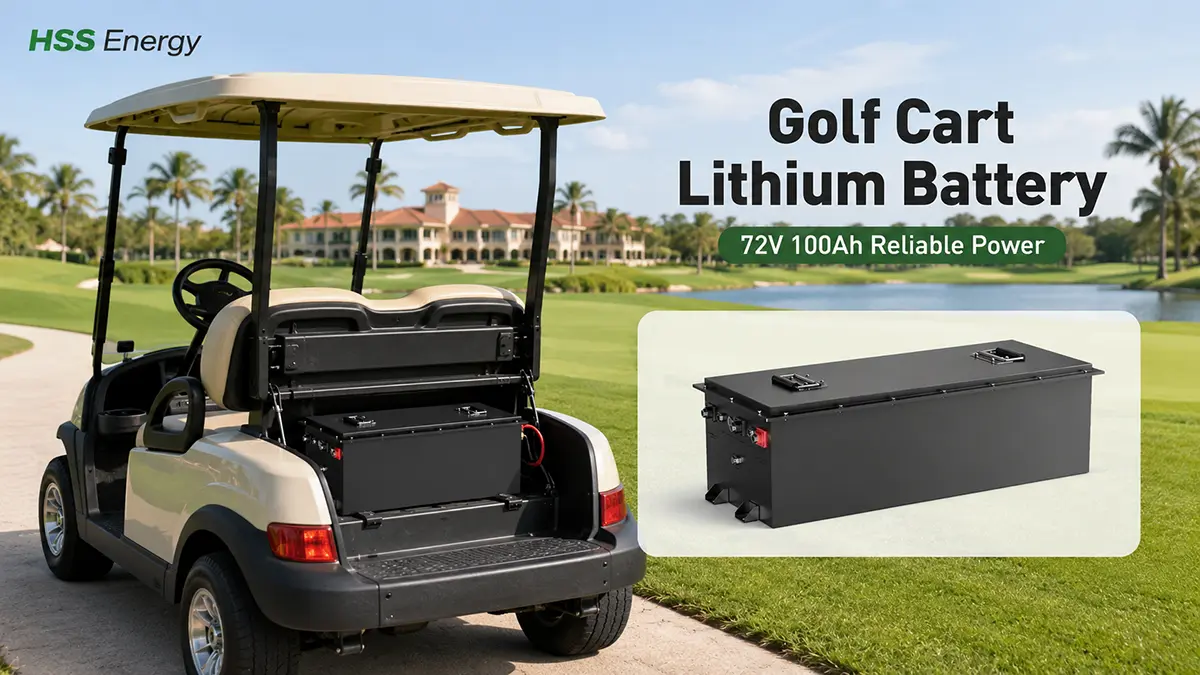
Marketing illustration of the intended application. It is not a verified installation or a universal compatibility claim.
|
Function |
Supplied Setting |
customers Meaning |
|
Operating charge temperature |
0 to 55 degrees C |
Normal charging range in the supplied specification |
|
Operating discharge temperature |
-20 to 60 degrees C |
Vehicle duty must remain within the approved range |
|
Low-temperature charge protection |
-10 +/- 5 degrees C |
Protection threshold; recovery behavior follows the final BMS setting |
|
Low-temperature discharge protection |
-20 +/- 3 degrees C |
Check winter operating conditions and load demand |
|
High-temperature charge protection |
65 +/- 5 degrees C |
Protection threshold, not a recommended charging temperature |
|
High-temperature discharge protection |
75 +/- 3 degrees C |
Protection threshold, not a recommended operating temperature |
|
Cell over-charge protection |
3.75 +/- 0.05V per cell |
Distinct from the normal 87.6V pack charging ceiling |
|
Cell over-discharge protection |
2.35 +/- 0.1V per cell |
Distinct from the normal 60V pack cut-off |
HSS Energy controls the order through incoming inspection, assembly, electrical testing, final inspection and packaging. The production file records the approved cell option, BMS settings, enclosure details, terminals and label version so repeat orders follow the same commercial specification.
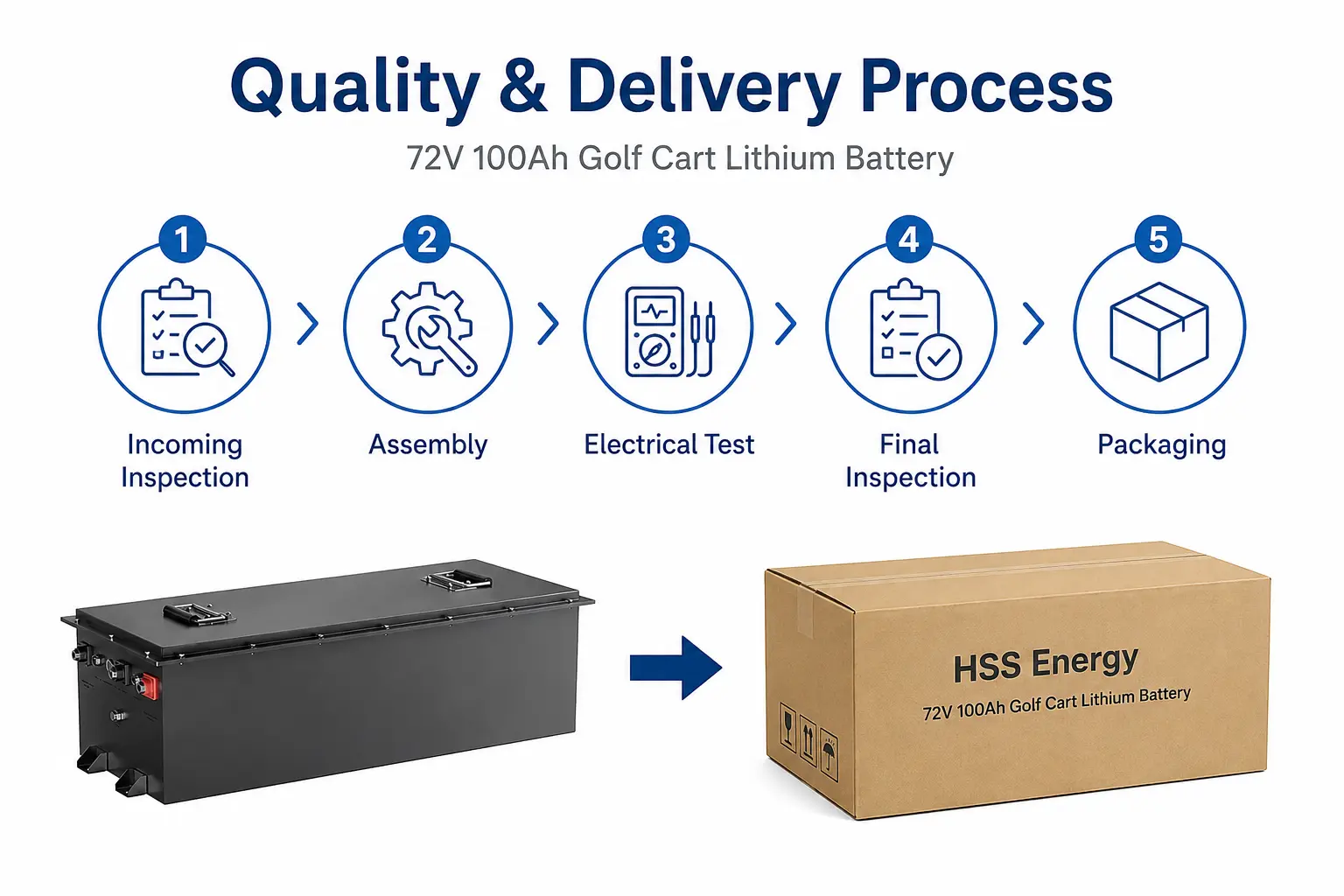
Process illustration for incoming inspection, assembly, electrical testing, final inspection and packaging.
72V is the vehicle voltage class. A 24-series LiFePO4 pack has 76.8V nominal voltage and an 87.6V maximum charge voltage.
The finished battery is rated to the confirmed pack specification. The cell nameplate is not presented as guaranteed delivered pack capacity.
REPT, EVE and Gotion are available options for this product. The selected brand is confirmed in the quotation and approved BOM; different brands are not mixed in one pack.
No. Controller voltage, peak current, charger profile, tray dimensions, mounting, cables, terminals and any communication requirements must be reviewed.
No. The interface alone does not confirm the protocol. Pinout, baud rate, data points and interaction requirements need confirmation.
Provide the cart brand and model, controller limits, charger information, tray dimensions, terminal and cable requirements, communication needs, quantity and destination.
Address
A3, 1204-1, 1142 Jimei North Avenue, Software Park Phase III, Xiamen Torch High-tech Zone, Xiamen, China
Tel