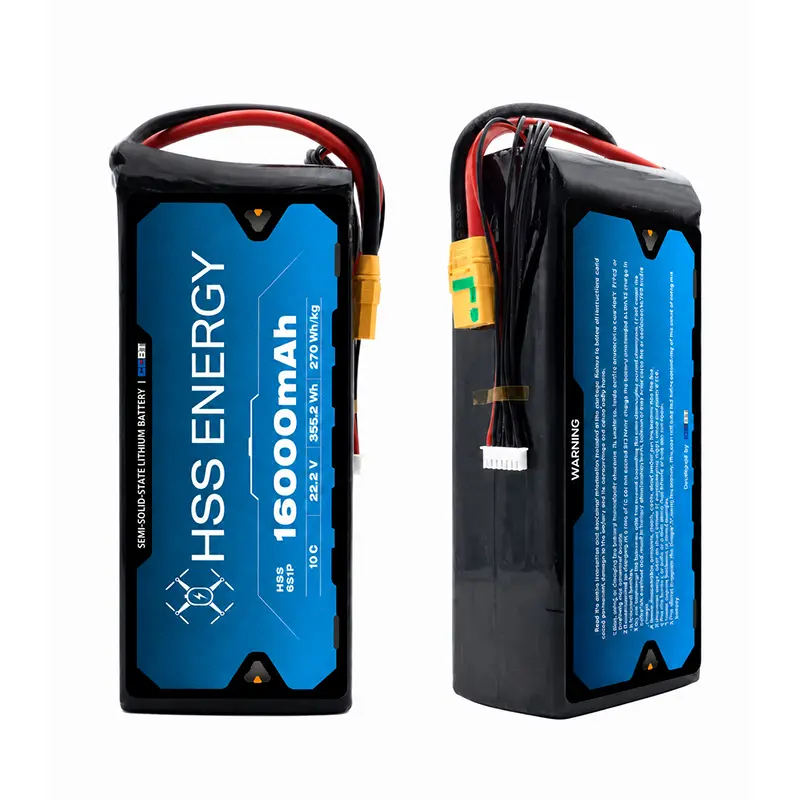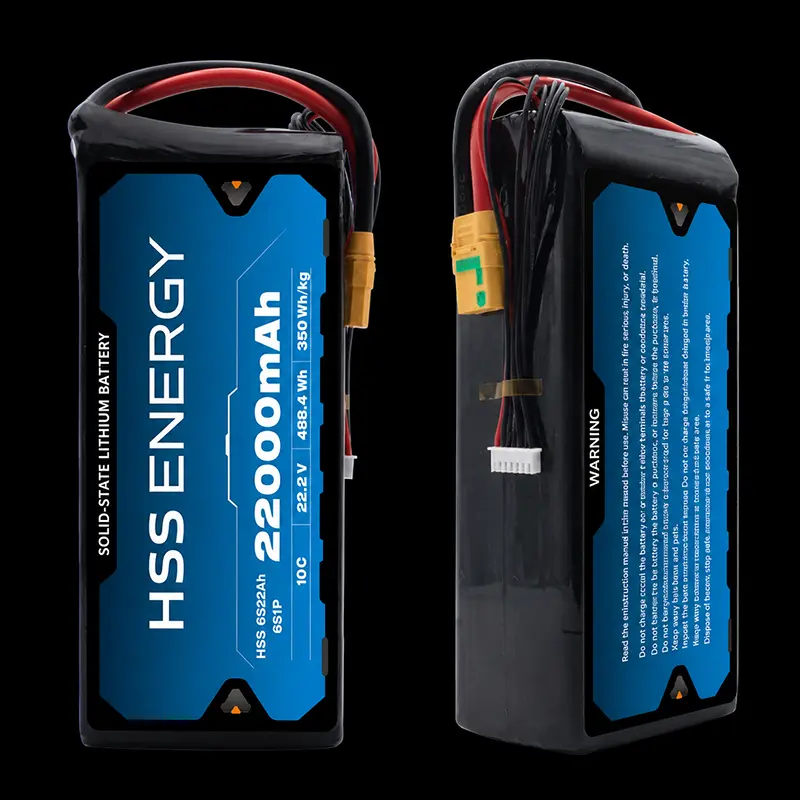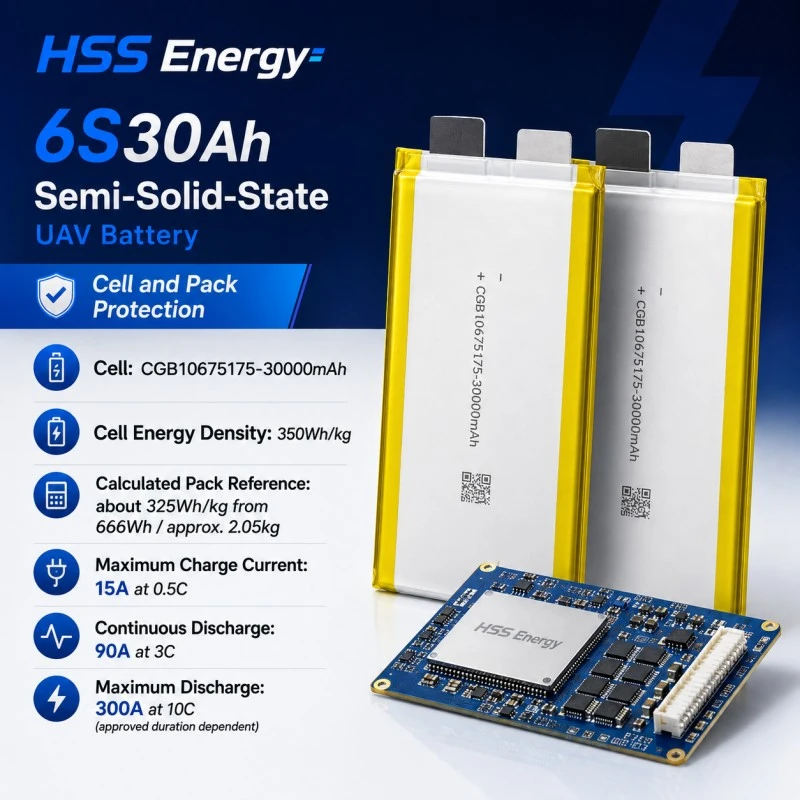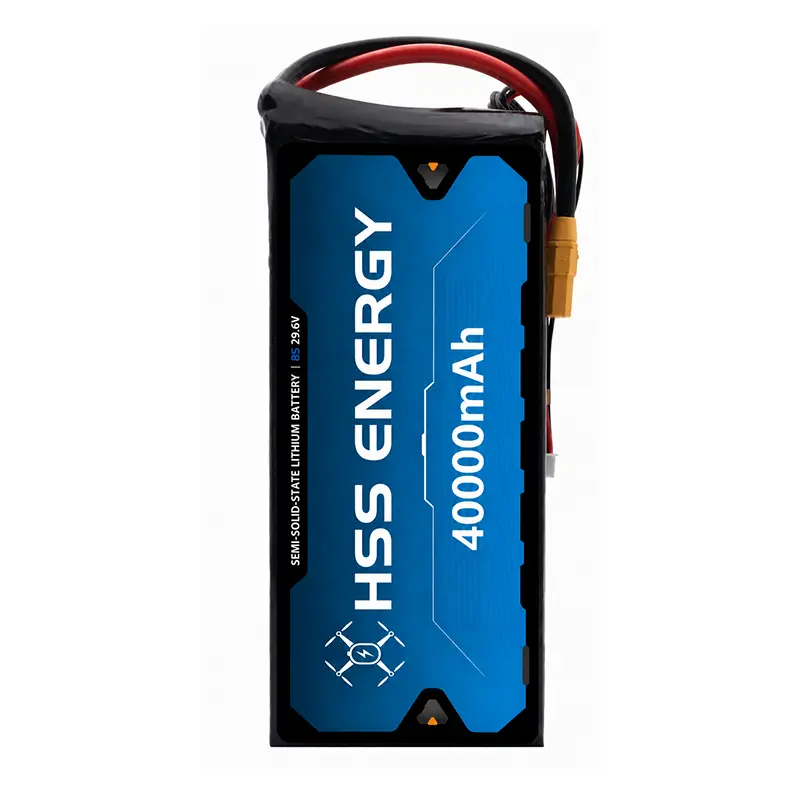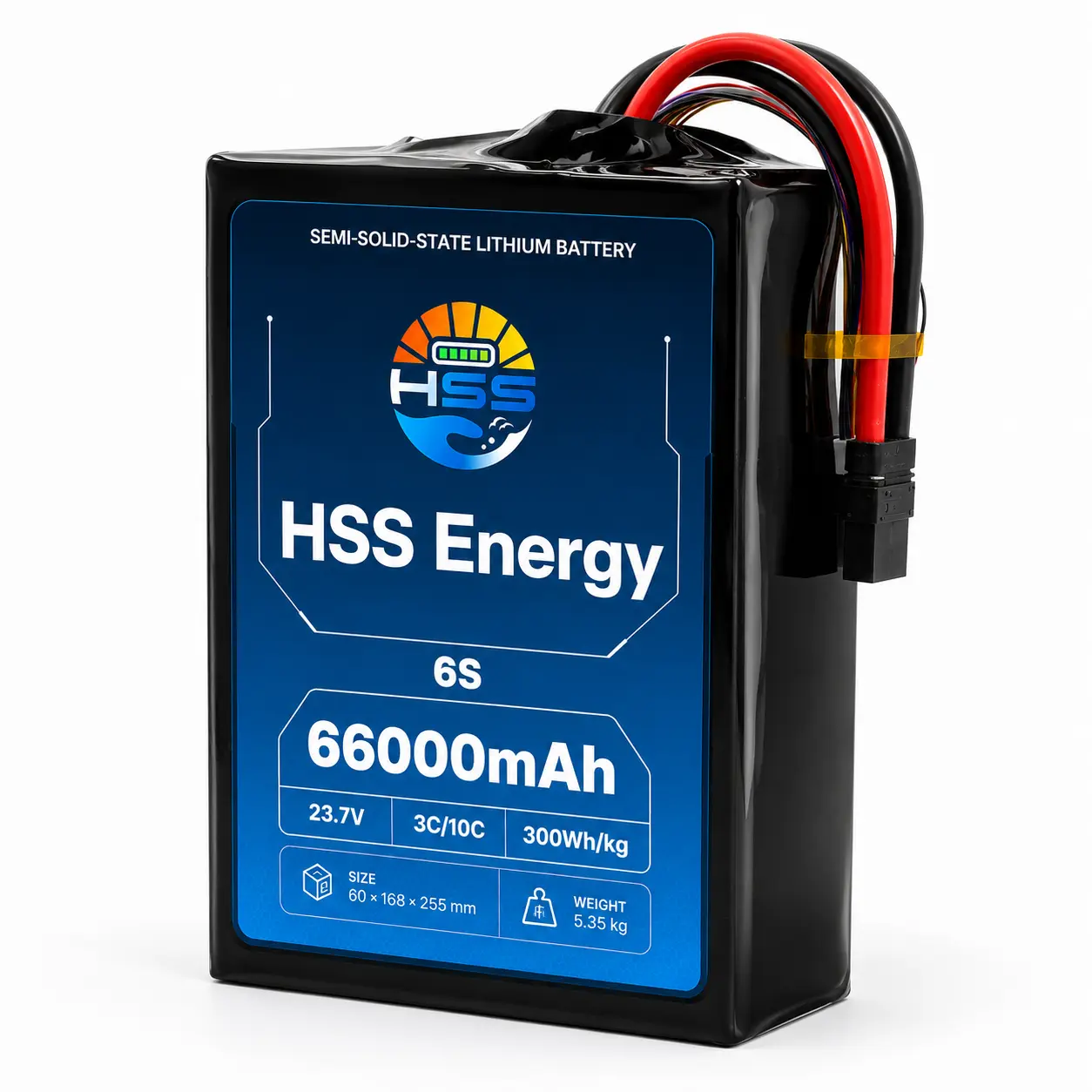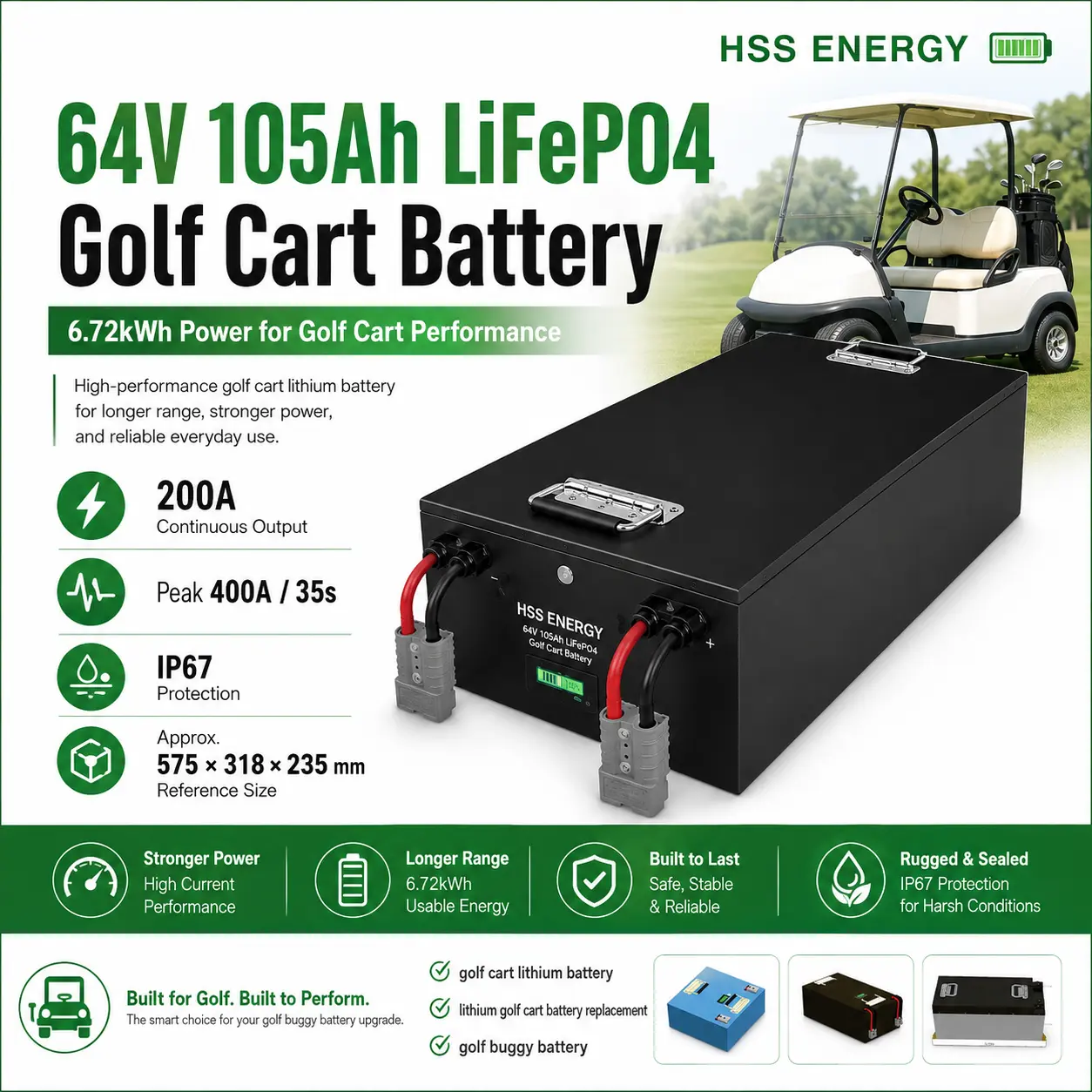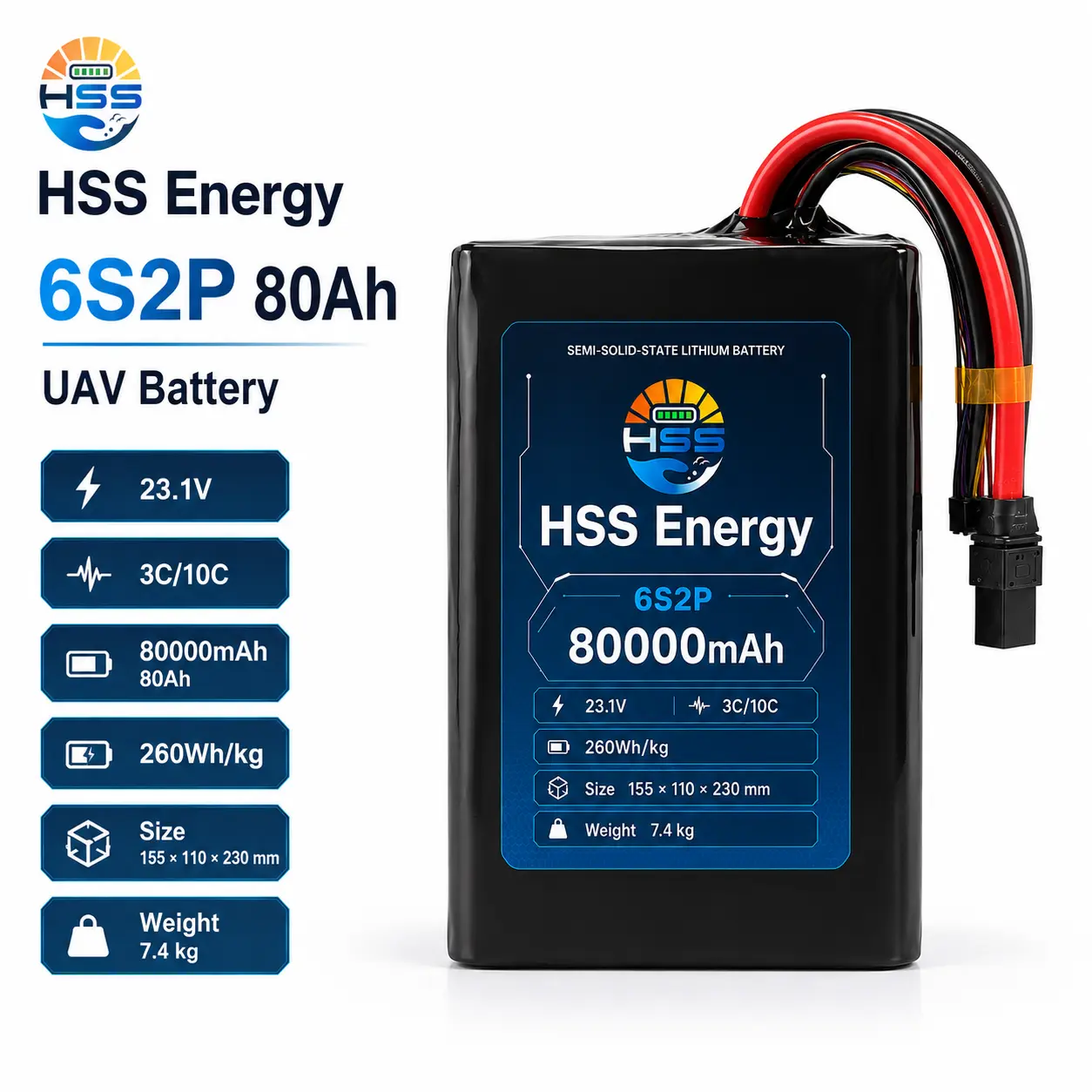
The high quality 6S 80000mAh UAV battery is the maximum-capacity position in the current HSS Energy 6S2P branch. It is designed for projects where keeping a 23.1V-class architecture matters more than minimizing battery mass. With 1848Wh calculated nominal energy and a 7.4kg pack, the customers decision shifts from “how much capacity is available?” to whether the aircraft can safely carry, cool, secure and electrically use that energy.
|
Parameter |
Specification |
|
Product model |
HSS 6S2P-80Ah |
|
Product category |
Semi-solid-state lithium UAV battery |
|
Configuration |
6S2P |
|
Nominal voltage |
23.1V |
|
Nominal capacity |
80000mAh / 80Ah |
|
Nominal energy |
1848Wh |
|
Published energy density |
260Wh/kg value shown on supplied product reference |
|
Calculated pack reference |
About 250Wh/kg (1848Wh / 7.4kg) |
|
Pack weight |
Approx. 7.4kg |
|
Pack size (L x W x H) |
155 x 110 x 230mm |
|
Discharge rate shown |
3C / 10C shown on product reference |
|
Arithmetic current reference |
240A at 3C; 800A at 10C (arithmetic references only, not verified pack limits) |
|
Power / balance interface |
High-current power lead and balance interface shown; final mating connector and cable configuration confirmed for the approved order |
|
Charging profile |
Matched series-count charging; charge voltage/current and charger workflow confirmed for the final configuration |
The 6S2P 80Ah UAV battery is the largest-capacity option in this HSS 6S branch. Choose it only when the aircraft has room and payload margin for a 7.4kg pack and the mission genuinely benefits from the extra installed energy; otherwise the 66Ah option may be easier to integrate.
|
Decision |
6S2P 66Ah |
6S2P 80Ah |
14S1P 36Ah |
|
Nominal energy |
1564.2Wh |
1848Wh |
1864.8Wh |
|
Nominal voltage |
23.7V |
23.1V |
51.8V |
|
Capacity |
66Ah |
80Ah |
36Ah |
|
Pack mass |
5.35kg |
7.4kg |
5.6kg |
|
Core choice |
Lower mass 6S2P |
Maximum 6S capacity |
Similar energy, higher voltage |
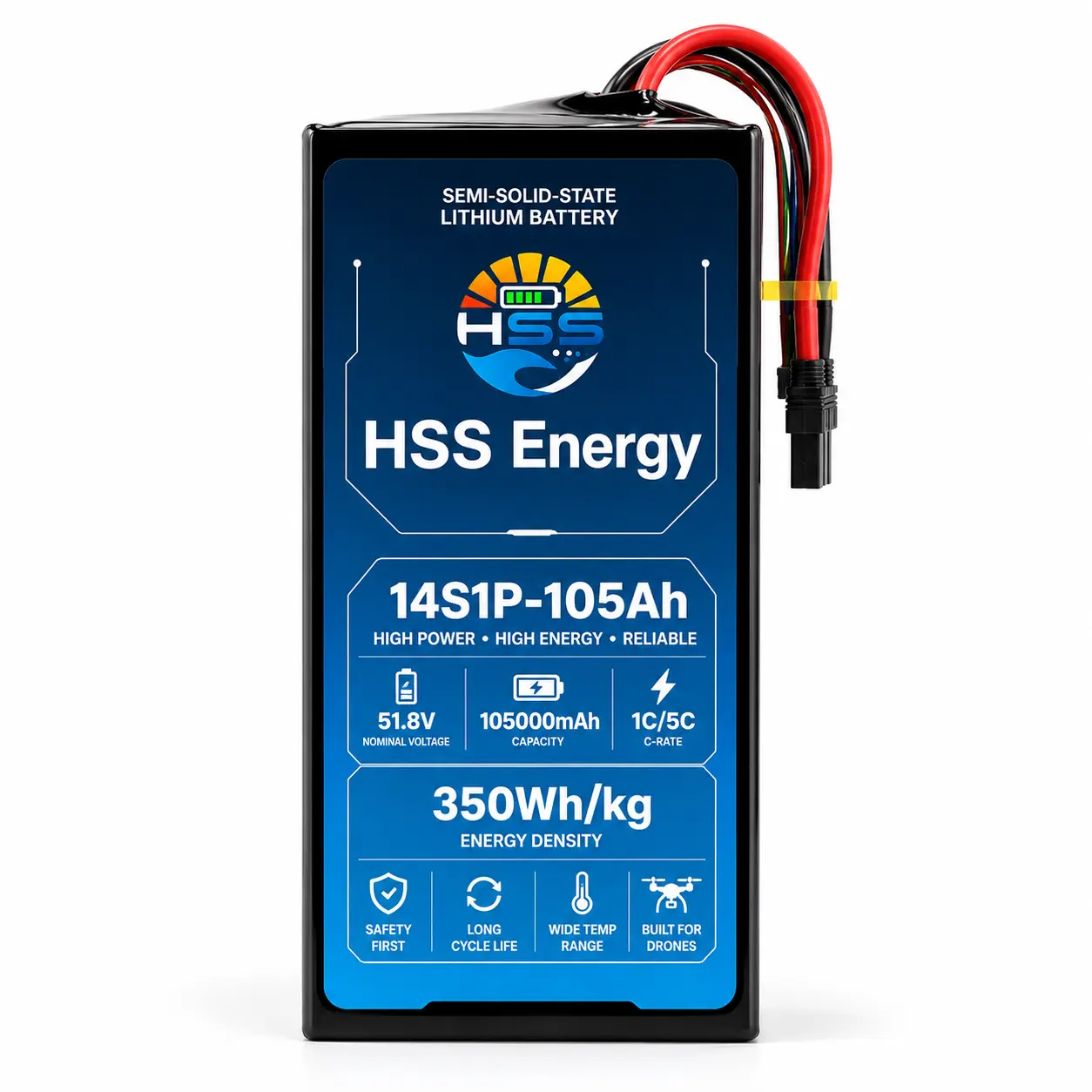
This high capacity 6S UAV battery should be compared with the HSS 14S1P 36Ah platform because the two packs sit in almost the same nominal-energy class (1848Wh vs 1864.8Wh) while using very different voltage and amp-hour architectures. Selection should follow propulsion voltage, ESC limits, charger architecture, current profile and aircraft wiring—not Wh alone.
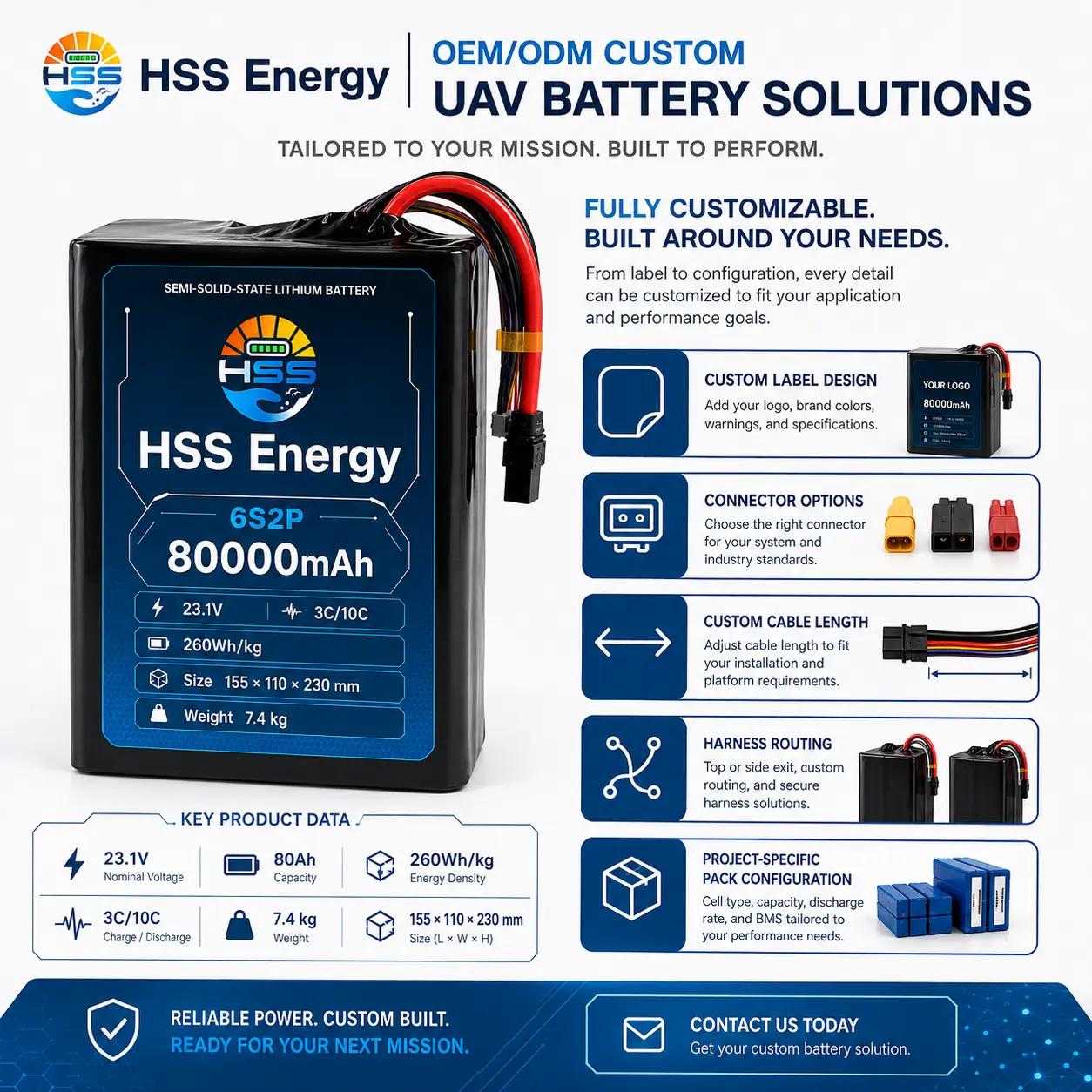
Engineering snapshot for the maximum-capacity 6S branch; energy, mass and voltage architecture should be evaluated together.
|
6S2P CONFIGURATION |
23.1V VOLTAGE |
155 x 110 x 230mm PACK SIZE |
7.4kg PACK MASS |
For an 80Ah drone battery, the published 260Wh/kg value should be separated from the calculated finished-pack reference. Using 1848Wh and the 7.4kg finished-pack mass gives about 250Wh/kg. This distinction matters when comparing endurance and payload margin because the complete pack includes insulation, leads, connector hardware and structural materials.
|
CHOOSE THIS SKU WHEN Choose this SKU when maximum installed energy within a 6S2P architecture is the primary requirement. |
MOVE TO ANOTHER SKU WHEN move to 66Ah when lower mass is needed; move to 14S36Ah when a higher-voltage architecture is acceptable and similar Wh is required with less pack mass. |
The 23.1V 80Ah UAV battery can be evaluated for large professional multirotors and industrial UAV programs where maximum energy within the 6S branch is the primary design objective. Mission time should be estimated from measured aircraft power demand rather than from capacity alone.
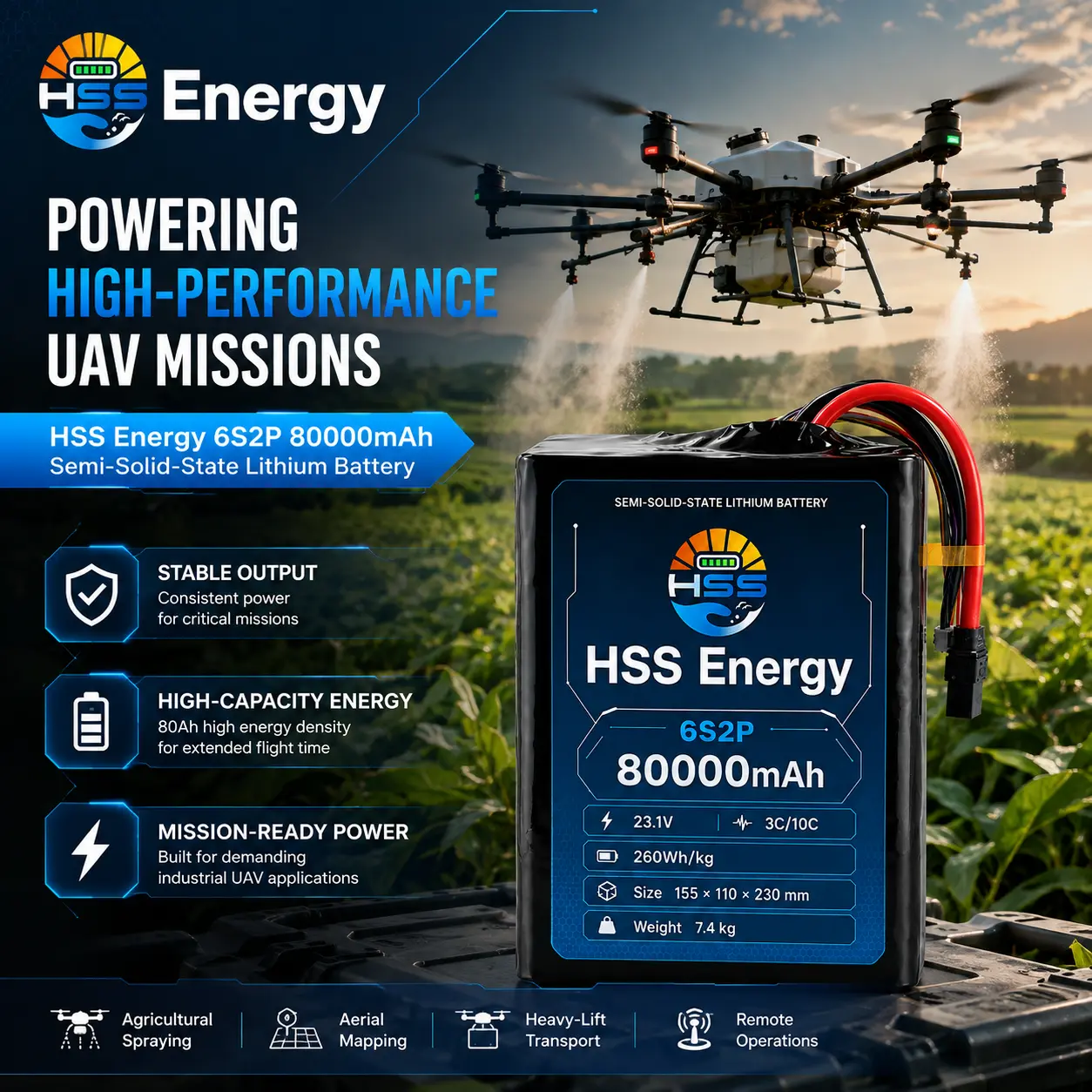
Large-UAV application reference for the 80Ah 6S2P platform; mission time must be estimated from real aircraft power demand.
For an 80000mAh semi-solid drone battery project, HSS Energy should review installed-energy target, aircraft mass margin, bay volume, lifting or handling method, real current log and charger capability. If the project is also considering 14S, the 6S80 and 14S36 architectures should be compared before sample selection.
At 80Ah, this is already a large 6S battery. Check real flight current, cable length, charger, installation space and how the 7.4kg pack will be installed and removed for service. If the aircraft can also accept 14S, compare both architectures before freezing the build.
|
Check the Whole Current Path The plug is only one part of the interface. Review measured current, mating connector, cable gauge, cable length, routing and charger together. |
Harness Details Matter Polarity, exit direction, bend radius and strain relief should match the aircraft layout. A long routed cable can change the installation problem. |
|
Plan for a 7.4kg Pack Confirm how the pack will be lifted, restrained, connected and removed. A battery that fits the bay may still be awkward to service. |
Use Flight Data, Not C-Rate Alone Current logs and event duration are more useful than simple C-rate multiplication when reviewing the pack, cable and connector path. |
|
Protect the Pack in Delivery Approved packaging can include connector protection, cushioning, pack orientation, batch labels, cartons and handling identification. |
Sample First, Then Repeat Use the sample or pilot order to confirm fit, handling, interface, charging and aircraft operation, then keep the approved setup for later batches. |
WHAT TO SEND BEFORE SAMPLING
Send the energy target, mass margin, bay dimensions, current log, connector photo, cable length, charger data, handling constraints and whether 14S is also being considered.
The 80Ah model is the maximum-capacity 6S2P position. It offers more installed energy but adds about 2.05kg of pack mass, so it requires more aircraft payload and structural margin.
They have nearly the same nominal energy but very different voltage and amp-hour architectures. The comparison helps customers choose the architecture that matches propulsion electronics and current demand.
No. It is treated as the product’s published energy-density value. The calculated finished-pack reference is about 250Wh/kg from 1848Wh and 7.4kg.
Yes. Send the mating connector, cable gauge, cable length and current profile so the final interface can be reviewed before sampling.
Confirm allowable battery mass, battery-bay dimensions, mounting orientation, cable exit, center of gravity and charger/ESC voltage compatibility.
Address
A3, 1204-1, 1142 Jimei North Avenue, Software Park Phase III, Xiamen Torch High-tech Zone, Xiamen, China
Tel