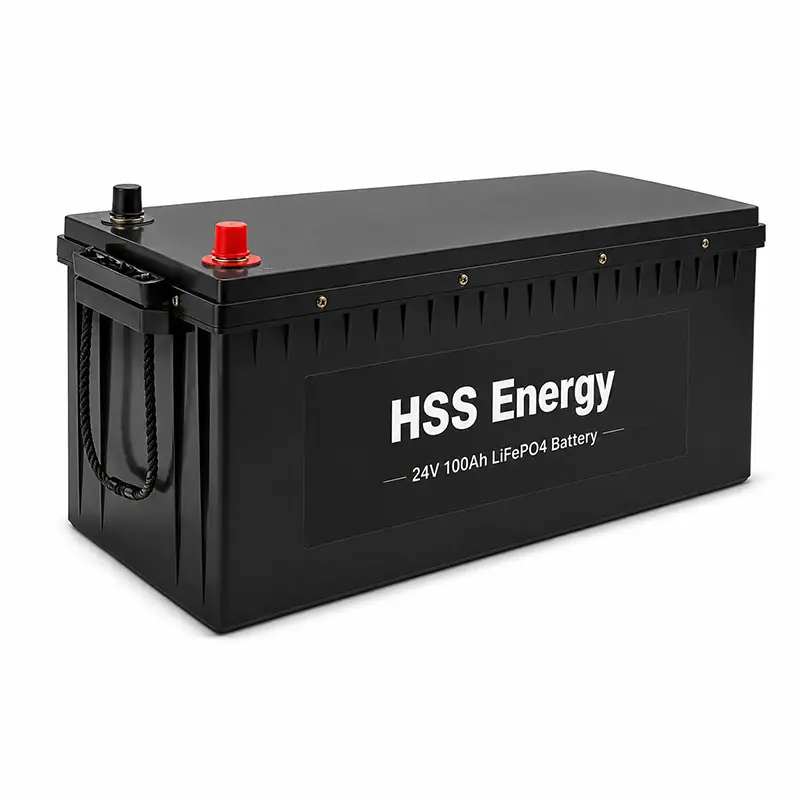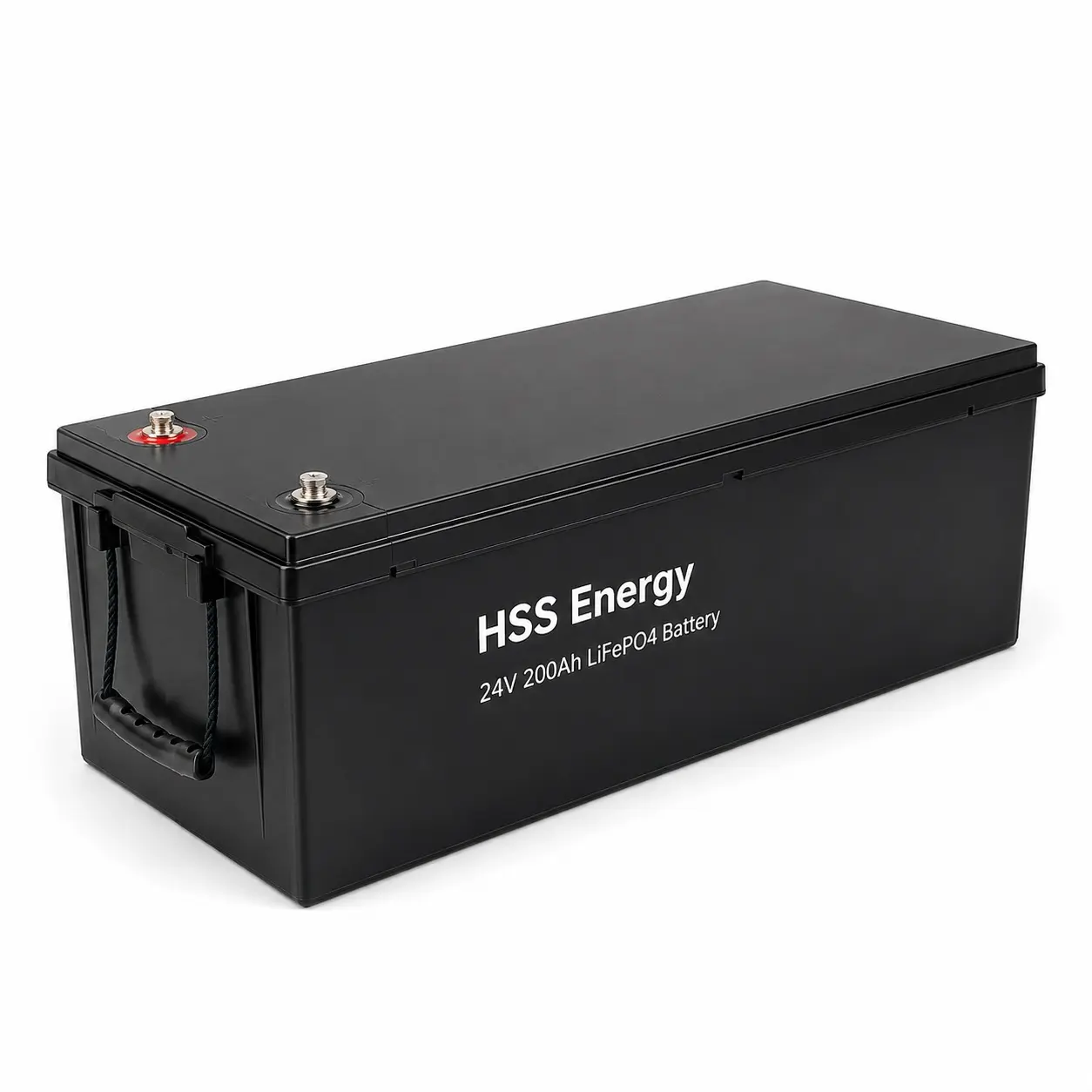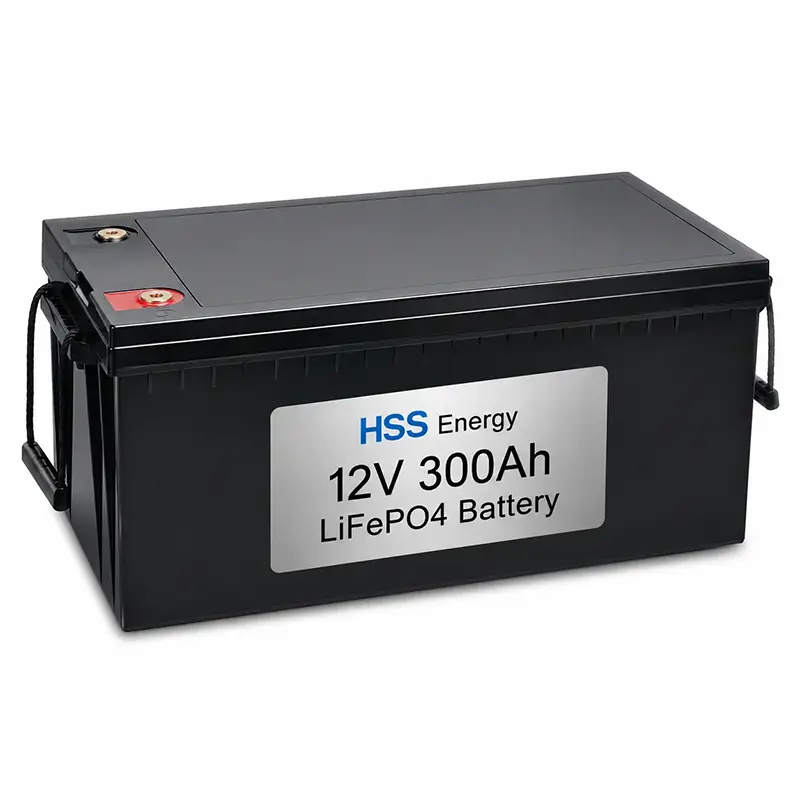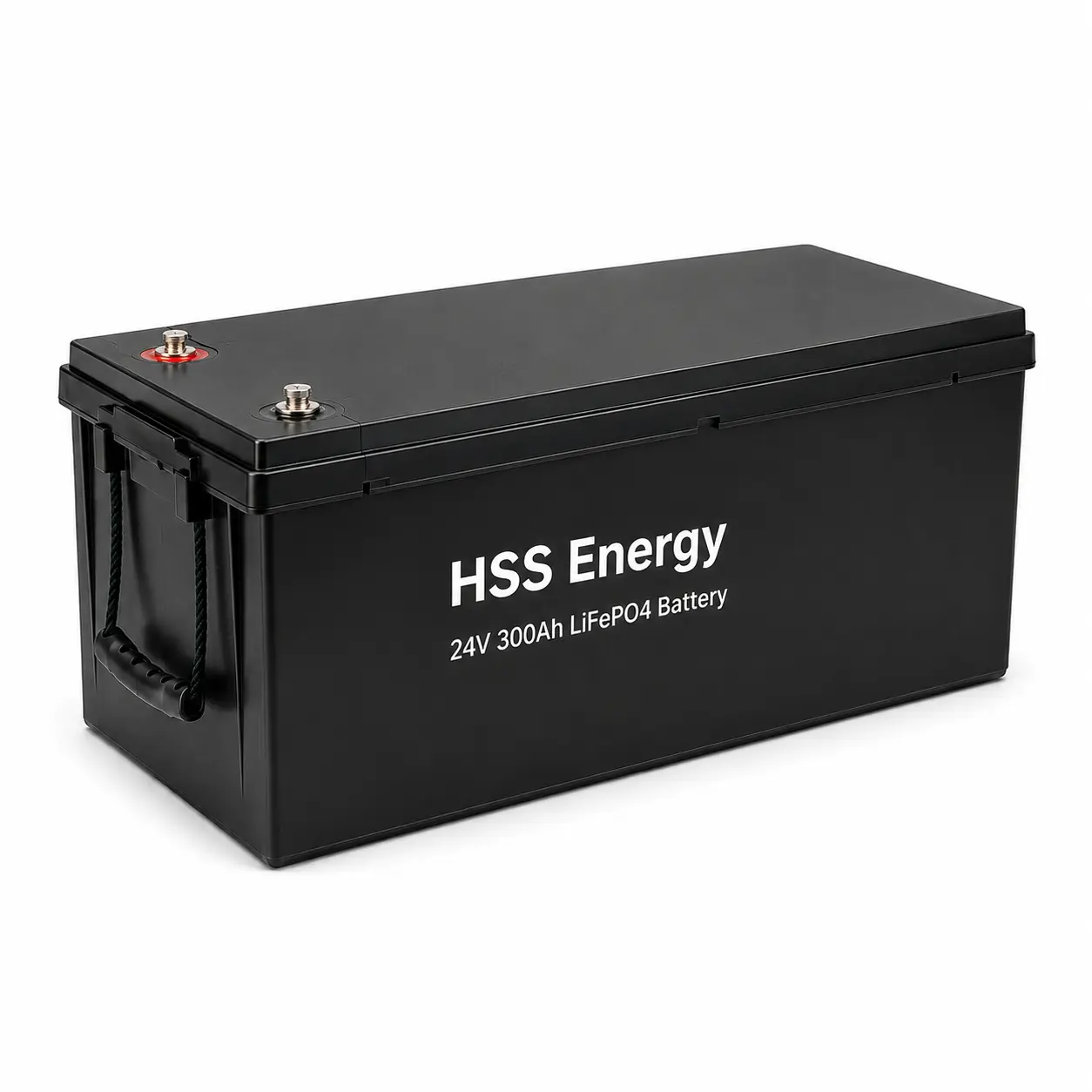
The 24V 300Ah LiFePO4 Battery supplied by HSS Energy is intended for high-reserve 24V projects where a larger single pack is preferred over adding more smaller modules. Selection should confirm charger profile, continuous and surge demand, cable and fuse sizing, lifting and retention method, terminal access, installation depth, BMS limits and the approved parallel-bank design.
When 300Ah Makes More Sense Than 200Ah
Choose the 300Ah class when reserve time and fewer physical battery modules matter more than minimum pack weight. Compared with the 200Ah model, the 300Ah option increases single-pack capacity but also moves to a deeper 54 kg enclosure. Buyers evaluating a 24V 300Ah lithium battery should verify usable installation depth, handling access, charger capability and actual load demand before approval.
|
Specification |
24V 300Ah Pack Data |
|
Market voltage class |
24V |
|
Nominal voltage |
25.6V nominal (8S LiFePO4 platform) |
|
Rated capacity |
300Ah |
|
Charge rate |
0.2C–1C (source-listed range) |
|
Discharge rate |
0.2C–1C (source-listed range) |
|
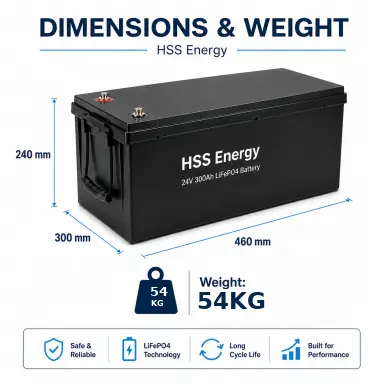
Dimensions (L × W × H) |
460 × 300 × 240 mm |
|
Net weight |
54 kg |
|
Parallel connection |
Supports multiple parallel connections |
|
Product positioning |
High-capacity 24V storage / backup / off-grid platform |
The 460 × 300 × 240 mm enclosure is shorter than the 200Ah pack but substantially deeper, so compartment depth and service access become key fit checks.
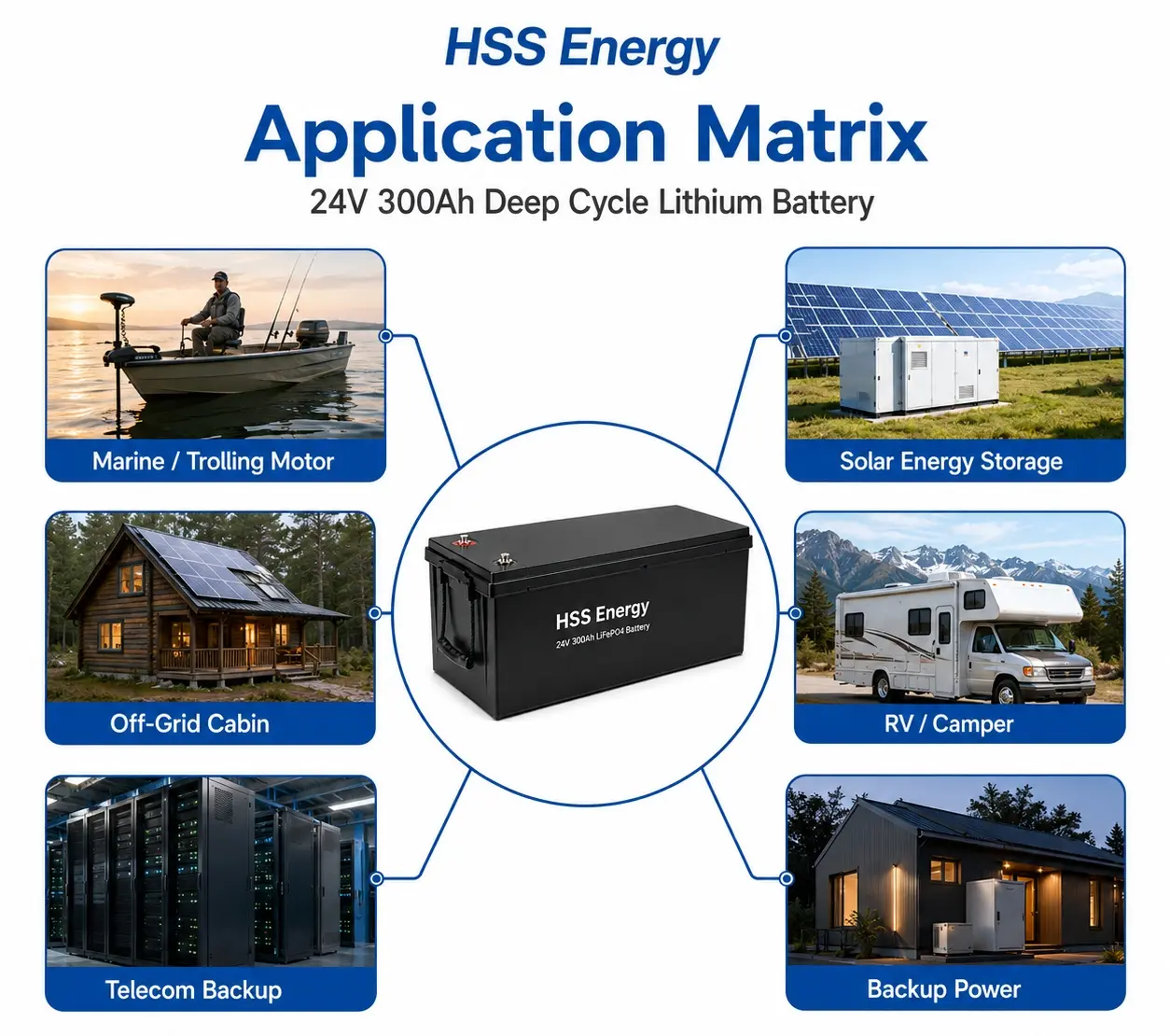
This 300Ah SKU is positioned first for high-capacity solar / off-grid storage and longer-reserve backup projects. Large RV house-power remains a strong secondary use case, while telecom and marine installations require project-specific review of load demand, charging, mounting and available space.
|
Solar / Off-Grid For system designers building a 24V solar battery bank, the 300Ah format concentrates more reserve in each installed pack and suits projects that can accommodate the 300 mm enclosure depth. |
Backup Power A 24V backup battery in this capacity class is most relevant where a larger reserve window is needed with fewer physical modules; inverter / charger settings, BMS behavior and protection still require system review. |
RV / House Power Large RV house-power projects can use the 300Ah class when reserve time matters more than minimum mass; charger compatibility, retention, terminal access and any lower-voltage auxiliary-load strategy should be reviewed before approval. |
Primary territory: high-capacity 24V storage and backup, with solar / off-grid systems first. Large RV house-power is secondary; marine / trolling-motor duty is not a keyword target for this 54 kg high-reserve SKU.
The 300Ah decision is a storage-bank decision: more reserve per pack, balanced against recharge demand, 54 kg handling and a deeper enclosure.
When a legacy flooded, AGM or GEL bank is being upgraded, buyers comparing a 24V 300Ah deep cycle battery should evaluate the complete 24V storage architecture rather than treating the project as a capacity-label swap. Charger profile, wiring, protection, retention, usable installation volume and the approved LiFePO4 / BMS configuration must all be reviewed together.
• Reserve target: define usable-energy and autonomy requirements first, then decide whether one 300Ah pack can reduce physical module count versus a smaller-capacity bank.
• Recharge path: confirm shore charger, inverter / charger, MPPT and any DC-DC source can restore the larger bank within the required operating window.
• Mechanical fit: 460 × 300 × 240 mm and 54 kg shift the design toward enclosure depth, lifting method, retention strength and terminal-service clearance.
• Load boundary: confirm continuous and surge demand, cable sizing, fuse strategy and BMS limits for the exact released configuration.
• Parallel architecture: multiple parallel connections are source-listed; final quantity, wiring symmetry, balancing practice and protection are confirmed for the project.
|
Choose 200Ah when… |
Choose 300Ah when… |
|
32 kg handling and a shallower 238 mm enclosure depth are important. |
Maximum single-pack reserve matters more than lower mass; 54 kg handling is acceptable. |
|
The project needs a mid-capacity 24V bank with more flexible installation geometry. |
Solar / off-grid, RV house power or backup duty benefits from 300Ah per installed pack and the 300 mm enclosure depth can be accommodated. |
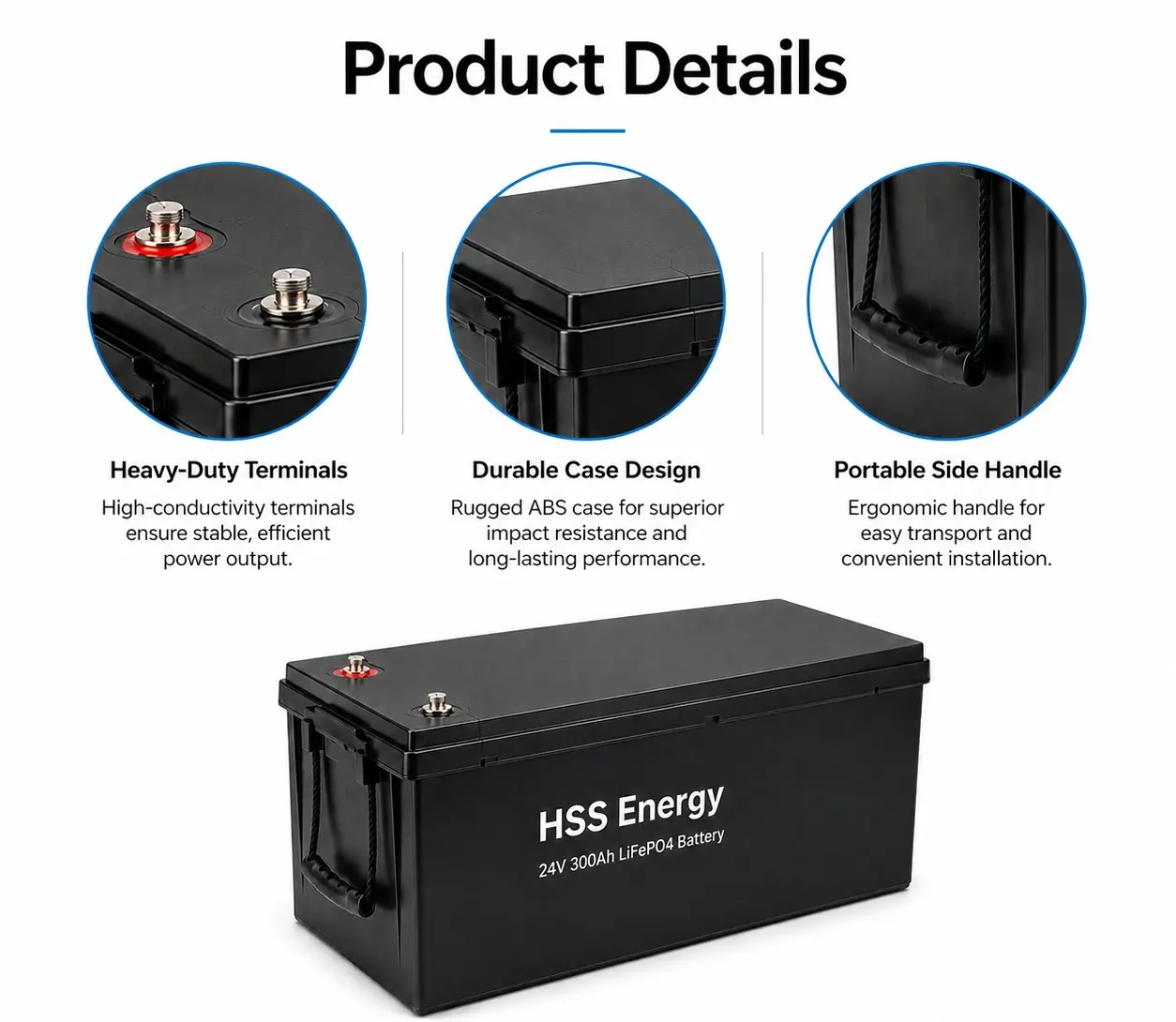
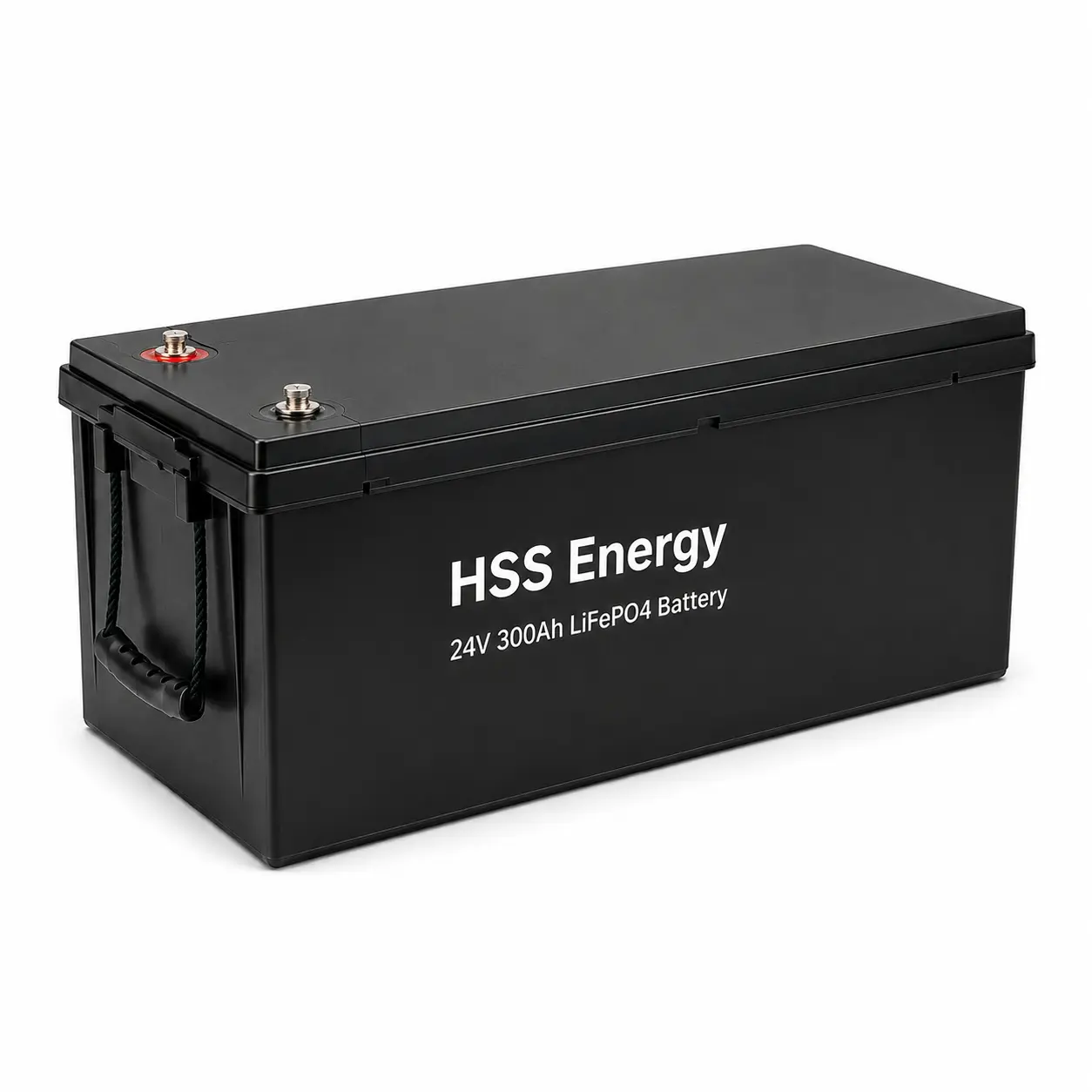
Visible features include threaded terminals, molded enclosure, side handle and enclosed top cover. For this 54 kg SKU, terminal access, retention and service handling deserve extra attention.
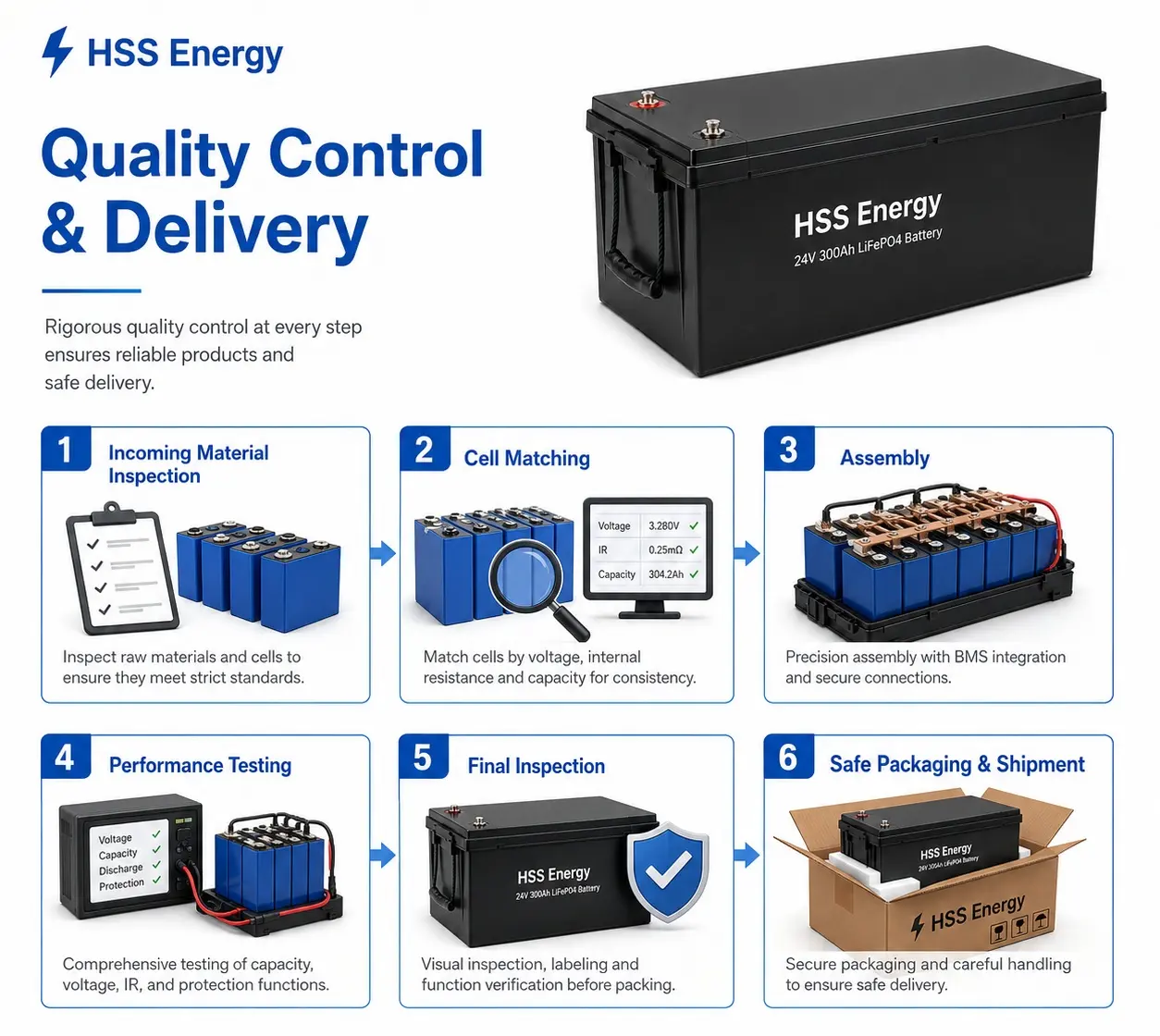
The supplied workflow illustrates incoming material inspection, cell matching, pack assembly, performance testing, final inspection and packaging / shipment preparation for the high-capacity pack family. Model-specific test reports, current limits and acceptance criteria should be matched to the approved production configuration.
For 300Ah projects, customization review should focus on enclosure fit, terminal orientation, BMS settings, recharge architecture, parallel-bank design, lifting / retention requirements, label / logo and packaging. Final features are confirmed against the approved application and released configuration.
|
OEM / ODM Options Case / terminal adaptation, BMS settings, label / logo, packaging and project-specific connection requirements. |
Information to Provide Application, target reserve time, current system voltage, charger / solar controller, continuous & surge load, installation depth and expected parallel quantity. |
300Ah Fit-Review Output Capacity / runtime recommendation, charger and load boundary, enclosure / handling fit points, parallel-bank notes and items requiring final project confirmation. |
|
FAQ |
Answer |
|
|
Why is the product sold as 24V while the nominal LiFePO4 platform is 25.6V? |
24V is the market / system class. An 8-series LiFePO4 cell stack uses a 25.6V nominal platform. |
|
|
What is the main reason to choose 300Ah instead of 200Ah? |
The 300Ah option provides more reserve per physical pack. The tradeoff is a 54 kg battery and a deeper 300 mm enclosure that needs more installation and handling planning. |
|
|
Is this suitable for RV house-power projects? |
It can be considered for larger RV house-power systems when the vehicle has adequate space, retention, charger compatibility and a load profile within the approved pack / BMS configuration. |
|
|
Can several 300Ah packs be connected in parallel? |
The supplied source lists support for multiple parallel connections. Final quantity, wiring, fusing, balancing and protection are confirmed for the approved project. |
|
SEND YOUR 24V 300Ah PROJECT REQUIREMENTS
Share the application, target runtime / backup window, charger or solar-controller details, continuous & surge load, available L×W×H, lifting / retention constraints, terminal preference, planned parallel quantity and OEM branding needs. HSS Energy will review the project boundary before quotation.
Address
A2, 1204-1, 1142 Jimei North Avenue, Software Park Phase III, Xiamen Torch High-tech Zone, Xiamen, China
Tel