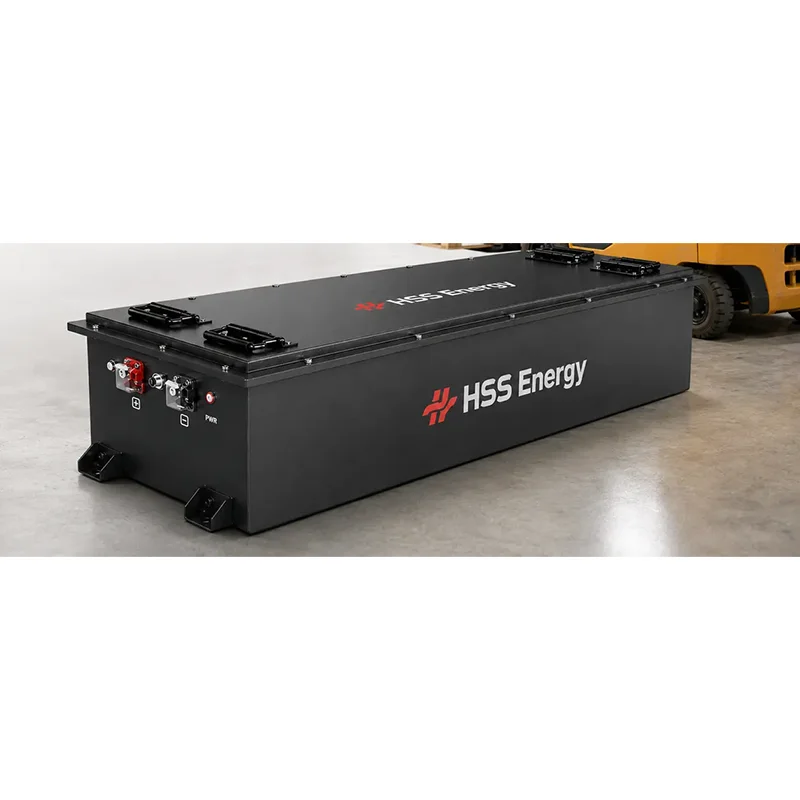
HSS Energy factory's 72V 200Ah LiFePO4 Forklift Battery gives customers a higher-capacity option when a 72V-class industrial vehicle needs more onboard energy without treating capacity as a guaranteed runtime figure. The pack combines a long metal enclosure, 200A continuous charge and discharge capability, a 315A / 30s peak discharge rating, and IP67 protection. Selection should be based on the vehicle controller, duty cycle, charger, battery bay, connector arrangement, and allowable battery mass.
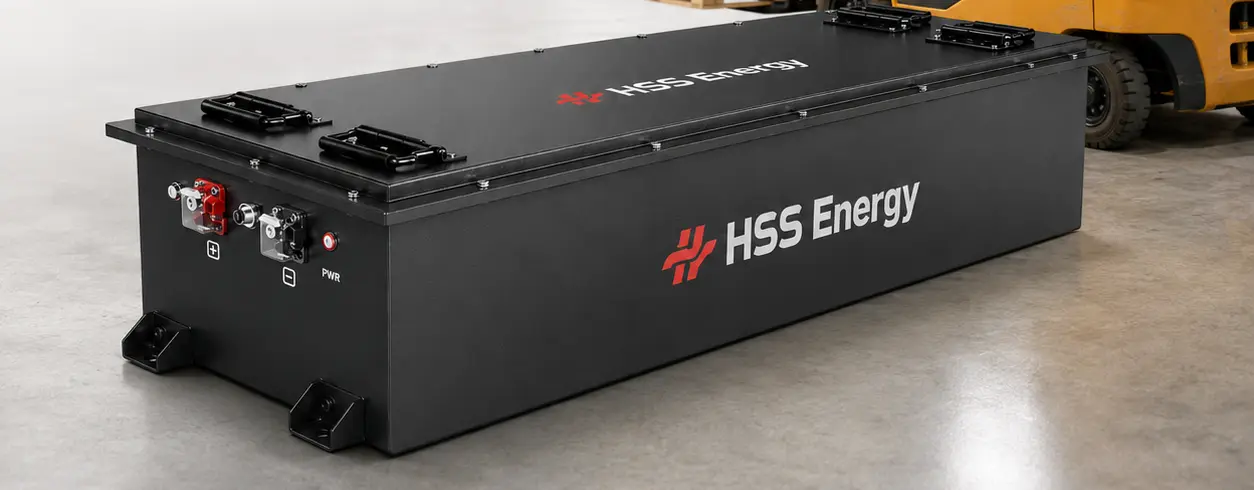
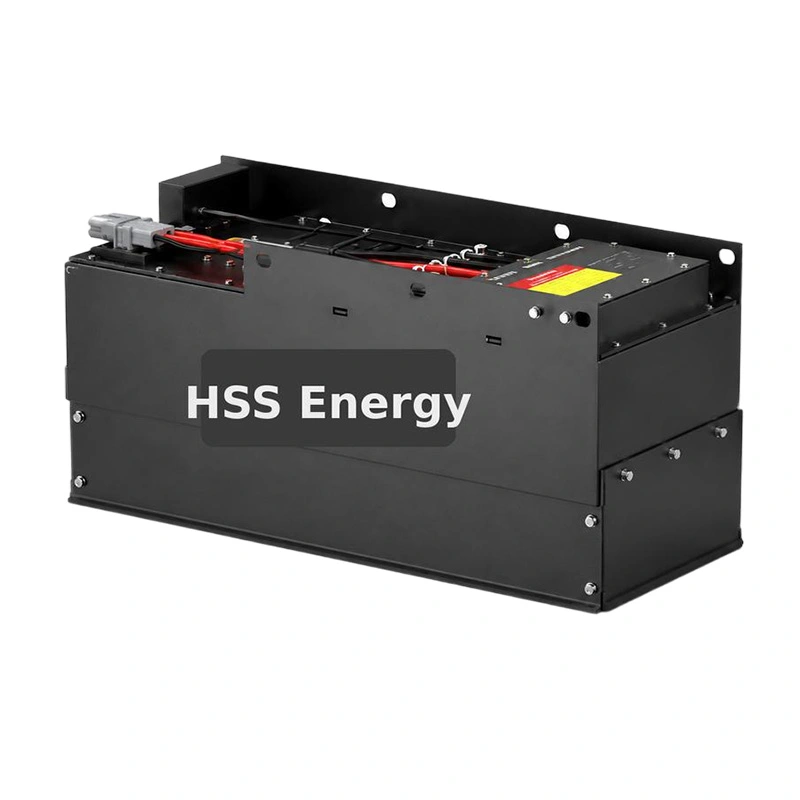
Forklift-focused product visual. Reference pack: 76.8V 200Ah, 15.36kWh LiFePO4.
|
Specification |
Reference Value |
|
Product Voltage Class |
72V |
|
Battery Chemistry |
LiFePO4 |
|
Reference Nominal Voltage |
76.8V |
|
Nominal Capacity |
200Ah |
|
Nominal Energy |
15.36kWh |
|
Peak Charge Voltage |
87.6V |
|
Discharge Cut-off Voltage |
60V |
|
Standard Charge Current |
40A |
|
Standard Full Charge Time |
5 hours |
|
Max Charge Current |
200A (continuous) |
|
Max Discharge Current |
200A (continuous) |
|
Peak Discharge Current |
315A (30s) |
|
Charge Temperature |
0-60°C |
|
Discharge Temperature |
-20-60°C |
|
Dimensions (L x W x H) |
1138 x 410 x 253 mm |
|
Weight |
125 kg |
|
IP Rating |
IP67 (reference specification) |
|
Cycle Life |
>6000 cycles at 80% DOD (reference condition) |
For fleets evaluating a 200Ah lithium forklift battery, the 15.36kWh nominal energy is most useful as a sizing baseline. A higher Ah rating can provide a larger onboard energy reserve, but actual operating time still depends on traction load, hydraulic work, lift frequency, travel distance, payload, gradients, temperature, and the usable SOC window.
Use capacity to plan the duty cycle, not to promise a fixed runtime. For a realistic review, customers can provide average shift length, load profile, charging windows, current battery data, and expected utilization.
customers comparing a 72V lithium forklift battery should check controller and load requirements before focusing on voltage alone. The reference configuration is rated for 200A continuous charge, 200A continuous discharge, and 315A peak discharge for 30 seconds. These values provide concrete inputs for evaluating drive, lift, acceleration, and short-duration surge demand.
The 76.8V nominal rating and 87.6V peak charge voltage should be matched with the approved charger and vehicle controller. Before production, confirm charger profile, connector, cable size, BMS settings, and any communication requirement for the target vehicle.
Choose a 72V-class battery when the forklift controller and charging system are designed for that voltage class and the required current, energy, enclosure, and weight are compatible with the vehicle. Do not treat a higher voltage class as a generic upgrade path for a truck designed around a different electrical system.
|
Controller / charger |
Must support the approved 72V-class battery configuration. |
|
Load profile |
Check continuous and short-duration current against drive and hydraulic demand. |
|
Battery bay / balance |
Confirm the long-format enclosure, 125 kg mass, mounting, terminals, and access. |
As a 72V forklift traction battery, this pack is best judged against the real truck architecture rather than by capacity alone. The customers should compare the battery bay, retention method, terminal direction, cable routing, charger location, controller requirement, and the vehicle manufacturer's permitted battery weight range.
This review is especially important for retrofit projects. A battery can fit electrically yet still be unsuitable mechanically if the enclosure, cable exit, mounting feet, service access, or required counterweight arrangement differs from the target truck.
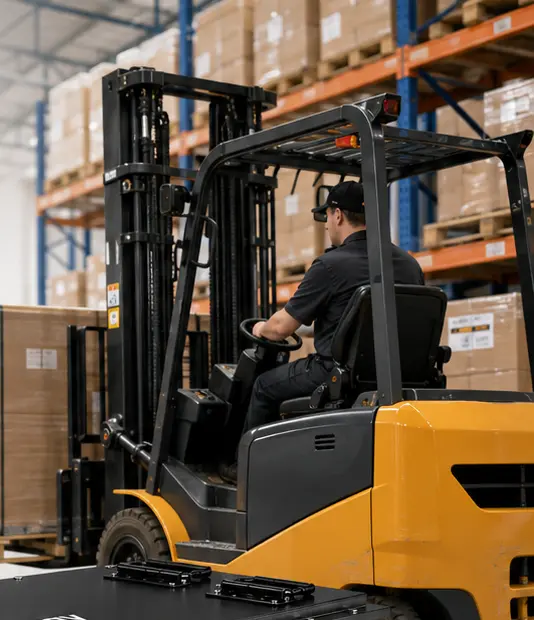
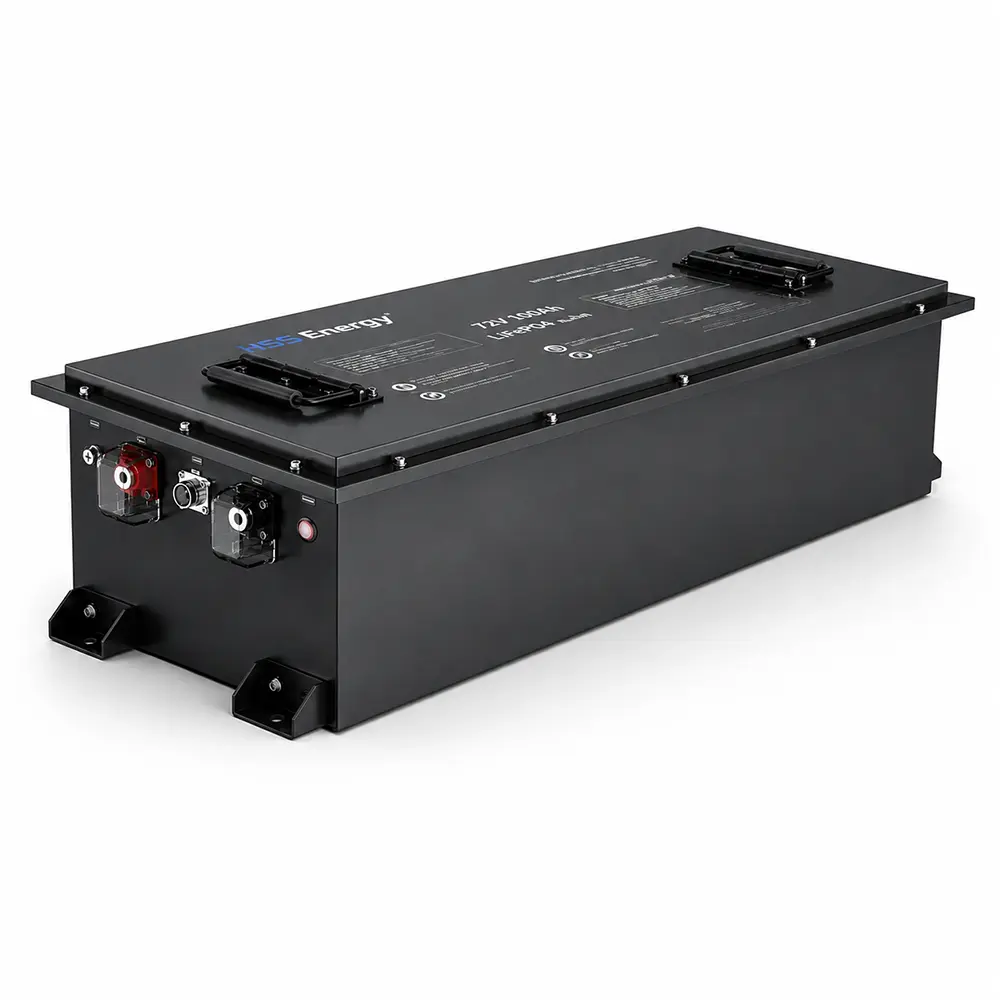
Forklift application reference. Final fit depends on the target truck, controller, charger, battery bay, mounting and connector requirements.
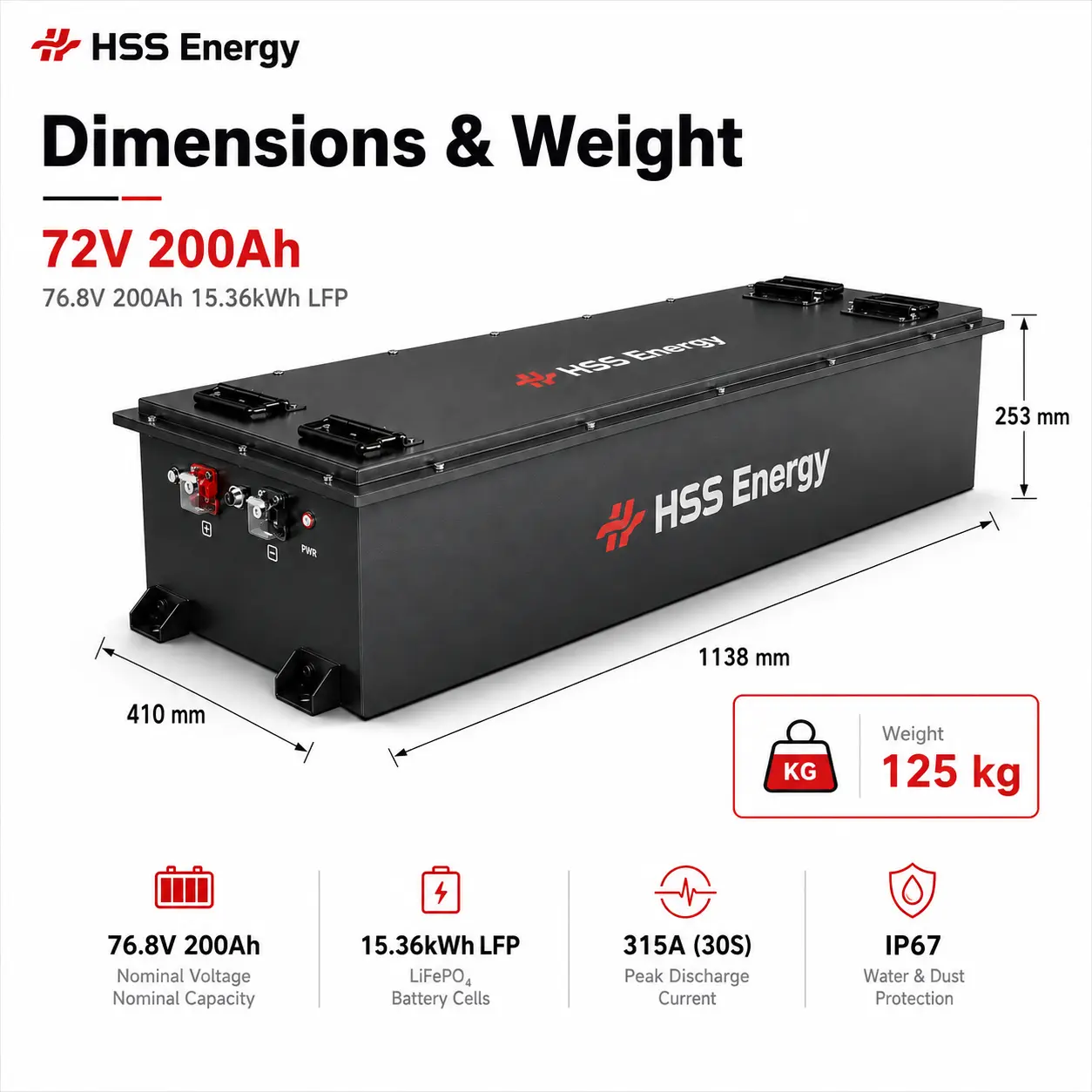
Reference dimensions and weight from the supplied 72V 200Ah product material: 1138 x 410 x 253 mm, 125 kg.
For a 72V 200Ah forklift battery, the 1138 x 410 x 253 mm enclosure is notably long and low in profile. For an exact installation review, compare all three dimensions with the available tray or compartment and verify clearance for handles, terminals, mounting feet, protective covers, and service access. The 125 kg pack weight also needs to be checked against vehicle balance and any minimum battery-weight requirement defined by the truck manufacturer.
For procurement teams reviewing the 72V 200Ah LiFePO4 Forklift Battery for warehouse, outdoor, or colder operating conditions, the supplied reference specification lists IP67 protection, a 0 to 60°C charging temperature range, and a -20 to 60°C discharge temperature range. These figures help screen the pack for the intended environment, but the final installation still needs to protect connectors, cable interfaces, charger components, and external communication hardware according to the vehicle design.
The supplied material also lists more than 6000 cycles at 80% DOD. This figure should be read together with the stated depth-of-discharge condition and the approved charging and operating strategy, not as an unconditional service-life guarantee.
For customers evaluating a lithium traction battery for forklift OEM / ODM projects, repeat-order consistency depends on more than cell capacity. After sample or project approval, HSS Energy can record the confirmed voltage class, capacity, enclosure, connector, charger profile, BMS settings, label, packaging, and other agreed interface details for subsequent production.
If the target truck differs from the reference build, identify which items are fixed and which can be adjusted. This gives purchasing, engineering, and production teams one approved configuration for quotation, sample approval, and repeat orders.
For sourcing a 72V industrial forklift battery, customers usually need both product data and evidence that the supplier can manage repeat production. The production and testing photos below are company-level capability evidence. They support statements about manufacturing and validation resources, but do not by themselves prove that this exact SKU has completed every available test unless a matching record or report is provided.

Battery assembly / production area

In-process production / inspection area
Environmental testing equipment
For this product family, the useful customer-facing quality message is process control: incoming materials, assembly requirements, electrical performance, final appearance and labeling, packaging, and shipment configuration should be checked against the approved order. This supports a more predictable transition from sample review to repeat supply.
72V is the market voltage class used for this product family, while the supplied reference configuration lists 76.8V nominal voltage for the LiFePO4 pack. The approved charger and vehicle controller should be matched to the confirmed electrical configuration.
No. The energy rating is a sizing input. Actual runtime depends on the truck, payload, traction and hydraulic demand, duty cycle, temperature, charging strategy, and usable state-of-charge window.
Confirm controller voltage, charger profile, continuous and peak current demand, battery compartment dimensions, allowable battery weight, connector type, cable direction, mounting method, and any BMS or communication requirement.
These items can be reviewed as part of an OEM / ODM project. Final scope depends on the approved technical requirement and order configuration.
Send the truck model, current battery label or specification, charger model, battery-bay dimensions, connector photos, current requirement, operating environment, desired quantity, and any branding or packaging needs.
Share your forklift model, battery compartment dimensions, charger information, connector photos, duty-cycle requirement, operating environment, and expected order quantity. HSS Energy can review the fit and confirm the appropriate 72V-class configuration before quotation or sample approval.
SEND FORKLIFT REQUIREMENTS
Address
A3, 1204-1, 1142 Jimei North Avenue, Software Park Phase III, Xiamen Torch High-tech Zone, Xiamen, China
Tel