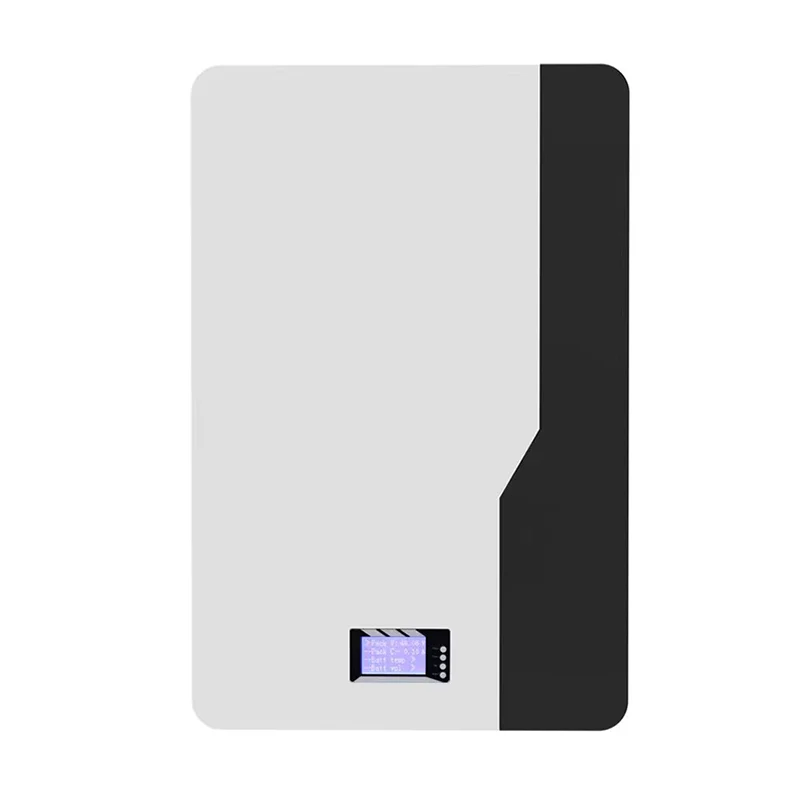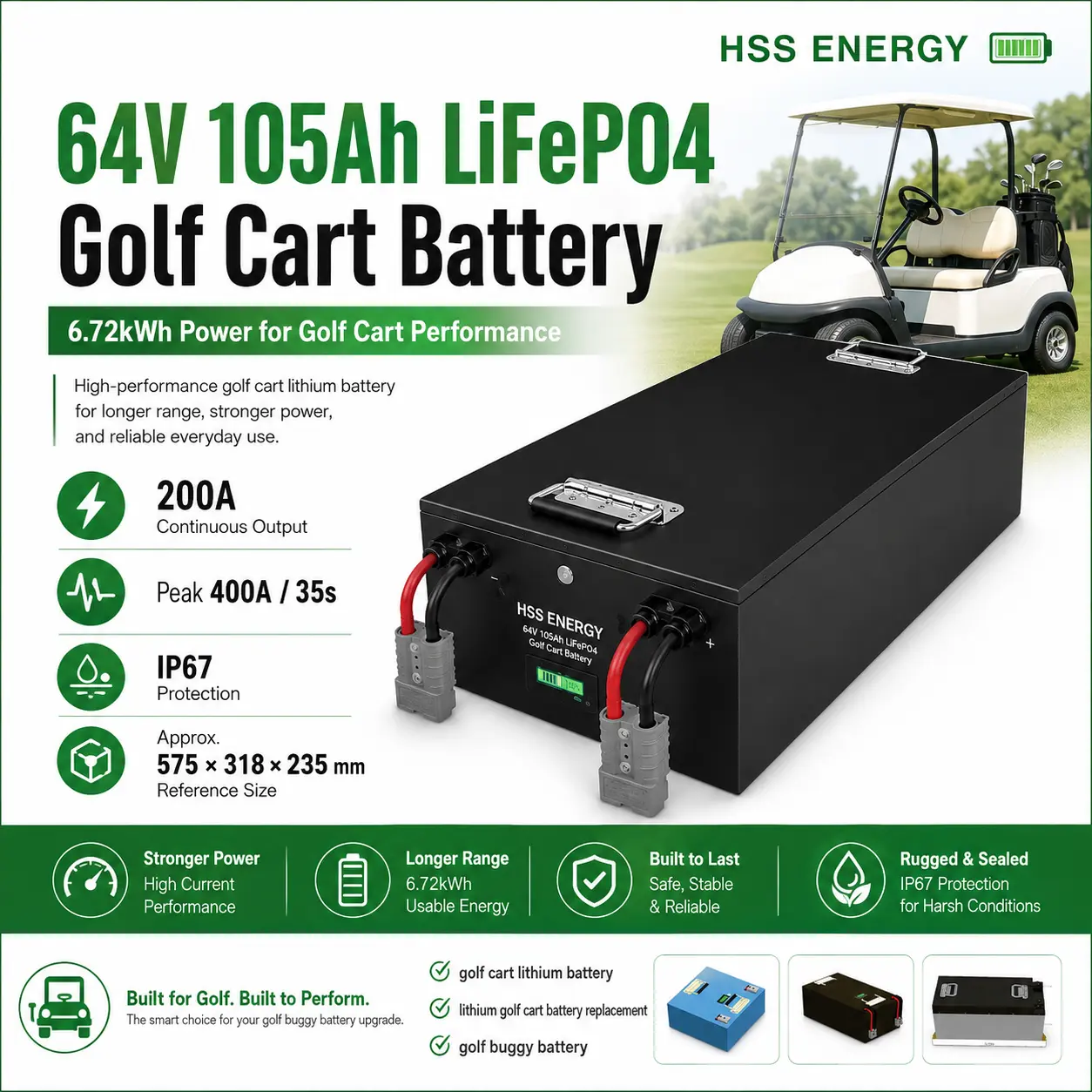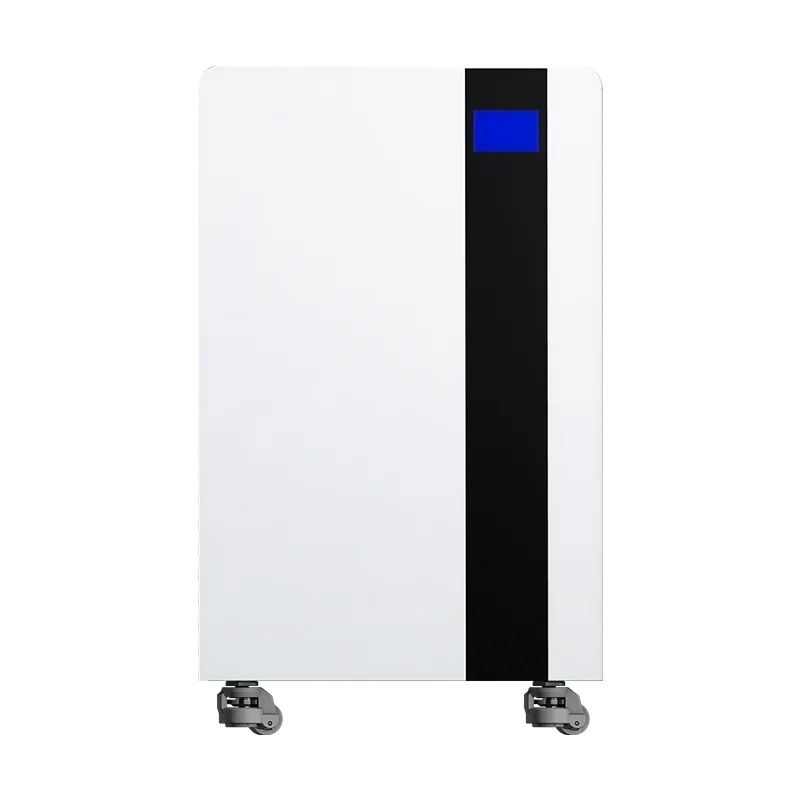
A custom lithium battery project starts with the equipment. Operating voltage, runtime, continuous and peak load, available installation space, charging method, operating environment and compliance requirements determine the final battery architecture. HSS Energy supports battery development from cell and BMS selection through prototype, device validation and production.
|
Chemistry |
Cell Format |
Voltage Platform |
Customization |
|
Li-ion / LiFePO4 |
18650 / 21700 / Pouch |
1S to multi-series custom |
BMS / housing / cable / connector / label / packaging |
A standard battery specification is only useful when it matches the equipment. Before cell selection, the project should define the electrical load and mechanical limits that the battery must work within.
· Operating voltage and allowable voltage range
· Required runtime or target energy
· Average, continuous and peak load current
· Maximum battery dimensions and weight
· Charging method and charge interface
· Operating and storage temperature
· Target country and certification requirements
· Expected sample and production quantity
|
Step |
Selection Point |
What to Confirm |
|
1 |
Device Voltage |
3.7V / 7.4V / 11.1V / 12V / 24V / custom |
|
2 |
Runtime and Load |
Operating time + continuous current + peak current |
|
3 |
Mechanical Limit |
Maximum L × W × H, weight and mounting method |
|
4 |
Battery Architecture |
Li-ion or LiFePO4 + cell format + S/P configuration + BMS |
|
5 |
Interface |
Connector, cable, charging port and optional communication |
|
6 |
Validation |
Prototype -> device test -> optimization -> approved sample -> production |
|
Platform |
Typical Strength |
Common Custom Applications |
|
NCM Lithium-ion |
Higher energy density and compact pack size |
Portable equipment, medical devices, smart equipment, robotics, personal-care devices |
|
LiFePO4 |
Long cycle capability and stable thermal characteristics |
12V/24V equipment, backup power, lead-acid replacement and stationary devices |
For small and medium custom lithium-ion projects, cell options can include Grade A cells from established manufacturers such as EVE, DMEGC, BAK, LG and Samsung, subject to the electrical, dimensional, certification and supply requirements of the project.
Cell brand is only one selection factor. Capacity consistency, internal resistance, discharge capability, operating temperature, size, cycle requirement and supply continuity are evaluated together.
|
Voltage Platform |
Typical Architecture |
Example Use |
|
3.7V |
1S Li-ion |
Portable electronics, smart devices, compact equipment |
|
7.4V |
2S Li-ion |
Portable instruments, personal-care equipment, smart devices |
|
11.1V |
3S Li-ion |
Medical equipment, monitoring devices, printers, robotics |
|
12V |
4S LiFePO4 |
Backup power, equipment battery, small lead-acid replacement |
|
24V and above |
Project-based Li-ion / LiFePO4 |
Robotics, equipment, industrial and custom DC systems |
Voltage is the starting architecture, not the complete battery specification. Capacity, current capability, cell format, BMS, pack dimensions and connector must still be matched to the device.
BMS configuration is selected according to the battery architecture and equipment requirements. Standard protection functions can include:
· Overcharge protection
· Over-discharge protection
· Over-temperature protection
· Short-circuit protection
· Over-current protection where required
· Cell balancing and temperature monitoring according to design
Communication is optional and selected according to the equipment interface. Available project options can include Bluetooth, RS485 and CAN. BMS development or protocol adaptation can be supported where the project requires a customized control strategy.
|
Area |
Available Options |
|
Housing |
Existing plastic housings where suitable; custom plastic tooling for defined projects; stainless-steel or sheet-metal enclosures for lower-volume or special mechanical requirements |
|
Cable |
Wire gauge, cable length, separate charge/discharge leads and project-specific harness |
|
Connector |
JST, Molex, XT-series, DC connectors, Anderson-type interfaces and other project-specified connectors |
|
Label |
Model label, customer branding, warning label and market-specific identification |
|
Packaging |
Standard export packaging or customized retail / OEM packaging |
|
BMS |
Protection setting, optional communication and project-specific development |
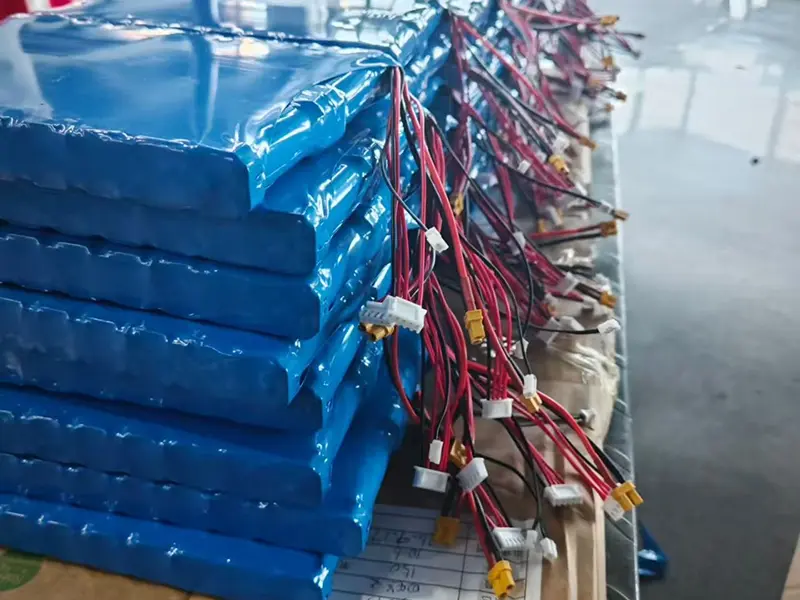
Custom battery packs with project-specific cables and connectors prepared for production
|
Application |
Typical Design Priority |
|
Medical and healthcare equipment |
Stable output, runtime, pack size, connector and market documentation |
|
Beauty and personal-care devices |
Compact dimensions, weight, runtime and housing fit |
|
Smart pet devices |
Standby time, low-power operation, charging interface and pack integration |
|
Portable printers and instruments |
Runtime, transient load, connector and portable size |
|
Robotics and smart equipment |
Continuous/peak current, BMS, optional communication and mechanical mounting |
|
Security and monitoring equipment |
Backup runtime, environmental conditions and stable DC supply |
Three real projects illustrate different customization priorities: electrical and connector matching, BMS communication integration, and high-current mechanical customization. Customer identities are not disclosed.
Case 01 — 11.1V 3Ah Custom Lithium Battery Pack
Electrical load and dual-connector customization
|
Project Item |
Confirmed Configuration |
|
Nominal Voltage |
11.1V |
|
Capacity |
3Ah |
|
Nominal Energy |
33.3Wh |
|
Continuous Discharge Current |
9A |
|
Battery Architecture |
3S |
|
Connectors |
DC connector + XT60 connector |
|
Customization Focus |
Discharge capability, dual-connector wiring and cable configuration |
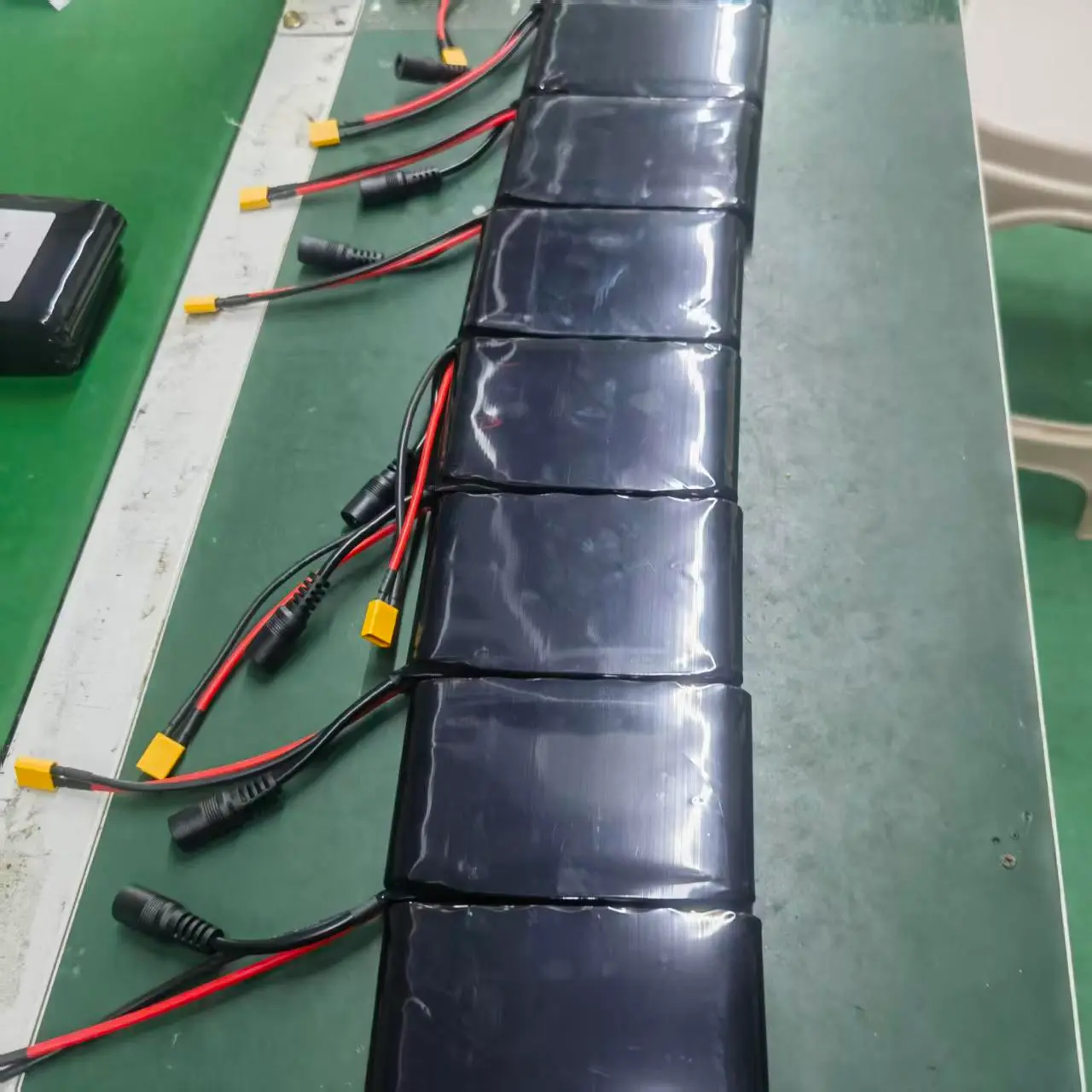
Batch production of 11.1V 3Ah packs with DC and XT60 interfaces.
Case 02 — 12.8V 30Ah LiFePO4 Battery Pack
BMS and Bluetooth communication customization
|
Project Item |
Confirmed Configuration |
|
Battery Chemistry |
LiFePO4 |
|
Nominal Voltage |
12.8V |
|
Capacity |
30Ah |
|
Nominal Energy |
384Wh |
|
BMS |
60A |
|
Communication |
Bluetooth |
|
Customization Focus |
BMS selection, Bluetooth communication and enclosure integration |
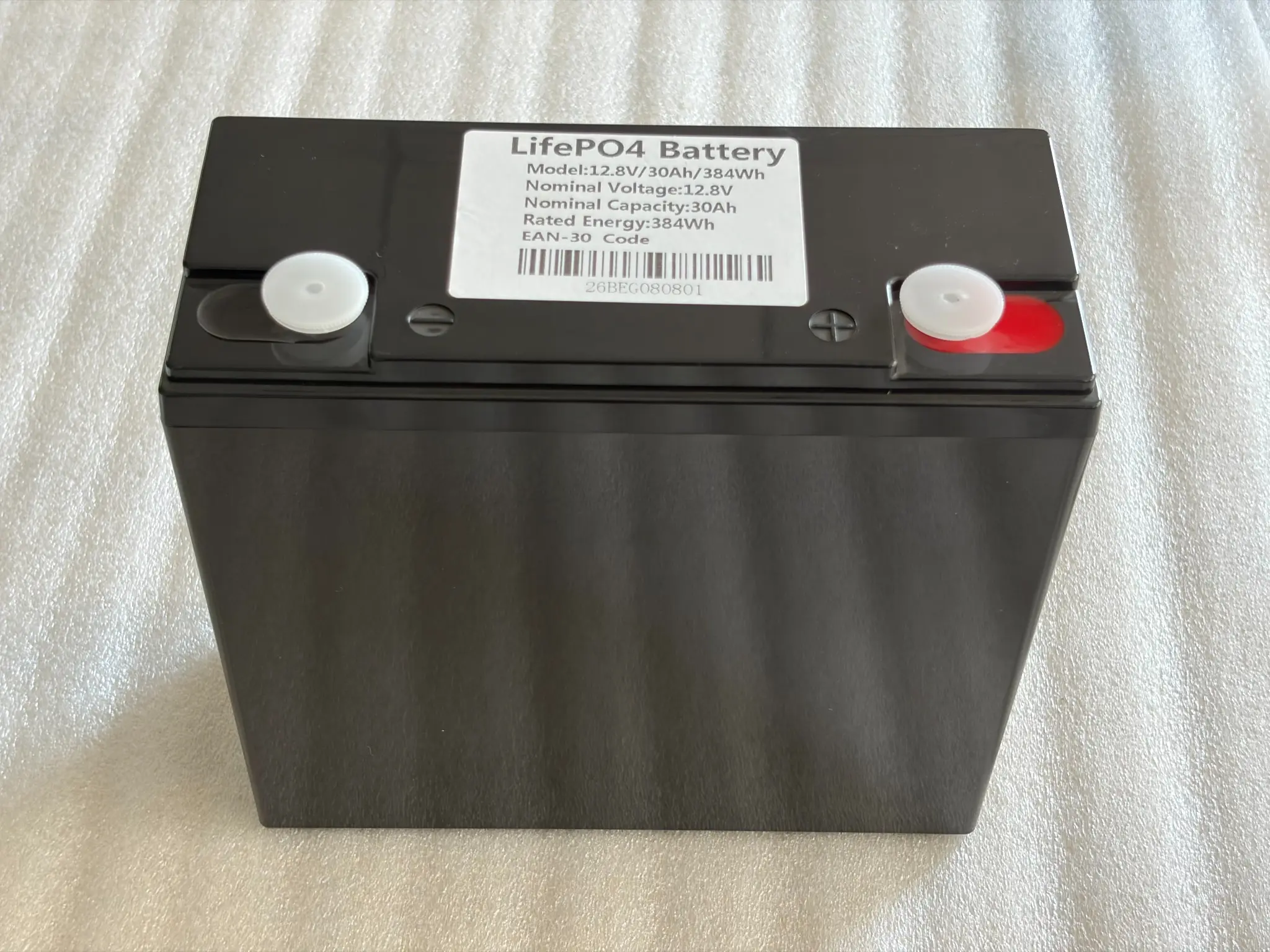
12.8V 30Ah LiFePO4 battery with 60A BMS and Bluetooth communication.
Case 03 — 72V 25Ah Custom-Shaped Battery Pack
High-current output and special mechanical form factor
|
Project Item |
Confirmed Configuration |
|
Nominal Voltage |
72V |
|
Capacity |
25Ah |
|
Continuous Discharge Current |
150A |
|
Connector |
QS10 |
|
Enclosure |
Custom-shaped metal enclosure |
|
Customization Focus |
Special shape, high-current discharge and high-current connector integration |
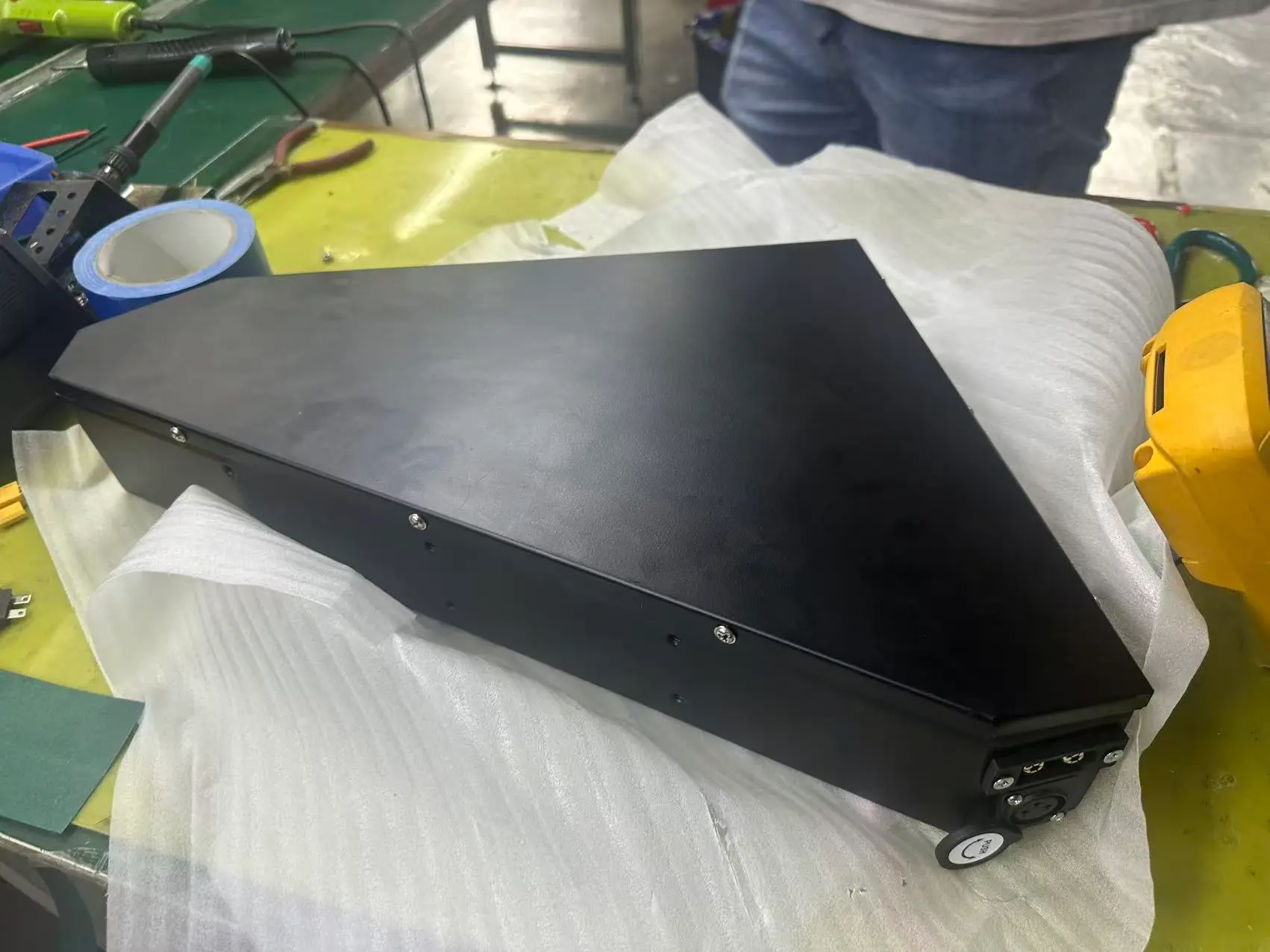
72V 25Ah custom-shaped battery pack with 150A continuous discharge and QS10 interface.
These cases show how voltage, current capability, BMS, communication, enclosure shape, cable and connector can be matched to the equipment instead of forcing a device to accept a fixed battery format.
A custom pack should be sized from the device energy requirement, then checked against current, voltage and space limits.
|
Input |
Example |
|
Device operating voltage |
11.1V class |
|
Average load |
15W |
|
Required runtime |
4 hours |
|
Initial energy estimate |
15W × 4h = 60Wh |
The 60Wh calculation is only the starting point. Final capacity should also consider discharge current, conversion efficiency, permitted depth of discharge, temperature, aging margin, peak load and device-specific reserve requirements. The engineering margin is confirmed by the project rather than applying one fixed percentage to every application.
|
Development Route |
Typical Scope |
Best Fit |
|
Existing platform |
Use an established voltage/capacity platform; adjust cable, connector, label or packaging |
Fast sample validation and lower development burden |
|
Semi-custom |
Keep the basic battery architecture; adjust capacity, BMS, enclosure or interface |
Projects that need moderate mechanical/electrical changes |
|
Full custom |
Define cell, S/P configuration, BMS, mechanical structure, connector and validation from device requirements |
New equipment, restricted installation space or project-specific electrical requirements |
|
Stage |
Action |
Output |
|
01 |
Requirement Review |
Device voltage, load, runtime, space, charging and target market |
|
02 |
Battery Proposal |
Chemistry, cell format, S/P configuration, BMS, housing and interface |
|
03 |
Engineering Sample |
Prototype production and electrical verification |
|
04 |
Device Test |
Runtime, fit, temperature, charging and load validation |
|
05 |
Optimization |
Adjust configuration where device test identifies a mismatch |
|
06 |
Sample Approval |
Freeze the approved configuration |
|
07 |
Pilot Production |
Small-batch consistency and assembly verification |
|
08 |
Mass Production |
Production QC, final inspection and shipment |
Custom battery production requires consistency at both component and pack level. Typical process controls can include incoming cell inspection, cell sorting and matching, BMS verification, pack assembly, charge/discharge checks, protection verification, aging and final inspection.
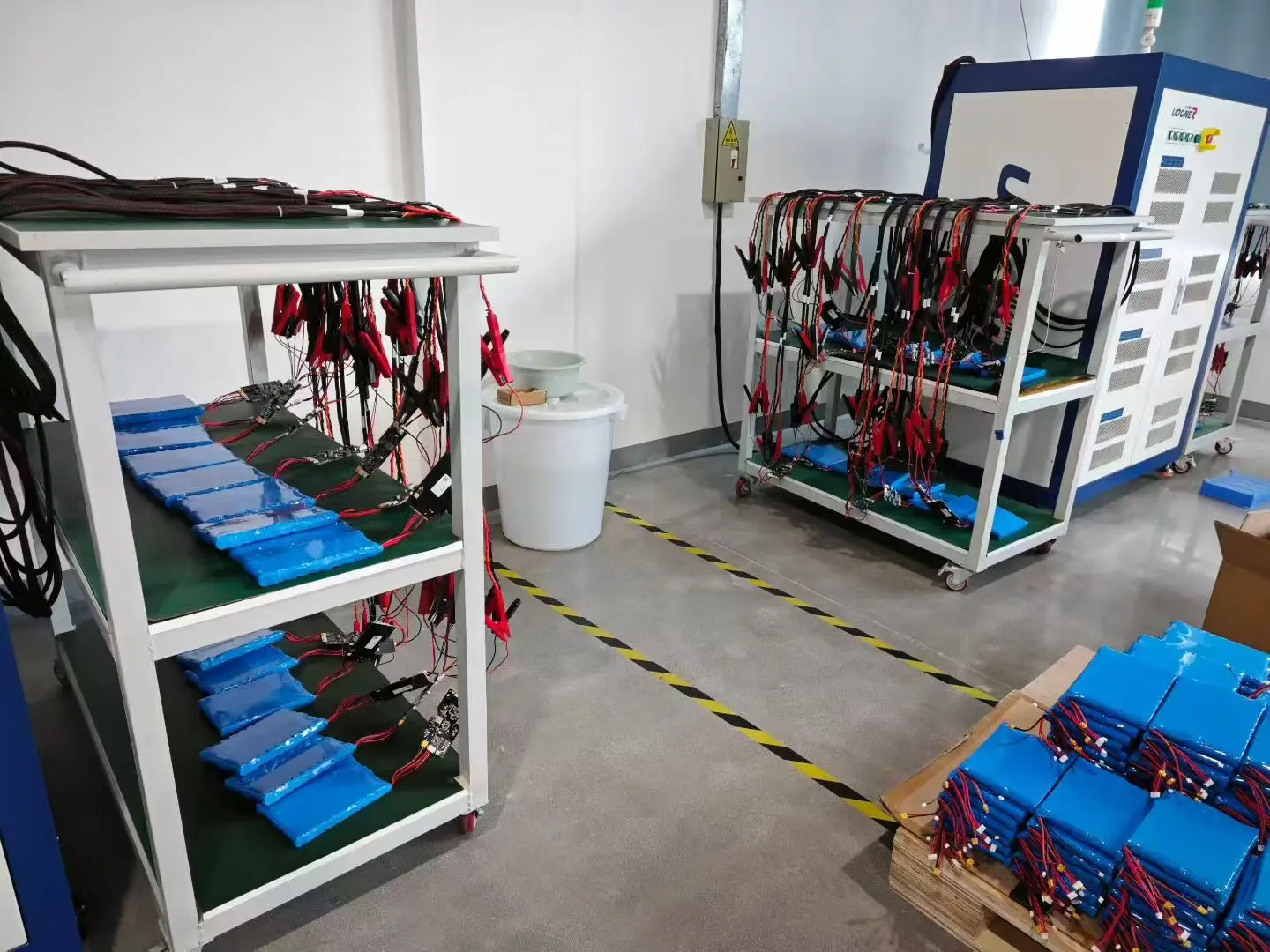
Battery packs undergoing multi-channel electrical testing and production verification
Certification requirements depend on the final battery configuration, end-product category and destination market. HSS Energy can support documentation and certification planning for custom battery projects. Examples of available project documentation include UN38.3 transport testing, MSDS and selected market certifications such as KC for applicable battery models.
The documents shown below are selected examples only. They do not mean that every custom battery configuration is automatically covered. Model-specific certification scope must be confirmed before order approval.
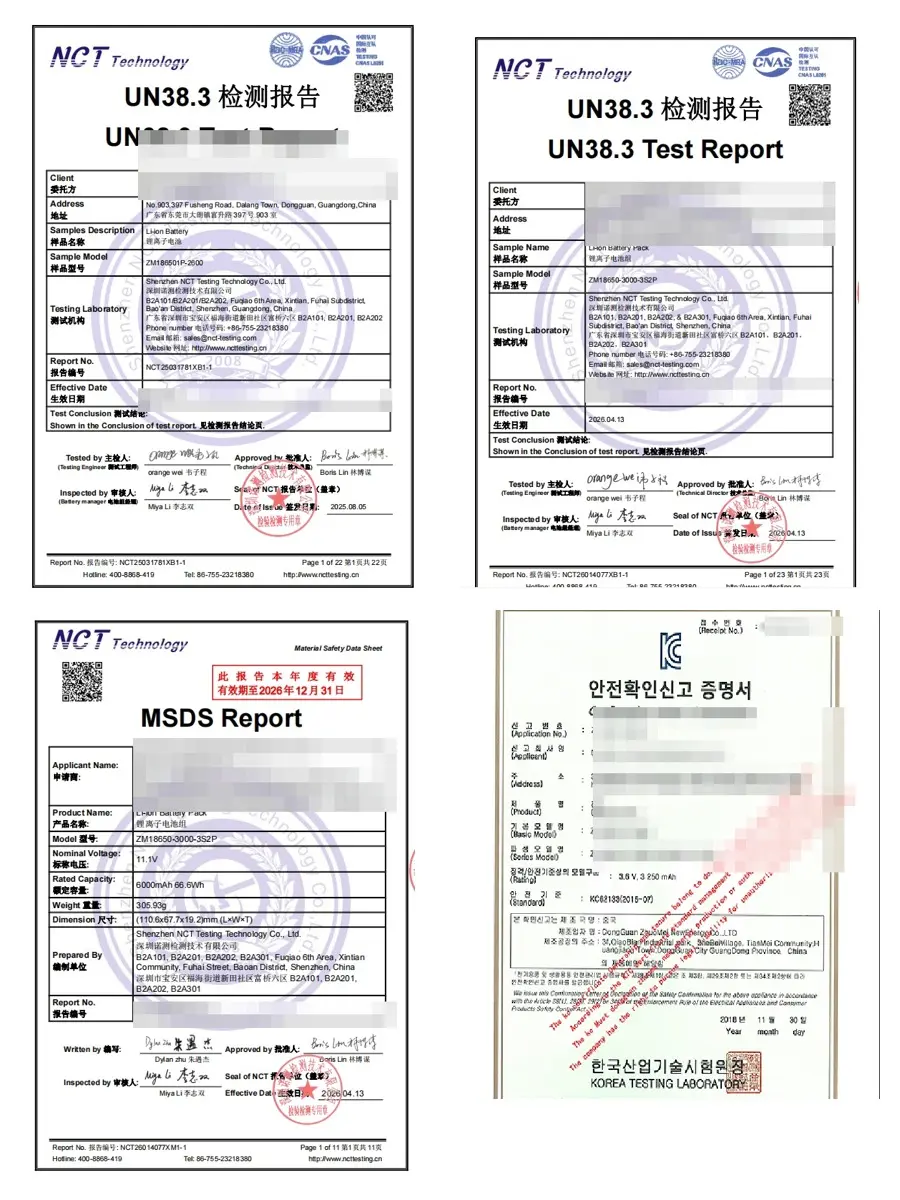
Selected certification and transport-document examples; applicant/company information redacted for public display
|
Requirement |
Typical Use |
|
UN38.3 |
Lithium battery transport testing for the applicable battery model |
|
MSDS |
Safety and transport-support documentation |
|
IEC 62133-2 / CB |
Where required for applicable portable sealed rechargeable lithium battery projects |
|
CE / RoHS |
According to final product configuration and destination-market requirements |
|
KC |
For applicable battery models intended for the Korean market |
· Device name and application
· Operating voltage and allowable voltage range
· Average and peak current or power
· Required runtime
· Maximum battery dimensions and weight
· Current battery specification if replacing an existing pack
· Charging method and charger information
· Connector, cable and communication requirements
· Operating temperature and installation environment
· Target country / certification requirement
· Expected sample and production quantity
Specifications, examples and configuration options shown on this page are for preliminary engineering evaluation. Final voltage, capacity, dimensions, weight, discharge current, cell model, BMS, connector, enclosure, communication and other specifications may change according to device requirements, component availability, certification scope and product development.
Final specifications are subject to the approved sample, confirmed datasheet, technical agreement, PI or contract. Where website information differs from an approved project document, the approved project document shall prevail.
Send the device voltage, load, required runtime, battery space, charging method, connector and target market. HSS Energy can evaluate whether an existing platform, semi-custom configuration or full custom battery design is the most suitable starting point for the project.
-