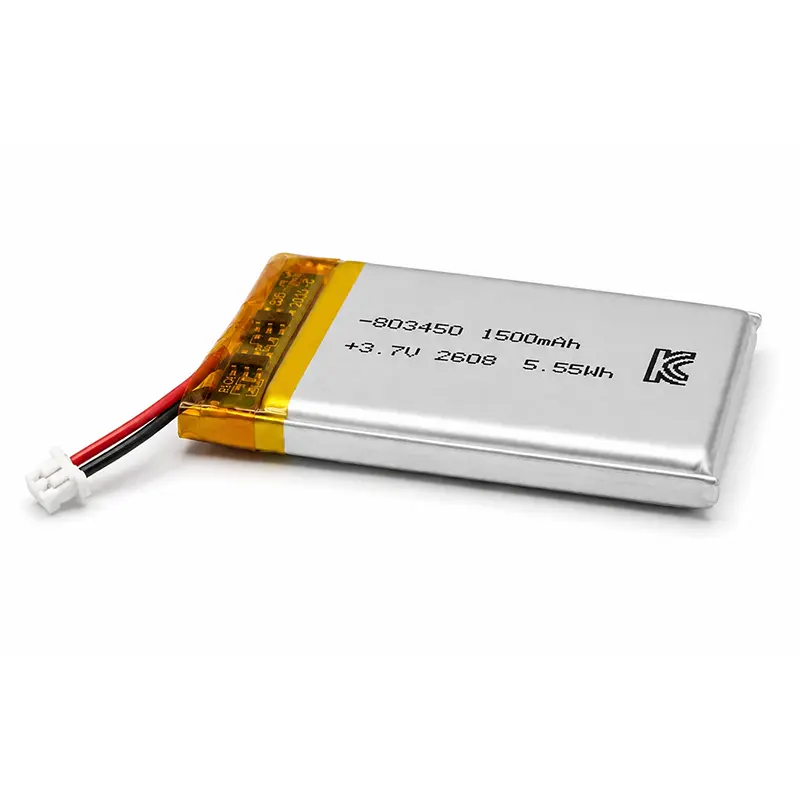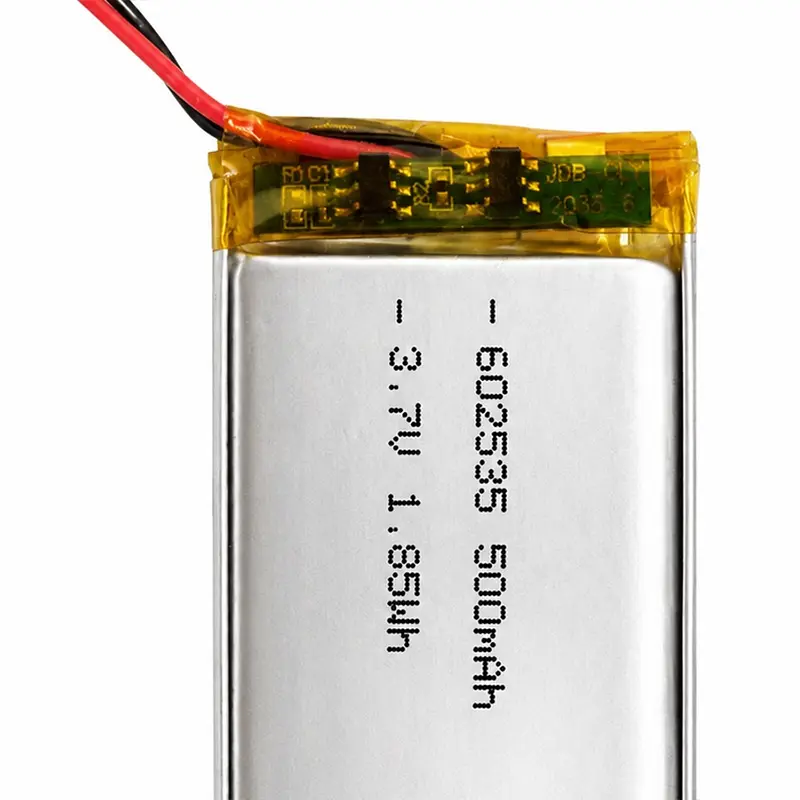
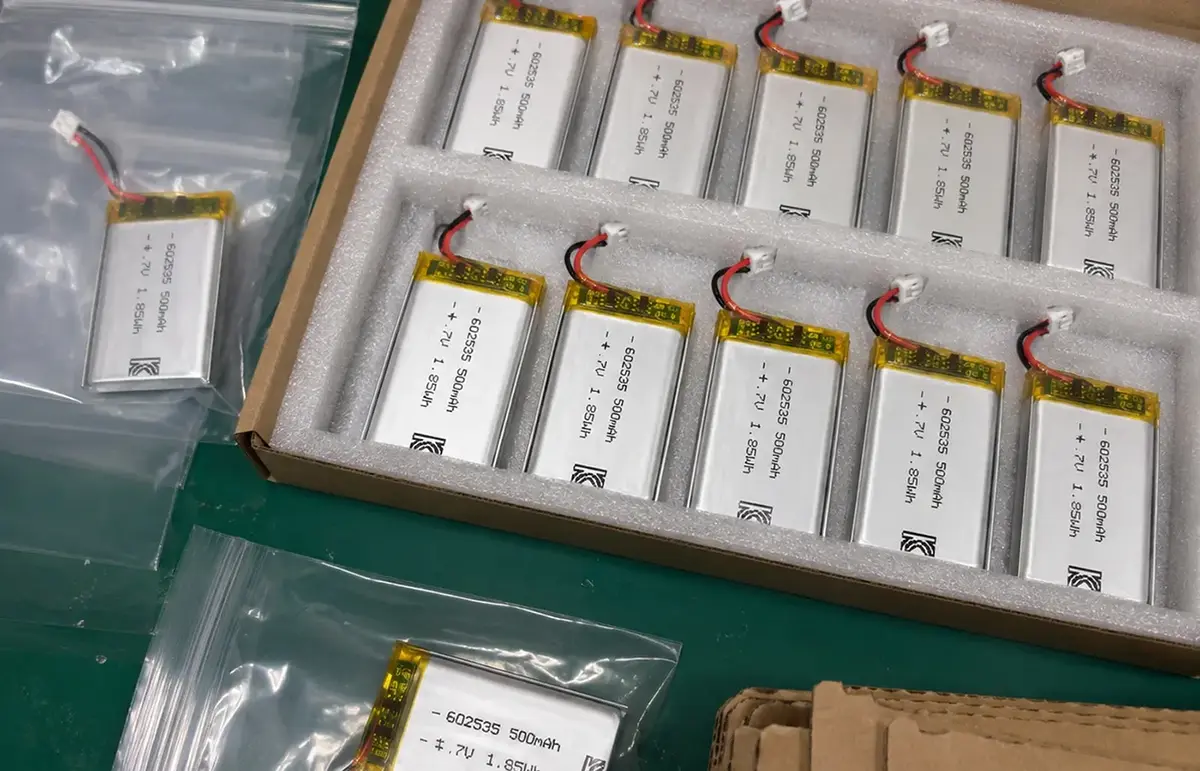
HSS Energy 3.7V 500mAh LiPo Battery is for space-constrained electronics using a 3.7V rechargeable single-cell source. The sample shows a protection PCB and 2-wire connector; final current, lead, connector and pack dimensions are project-confirmed. Typical projects include wearables, trackers, beauty devices and other compact electronics where thickness and connector routing can matter as much as capacity. The finished battery is larger than the nominal cell code once the protection board, tape, leads and connector are included, so the device cavity and service route should be confirmed from a drawing or original battery. This project-based approach gives OEM customers a more realistic pack envelope and connector specification for production.
|
Parameter |
HSS Sample / Project Confirmation |
|
Model / Cell Format |
602535 |
|
Chemistry |
Rechargeable lithium polymer pouch cell |
|
Configuration |
1S1P |
|
Nominal Voltage |
3.7V |
|
Nominal Capacity |
500mAh |
|
Nominal Energy |
1.85Wh |
|
Charge Voltage |
4.2V reference for 1S Li-ion / LiPo |
|
Nominal Cell Format |
Approx. 6 × 25 × 35 mm |
|
Measured Sample Axis |
35.00 mm shown in supplied caliper photo |
|
Protection |
Protection PCB visible on current sample; thresholds project-confirmed |
|
Lead / Connector |
Red-black 2-wire sample with small white 2-pin plug; exact housing, pitch and polarity project-confirmed |
|
Current Limits |
Project-confirmed from target device load and selected PCM / cell configuration |
A 602535 LiPo battery uses the 6 × 25 × 35 mm nominal cell format and stores 1.85Wh. The supplied photo confirms 35.00 mm on the measured axis. The nominal code is useful for early mechanical screening, but it should not be treated as the final finished-pack size. PCM position, tab construction, insulation, wire exit and connector body can all extend one or more dimensions. For compact devices, even a few millimeters can affect assembly pressure or housing closure, so HSS prefers to validate the complete pack against the actual battery cavity.
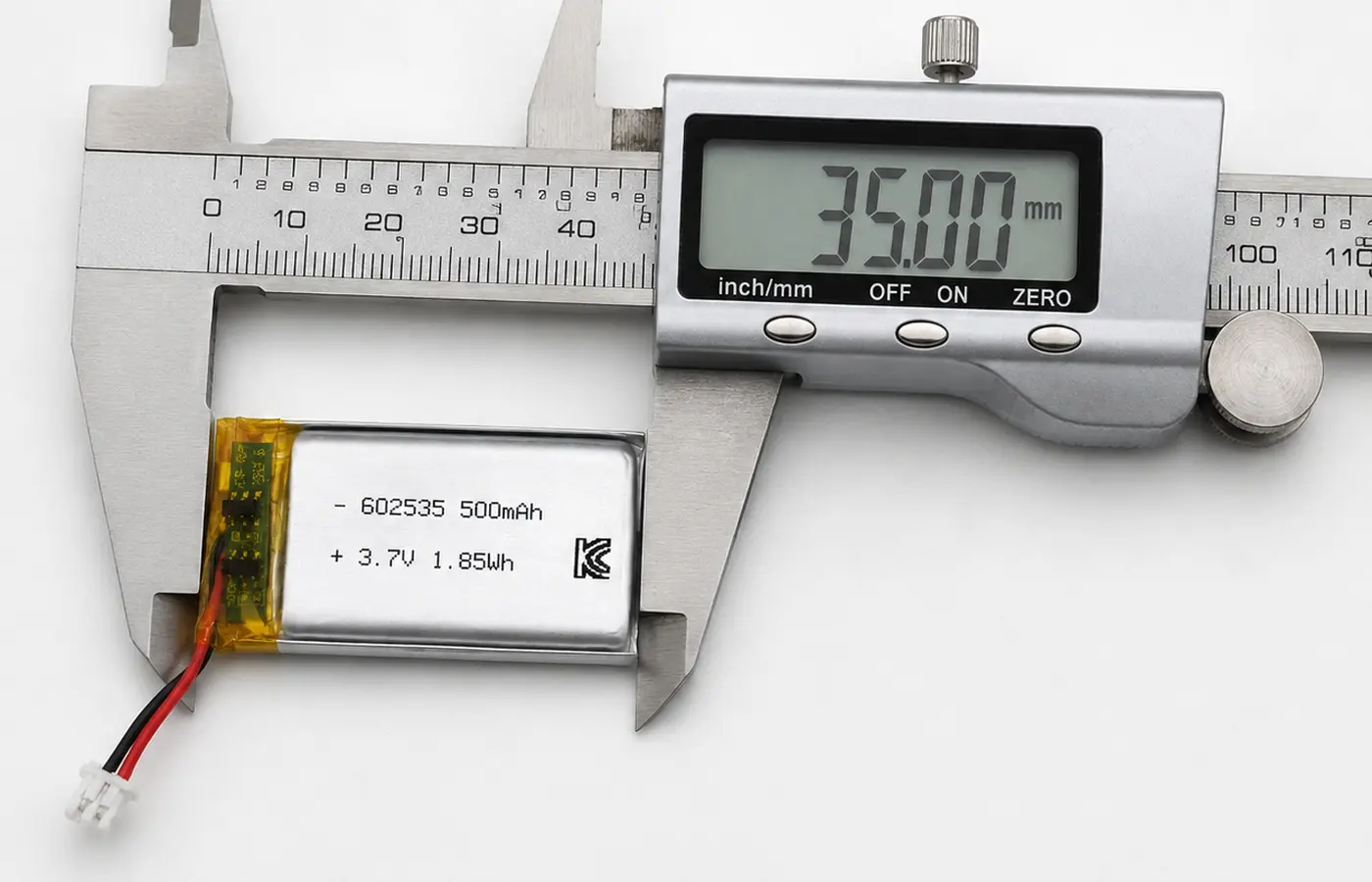
Supplied dimensional evidence: 35.00 mm on the measured axis. Final finished-pack dimensions must include PCM, leads and connector. This measurement supports the cell-format reference on the supplied sample, while the remaining dimensions and final envelope still require project confirmation. For a repeat OEM order, the approved drawing should distinguish between the nominal pouch-cell body and the finished battery assembly so purchasing, engineering and production teams use the same dimensional reference.
A 500mAh LiPo battery with PCM adds protection hardware, but thresholds and current capability depend on the selected cell and board. The PCM can provide important battery protection functions, but its actual thresholds and current capability are determined by the selected cell, board and project settings. customers should therefore provide average load, peak load and charging information before assuming the sample can support a motor, heater or radio burst. This lets HSS select an appropriate protection solution instead of treating every 500mAh battery as electrically identical.
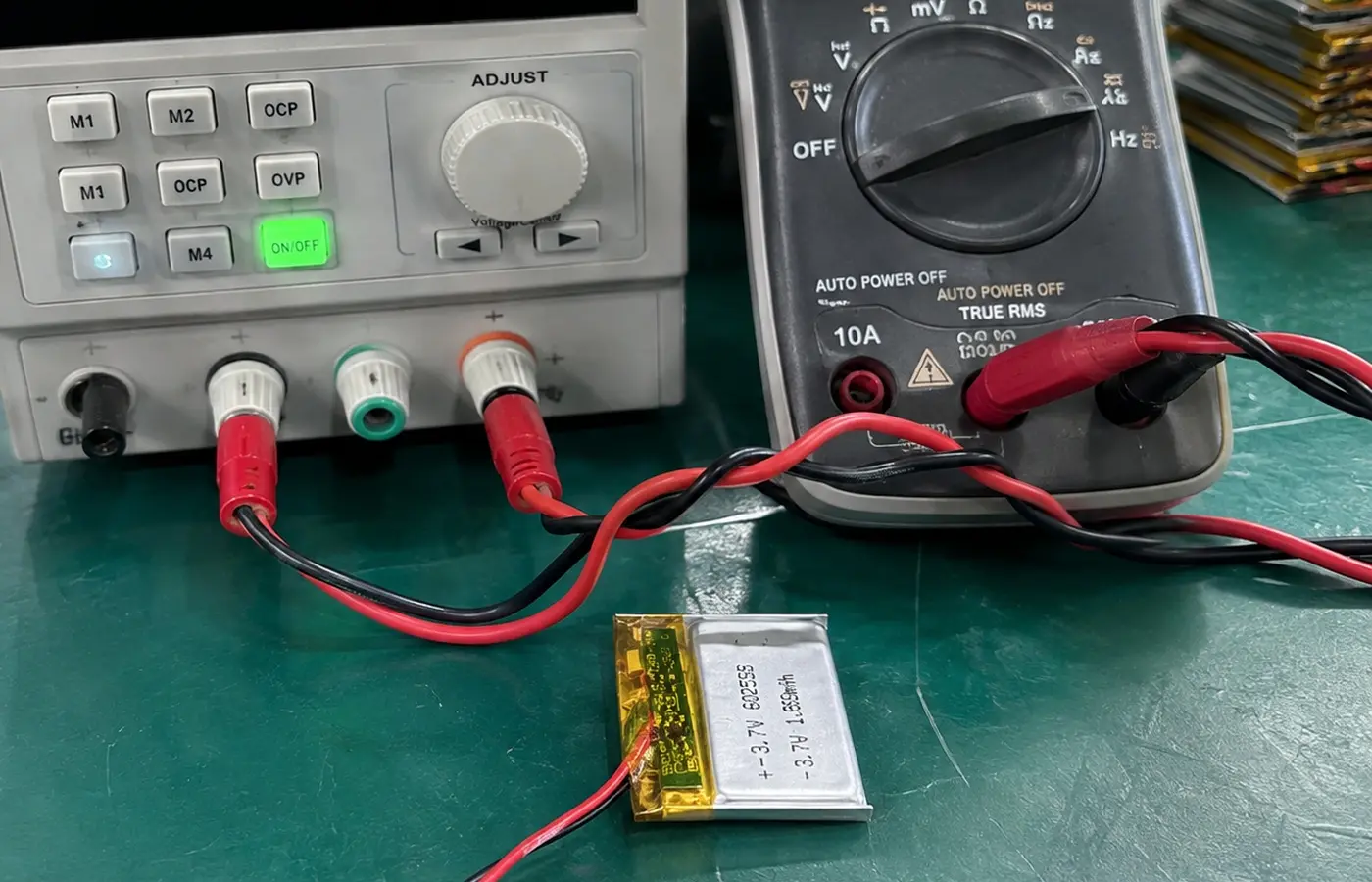
Supplied electrical-check image. The 4.20V setup is consistent with a 1S LiPo charging ceiling; displayed current is test evidence, not a universal HSS product rating.
|
Design Question |
What Must Be Confirmed |
|
Charging IC / charger |
4.2V profile, charge current and termination behavior |
|
Device average load |
runtime target from 1.85Wh nominal energy |
|
Peak load |
wireless TX, motor, buzzer, vibration or heater surge |
|
Protection PCB |
over-charge, over-discharge, over-current and short-circuit thresholds |
A 3.7V 500mAh LiPo battery is best for low-to-medium average loads; radio bursts, motors, heaters and actuator peaks must be checked before approval. The 1.85Wh energy class works well when the device spends much of its time in standby or operates moderate electronic loads, but short high-current events can still dominate the battery design. GPS/LTE transmission, vibration motors, pumps and heaters should be checked against the selected cell and PCM. For customers comparing multiple pouch-cell sizes, real duty cycle is usually a better selection input than capacity alone.
A 602535 battery with connector should be matched by polarity, plug housing, pitch, wire and lead length; the sample uses red/black leads and a small white 2-pin plug. Connector matching also needs the housing family, pitch, pin position, wire gauge and lead length to agree with the device-side design. A visually similar 2-pin connector can still be incompatible if polarity or pitch is different. Providing a close-up photo, PCB drawing or original battery sample allows HSS to confirm the interface before the customer receives a prototype.
|
OEM Variable |
Why It Matters |
Approval Input |
|
|
Connector / polarity |
prevents reverse or incompatible installation |
device PCB or original battery photos |
|
|
Wire length / gauge |
affects routing, resistance and assembly |
battery cavity + harness route |
|
|
PCM layout |
changes overall pack envelope |
device load + available top clearance |
|
|
Label / traceability |
supports production control and customer identification |
project labeling requirements |
|
|
1 Device Side |
2 Polarity |
3 Wire / Length |
4 PCM + Pack |
|
connector housing + pitch |
red / black pin position |
gauge + routing + lead length |
board layout + finished envelope |
For the 602535 3.7V 500mAh LiPo Battery, connector approval should follow the device-side drawing or original battery sample. Once the connector is confirmed, the wire route, lead length and PCM position can be frozen in the finished-pack drawing. This is particularly valuable for contract manufacturers and OEM customers because it reduces variation between sample and bulk production and gives assembly teams a repeatable interface reference.
A 602535 lithium polymer battery can fit trackers, wearables, smart locks, beauty devices and other compact electronics when the real power profile is validated. These applications share a need for a small rechargeable format, but their load patterns are very different. A tracker may spend most of its time asleep and then transmit at high peak current, while a beauty device may run a motor or heater intermittently. HSS therefore evaluates application fit from actual load, charging frequency, thermal conditions and available cavity instead of using a broad compatibility claim.
|
Application |
Typical Power Pattern |
Why 602535 Can Fit |
customers Must Confirm |
|
GPS Tracker / IoT Sensor |
long standby + short radio bursts |
1.85Wh in a compact 1S pouch format |
LTE / GPS transmit peak, sleep current, recharge interval |
|
Smartwatch / Wearable |
display + sensor + Bluetooth, frequent recharge |
thin rectangular footprint and light pack mass |
cavity pressure, charging frequency, skin-temperature design |
|
Beauty / Personal Care |
intermittent motor, LED or control electronics |
500mAh class suits compact handheld products |
motor/heater surge, duty cycle, moisture isolation |
|
Smart Lock / Access Control |
standby electronics + intermittent communication / actuator event |
compact backup or controller power where load fits |
actuator peak, cold-start behavior, charging architecture |
|
Bluetooth / Remote / Handheld |
low-to-medium digital load with short wireless activity |
simple 1S charging and small enclosure fit |
audio / radio peak, connector, target runtime |
|
Baby Monitor / Dashcam Backup |
monitoring electronics or short backup duty |
compact rechargeable reserve source |
continuous load, heat, expected backup duration |
|
TRACKING / IoT |
WEARABLE / UI |
BEAUTY / HANDHELD |
|
Standby can be low, but GPS / LTE / Bluetooth TX bursts drive peak-current review. |
Check 6 mm class thickness, cavity pressure, charging frequency and connector routing. |
Motor, pump or heater loads need surge-current validation; do not size from 500mAh alone. |
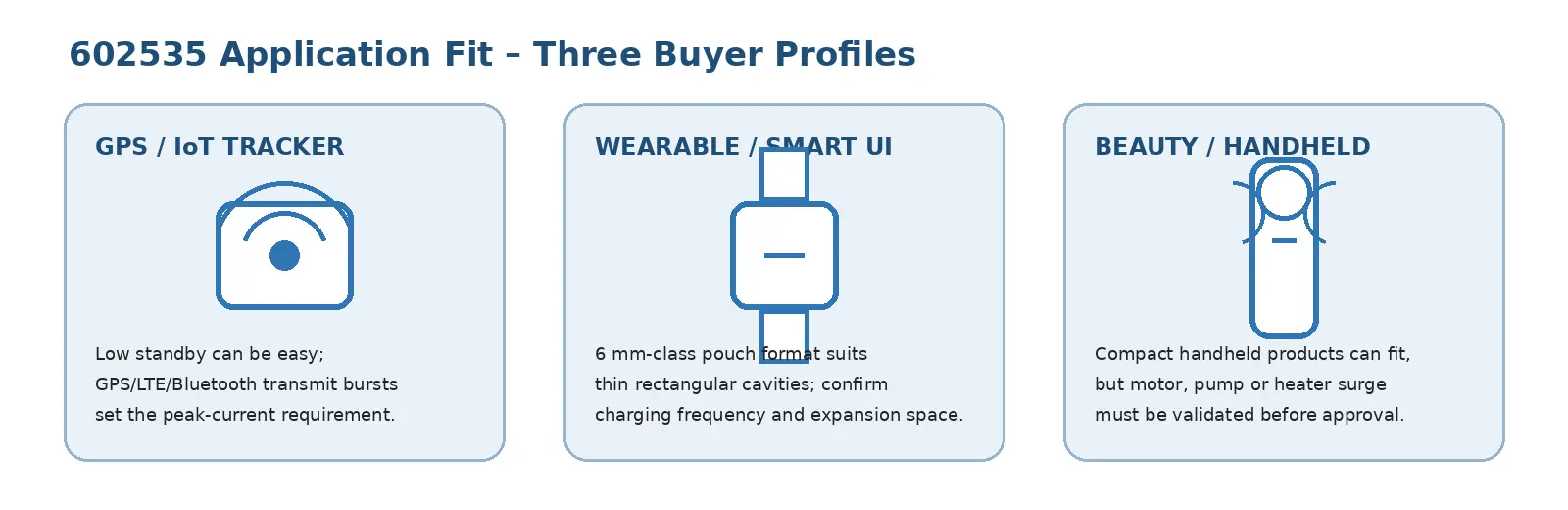
Application-fit visual: select from duty cycle, peak load, charging behavior and device cavity rather than capacity alone.
customers decision: do not select 602535 from capacity alone for drones, RC vehicles or high-drain motor equipment. Validate the real peak-current profile first. Those applications can demand peak currents that exceed what a small pouch cell and PCM are designed to supply. If the customer is considering a higher-drain device, HSS should first review the measured current profile and temperature behavior, and may recommend a different cell format if the 602535 platform does not provide enough margin.
|
Cell / Label Check |
PCM / Lead Check |
Electrical Check |
Packing Review |
|
model + voltage + capacity |
board + polarity + connector |
charge / voltage / function |
separation + protection |
|
Document / Market |
Current Evidence Boundary |
Customer-Facing Rule |
|
KC / Korea |
KC mark is visible on the supplied sample. Certificate number and exact model scope are not yet linked in this document. |
Claim KC only after the certificate matches the exact HSS 602535 cell / pack. |
|
UN38.3 / Transport |
602535 3.7V 500mAh market test reports exist, but third-party reports are not HSS product evidence. |
Use only the HSS report that matches the ordered cell / pack and shipping configuration. |
|
MSDS / Safety Data |
MSDS is commonly available for 602535-class cells in the market. |
Provide / cite only the current HSS document for the exact ordered configuration. |
|
IEC62133 / CE / RoHS |
Applicability varies by cell, pack, market and customer requirement. |
Do not assign a certification or compliance mark to this SKU without exact-document verification. |
|
customers Question |
HSS Engineering Answer |
|
Does 602535 always mean the finished pack is exactly 6 × 25 × 35 mm? |
No. The code describes the nominal cell format; PCM, tabs, leads and connector can increase the finished envelope. |
|
Can I use a different 2-pin connector? |
Yes. Send the device-side connector photo, pitch, polarity and required lead length for matching. |
|
Is 500mAh enough for my device? |
It depends on average load, peak current and duty cycle. HSS reviews the device power profile before approval. |
|
Can this power a motor or heater? |
Only after surge and continuous current are verified. High-drain applications should not be assumed compatible. |
SEND YOUR DEVICE BATTERY REQUIREMENTS
For a 602535 3.7V 500mAh LiPo Battery fit review, send HSS Energy the device load, charging profile, cavity, connector, polarity, lead length and duty cycle. If available, include the original battery sample or device-side connector photo together with sample quantity and expected annual demand. That information helps HSS review both technical fit and repeat-production requirements before preparing the quotation.
Address
A3, 1204-1, 1142 Jimei North Avenue, Software Park Phase III, Xiamen Torch High-tech Zone, Xiamen, China
Tel