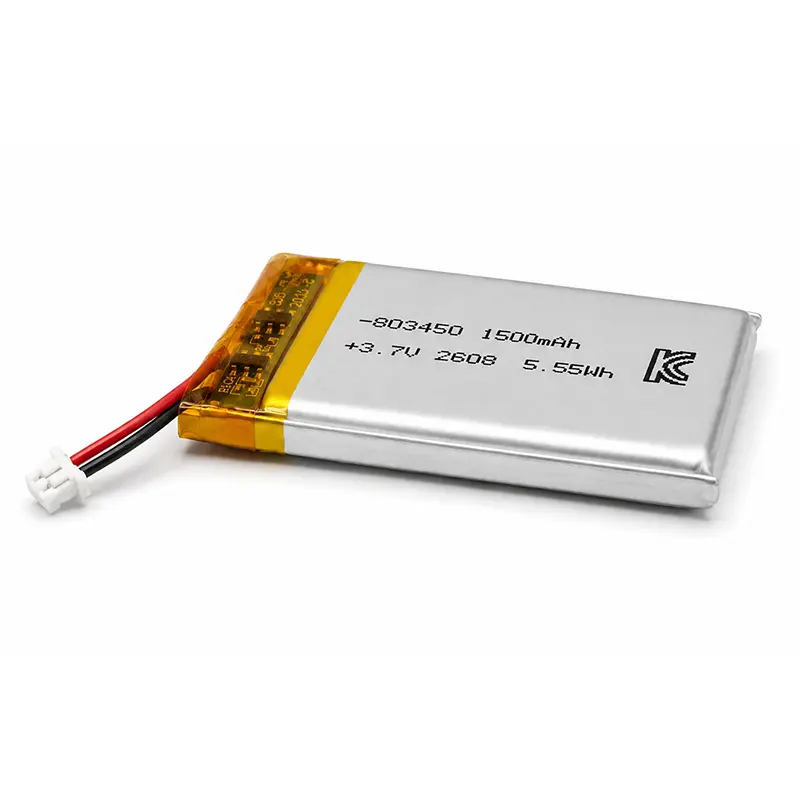
HSS Energy 3.7V 1500mAh LiPo Battery is for compact electronics needing more energy than smaller 500mAh cells. The sample uses a protection PCB and 2-wire connector; current, plug, polarity and finished dimensions are confirmed for the target device. This makes it suitable for portable products that need longer operating time but still require a relatively thin rechargeable pouch battery. The current sample already demonstrates a protection board, red-black leads and a 2-pin connector, while the final connector housing, polarity, lead length and current limits remain project-specific. A device drawing or original battery sample gives HSS the best basis for matching those details.
|
Parameter |
HSS Sample / Project Confirmation |
|
Model / Cell Format |
803450 |
|
Chemistry |
Rechargeable lithium polymer pouch cell |
|
Configuration |
1S1P |
|
Nominal Voltage |
3.7V |
|
Nominal Capacity |
1500mAh |
|
Nominal Energy |
5.55Wh |
|
Charge Voltage |
4.2V reference for 1S Li-ion / LiPo |
|
Nominal Cell Format |
Approx. 8 × 34 × 50 mm |
|
Typical Finished-Pack Reference |
Approx. 8 × 34-35 × 52-53 mm with PCM / wires in public 803450 designs |
|
Protection |
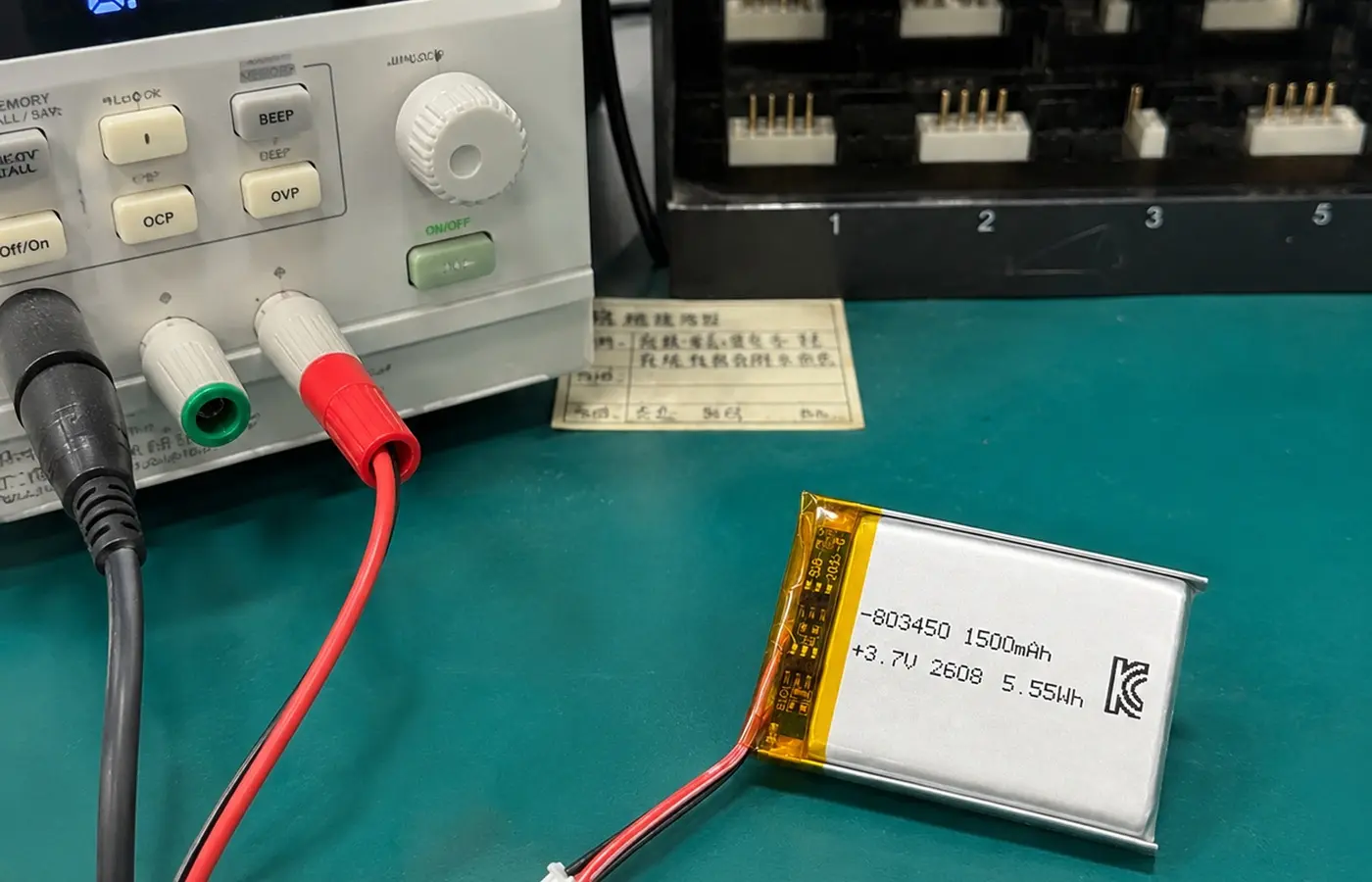
Protection PCB visible on HSS sample; thresholds project-confirmed |
|
Lead / Connector |
Red-black 2-wire sample with small white 2-pin plug; housing, pitch and polarity project-confirmed |
|
Current Limits |
Project-confirmed from target load and selected cell / PCM |
An 803450 LiPo battery uses an approximately 8 × 34 × 50 mm nominal cell format; PCM, tape, leads and connector can extend the finished pack length. That code describes the pouch-cell body rather than the complete finished battery. PCM, tape, tabs, wires and the connector can extend the final length or thickness, which matters in tightly packaged electronics. For production release, HSS should record the final pack envelope separately from the nominal cell code so the customer can check enclosure fit and assembly clearance accurately.
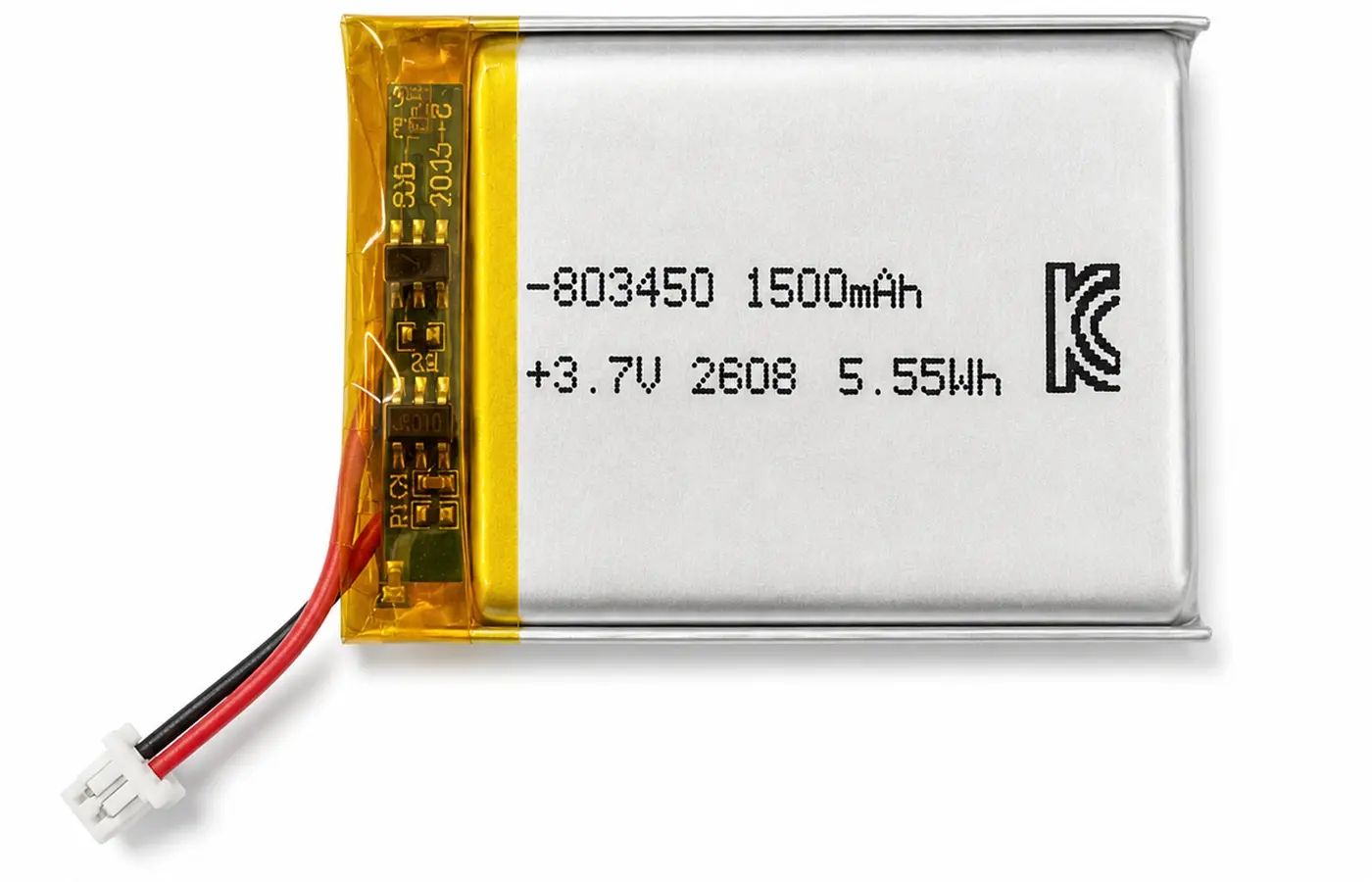
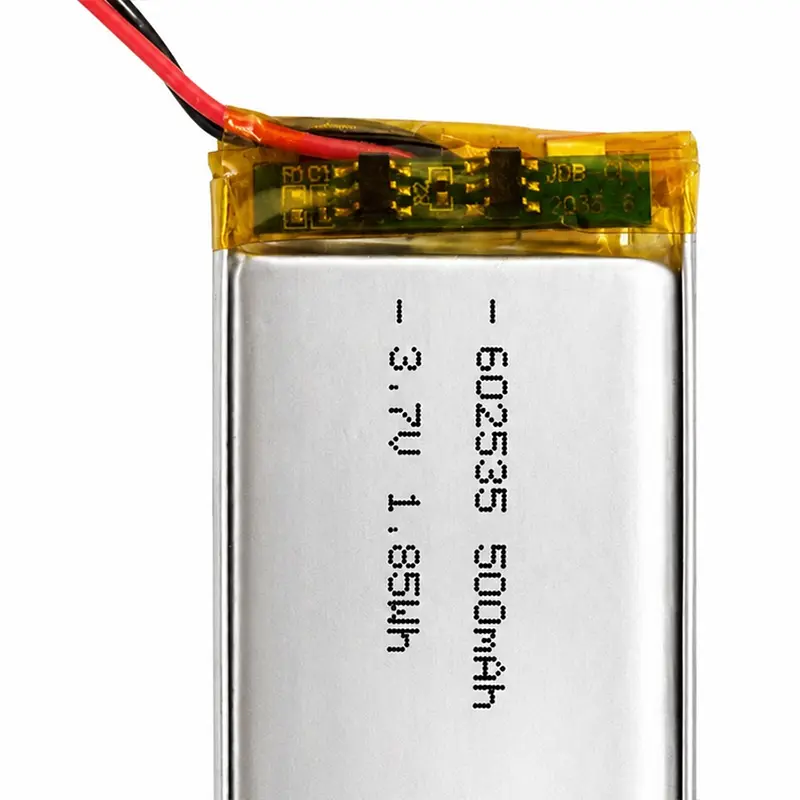
HSS sample evidence: 803450 / 1500mAh / 3.7V / 5.55Wh marking with protection board and connector.
A 3.7V 1500mAh LiPo battery stores 5.55Wh—three times the nominal energy of a 500mAh / 1.85Wh pack—but needs a larger battery cavity. The additional energy can extend the interval between charges in suitable products, but it also requires a larger battery cavity and may change device mass or balance. customers should therefore treat the upgrade as an energy-versus-space tradeoff rather than assuming the larger capacity is always better. The real benefit depends on average load, peak current, duty cycle and how often the product is expected to recharge.
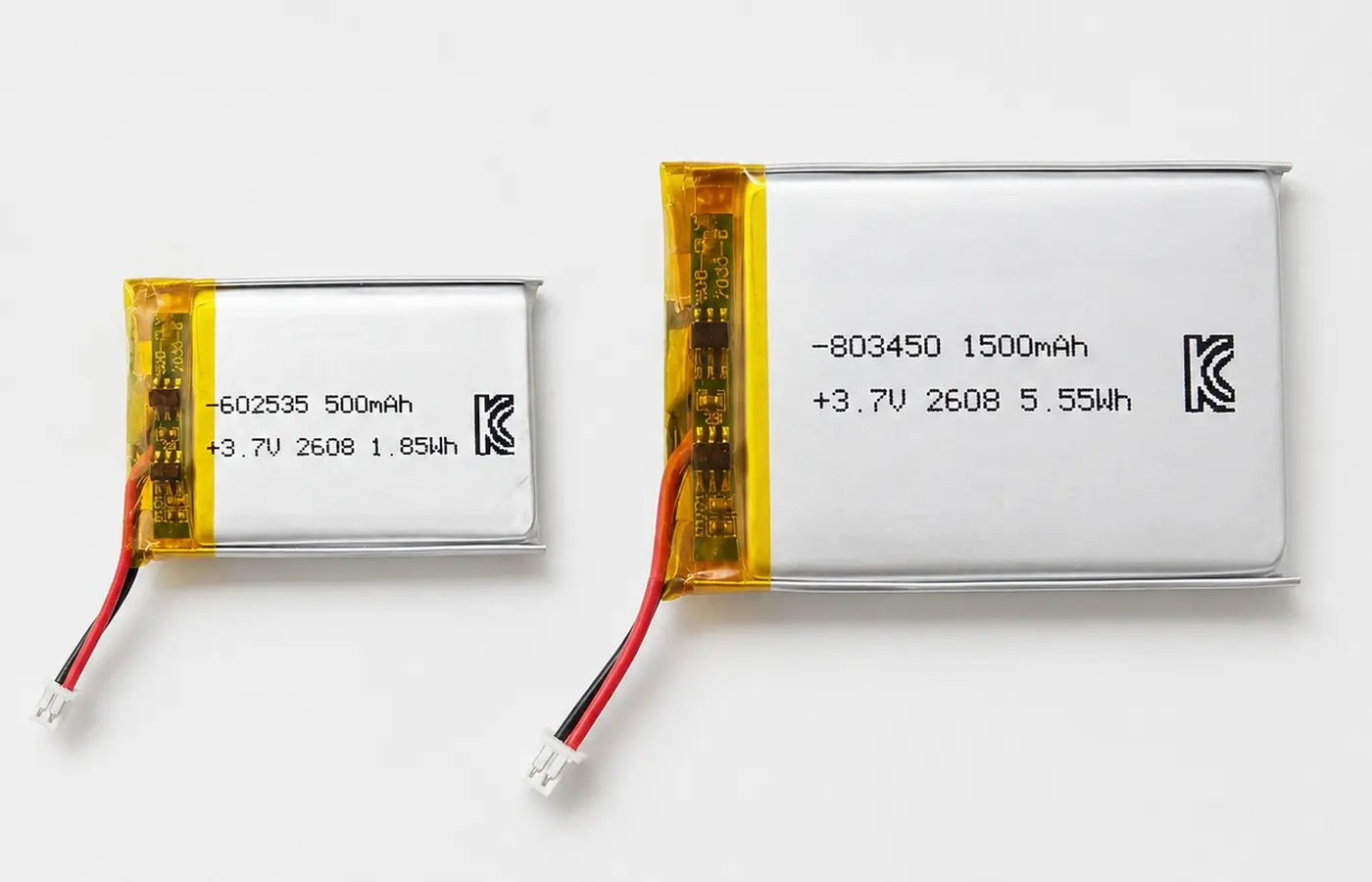
HSS size-and-energy comparison: 602535 500mAh / 1.85Wh versus 803450 1500mAh / 5.55Wh. Three times nominal energy does not guarantee three times device runtime. This comparison is useful for product planning because it shows why two batteries on the same 3.7V architecture can serve very different devices. The 500mAh format favors smaller cavities and lower mass, while the 1500mAh format provides more energy reserve when the product can accept additional thickness and footprint. HSS can use the device runtime target and cavity drawing to help determine which direction is more appropriate.
|
Selection Point |
602535 500mAh |
803450 1500mAh |
|
Nominal Energy |
1.85Wh |
5.55Wh |
|
Cell Format |
~6×25×35 mm |
~8×34×50 mm |
|
Best Fit |
smaller cavity / lighter device |
longer-use compact device with more space |
|
Key Tradeoff |
less energy reserve |
larger thickness / footprint |
For the 803450 3.7V 1500mAh LiPo Battery, verify runtime and peak load, then confirm the 8mm-class pouch plus PCM/connector envelope fits the device. The battery should have enough continuous and peak-current margin for the real product, not only enough nominal energy. Motors, heaters, wireless transmitters and actuators can create short high-current events that must be checked against the selected cell and PCM. Once the electrical profile is acceptable, the finished 8mm-class pouch assembly, wiring and connector can be validated against the mechanical design.
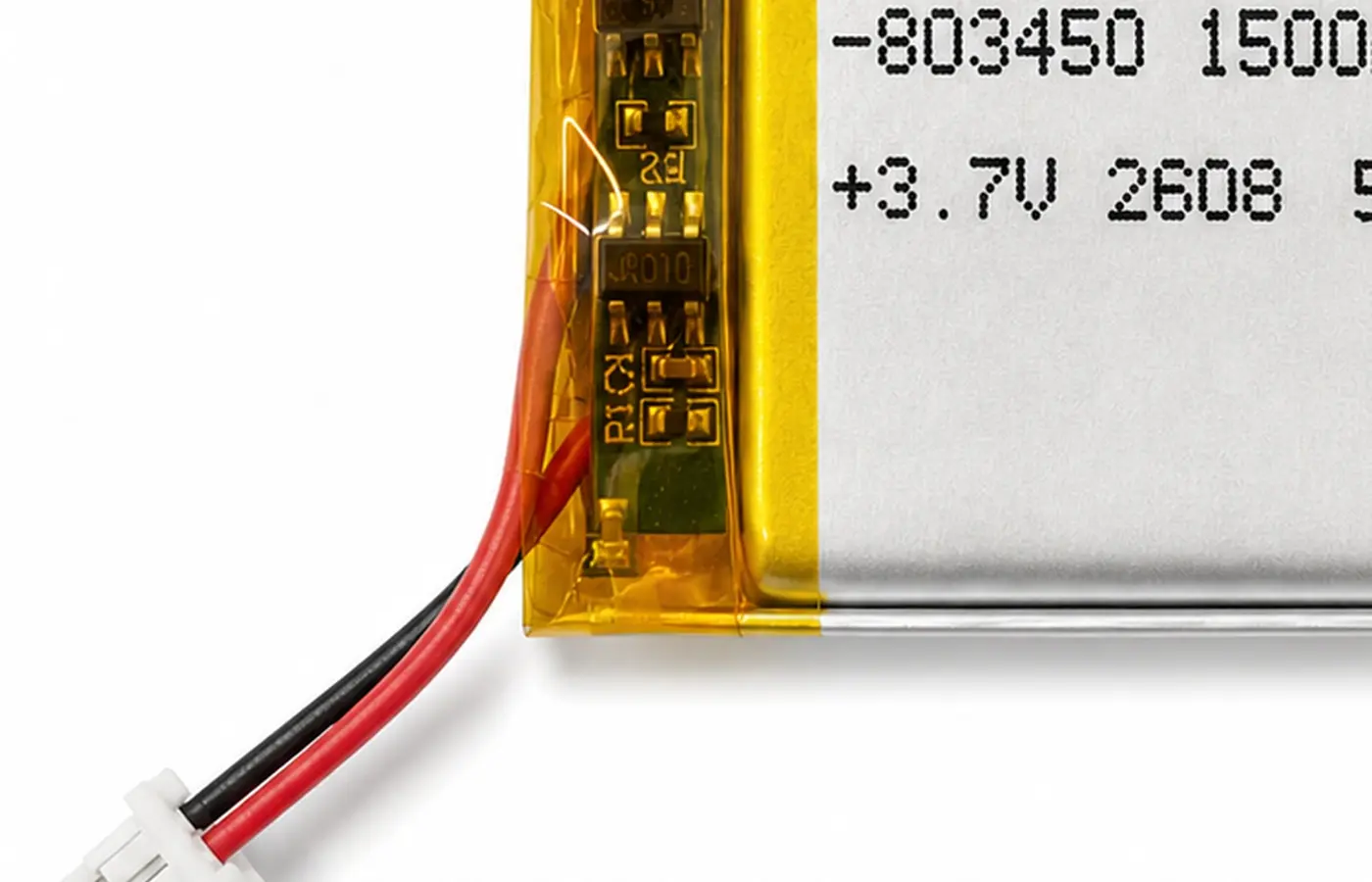
A 1500mAh LiPo battery with PCM adds protection, but charge, discharge and over-current limits depend on the selected cell and board. The board does not make every configuration electrically identical because charge, discharge and over-current limits depend on the selected cell and PCM design. HSS therefore needs the device's steady and peak load together with the charging profile before finalizing the protection configuration. This is especially important in portable devices that combine wireless communication with motors, heaters or displays.
An 803450 battery with connector must match housing, pitch, polarity, wire and lead length from the device drawing or original battery. Connector compatibility should be confirmed from the device PCB, connector drawing or original battery rather than from appearance alone. Wire gauge and lead length also affect routing and voltage drop, while the wire exit can change the finished pack envelope. Freezing these details in the sample drawing helps OEM customers keep the bulk-production assembly consistent with the approved prototype.
|
OEM Variable |
Why It Matters |
Approval Input |
|
|
PCM / current limit |
protects cell and defines usable load envelope |
device steady + peak current |
|
|
Connector / polarity |
prevents incompatible or reversed installation |
PCB or original battery photo |
|
|
Wire / lead length |
affects routing and voltage drop |
cavity + harness route |
|
|
Finished envelope |
PCM and wiring can add length beyond cell code |
battery compartment drawing |
|
An 803450 lithium polymer battery fits compact devices needing more energy than smaller wearable-class cells while staying on a 1S 3.7V architecture. Its 5.55Wh energy class can be valuable in beauty devices, trackers, portable medical products, handheld terminals and monitoring equipment where longer use between charges improves the user experience. However, application fit still depends on the real load profile, heat generation, charging frequency and battery cavity. HSS therefore positions the 803450 as a higher-energy compact platform rather than a universal battery for every 3.7V device.
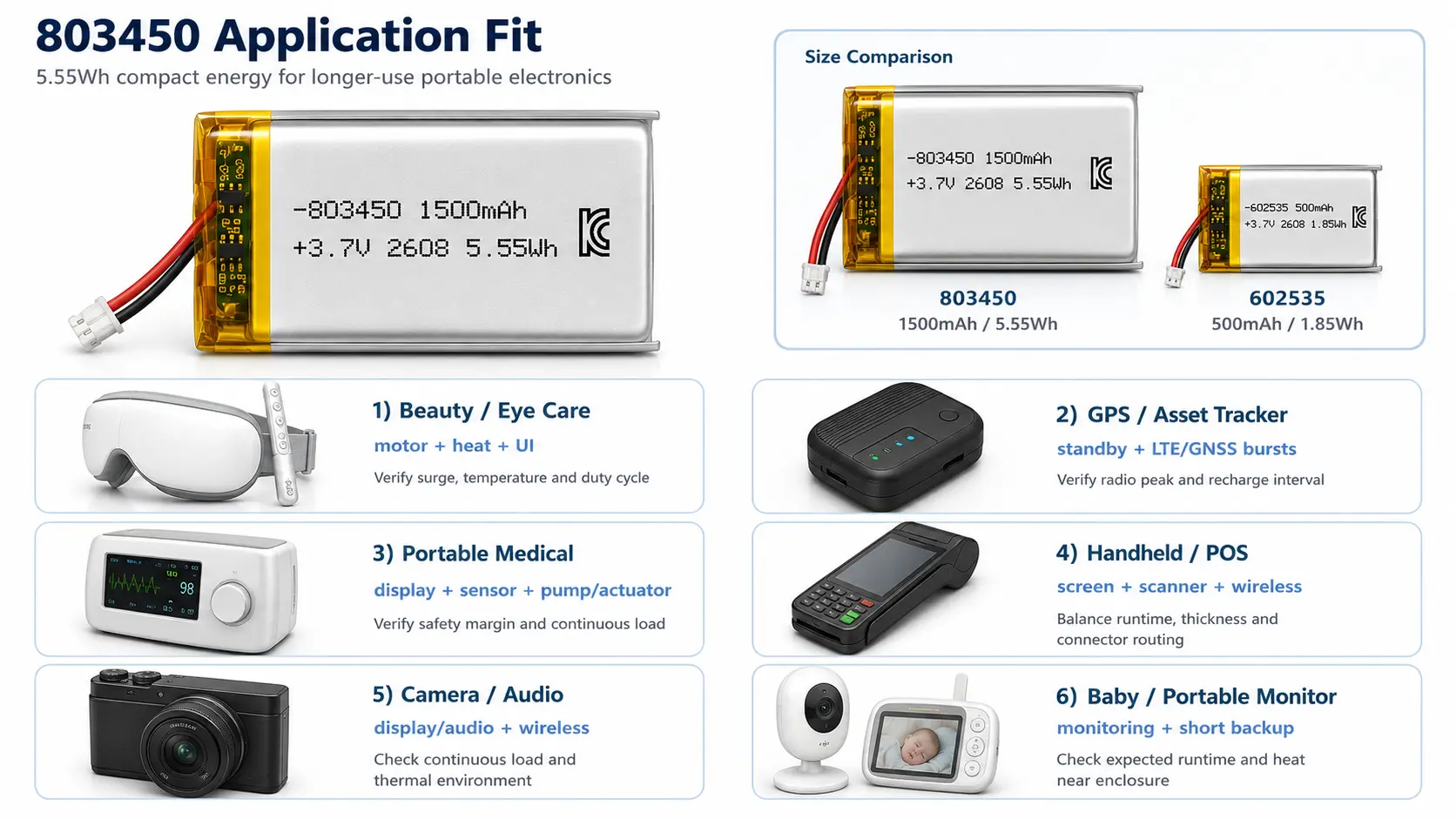
Application selection should start from real power pattern, peak load, charging frequency and available battery cavity. A product with long standby and short radio bursts has a different battery requirement from a device that drives a motor or heater for several minutes. By separating average energy demand from peak-current demand, customers can avoid oversizing the battery for runtime while overlooking the current capability that actually determines performance.
|
Application |
Power Pattern |
Why 5.55Wh Helps |
customers Must Confirm |
|
Beauty / Eye Care |
motor or heat + UI |
more energy reserve for longer treatment sessions |
heater/motor surge, surface temperature, duty cycle |
|
GPS / Asset Tracker |
standby + LTE/GNSS bursts |
extends interval between charges in a compact tracker |
TX peak, sleep current, network duty cycle |
|
Portable Medical |
sensor/display + pump or actuator |
supports longer mobile operation where cavity permits |
continuous current, safety margin, recharge schedule |
|
Handheld / POS / Scanner |
screen + scanner + wireless |
balances portable size with stronger runtime target |
screen duty, scan bursts, Wi-Fi/LTE load |
|
Camera / Portable Audio |
display/audio + storage/wireless |
5.55Wh is better suited to continuous-use portable electronics |
continuous load, thermal design, charging rate |
|
Baby / Portable Monitor |
monitoring + wireless + short backup |
provides compact rechargeable reserve for longer monitoring windows |
expected runtime, enclosure heat, charging frequency |
|
Document / Market |
Current Evidence Boundary |
Customer-Facing Rule |
|
KC / Korea |
KC mark is visible on the supplied HSS sample |
certificate number and exact model scope must be verified before SKU-level claim |
|
UN38.3 / Transport |
public market has model-specific LP803450 3.7V 1500mAh UN38.3 reports |
HSS exact shipping document must match the released production model |
|
MSDS / SDS |
public 803450 3.7V 1500mAh safety data exists |
provide only the document tied to the supplied cell / pack |
|
RoHS / other compliance |
market 803450 suppliers publish RoHS or related documentation |
scope must be verified before assignment to HSS 803450 |
|
customers Question |
HSS Engineering Answer |
|
Does 803450 mean the finished pack is exactly 8 × 34 × 50 mm? |
No. The code describes the nominal cell format; PCM, tape, leads and connector can increase the finished pack length. |
|
Is 1500mAh automatically better than 500mAh? |
Only when the device can accept the larger envelope and the real runtime target justifies the extra energy. |
|
Can HSS match my connector and polarity? |
Yes. Send the device-side connector photo, pin definition, pitch, polarity and lead-length requirement. |
|
What applications should avoid this pack? |
High-drain motors, heaters or RC/drone loads should not be assumed compatible without current and thermal validation. |
SEND YOUR DEVICE BATTERY REQUIREMENTS
For an 803450 3.7V 1500mAh LiPo Battery fit review, send HSS Energy the load, runtime, charging profile, cavity, connector, polarity and lead length. If possible, also send the original battery or device-side connector photo, target sample quantity and expected production volume. This gives HSS a stronger basis for matching the electrical configuration, finished pack envelope and commercial production requirements before the quotation is finalized.
Address
A3, 1204-1, 1142 Jimei North Avenue, Software Park Phase III, Xiamen Torch High-tech Zone, Xiamen, China
Tel