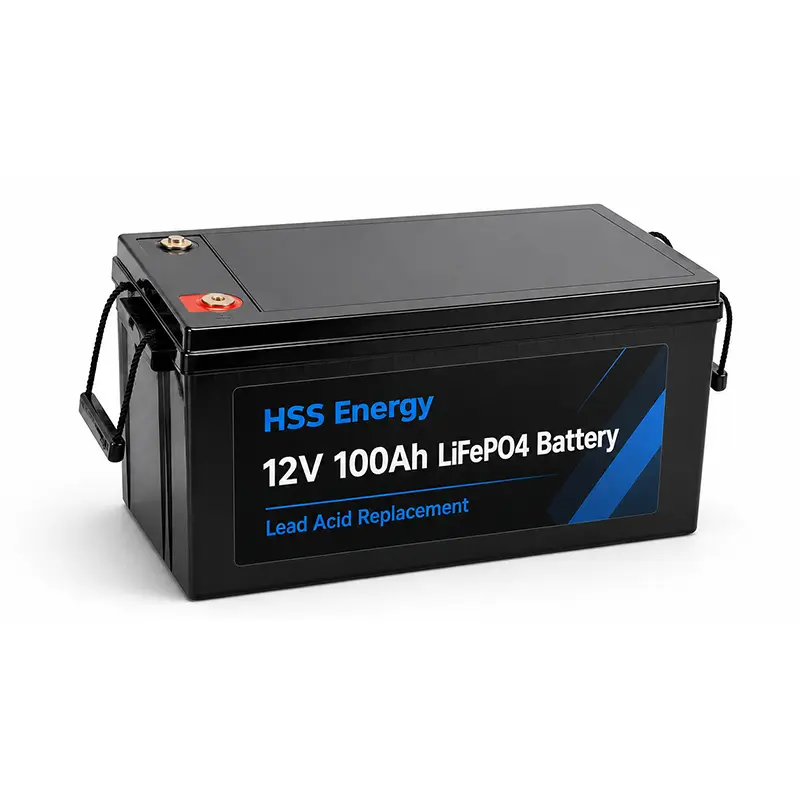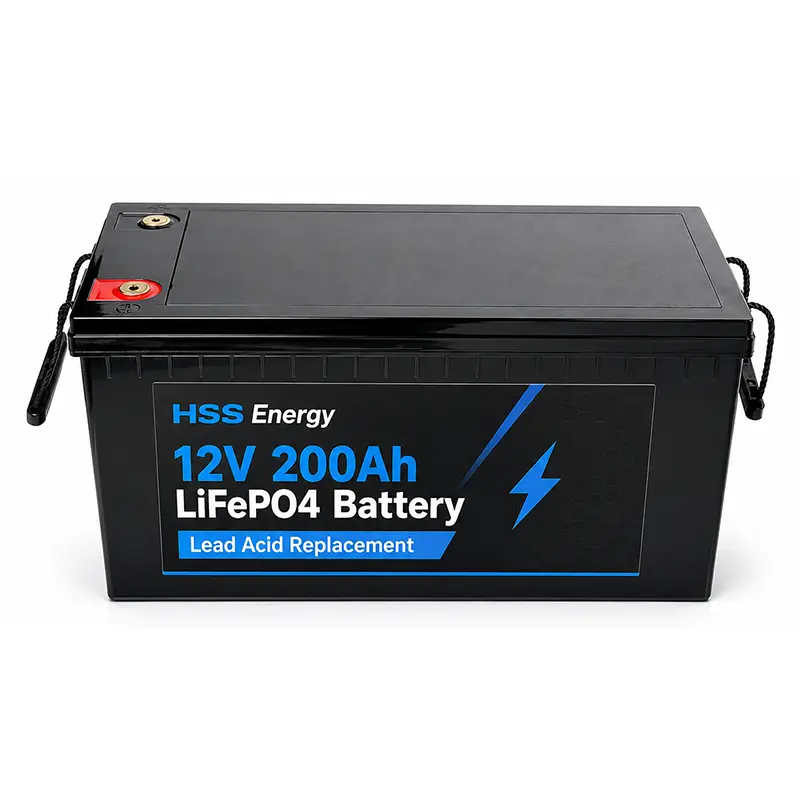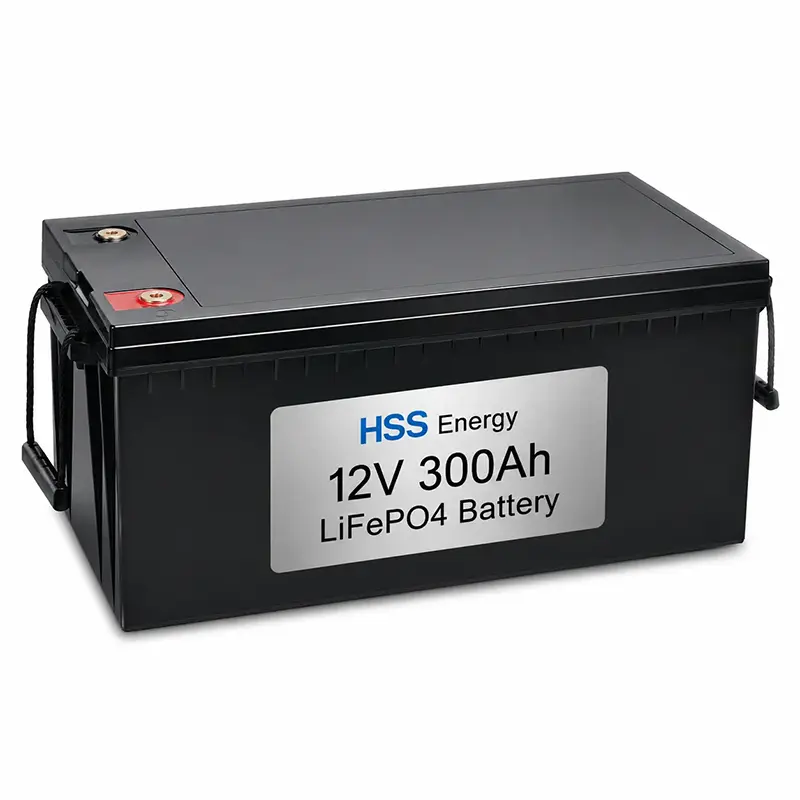
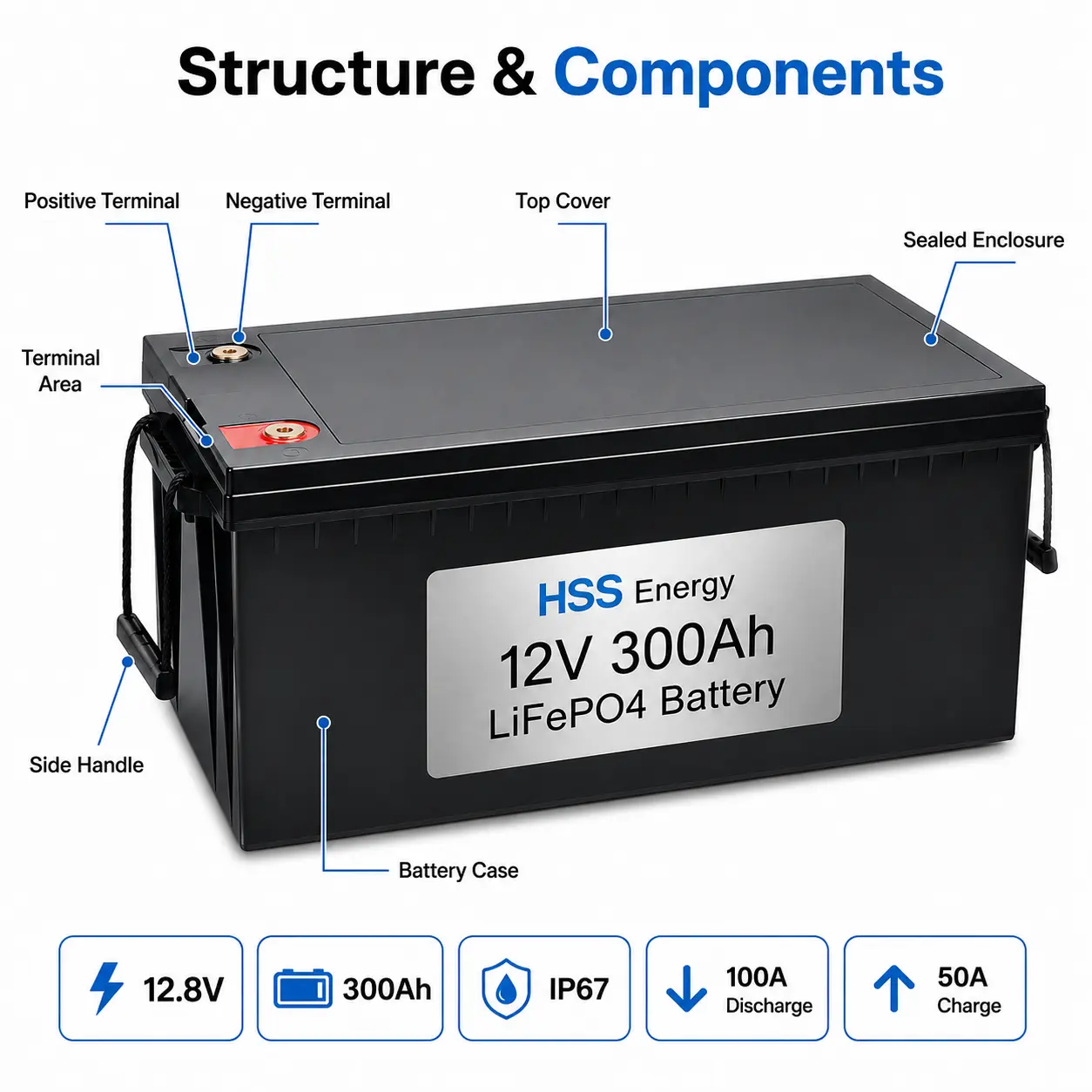
The 12V 300Ah LiFePO4 Battery gives HSS Energy supplier a large-reserve 12.8V nominal platform for projects that need more stored charge within a 12V-class architecture. Selection should confirm recharge capacity, the source-listed 100A discharge boundary, cable and fuse sizing, available mounting volume, lifting and retention, low-temperature charging behavior, parallel approval and the approved BMS configuration before production.
|
12V Voltage class |
12.8V Nominal |
300Ah Capacity |
100A Discharge |
50A Charge |
|
300Ah SKU decision Choose this capacity when the project needs a larger 12V reserve and can accommodate the 522 × 240 × 218 mm enclosure, 30 kg mass and appropriate recharge strategy. Do not select the 300Ah version simply to obtain more output current; the supplied discharge figure remains 100A. |
||||
Source-listed values for the supplied 12V 300Ah reference configuration
|
Parameter |
Reference value |
|
Market / System Class |
12V |
|
Nominal Voltage |
12.8V |
|
Nominal Capacity |
300Ah |
|
Voltage Range |
10V–14.6V |
|
Cycle Life Reference |
5,000 cycles @ 75% DOD |
|
Source-Listed Discharge Current |
100A |
|
Recommended Charge Current |
50A |
|
Cooling Method |
Self-cooling |
|
Relative Humidity |
20%–95% RH |
|
Ingress Protection |
IP67 |
|
Operating Temperature |
-20°C to 55°C |
|
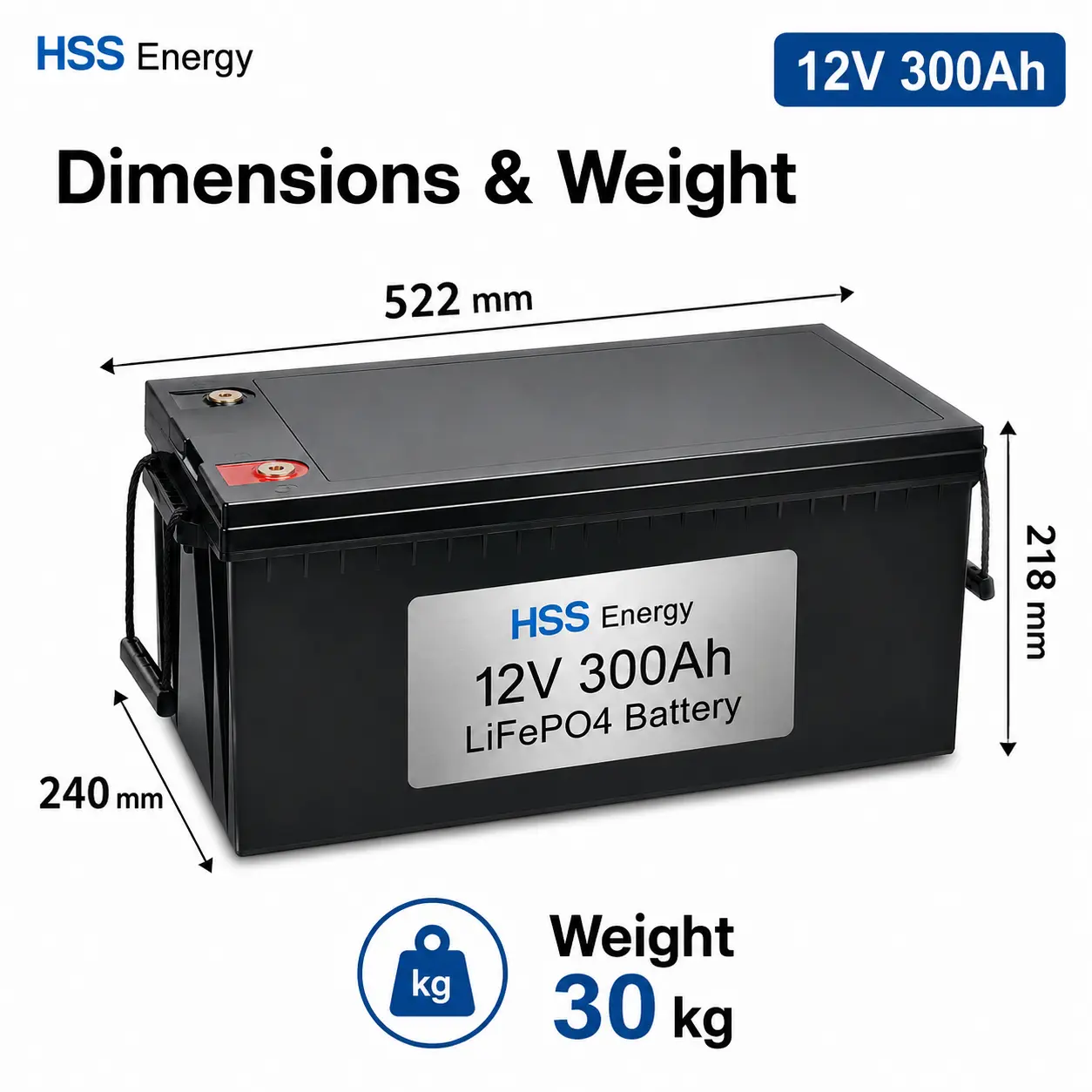
Dimensions (L × W × H) |
522 × 240 × 218 mm |
|
Weight |
30 kg |
When evaluating a 12.8V 300Ah LiFePO4 battery, the 300Ah rating describes stored charge capacity, while the source-listed 100A discharge figure remains the key power-path boundary. A larger Ah number must not be interpreted as permission for a larger inverter or higher DC load without BMS and protection review.
|
Recharge planning matters more as the bank grows A 300Ah bank contains more charge to replenish than the smaller 100Ah and 200Ah family members, while the supplied recommended charge current remains 50A. Charger capacity, charging opportunity, solar yield and alternator/DC-DC strategy therefore become part of the project decision; no fixed recharge time should be promised without the actual SOC window and charging profile. |
This SKU targets larger 12V reserve requirements where recharge power, the source-side current boundary and recovery time become project decisions.
Reserve-Bank Planning Sequence
Reserve target: Define the usable-energy and autonomy objective before deciding whether 300Ah should replace several smaller legacy batteries.
Recharge path: Check shore charger/converter, solar controller and alternator/DC-DC capability so the larger bank can recover within the required operating window.
Output boundary: Confirm maximum DC/inverter demand against the source-listed 100A discharge figure and the approved BMS configuration.
Bank architecture: Review whether one larger pack simplifies the legacy layout and confirm any approved series/parallel rules before production.
Physical handling: Use 522 x 240 x 218 mm and 30 kg for mounting, retention, service access and safe handling planning.
A 12V 300Ah lithium iron phosphate battery in this size class should be evaluated as a reserve-bank design rather than a simple chemistry swap. The strongest reason to consider the 300Ah SKU is stored charge within a 12V architecture; the tradeoff is that output remains governed by the source-listed 100A discharge figure, while recharge time and 30 kg handling become more important project factors.
|
Decision factor |
Legacy lead-acid bank |
300Ah LiFePO4 project consideration |
|
Maintenance |
Flooded units may require watering; all banks need cable and terminal inspection. |
No watering is required; cable, fuse, mounting and terminal inspection still remain. |
|
Bank count |
Higher reserve may be achieved with multiple batteries in parallel. |
A larger single-pack capacity can simplify bank count when the electrical and BMS rules permit. |
|
Output capability |
Depends on battery type, count, state of health and wiring. |
Do not infer more than the source-listed 100A discharge boundary from the 300Ah capacity. |
|
Charging |
Existing system is designed around the legacy chemistry. |
LiFePO4-compatible voltage/profile and cold-weather charging strategy must be confirmed. |
Primary product role: larger 12V reserve capacity for applications where energy availability matters, but the 100A discharge boundary still governs load sizing.
|
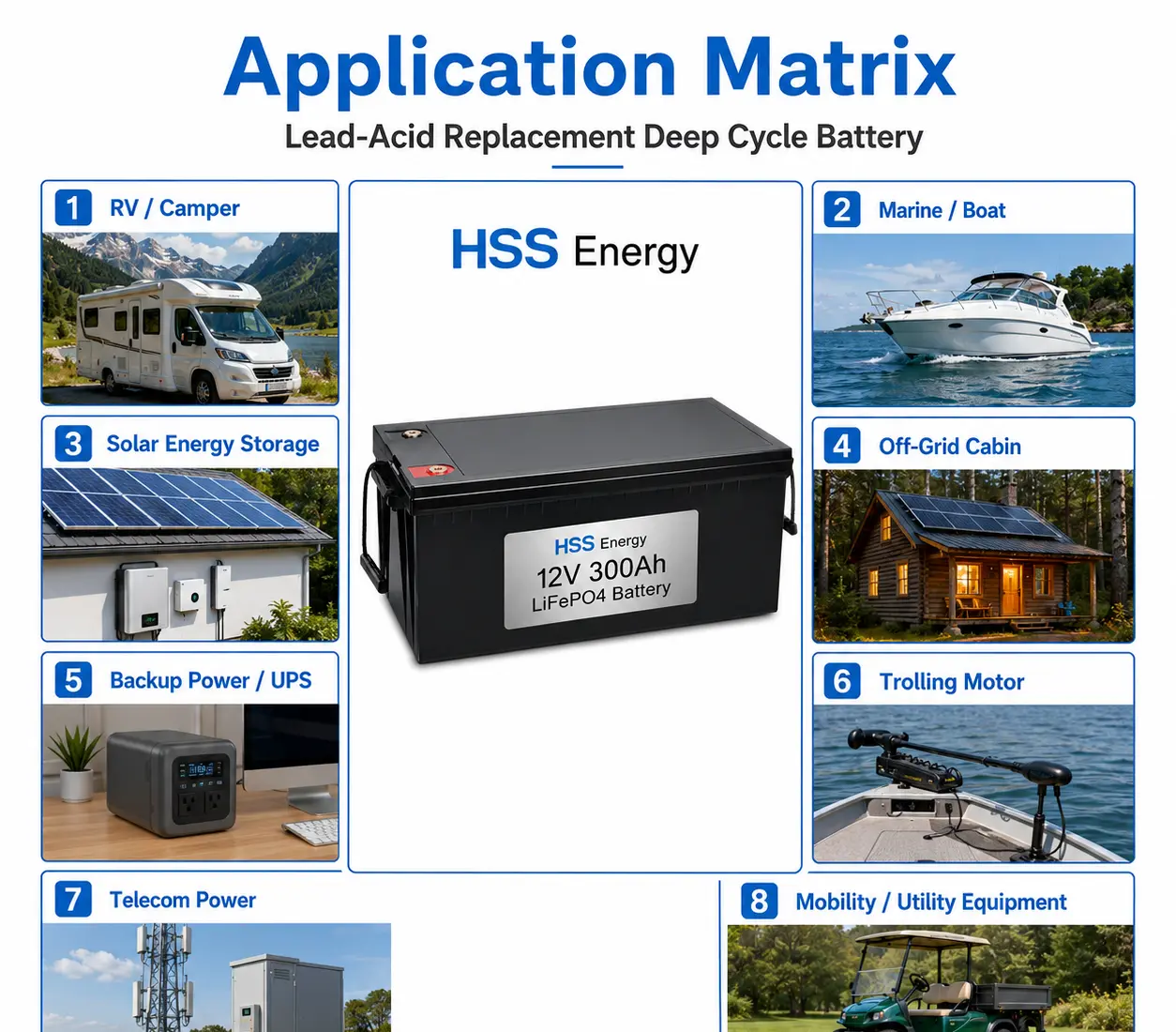
Solar charging role For a solar energy storage project, a 12V 300Ah LFP battery should be sized from daily Wh demand, reserve margin, MPPT settings, expected solar yield and the permitted SOC window. The 300Ah rating should not be translated directly into a guaranteed number of autonomous days. |
|
Remote / cabin role For an off-grid conversion from a legacy bank, a 12V 300Ah lithium battery pack should be evaluated as part of the lead-acid replacement project, including inverter DC demand, low-temperature charging conditions, generator or solar charging availability, cable/fuse design and service access. The 30 kg pack mass should also be included in mounting and handling planning. |
|
Standby / resilience role For backup power in demanding installation environments, a 12V 300Ah lithium battery configuration should be checked against charger standby behavior, inverter/transfer equipment, load priority, restart current and the source-listed 100A discharge boundary. Runtime depends on the real load profile and usable SOC, not Ah alone. |
Secondary application semantics may include RV/camper house power, marine auxiliary loads, telecom cabinets and utility equipment when the complete electrical and mechanical fit is confirmed.
Use the approved mechanical drawing and project configuration—not a generic family image alone—to release the production version.
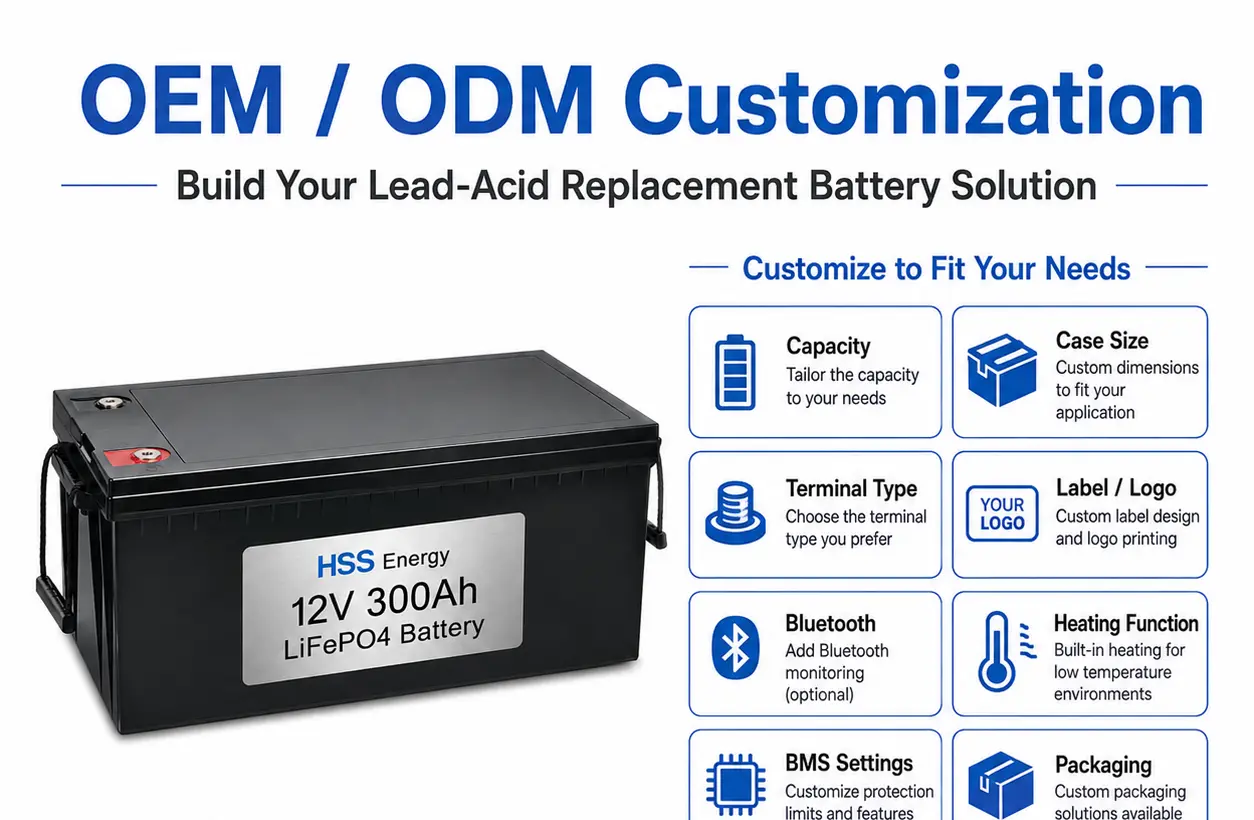
• Terminals & cable access: Confirm polarity, terminal hardware, cable lugs, torque requirements, insulation, cable bend radius and service access.
• Enclosure & retention: Use 522 × 240 × 218 mm and 30 kg as the fit-review baseline; final approved drawing governs the production release.
• BMS limits: Protection thresholds, current limits and any communication functions must follow the approved BMS configuration.
• Cold-weather option: Heating may be reviewed as a project option where charging below the permitted battery temperature range is a concern.
• Bluetooth option: Monitoring functionality should be treated as configuration-dependent, not automatically standard on every order.
• OEM/ODM scope: Case details, terminal type, label, packaging and selected functions can be reviewed against MOQ, engineering feasibility and compliance requirements.
|
Project configuration rule Do not infer unlimited series/parallel support, a different current limit, or a specific Bluetooth/heating package from family visuals. The ordered configuration should be released only after the BMS, charger, terminals, housing, label and test/document scope are confirmed. |
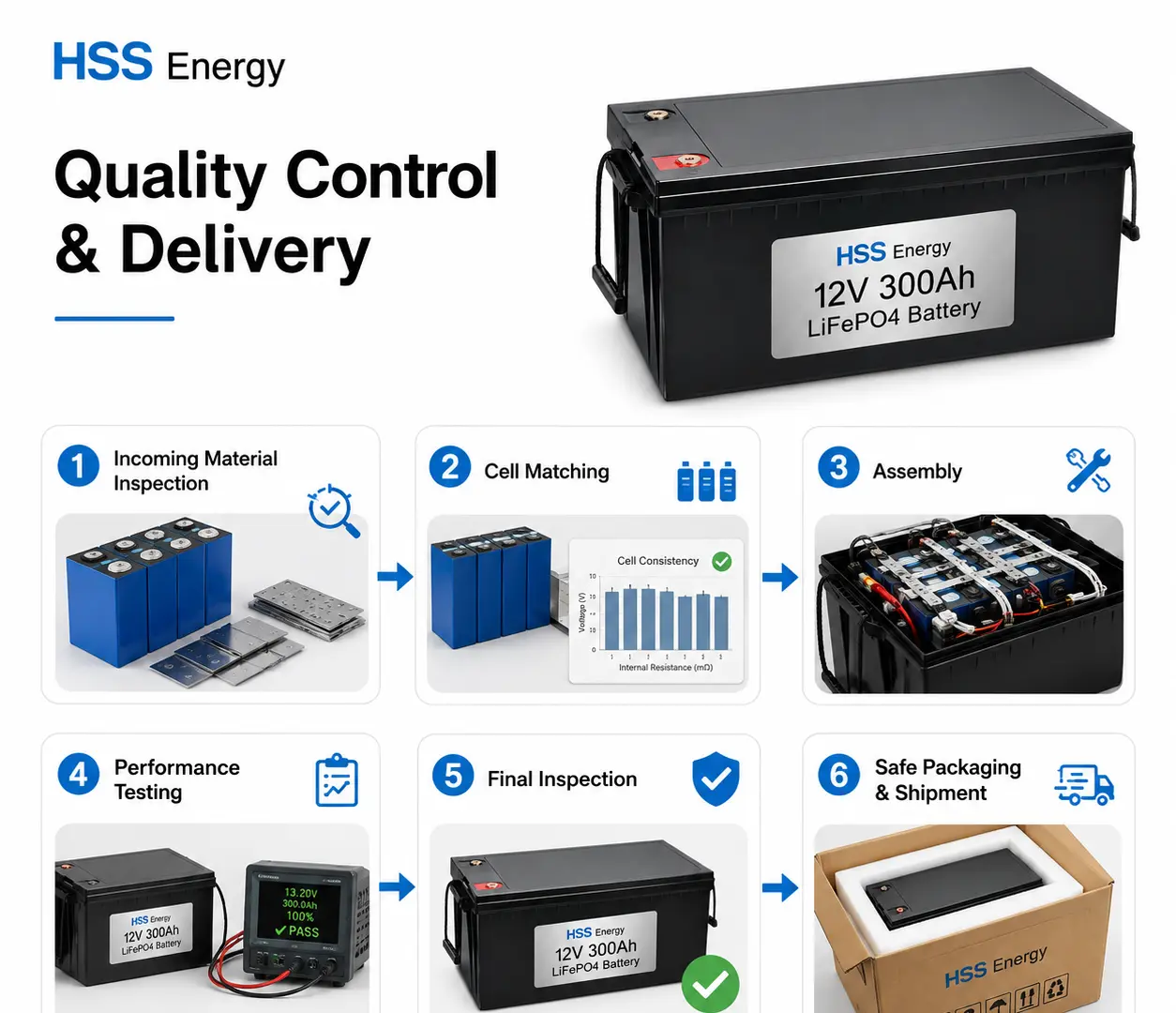
Manufacturing-process visuals support supplier capability review; they do not automatically prove that every listed test applies to every ordered configuration.
12V is the market/system class. The supplied LiFePO4 reference configuration is 12.8V nominal, consistent with a four-series 3.2V-cell architecture.
No. The supplied source lists 100A discharge current. Capacity and output current are separate design limits.
Potentially, but compare total bank voltage, capacity, maximum load, charger behavior, cable/fuse, compartment volume, terminal layout and BMS series/parallel permission before approval.
Only after checking charge voltage and operating modes. Equalization or desulfation functions should not be assumed compatible with LiFePO4.
It is a source-listed reference condition. Actual service life depends on temperature, current, SOC window, charging profile and operating conditions.
Send the legacy battery label/model, chemistry, battery count, compartment dimensions, terminal orientation, charger/converter, inverter or maximum DC load, solar/alternator charging details, operating temperature, quantity and option requirements.
Address
A3, 1204-1, 1142 Jimei North Avenue, Software Park Phase III, Xiamen Torch High-tech Zone, Xiamen, China
Tel