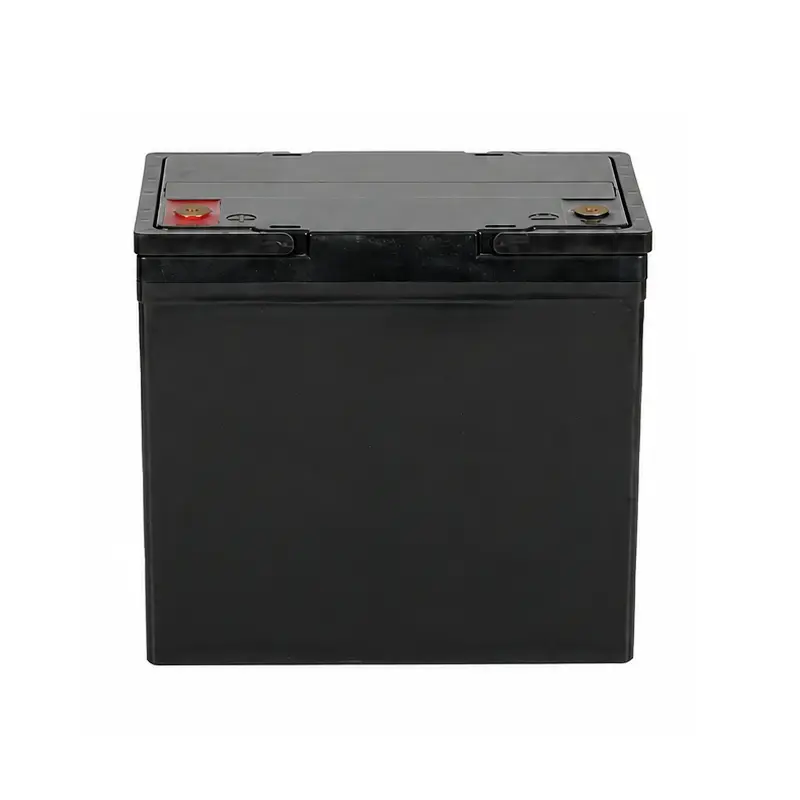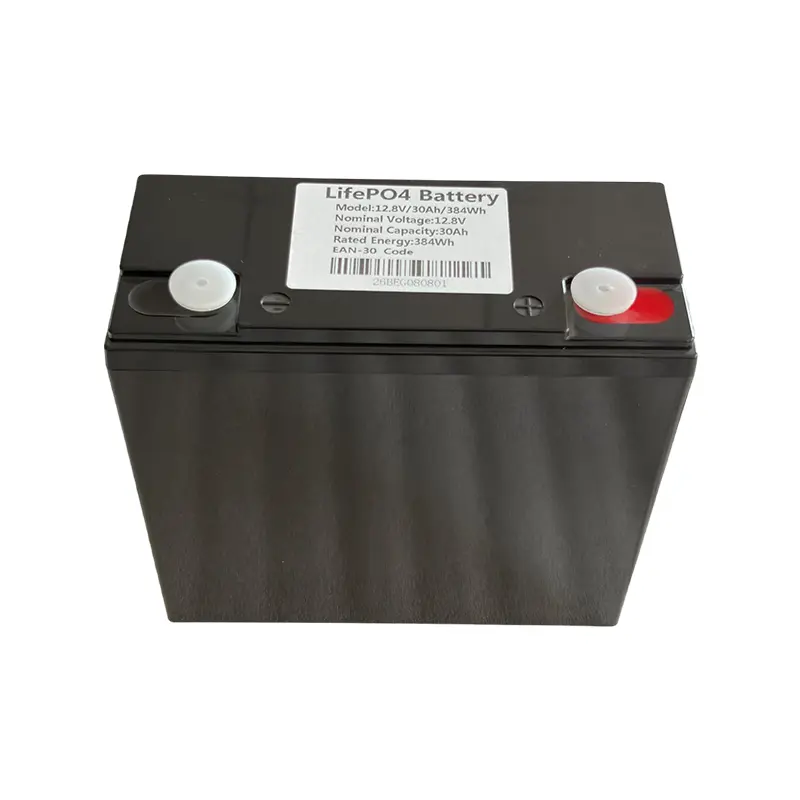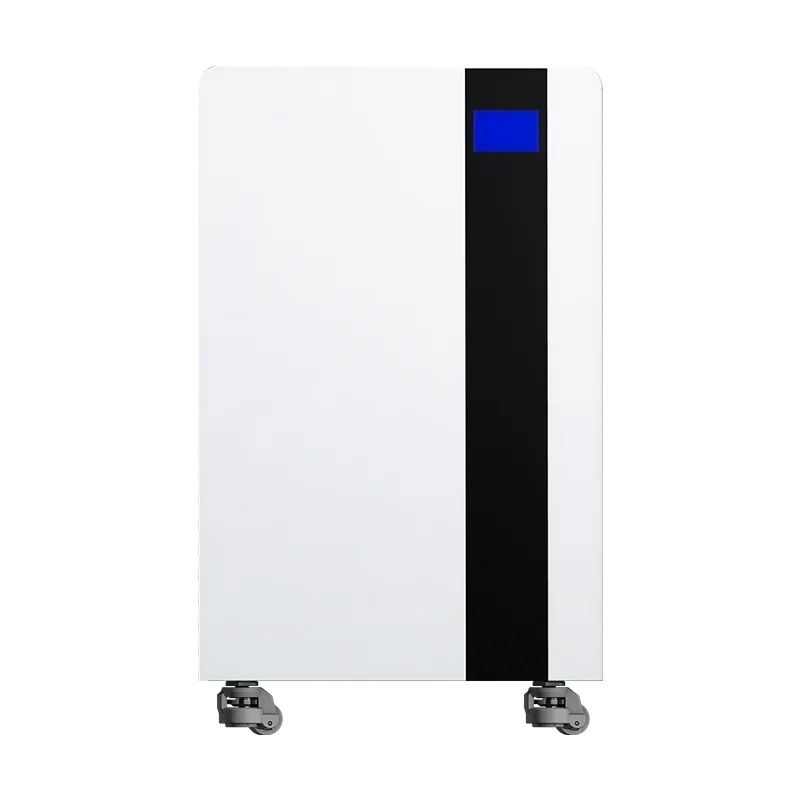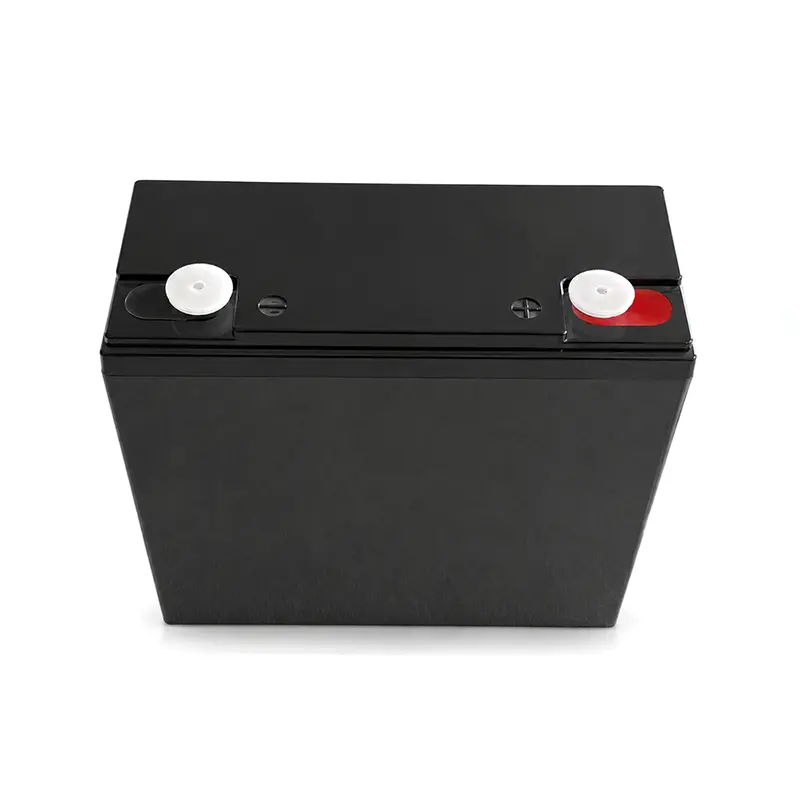
For project sourcing, the China 12V 10Ah LiFePO4 Battery Pack from HSS Energy manufacturer should be matched by electrical load first, not by the 12V label alone. The reference sheet gives 20A maximum continuous discharge, a 30A peak-current value, 14.4V recommended charging and a 10A maximum charge current. customers should confirm steady current, surge demand, charger behavior, installation space, terminal arrangement and communication needs before approving the production sample.
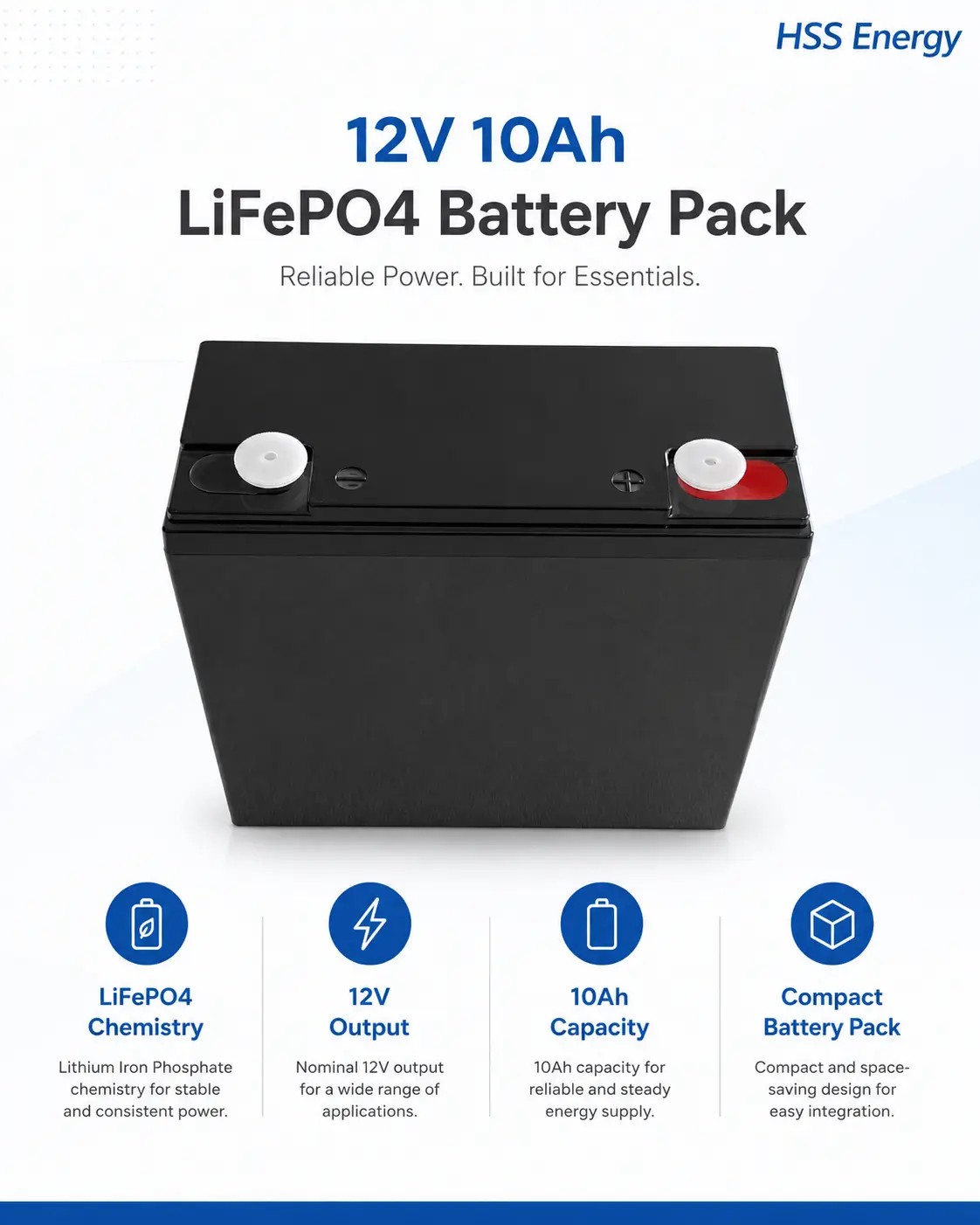
Supplied HSS Energy product graphic. Product form and 10Ah LiFePO4 positioning are shown; detailed production specifications are controlled by the technical sheet.
|
Parameter |
Reference Specification |
|
Product Name |
12V 10Ah LiFePO4 Battery Pack |
|
Brand |
HSS Energy |
|
Chemistry |
LiFePO4 |
|
Nominal Voltage |
12.8V |
|
Rated Capacity |
10Ah |
|
Minimum Rated Capacity |
9.5Ah |
|
Nominal Energy |
128Wh (calculated from 12.8V × 10Ah) |
|
Cell Format |
26700 LiFePO4 cylindrical cell, 5000mAh |
|
Cell Configuration |
4S2P |
|
Housing Material |
Plastic housing |
|
Standard Charge |
0.2C CC to 14.4V, then 14.4V CV until charge current declines to ≤0.05C |
|
Reference Charge Time |
Approx. 6 hours under the stated standard-charge method |
|
Charging Cut-off Voltage |
Source lists ≤14.6V; 14.4V recommended |
|
Maximum Charge Current |
10A |
|
Standard Discharge |
0.2C constant-current discharge to 10.4V |
|
Discharge Cut-off Voltage |
Source lists ≥8V; 10.4V recommended |
|
Maximum Continuous Discharge |
20A reference; source notes this can be adjusted according to customer requirements |
|
Peak Current |
30A reference; permitted peak duration not supplied |
|
Cycle-Life Reference |
≥1000 cycles with remaining cell capacity above 80% of initial capacity; full cycle-test conditions not supplied |
|
Operating Temperature |
Charge: 0–55°C; Discharge: 0–55°C; supplied sheet also notes cell surface temperature ≤80°C during discharge |
|
Storage Temperature |
Less than 1 year: 0–25°C; less than 3 months: -10–45°C |
|
Approx. Weight |
1.2kg, as stated in the supplied specification; confirm for final production SKU |
|
Maximum Dimensions |
98 × 98 × 152mm (L × W × H), based on supplied Length / Width / Height values |
|
Optional Communication |
RS485, CAN, Bluetooth |
Specification note: the 30A peak-current duration, communication protocols, exact terminal model/polarity, BMS protection thresholds, IP rating, and certification set are not supplied. Keep these project-specific until confirmed.
A 10Ah platform is useful when the system needs more than a very small auxiliary cell pack but does not justify the size or stored energy of a larger battery. For customers comparing a 12V 10Ah lithium battery, the reference configuration provides 128Wh of nominal energy in a 12.8V electrical platform. Runtime still needs to be calculated from the real load and duty cycle rather than from the Ah figure alone.
· Use the 128Wh nominal-energy figure for early runtime screening, then confirm actual load current and duty cycle.
· Check the 98 × 98 × 152mm reference envelope against the equipment battery compartment before sampling.
· Keep enclosure and terminal details tied to the approved sample and production drawing.
The supplied electrical sheet lists 20A maximum continuous discharge and a 30A peak-current reference. That gives the 12.8V 10Ah LiFePO4 battery a clear load envelope for small equipment, but the permitted duration of the 30A peak is not provided. Loads with startup surge, motors or inverter behavior should therefore be reviewed from the actual current profile before approval.
· Separate steady current, maximum continuous current and startup or surge current during engineering review.
· If the project needs more than the reference 20A continuous output, re-evaluate the cells, BMS, wiring and terminals as one system.
· Do not treat the 30A peak value as a continuous rating or assign a peak duration that is not in the source.
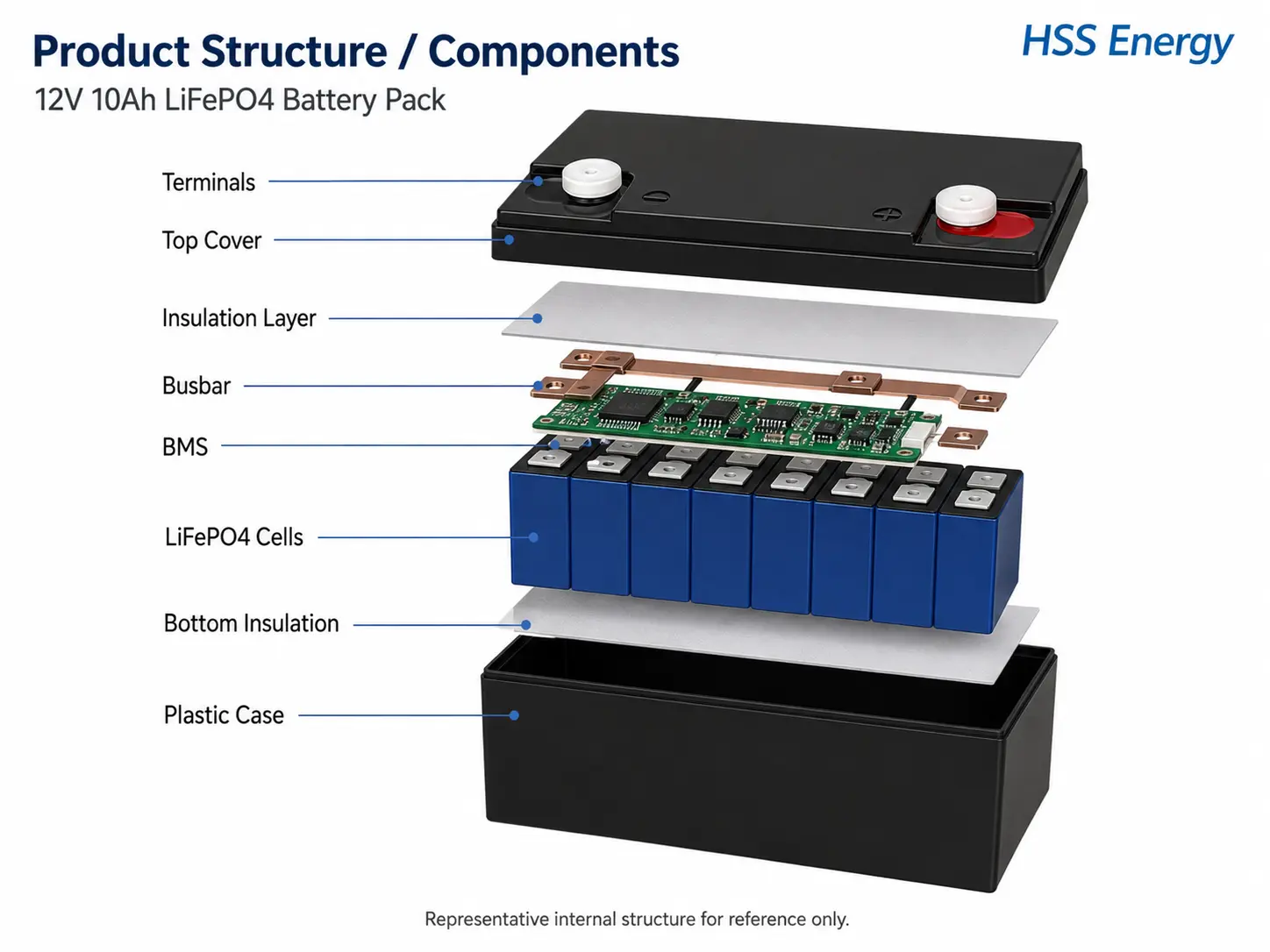
The confirmed cell arrangement is 4S2P using 26700 5000mAh LiFePO4 cells, which establishes the 12.8V nominal and 10Ah rated configuration. For a 12.8V 10Ah rechargeable LiFePO4 battery, the external fit matters just as much as the internal series-parallel layout because the battery must sit correctly in the equipment and connect without forcing the terminal geometry. The supplied sheet gives a plastic housing and 98 × 98 × 152mm maximum dimensions for this reference.
|
Confirmed from technical sheet 26700 5000mAh cells • 4S2P • plastic housing • 98 × 98 × 152mm reference dimensions |
Keep project-specific Exact terminal model and polarity • BMS thresholds • wiring details • IP rating • internal mechanical layout |
A 12V 10Ah LFP battery is best evaluated by the connected load, required runtime, charger or controller and installation environment. The 20A continuous-discharge reference leaves useful room for many low-to-moderate current 12V devices, while projects with higher startup demand need separate surge verification. The following are practical evaluation paths rather than blanket compatibility claims.
Backup Power: Calculate the required standby or discharge runtime from the real DC load. Check how the equipment and charger behave near the battery cut-off range.
Security and Monitoring: Suitable for evaluation in cameras, alarms, access-control or monitoring equipment when continuous current, enclosure space and terminal layout fit.
Emergency Lighting: Review normal standby charging, discharge duration and low-voltage behavior before replacing an existing SLA-type battery.
Small Solar Power: Match the controller to the LiFePO4 charging profile. The supplied sheet recommends 14.4V charging and lists a 14.6V cut-off limit.
Portable 12V Equipment: Confirm steady and peak current, connector protection and the physical battery compartment before using the 10Ah configuration in field equipment.
A 12V 10Ah lithium iron phosphate battery can be evaluated when a customers wants to replace a small lead-acid unit, but a nominal-voltage match is only the first check. The supplied sheet uses a 14.4V CC/CV charge target, lists ≤14.6V as the charging cut-off and specifies 10A as the maximum charge current. For repeatable replacement projects, the existing charger, compartment, terminal positions, low-voltage behavior and load current should all be compared before sampling.
· Standard charge in the supplied sheet is 0.2C: for 10Ah, this corresponds to 2A before the 14.4V CV stage.
· The stated standard-charge time is approximately 6 hours under the supplied method.
· The discharge reference uses 10.4V as the recommended cut-off; do not assume the legacy lead-acid system uses the same threshold.
· Freeze terminal position, polarity and external dimensions in the approved sample before a replacement program moves to volume production.
Once the electrical fit is confirmed, HSS Energy can use the project requirements to review the enclosure, terminal or connector, label, packaging and optional communication. RS485, CAN and Bluetooth are listed as optional choices in the supplied technical sheet, but protocol details and connector definitions still need to be frozen for the ordered version. The aim is to turn the sample into a controlled specification that can be repeated in later orders.
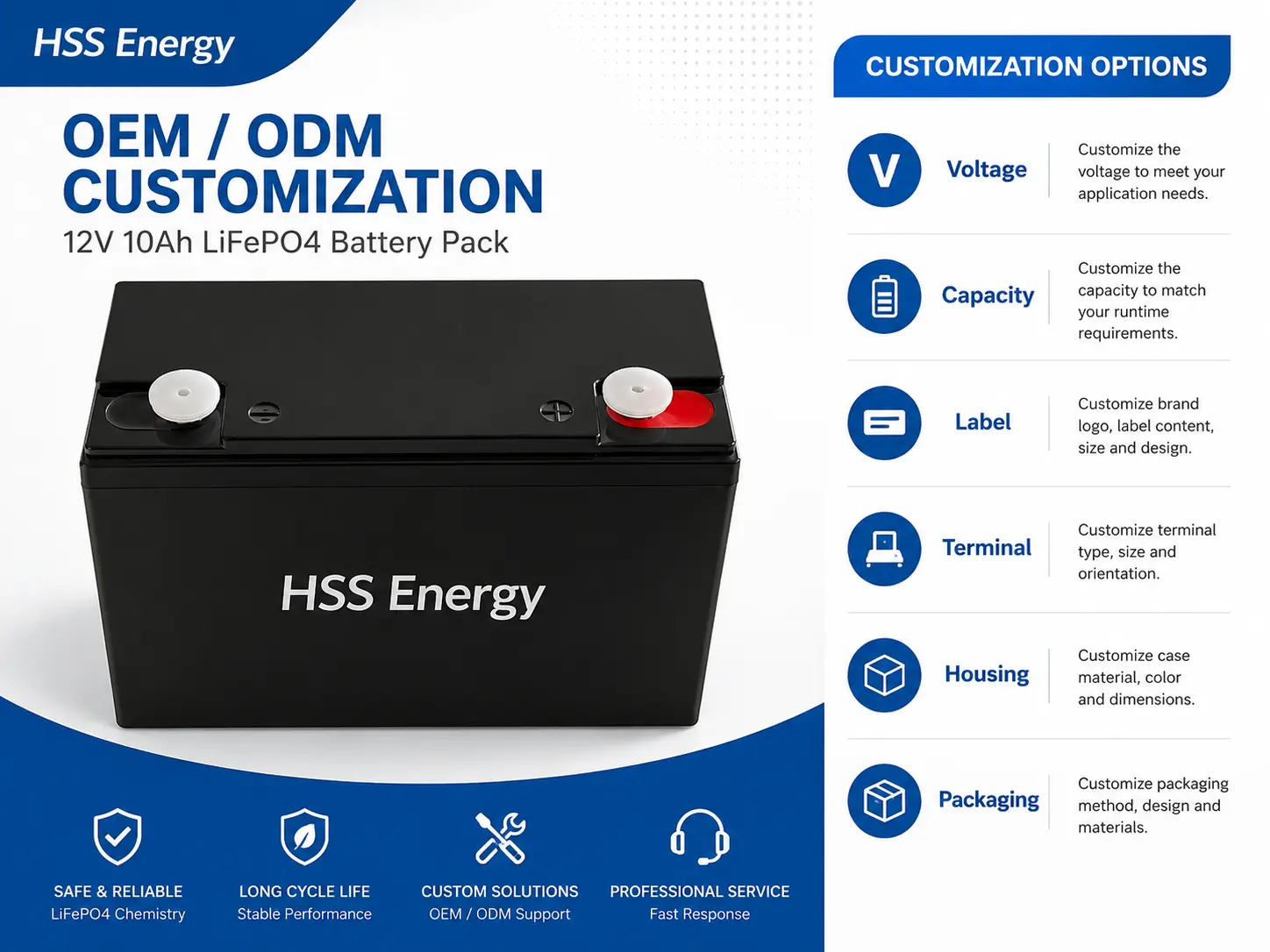
Supplied OEM / ODM customization graphic. Treat voltage, capacity, label, terminal, housing and packaging as reviewable project options; the exact 12V 10Ah production specification remains controlled by the approved project file.
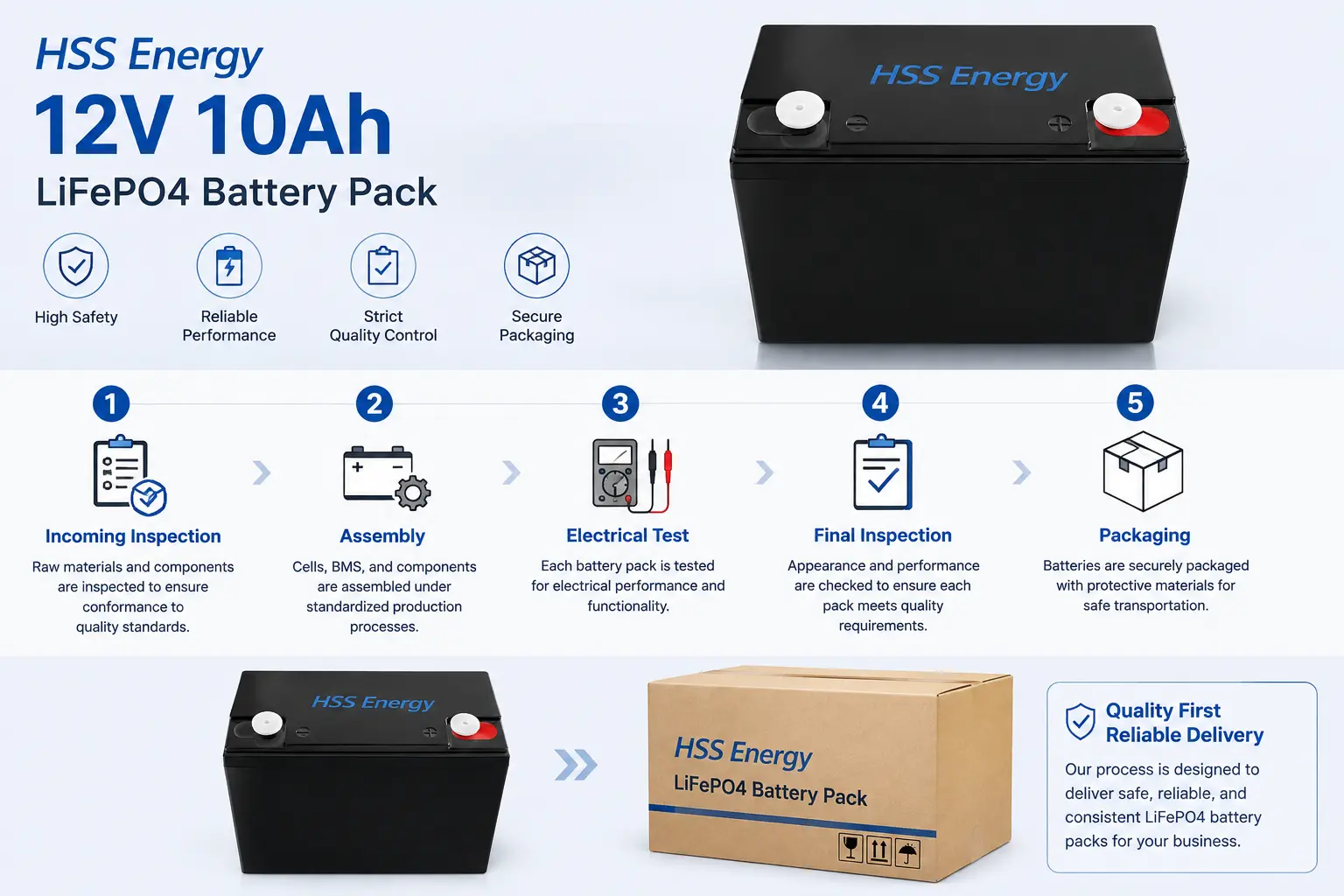
Supplied HSS Energy quality-process illustration: Incoming Inspection → Assembly → Electrical Test → Final Inspection → Packaging. Verify internal SOP details before publishing this as an exact factory workflow.
· Application and equipment model
· Normal operating current, maximum continuous current and startup or peak current
· Existing charger or controller output and charging profile
· Available battery space and preferred enclosure orientation
· Terminal or connector type, polarity, cable requirement and exit direction
· RS485, CAN or Bluetooth communication requirements, if needed
· Sample quantity, forecast volume, destination country and required compliance documents
The commercial product name uses the common 12V system class. The supplied technical sheet lists 12.8V as the nominal battery voltage.
Rated capacity is 10Ah, minimum rated capacity is 9.5Ah, and the supplied sheet specifies 26700 5000mAh LiFePO4 cells in 4S2P.
The supplied sheet lists 20A maximum continuous discharge and a 30A peak-current reference. The permitted duration of the 30A peak is not supplied.
The standard-charge method is 0.2C CC to 14.4V, followed by 14.4V CV until current declines to ≤0.05C. The sheet lists 10A maximum charge current and approximately 6 hours for the stated standard-charge method.
Not automatically. Charger profile, low-voltage behavior, current demand, dimensions, terminal arrangement and polarity should be checked before replacement.
RS485, CAN and Bluetooth are listed as optional. The required protocol, connector and data definition need to be confirmed for the ordered version.
Provide the equipment model, load current, peak current, charger data, available space, terminal or connector drawing, communication needs and expected quantity.
For the 12V 10Ah LiFePO4 Battery Pack, send HSS Energy your load profile, charger or controller data, battery-space dimensions, terminal or connector requirement, communication needs, target market and expected quantity. We can review whether the 12.8V 10Ah, 4S2P and 20A reference configuration fits the system or whether the electrical and mechanical design should be adjusted before sampling.
Address
A3, 1204-1, 1142 Jimei North Avenue, Software Park Phase III, Xiamen Torch High-tech Zone, Xiamen, China
Tel