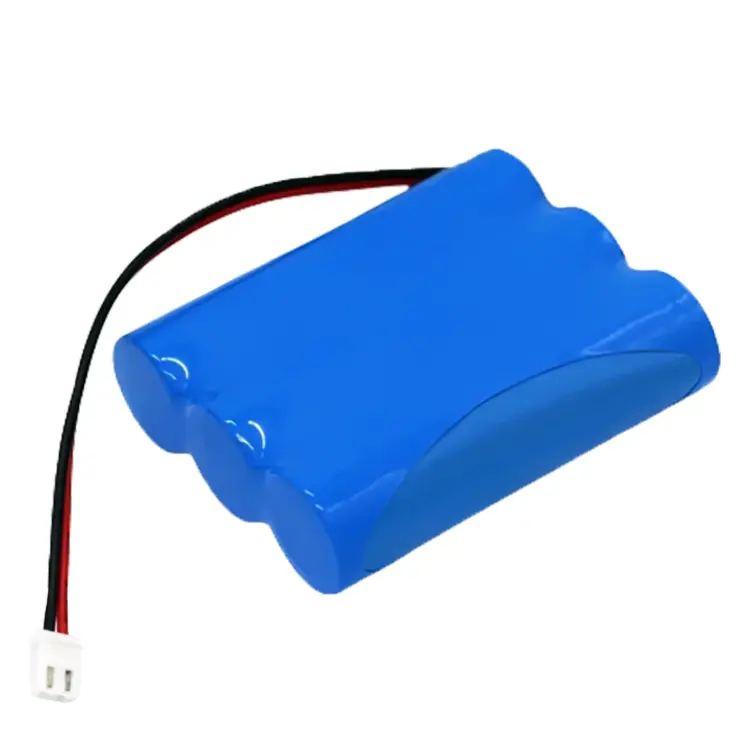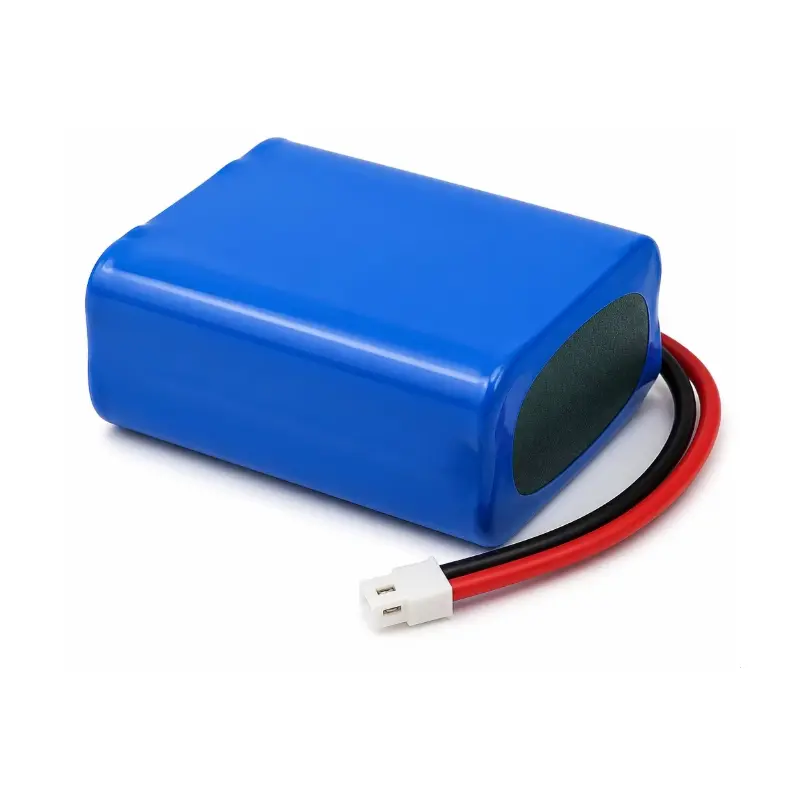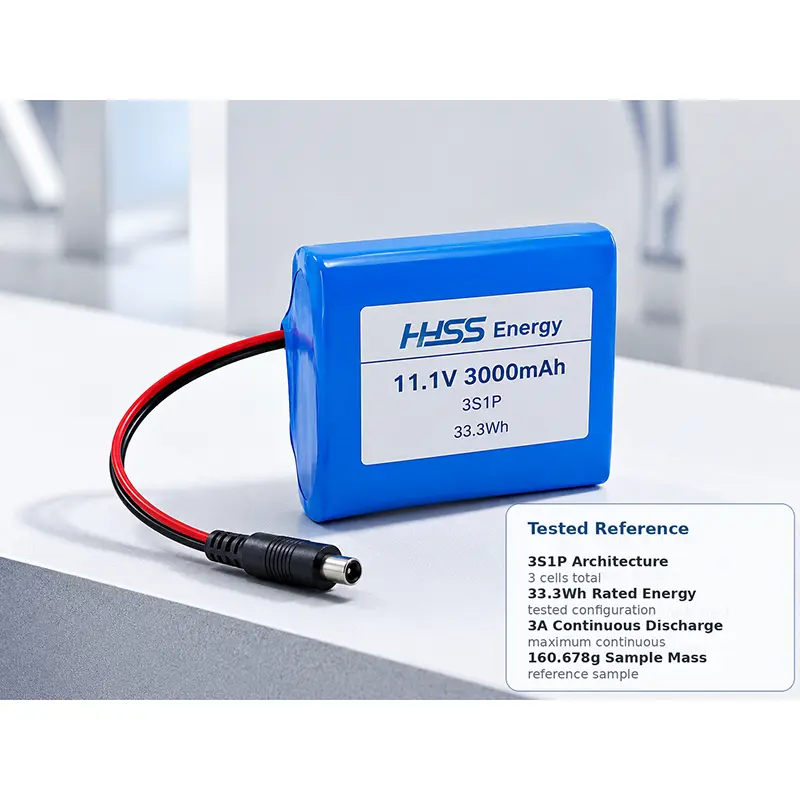
The 11.1V 3000mAh Battery Pack by HSS Energy supplier uses three 18650-3000 cylindrical cells in a tested 3S1P configuration to provide 11.1V nominal voltage, 3000mAh and 33.3Wh for compact portable equipment. The reference configuration lists a 12.6V limited-charge voltage, 9.0V discharge cut-off and up to 3A maximum continuous charge and discharge; connector and cable details remain device-specific.
|
33.3Wh |
3A |
160.678g |
69.6×55.2×19.2mm |
|
Rated Energy |
Max Continuous Discharge |
Sample Mass |
Pack Size |
|
Parameter |
Tested Reference Configuration |
|
Battery Type |
Rechargeable lithium-ion battery pack; cylindrical 18650 cell platform |
|
Model |
18650-3000-3S1P |
|
Configuration |
3S1P; 3 cells total |
|
Cell Model |
ZM18650-3000 |
|
Nominal Voltage |
11.1V |
|
Rated Capacity |
3000mAh |
|
Rated Energy |
33.3Wh |
|
Limited Charge Voltage |
12.6V |
|
Standard Charge Current |
600mA |
|
Maximum Continuous Charge Current |
3000mA (3A) |
|
End Charge Current |
60mA |
|
Discharge Cut-off Voltage |
9.0V |
|
Standard Discharge Current |
600mA |
|
Maximum Continuous Discharge Current |
3000mA (3A) |
|
Pack Dimensions |
69.6 × 55.2 × 19.2 mm (L × W × T) |
|
Sample Mass |
160.678 g |
|
Reference Appearance |
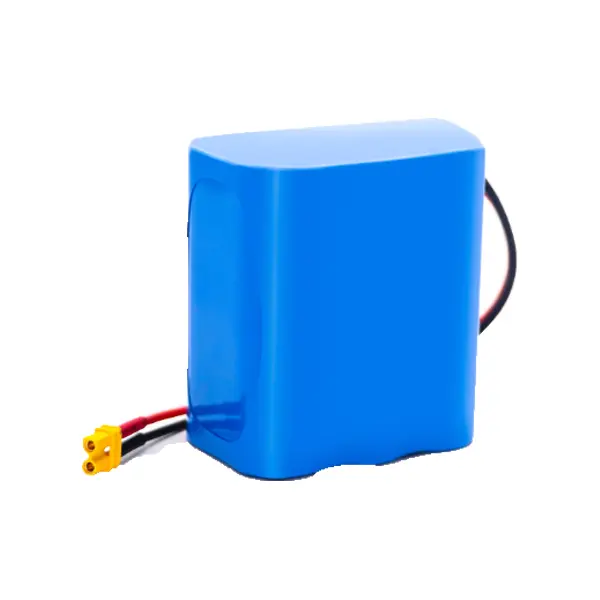
Approximate blue cuboid |
|
Connector / Cable |
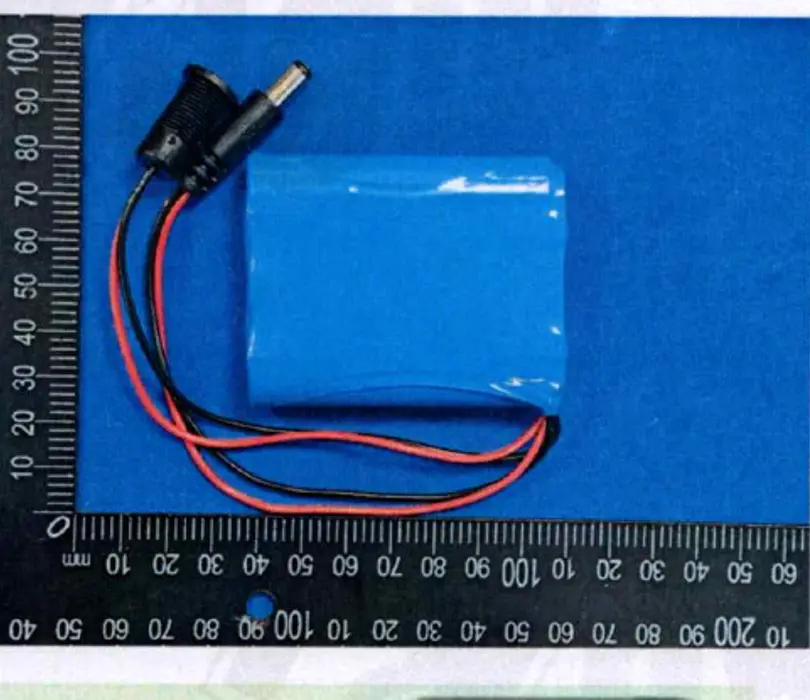
Tested sample shows a DC barrel-style connector; final connector, polarity and cable length require configuration review |
Specification note: values above apply to the tested reference configuration. Changes to the cell, protection design, connector, cable or pack structure require a fresh integration and documentation review.
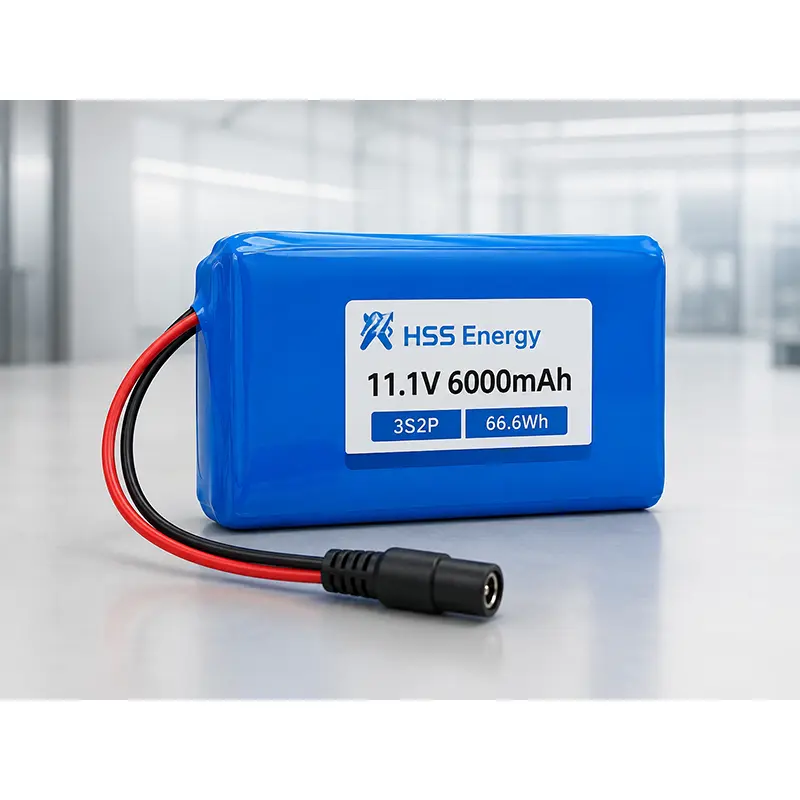
Designed as a 11.1V 3000mAh battery, this compact configuration prioritizes battery space and mass over maximum runtime. Its smaller tested envelope is the main reason to choose it over the 6000mAh alternative.
|
Decision Point |
3000mAh 3S1P |
6000mAh 3S2P |
|
Primary Priority |
Compact installation |
Longer runtime / more current headroom |
|
Energy |
33.3Wh |
66.6Wh |
|
Dimensions |
69.6 × 55.2 × 19.2 mm |
110.6 × 67.7 × 19.2 mm |
|
Mass |
160.678 g |
305.93 g |
|
Max Continuous Discharge |
3A |
6A |
The tested 69.6 × 55.2 × 19.2 mm envelope keeps this configuration focused on space efficiency rather than maximum stored energy. It can leave more internal room for electronics, displays, sensors or enclosure features, but the finished installation still needs clearance for insulation, lead exit, connector body and cable bend radius.
When a device needs the same three-series voltage platform but cannot accept a wider parallel-cell layout, an 3S 3000mAh Li-ion battery provides a practical mechanical starting point. The final compartment still needs to be checked with the real connector orientation, lead exit and cable bend radius rather than battery dimensions alone.
Charging compatibility should follow the tested electrical limits: 12.6V limited-charge voltage, 600mA standard charge current, up to 3A maximum continuous charge current, 60mA end-charge current and a 9.0V discharge cut-off. The charger, protection circuit and device low-voltage behavior need to work as one system.
Load matching is equally important. In handheld instruments and portable control equipment, a 3000mAh 18650 battery pack can work well when normal load and short transient demand remain inside the validated current window. Motors, heaters or higher startup current may require a different cell or protection configuration.
The clearest application direction is compact portable electronics: monitoring devices, handheld instruments, portable control terminals and similar products where battery mass affects usability. An 11.1V 3000mAh lithium ion battery pack is strongest when keeping the device smaller matters more than extending runtime with an additional parallel cell path.
Runtime remains the tradeoff. With 33.3Wh rated energy, the pack stores half the energy of the 6000mAh alternative, so operating time should be checked against duty cycle, screen use, sensor load, communication modules and standby periods. For customers evaluating an 11.1V 3Ah Li-ion battery, that tradeoff can still be attractive when a smaller 3S1P layout helps keep the enclosure compact and leaves more internal space for the rest of the device.
If the device can comfortably accept the larger 110.6 × 67.7 × 19.2 mm pack, the higher-capacity option may provide better runtime margin. For the 11.1V 3000mAh Battery Pack, minimum size and mass remain the main reasons to choose the tested 69.6 × 55.2 × 19.2 mm configuration.
|
|
|
|
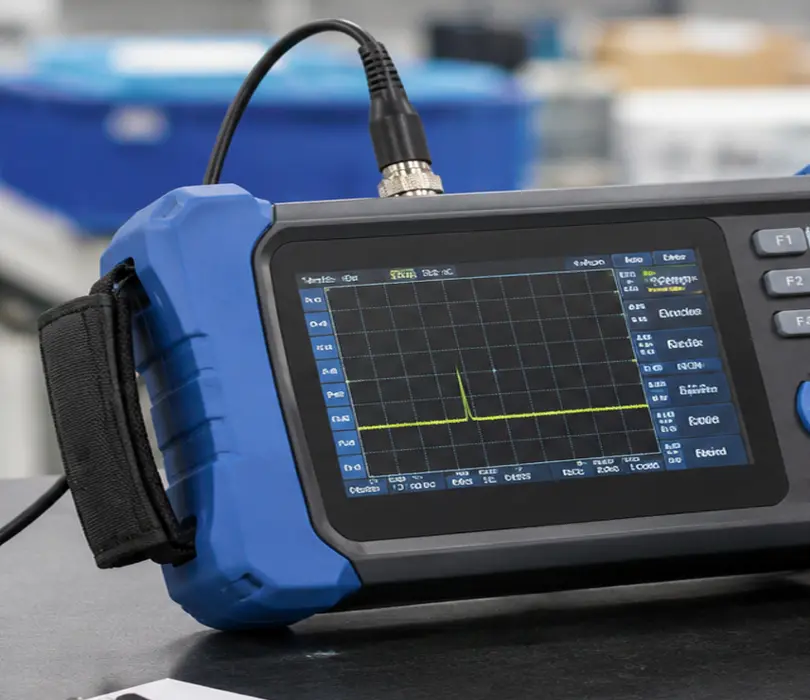
Compact Portable-Equipment Application |
Tested Reference Sample |
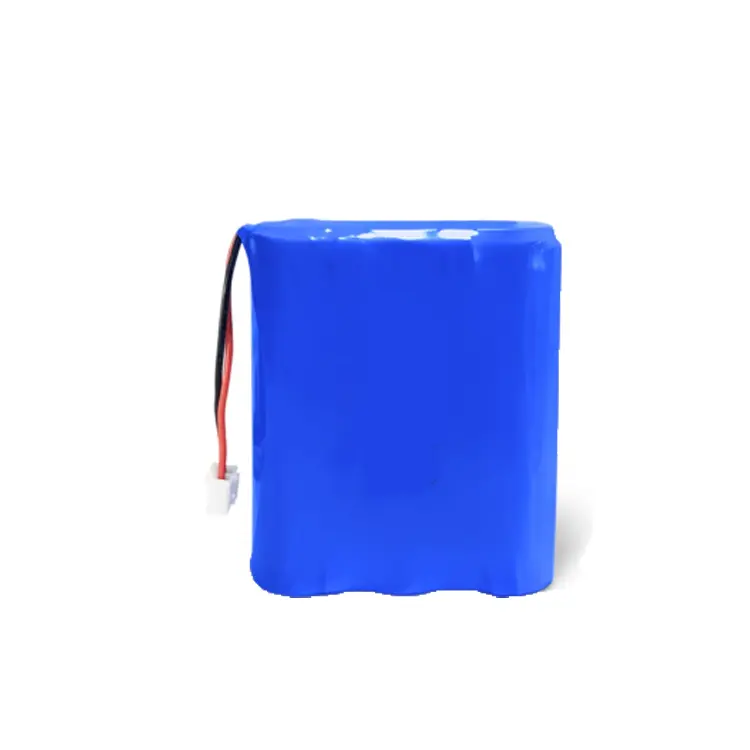
The application image illustrates a compact 18650 pack use direction for portable equipment. The tested sample image shows the reference pack form, lead arrangement and connector used in the supporting test files.
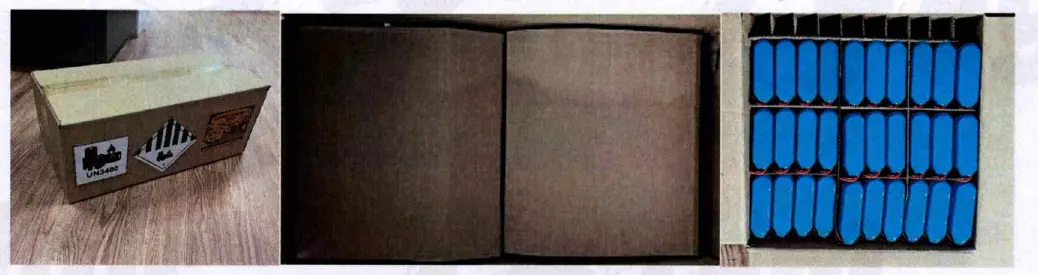
Tested packaging reference for the documented transport configuration.
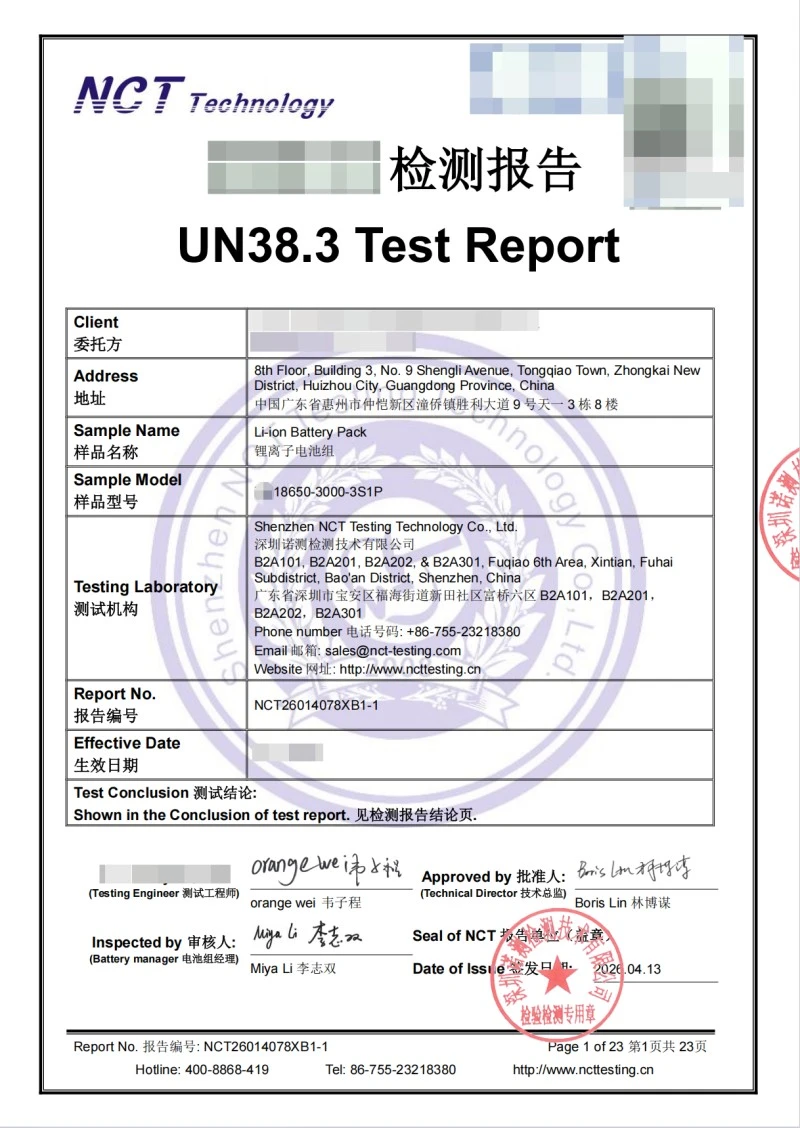
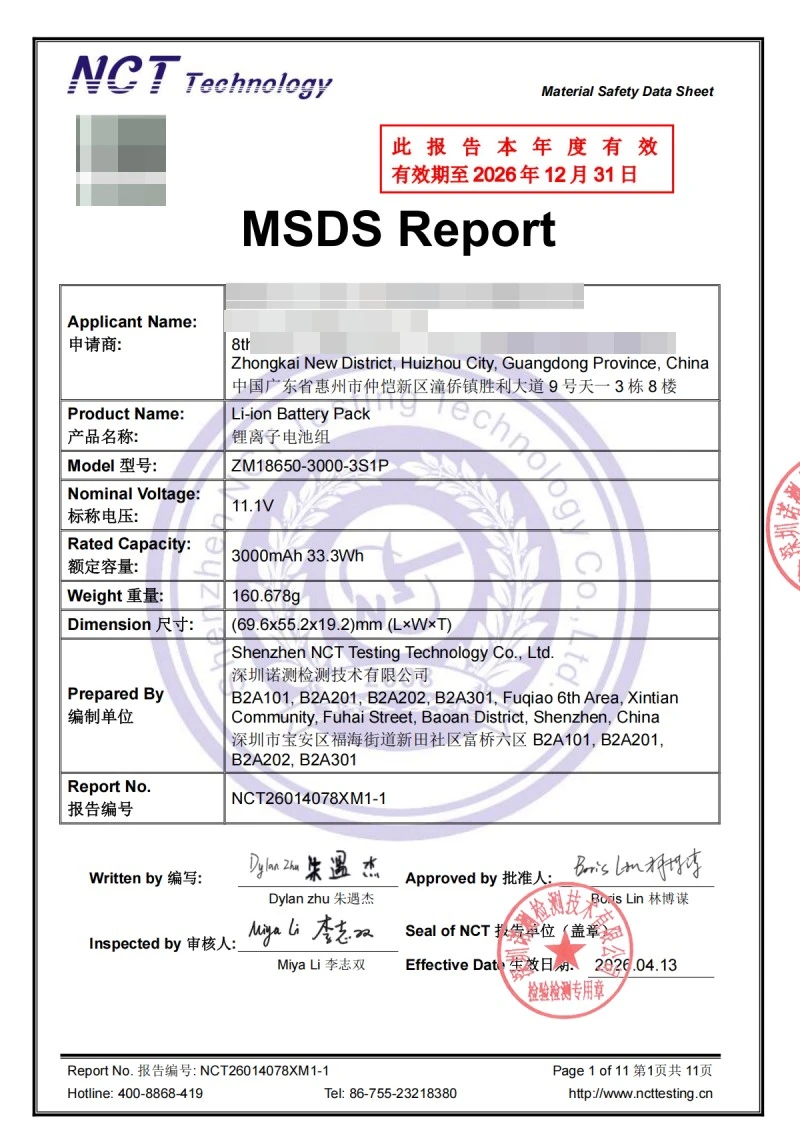
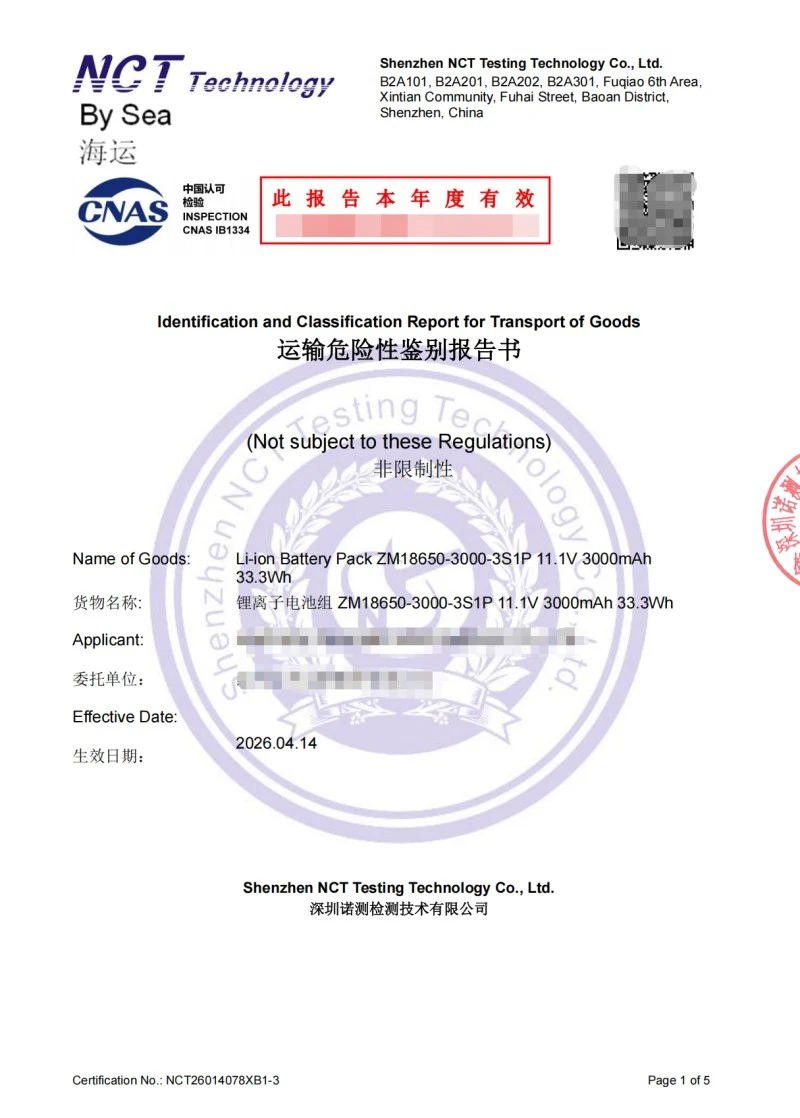
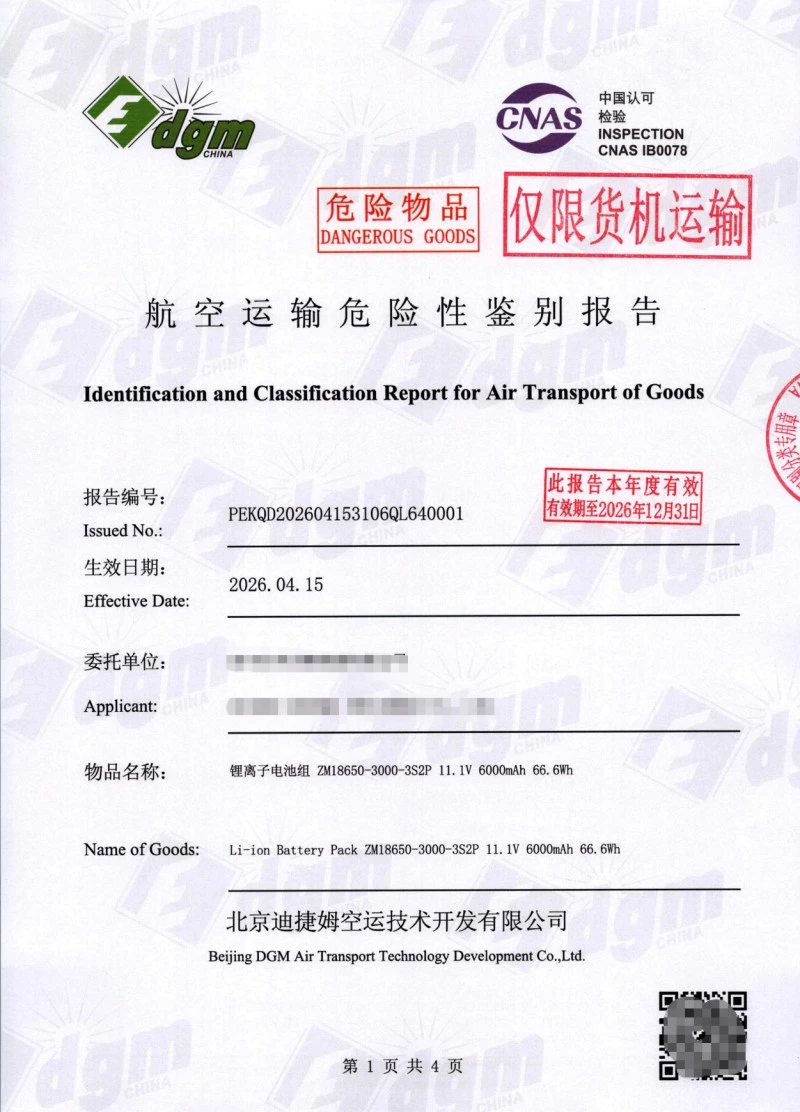
The tested 33.3Wh pack is supported by the exact test and transport files previewed below. Full documents can be provided for project review or order confirmation.
|
|
|
|
UN38.3 Test Report Reference Preview |
MSDS Reference Preview |
|
|
|
|
Sea Transport Reference Preview |
Air Transport Reference Preview |
Document applicability: these records apply to the tested configuration and the documented transport / packaging conditions. Applicability should be reconfirmed if the battery or shipment configuration changes.
It is an 11.1V nominal three-series lithium-ion pack. The tested configuration lists a 12.6V limited-charge voltage and a 9.0V discharge cut-off.
The tested configuration lists 3000mA as the maximum continuous charge current and 3000mA as the maximum continuous discharge current. No higher peak-current value is claimed here.
For a custom battery pack, connector type, polarity, cable length and exit direction should be confirmed against the final device.
UN38.3, MSDS, sea-transport, air-transport and packaging-test records are available for the tested 11.1V 3000mAh Battery Pack configuration.
Choose the 6000mAh 3S2P configuration when longer runtime, 66.6Wh energy and up to 6A continuous discharge matter more than minimum battery size and mass, and the device can accept the larger 110.6 × 67.7 × 19.2 mm pack.
· Device / application and operating voltage
· Normal current and startup / transient current
· Required runtime
· Available battery space and weight limit
· Charger output and charging method
· Connector photo / type, polarity and cable length
Address
A3, 1204-1, 1142 Jimei North Avenue, Software Park Phase III, Xiamen Torch High-tech Zone, Xiamen, China
Tel