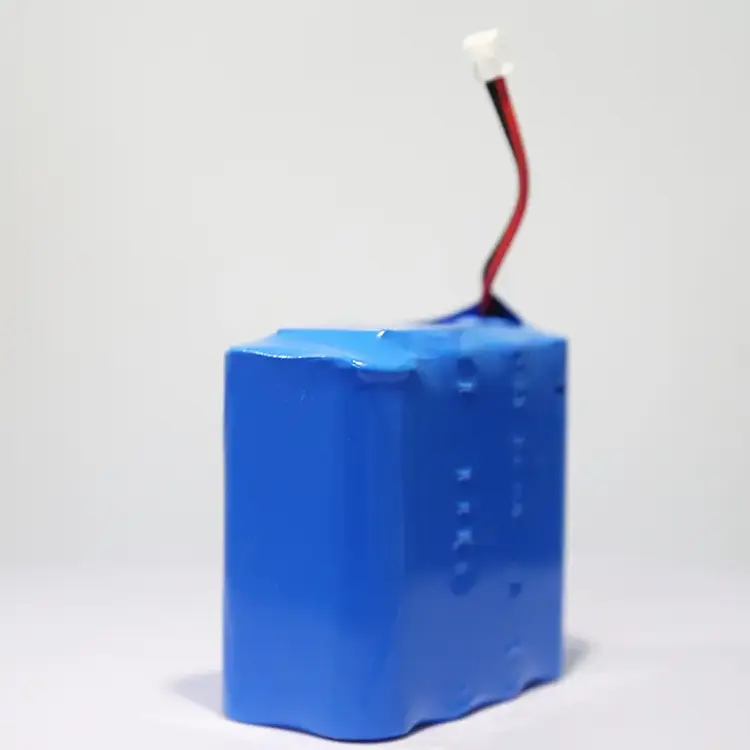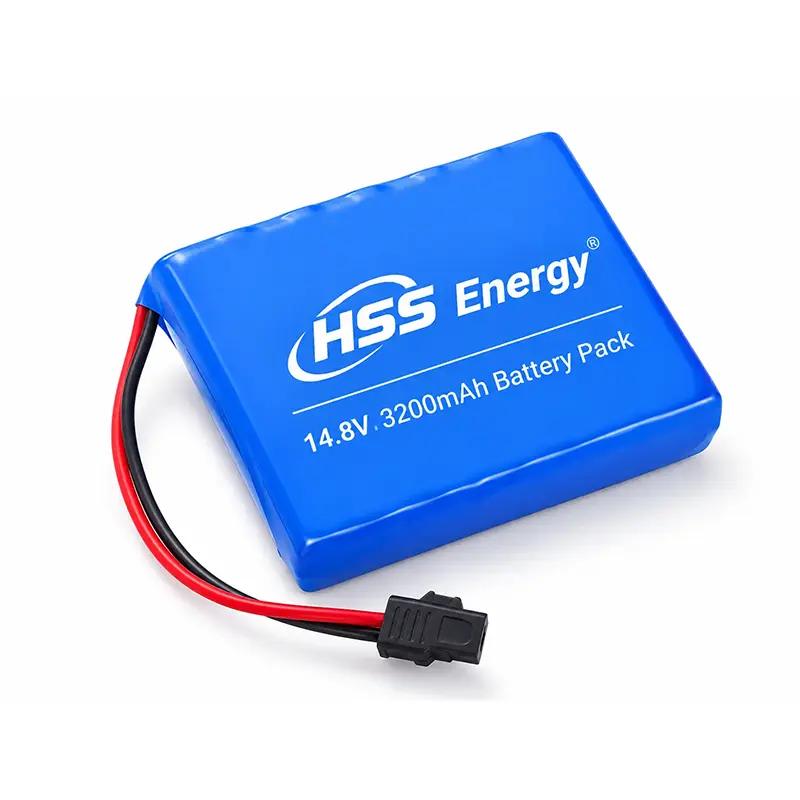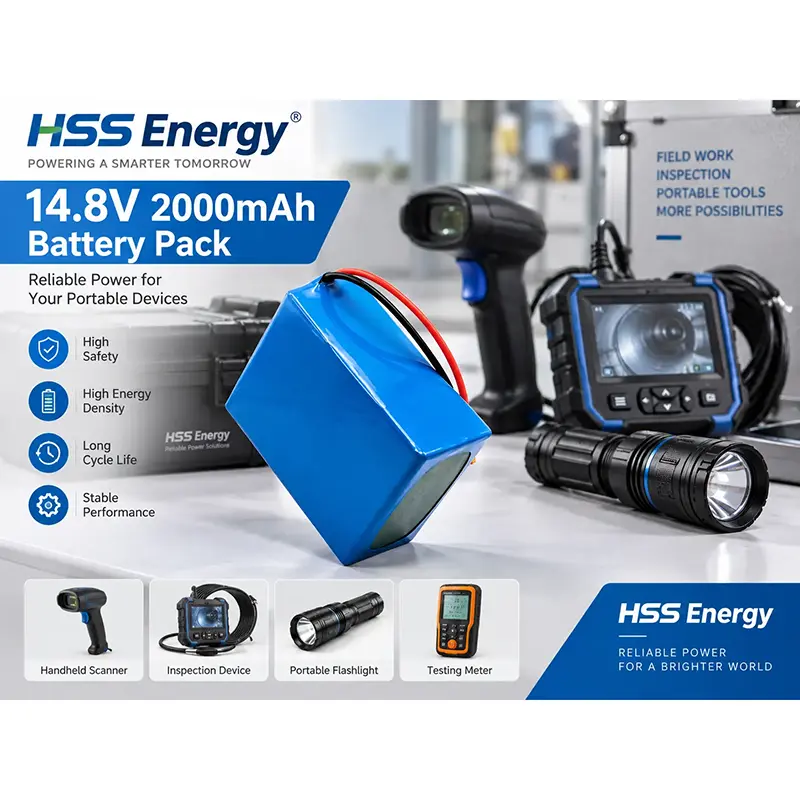
For OEMs, distributors and equipment makers, the 14.8V 2000mAh Battery Pack is most useful when the device already needs a 4S lithium-ion voltage platform but has limited room for battery expansion. Its four 18650 2000mAh cells are connected as 4S1P, delivering 14.8V nominal voltage, 2Ah capacity and approximately 29.6Wh without adding parallel cell groups. The regular 80 x 20 x 68 mm reference size supports early mechanical screening, while JST, wire length, polarity and BMS settings can be matched to the target equipment. Instead of treating voltage and capacity as the whole specification, HSS reviews load current, charger behavior and installation clearance before the sample is frozen, reducing fit and interface risk before bulk production.
|
Item |
Specification |
|
Product Name |
14.8V 2000mAh Battery Pack |
|
Brand |
HSS Energy |
|
Battery Type |
Rechargeable lithium-ion battery pack |
|
Nominal Voltage |
14.8V |
|
Rated Capacity |
2000mAh / 2Ah |
|
Nominal Energy |
Approx. 29.6Wh |
|
Cell Format |
18650 2000mAh |
|
Cell Configuration |
4S1P |
|
Cell Quantity |
4 cells |
|
Full-Charge Reference |
16.8V for a conventional 4S lithium-ion architecture; final charger must match the approved pack |
|
Regular Size |
80 x 20 x 68 mm |
|
Common Connector |
JST; final housing / pitch / polarity confirmed by project |
|
Wire Length |
Customized according to device installation |
|
BMS / Protection |
Project-specific; protection thresholds and current capability confirmed before production |
|
Cycle Life Reference |
500 cycles reference; test conditions and remaining-capacity criterion to be confirmed for the final SKU |
|
Outer Finish |
Blue shrink-wrap style pack shown in supplied images |
|
Application |
Portable devices, inspection equipment, field instruments and suitable OEM electronics after project review |
|
OEM / ODM |
Available |
Specification note: the 80 x 20 x 68 mm size is the regular reference for this SKU. Final discharge current, BMS limits, JST connector version, cable length, polarity, charger setting and any certification claim should follow the approved BOM, drawing, technical agreement, PI or contract.
|
Parameter |
Why It Must Be Confirmed |
|
Continuous / Peak Discharge Current |
Depends on the actual device load, selected cell, BMS, wire and JST interface. |
|
Maximum Charge Current |
Must match the approved 18650 cell and charger strategy. |
|
Exact Cell Brand / Model |
Final BOM item; not inferred from capacity alone. |
|
Finished Pack Weight |
Confirmed after BMS, wire, connector and insulation are frozen. |
|
JST Housing / Pitch / Polarity |
Must match the device-side connector before sample release. |
When the equipment already requires a 4S input, moving to a larger parallel pack can add cost and occupy space without solving a real problem. A 14.8V 2000mAh lithium battery keeps the voltage architecture at 14.8V while delivering 29.6Wh from only four cells. For handheld and portable equipment, that balance can protect enclosure space and simplify installation. Buyers should still size the pack from measured average load, peak current and required operating time, but the 2Ah platform is a strong starting point when the device needs voltage and portability more than maximum runtime.
More capacity is useful only when the application can use it. In a fixed enclosure, extra Ah can increase cost, mass and packaging complexity while giving little commercial benefit. A 14.8V 2Ah battery pack is easier to justify when the target operating session fits within 29.6Wh and the device is carried, handheld or installed in a tight cavity. For OEM buyers, this creates a cleaner BOM decision: use the smaller 2Ah platform when it meets the duty cycle, and move to a higher-capacity configuration only when the measured runtime requirement genuinely demands it.
A simple cell structure is easier to document, inspect and reproduce across future orders. In this SKU, a 14.8V rechargeable battery pack uses four series-connected 18650 cells with no parallel group, so the nominal voltage, capacity and cell count are immediately clear in the BOM. That helps engineering and purchasing teams keep sample and production versions aligned, especially when the same battery will be reordered for an established device. The value is not only technical simplicity; it is fewer opportunities for undocumented changes in cell count, wiring, connector layout or pack geometry between batches.
Quick Buyer Check
|
Good 4S Fit Device input and charger already support a 4S / 14.8V platform. |
Good 2Ah Fit 29.6Wh covers the target work session without oversizing the pack. |
Move Up When Runtime or peak-current demand requires a larger configuration. |
For an OEM project, a familiar cell format can make mechanical review and future sourcing easier, but the pack still has to be engineered around the real load. The 14.8V 18650 battery pack uses four 2000mAh cells to create the required 4S platform, while the approved cell model, BMS, nickel connection, wire and JST interface determine the finished current capability. This is why HSS asks for steady and peak load data before quotation. The buyer gets a defined 18650 architecture without turning an unverified cell-current assumption into a product claim.
A 4S1P structure is deliberately compact: all four cells are used to build the 14.8V voltage platform, with no extra parallel cells added for runtime. For a 14.8V 2Ah 18650 battery, that means 29.6Wh from the minimum four-cell structure required for this specification. This can be an advantage in scanners, meters and inspection equipment where cavity size and weight matter. If the device needs substantially longer operation or higher current margin, HSS should move the project to a larger configuration rather than stretching the 2Ah pack beyond its intended duty cycle.
The regular 80 x 20 x 68 mm envelope and JST connector direction give the buyer two concrete points to check before sampling: will the battery physically fit, and will the electrical interface match the device? HSS then confirms the JST housing, pitch, polarity, wire gauge, lead length and exit direction against the PCB or existing battery. This turns the sample into a real fit-and-function check rather than a generic voltage test. For replacement and OEM projects, resolving these details early can reduce rework and create a repeatable specification for later production orders.
Prototype Approval Check
|
Electrical Average / peak load and approved charger window. |
Interface JST housing, pitch, pinout, polarity and lead length. |
Mechanical Battery cavity, cable exit, clearance and service access. |
The strongest fit for this 14.8V 2Ah platform is portable equipment that needs a 4S voltage window, moderate energy and a small battery envelope. Representative directions include inspection tools, handheld scanners, testing meters, monitoring devices and compact field electronics. For an OEM or replacement buyer, the value is the defined 29.6Wh energy and compact 80 x 20 x 68 mm reference size, which make early fit and runtime screening straightforward. The tradeoff is equally clear: if the equipment has long continuous operation or high peak-current demand, a larger-capacity or higher-current configuration should be reviewed instead of forcing this compact SKU into the wrong duty cycle.
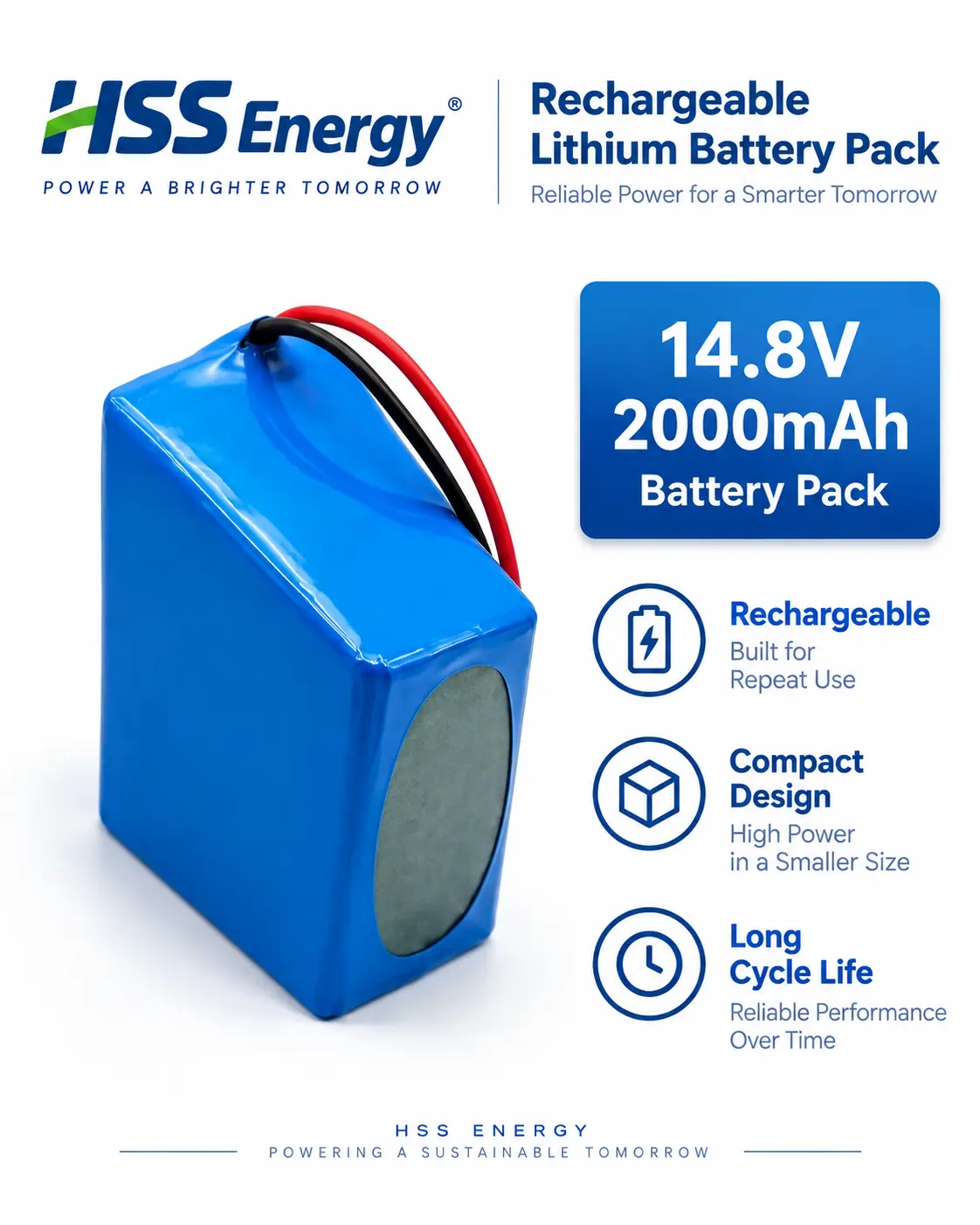
Product visual supplied for the 14.8V 2000mAh battery pack.
What Can Be Customized
|
Connector JST as common direction; exact type / pitch / polarity by project |
Wire Length Adjusted to PCB and device installation |
BMS Protection and current settings matched to load |
|
Label / Brand OEM / ODM logo, color and product information |
Packaging Project and export packing can be customized |
Dimensions Regular 80 x 20 x 68 mm; alternative layouts reviewed by project |
Fit Review: What Must Match the Device
|
Good Fit When |
Review Another Configuration When |
|
The device is designed around a 14.8V / 4S lithium-ion architecture. |
The charger or electronics are designed for another series count. |
|
2Ah / 29.6Wh meets the required operating-time target. |
The device needs substantially longer runtime between charges. |
|
The 80 x 20 x 68 mm pack fits the battery cavity with connector clearance. |
The battery bay cannot accommodate the regular reference envelope. |
|
JST or a defined project-specific connector can match the PCB / wiring. |
The load current exceeds the practical capability of the approved cell / BMS / connector design. |
From Requirement to Bulk Production
|
1 Share Device Data Battery cavity, load, charger, connector, quantity |
2 Confirm Battery Plan 4S1P, BMS, JST, wire length, label |
3 Evaluate Sample Fit, charging, current behavior, runtime |
4 Freeze Production Approved drawing, BOM, QC and packaging |
What to Send for a Faster Quotation
· Device type and target market
· Battery cavity drawing or maximum available dimensions
· Average and peak load current
· Existing charger voltage / current
· Required JST housing / pitch / pinout / polarity
· Wire length and cable-exit direction
· Target operating time between charges
· Sample quantity and expected bulk quantity
It uses four 18650 2000mAh cells in a 4S1P arrangement, giving 14.8V nominal voltage and 2000mAh capacity.
The regular reference size is 80 x 20 x 68 mm. Final device fit should also include wire exit and connector clearance.
JST is the common connector direction for this model. Exact housing, pitch, pinout, polarity and lead length should follow the target device.
For a conventional 4S lithium-ion architecture, 16.8V is the full-charge reference. The final charger must match the approved battery configuration.
The product reference is 500 cycles. Because the supplied product information does not define the cycle-test current, depth of discharge, temperature or remaining-capacity threshold, those conditions should be confirmed before the figure is used as a contractual life guarantee.
No. Voltage alone does not guarantee compatibility. Load current, battery space, charger, connector and wiring route all need review.
For the 14.8V 2000mAh Battery Pack, send HSS Energy the device model, battery-space dimensions, average and peak load, charger specification, JST connector details, required wire length and target quantity. We can then confirm the 4S1P configuration, BMS direction and mechanical fit before preparing the sample and bulk-order quotation.
Address
A3, 1204-1, 1142 Jimei North Avenue, Software Park Phase III, Xiamen Torch High-tech Zone, Xiamen, China
Tel