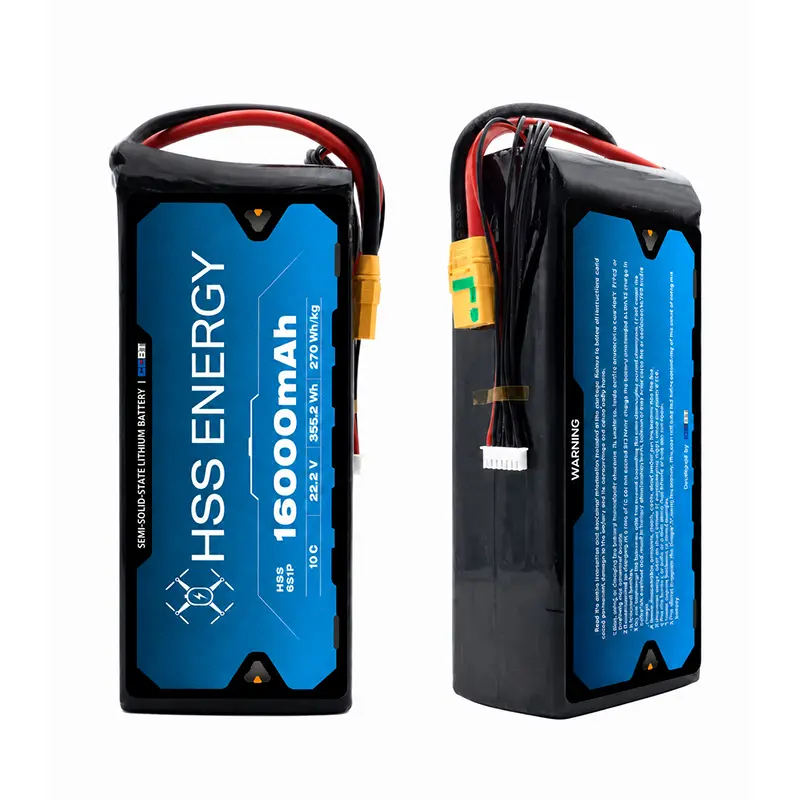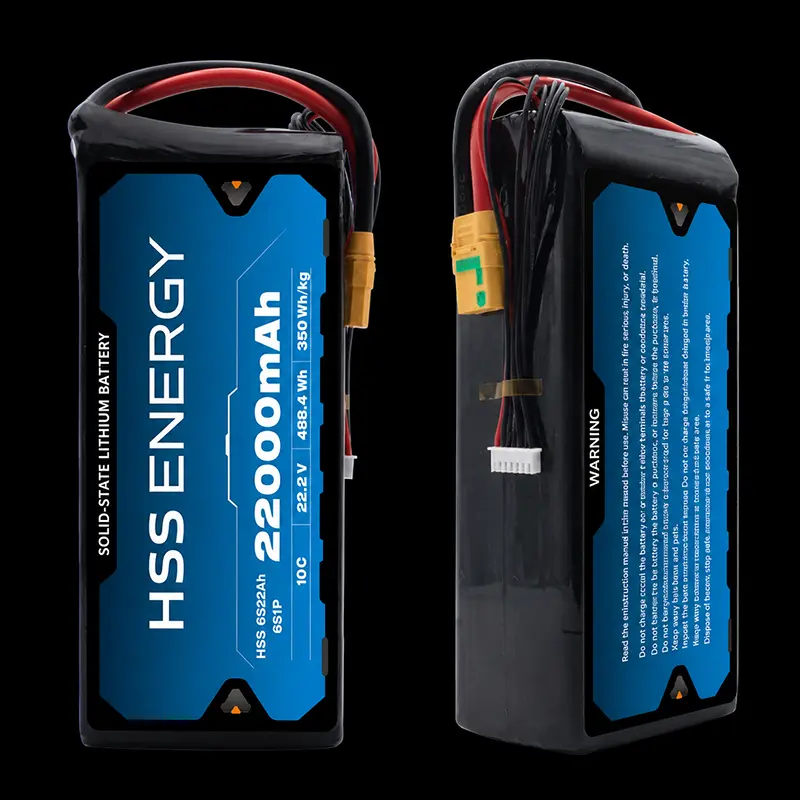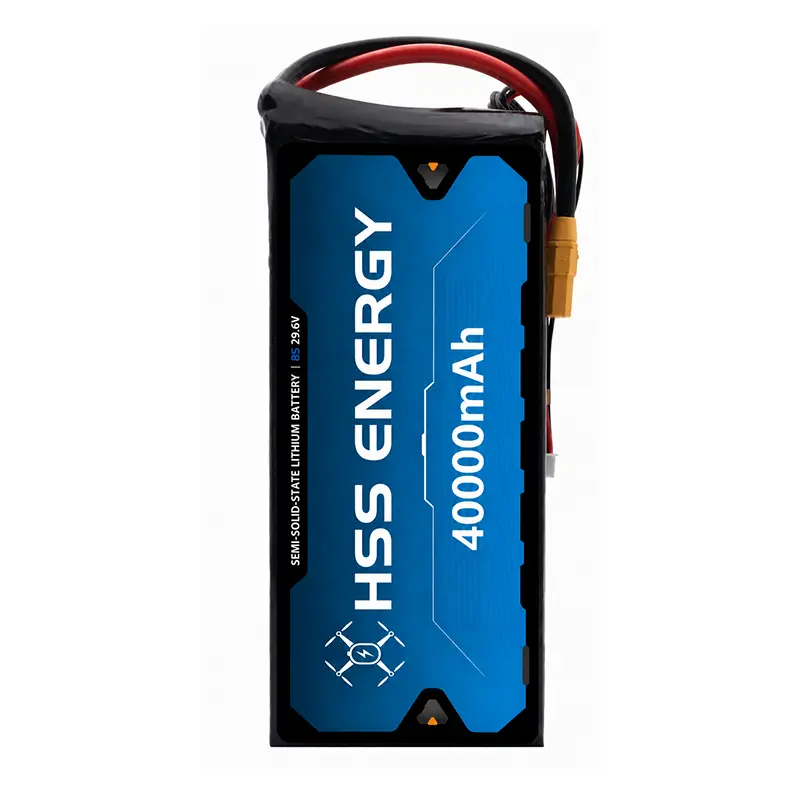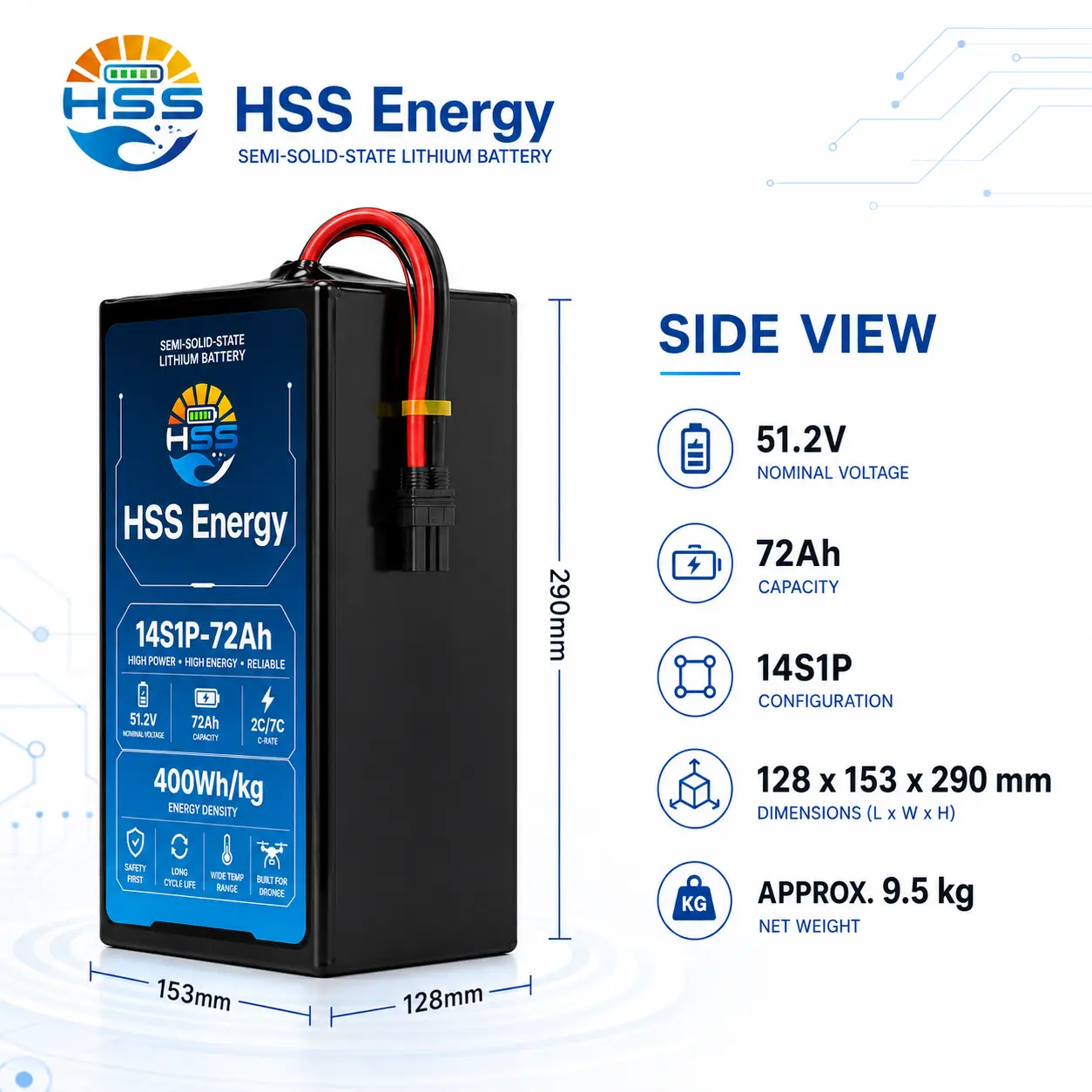
The 14S 72000mAh UAV battery is the high-specific-energy position in the HSS Energy manufacturer 14S family. At 51.2V and 72Ah, nominal energy is 3686.4Wh. The supplied product reference shows a published energy-density value of 400Wh/kg and a 9.5kg finished pack, giving an arithmetic pack-level reference of about 388Wh/kg. Its value proposition is therefore energy-to-mass efficiency, not simply maximum capacity.
|
Parameter |
Specification |
|
Product model |
HSS 14S1P-72Ah |
|
Product category |
Semi-solid-state lithium UAV battery |
|
Configuration |
14S1P |
|
Nominal voltage |
51.2V |
|
Nominal capacity |
72000mAh / 72Ah |
|
Nominal energy |
3686.4Wh |
|
Published energy density |
400Wh/kg value shown on supplied product reference |
|
Calculated pack reference |
About 388Wh/kg (3686.4Wh / 9.5kg) |
|
Pack weight |
Approx. 9.5kg |
|
Pack size (L x W x H) |
128 x 153 x 290mm |
|
Discharge rate shown |
2C / 7C shown on product reference |
|
Arithmetic current reference |
144A at 2C; 504A at 7C (arithmetic references only, not verified pack limits) |
|
Power / balance interface |
High-current power lead and balance interface shown; final mating connector and cable configuration confirmed for the approved order |
|
Charging profile |
Matched series-count charging; charge voltage/current and charger workflow confirmed for the final configuration |
The 14S 72Ah drone battery is the middle 14S choice when the aircraft needs a large endurance increase but still has to protect payload margin. It carries far more energy than the 36Ah option while remaining substantially lighter and smaller than the 105Ah pack.
|
Selection Point |
14S1P 36Ah |
14S1P 72Ah |
14S1P 105Ah |
|
Nominal energy |
1864.8Wh |
3686.4Wh |
5439Wh |
|
Pack mass |
5.6kg |
9.5kg |
15.6kg |
|
Published density value |
350Wh/kg |
400Wh/kg |
350Wh/kg |
|
Product position |
Compact 14S |
High specific energy |
Maximum installed energy |
|
Choose when |
Lower mass / compact fit |
Endurance + mass balance |
Energy dominates |
For this 400Wh/kg UAV battery, 400Wh/kg is the published energy-density value shown for the product rather than a finished-pack guarantee. The calculated finished-pack reference is about 388Wh/kg from 3686.4Wh and 9.5kg. Keeping the two values separate gives customers a clearer energy-to-mass comparison.
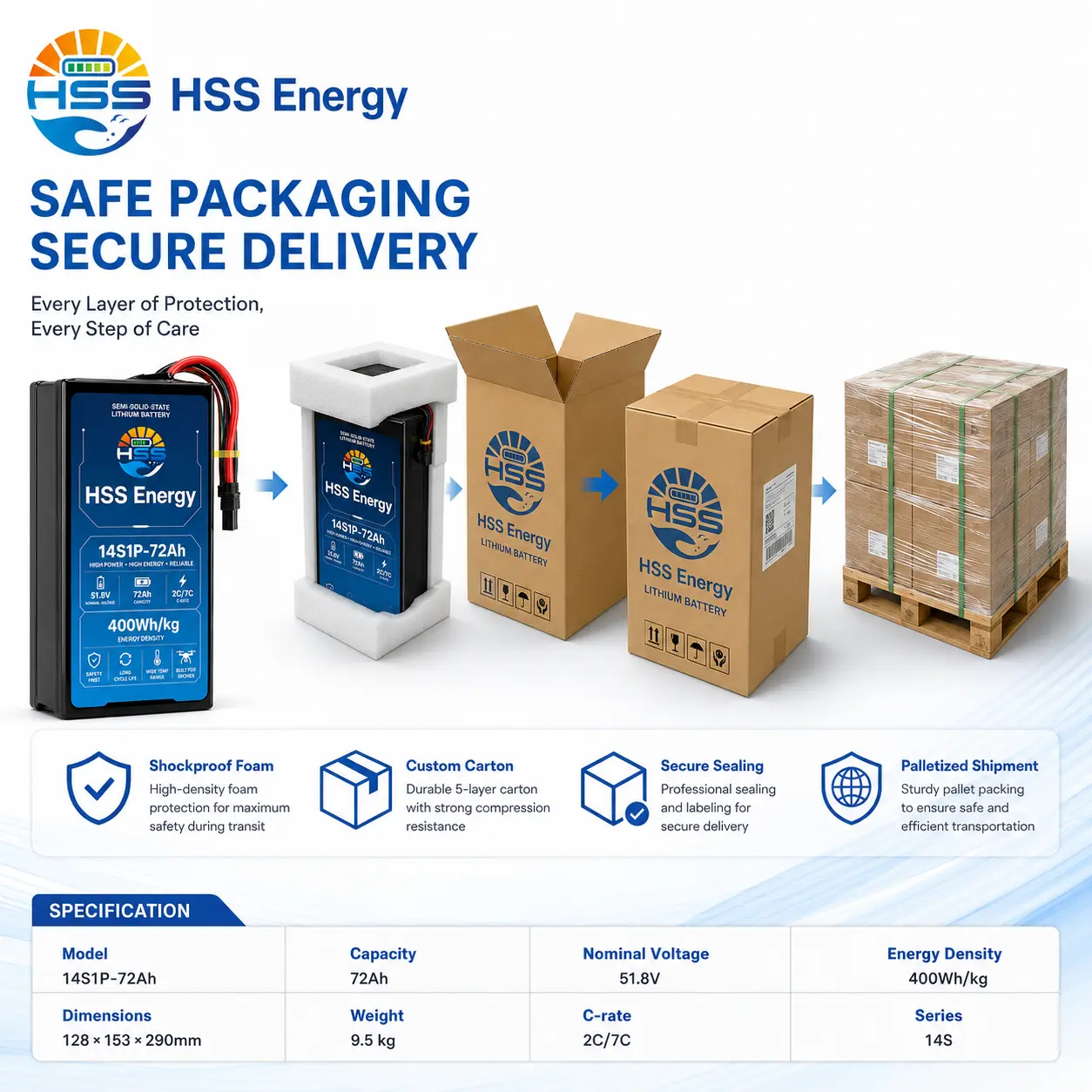
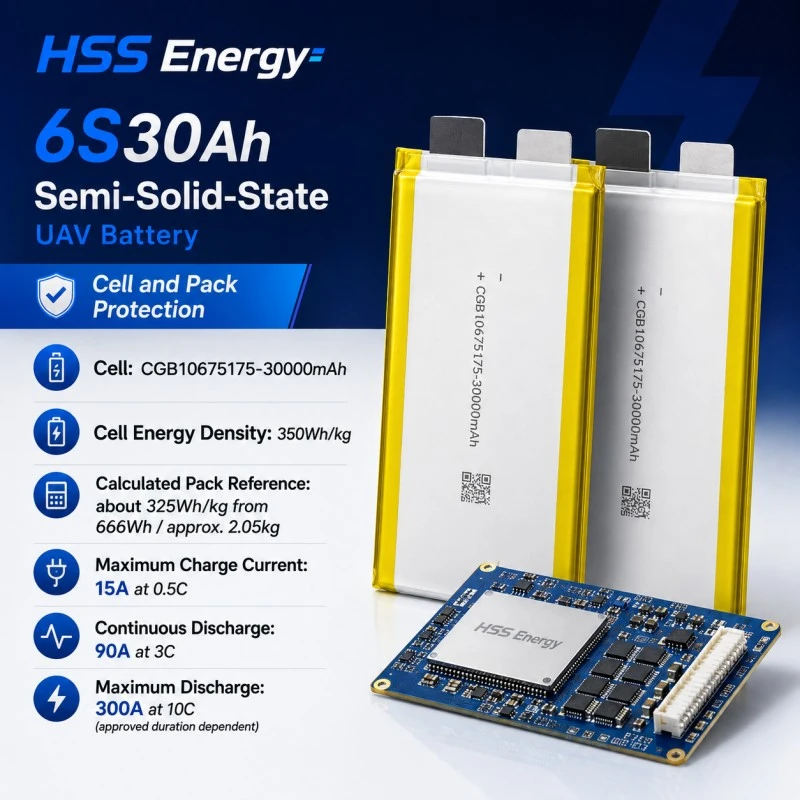
Cell / protection architecture reference visual for the HSS project configuration.
Payload Margin, CG and Battery-Bay Fit
A 51.2V 72Ah UAV battery with a 9.5kg pack mass can materially change aircraft center of gravity, structural loading and handling. Provide allowable battery mass, CG target, installation position, mounting interface, restraint method, cable route and removal path before sample approval.
|
CHOOSE THIS SKU WHEN Choose this SKU when endurance and energy-to-mass balance are stronger priorities than maximum installed energy. |
MOVE TO ANOTHER SKU WHEN move to 36Ah when lower mass and compact fit are stronger priorities; move to 105Ah when maximum installed energy dominates and the aircraft can accept 15.6kg. |
The 14S long endurance UAV battery project should start with the mission rather than the capacity number. Hover or cruise power, payload, target flight time and CG limits show whether the 72Ah pack adds useful endurance without creating a new aircraft-balance problem.
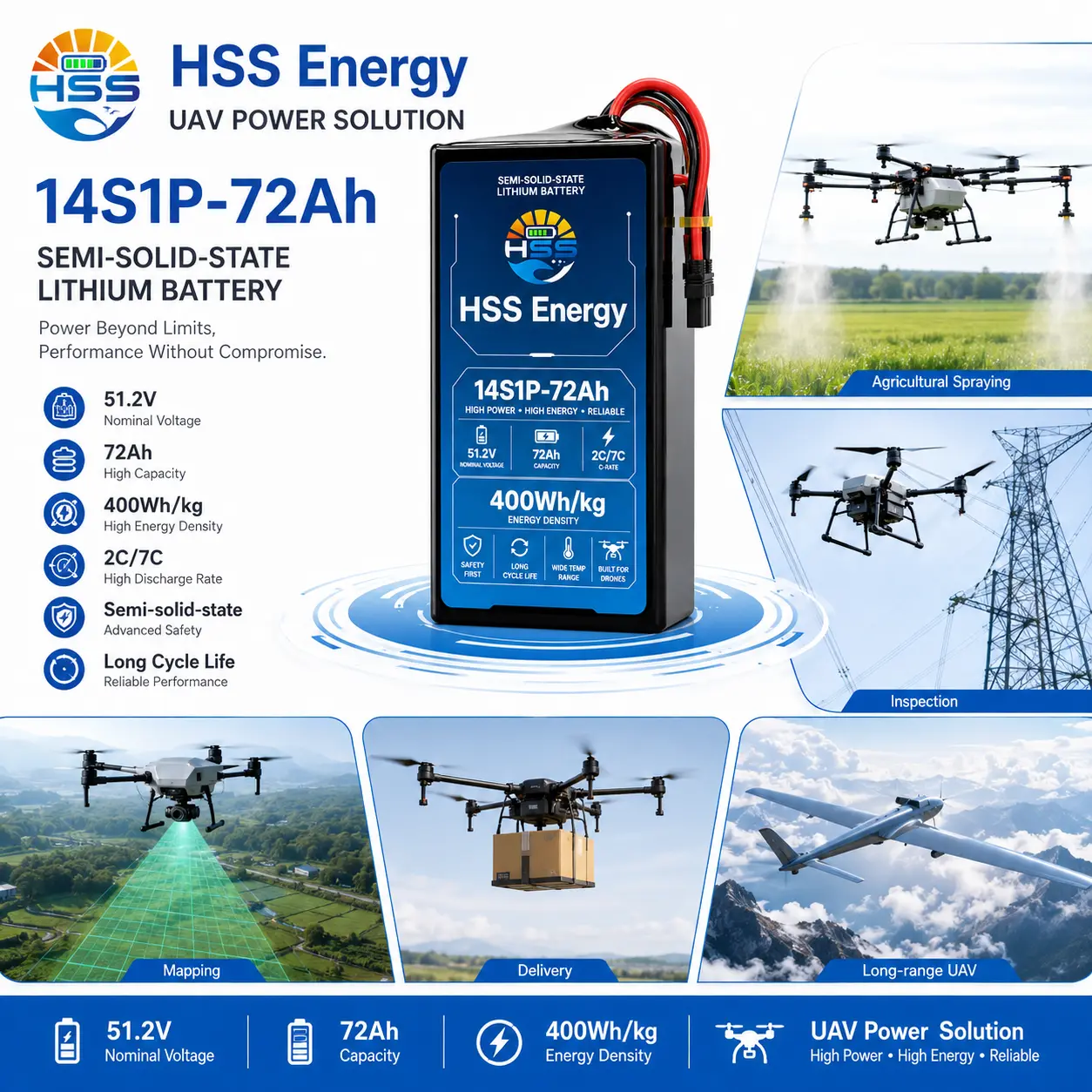
Endurance-focused UAV application reference for the 72Ah platform; payload margin and CG remain part of aircraft selection.
For a 14S1P 72Ah UAV battery project, HSS Energy should review mission duration target, hover or cruise power, payload mass, CG window, battery-bay drawing, connector, charger and real current profile together. The goal is to confirm whether the 72Ah energy-to-mass balance is preferable to stepping up to the heavier 105Ah pack.
For the 72Ah pack, the main question is not simply how much energy the aircraft can carry. It is whether that energy adds useful flight time without taking away too much payload or moving the CG outside the preferred range. Start with mission data, then review battery position.
|
What Flight Time Are You Targeting? Use measured power, payload and reserve requirement to judge whether 3686.4Wh gives a useful endurance gain. Capacity alone cannot predict flight time. |
Connector and Balance Setup Confirm mating connector, cable gauge, length, polarity, service access and balance-connection workflow with the actual charger and aircraft. |
|
Keep the CG in Check Review battery position, cable exit, bend radius, restraint and removal path together. More energy is not useful if the installation creates a CG problem. |
72Ah or 105Ah? Choose 72Ah when endurance matters but payload and mass margin still need protection. Move to 105Ah only when the added energy justifies the added mass. |
|
Protect a High-Value Pack in Transit Packaging can include connector protection, cushioning, pack orientation, batch labels, cartons and handling instructions. |
Freeze the Proven Setup After ground and flight validation, record the bay position, connector, cable route, charger workflow, label and packing details for production. |
SEND THE MISSION DATA FIRST
Send target flight time, hover or cruise power, payload, reserve requirement, CG window, bay drawing, allowable mass, current profile, connector needs, charger information and order volume.
For this HSS 14S1P 72Ah product, the specified nominal voltage is 51.2V. At 72Ah, the corresponding nominal energy is 3686.4Wh.
Choose the 72Ah model when endurance is important but the aircraft still needs payload and mass margin. The 105Ah model carries more energy but increases pack mass to 15.6kg.
It is treated as the product’s published energy-density value. Using the confirmed pack energy and mass gives a calculated pack-level reference of about 388Wh/kg.
It gives arithmetic references of 144A and 504A from capacity multiplication. These are not published as verified continuous and peak pack limits without approved test conditions.
Send the bay drawing, mounting orientation, maximum pack mass, CG requirement, connector/cable route, charger information and average/peak current profile.
Address
A3, 1204-1, 1142 Jimei North Avenue, Software Park Phase III, Xiamen Torch High-tech Zone, Xiamen, China
Tel